rough beech wood
CN → US| HS Code | Tariff Rate | Origin | Destination | Doc |
|---|---|---|---|---|
| 4407920000 | 35.0% | CN | US | Official Doc |
| 4407990295 | 35.0% | CN | US | Official Doc |
| 4403930100 | 35.0% | CN | US | Official Doc |
| 4403940100 | 35.0% | CN | US | Official Doc |
Product Images
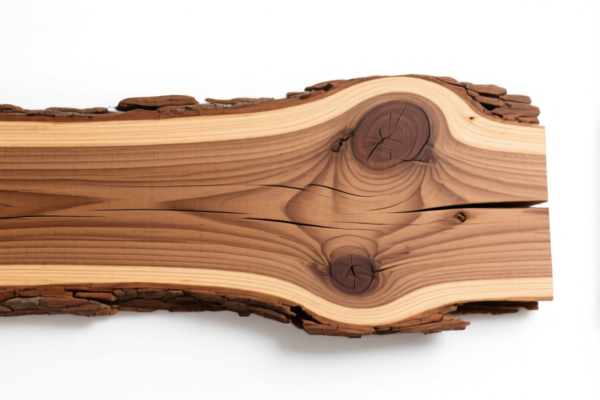
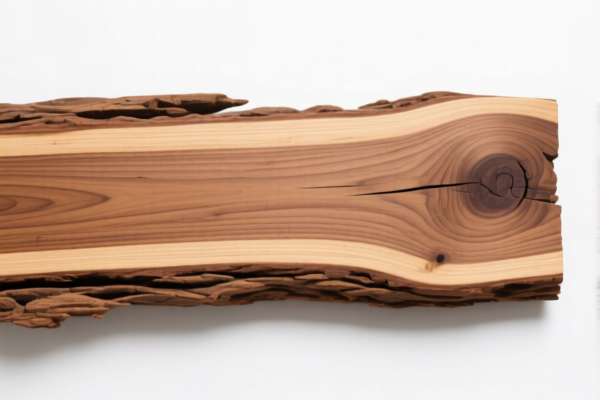
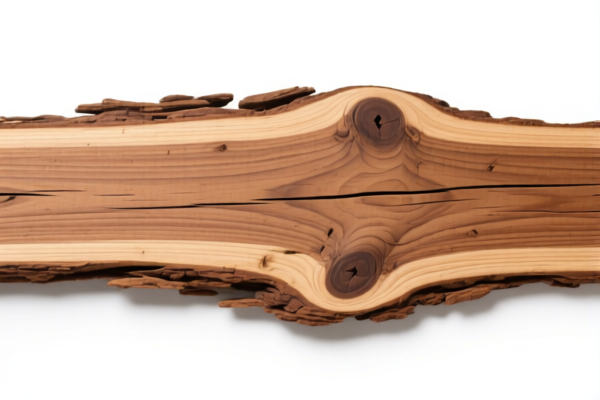
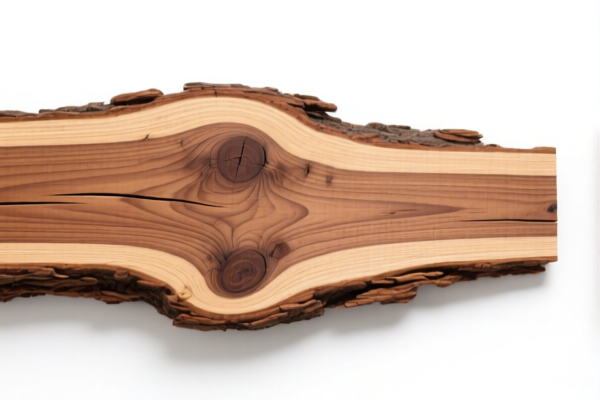
AI Analysis
🌲 Rough Beech Wood (Logs & Unworked Timber)
🌐 HS Code Reference & Customs Clearance Guide | 2026 Latest Tariff Analysis | Professional Clearance Strategy
📌 Part I: Product Definition & Classification: Do You Know "Rough Beech Wood"?
Beech wood (Fagus spp.) is one of the most commercially important hardwoods in global trade, widely used for furniture, flooring, tool handles, and pulp. In international trade, Rough Beech Wood refers to timber that has undergone minimal processing—typically just debarked, delimbed, or roughly squared, but not yet sawn into planks or veneers.
Key Distinction:
- Rough Logs (4403): Wood in the rough, whether or not stripped of bark or sapwood, or roughly squared.
- Sawn Timber (4407): Wood sawn or chipped lengthwise, sliced, or peeled, exceeding 6mm thickness.
⚠️ Critical Classification Point:
- If the wood is not sawn and is primarily in log form or roughly squared logs → Classify under Chapter 4403.
- If the wood has been sawn, sliced, or peeled into lumber/boards → Classify under Chapter 4407.
- Size Matters: For Chapter 4403, the smallest cross-sectional dimension must be ≥15cm to qualify for specific subheadings like4403.93.01.00.
📦 Part II: HS Code Classification Details (2026 Latest Tariff Authority Comparison)
| HS Code | Product Description | Applicable Scenario | Key Condition |
|---|---|---|---|
4403.93.01.00 |
Rough Beech Wood, smallest cross-section ≥15 cm | Large logs, industrial raw material for veneer/pulp | ✅ ≥15cm cross-section |
4403.94.01.00 |
Other Rough Beech Wood (smaller than 15cm or other forms) | Smaller logs, briquettes, or non-standard shapes | ❌ <15cm or irregular |
4407.92.00.00 |
Sawn Beech Wood (thickness >6mm) | Planks, boards, timber ready for furniture making | ✅ Sawn/Chipped/Sliced |
4407.99.02.95 |
Other Non-Coniferous Wood (not Beech, or processed differently) | Mixed hardwoods or other non-Fagus species | ❌ Not Beech |
🔍 Important Reminder:
- Beech (Fagus spp.) is strictly defined by its botanical origin. Misidentifying Beech as another hardwood (e.g., Oak, Maple) can lead to misclassification.
- Rough vs. Sawn: If the wood is sawn into planks, it must go to 4407, not 4403.
- Bark/Sapwood: The presence or absence of bark/sapwood does not change the classification from 4403 to 4407, provided it is not sawn lengthwise.
💰 Part III: 2026 Latest Tariff Rate Details (Including Surtaxes & Policy Add-ons)
✅ Applicable Country: United States (US)
✅ Origin: China (CN)
✅ Effective Date: 2025–2026 (Current Trade War Context)
🎯 1. 4403.93.01.00 & 4403.94.01.00 —— Rough Beech Wood (Logs/Unworked)
| Item | Content |
|---|---|
| Base Tariff Rate | 0% (ad valorem) |
| USITC Surtax (Section 301) | +25% (from USITC Footnote related to Chinese hardwood logs) |
| IEEPA Surtax | +10% (targeted China/Hong Kong products, from Nov 2025) |
| Total Tariff Rate | 35% |
| Tax Calculation | CIF Value × 35% |
| De Minimis Eligibility | ❌ Not Eligible (deny_de_minimis) |
| Legal Basis Path | IEEPA:9903.01.25 → USITC:4403.93.01.00 → FOOTNOTE:9903.88.01 |
📌 Explanation:
- "USITC Surtax 25%": Imposed under the U.S. Trade Act Section 301 on Chinese-origin wood products.
- "IEEPA 10%": Additional surtax under the International Emergency Economic Powers Act for Chinese goods.
- Total 35%: High tariff burden. Requires precise classification to avoid penalties.
🎯 2. 4407.92.00.00 —— Sawn Beech Wood (Lumber/Planks)
| Item | Content |
|---|---|
| Base Tariff Rate | 0% (ad valorem) |
| USITC Surtax (Section 301) | +25% |
| IEEPA Surtax | +10% |
| Total Tariff Rate | 35% |
| Tax Calculation | CIF Value × 35% |
| De Minimis Eligibility | ❌ Not Eligible |
| Legal Basis Path | IEEPA:9903.01.25 → USITC:4407.92.00.00 → FOOTNOTE:9903.88.01 |
📌 Note:
- Sawn Beech wood faces the same high tariff as rough logs.
- Even if processed (planed, sanded, end-jointed), if it is Beech wood >6mm thick, it falls here.
🎯 3. 4407.99.02.95 —— Other Non-Coniferous Wood
| Item | Content |
|---|---|
| Base Tariff Rate | 0% |
| USITC Surtax (Section 301) | +25% |
| IEEPA Surtax | +10% |
| Total Tariff Rate | 35% |
| Tax Calculation | CIF Value × 35% |
| De Minimis Eligibility | ❌ Not Eligible |
📌 Caution:
- This code is for non-Beech non-coniferous woods. If you are exporting Beech, do not use this code. Misclassification leads to severe penalties.
🛠️ Part IV: Customs Clearance Practical Advice (Pitfall Avoidance Guide)
✅ 1. Required Documentation Checklist (Mandatory)
| Document | Must Provide | Explanation |
|---|---|---|
| ✅ Botanical Name Certificate | ✔️ | Must state Fagus spp. (e.g., Fagus grandifolia, Fagus silvatica) |
| ✅ Log Specifications Sheet | ✔️ | Dimensions, diameter, bark status, rough-squared details |
| ✅ Product Photos (including logs) | ✔️ | Clear view of cross-section and length |
| ✅ Phytosanitary Certificate | ✔️ | Required by USDA APHIS to prevent pest invasion |
| ✅ Commercial Invoice | ✔️ | Clearly state "Rough Beech Wood" or "Sawn Beech Lumber" |
| ✅ Packing List | ✔️ | Detail weight, volume, and packaging type |
| ✅ Certificate of Origin (CO) | ✔️ | If not Chinese origin, may reduce/eliminate surtaxes |
✅ 2. Declaration Tips (Critical Mnemonics)
🔥 "Logs vs. Lumber: Check the Saw, Check the Size, Check the Species!"
| Scenario | Correct Declaration | Wrong Action |
|---|---|---|
| Unworked Logs, ≥15cm cross-section | 4403.93.01.00 |
Misdeclare as sawn lumber → 35% but wrong code |
| Unworked Logs, <15cm or irregular | 4403.94.01.00 |
Use 4403.93 → Risk of audit |
| Sawn Planks/Boards (>6mm) | 4407.92.00.00 |
Misdeclare as logs → Delayed clearance |
| Mixed Hardwood Logs (Non-Beech) | 4407.99.02.95 (if sawn) or 4403.99 (if rough) |
Claim Beech when it’s Oak → Fraud penalty |
| Wood Chips/Shavings | 4401.21.00.00 |
Misdeclare as logs → Wrong tariff |
✅ 3. Special Case Handling
| Scenario | Handling Advice |
|---|---|
| OEM Custom Logs | Provide customer order + design specs to prove "rough" status |
| Beech Wood with Bark | Still 4403 if not sawn. Declare "With Bark" or "Debarked" |
| Beech Wood for Pulp | If >15cm cross-section, still 4403.93.01.00 |
| Beech Wood for Flooring | If sawn, use 4407.92.00.00. If pre-sawn but not finished, still 4407 |
| Import from Non-China Origin | Apply for IEEPA Exemption if from eligible countries (e.g., Vietnam, Mexico) |
🌍 Part V: Global Market Clearance Comparison (2026 Latest)
| Country/Region | Recommended HS Code | Tariff (China Origin) | Certification Requirement | Notes |
|---|---|---|---|---|
| 🇺🇸 USA | 4403.93.01.00 / 4407.92.00.00 |
35% (25% + 10%) | USDA Phytosanitary + FLSA | High tariff due to Section 301 |
| 🇨🇳 China | 4403.93.01.00 / 4407.92.00.00 |
0–2.5% | GB Standards | No surtax for imports |
| 🇪🇺 EU | 4403.93 / 4407.92 |
0% (if FSC/PEFC) | EUTR + FSC/PEFC | Strict wood legality requirements |
| 🇬🇧 UK | 4403.93 / 4407.92 |
0% (if FSC/PEFC) | UK Wood Guarantee Scheme | Post-Brexit rules apply |
| 🇯🇵 Japan | 4403.93 / 4407.92 |
0% | JIS Standards | No surtax |
📌 Conclusion:
- USA is the most costly market due to additional surtaxes on Chinese wood products.
- EU/UK require strict legality verification (EUTR/UK WGS). Ensure FSC/PEFC certification to facilitate clearance.
- China has low tariffs for imported wood, but strict phytosanitary rules.
📌 Part VI: Common Mistakes & Pitfall Avoidance (Lessons from Blood & Tears)
❌ Mistake 1: Declaring sawn lumber as rough logs
👉 Consequence: Under-reporting value/tariff → Severe penalty + seizure
❌ Mistake 2: Misidentifying Beech as Oak or Maple
👉 Consequence: Wrong HS Code → Audit + Back Taxes + Delay
❌ Mistake 3: Ignoring cross-sectional dimension (≥15cm rule)
👉 Consequence: Misclassifying 4403.93 for <15cm logs → Rejection
❌ Mistake 4: Failing to provide Phytosanitary Certificate
👉 Consequence: USDA APHIS Rejection → Return or Destroy
✅ Correct Approach:
"Rough Beech Logs (Fagus spp.), Debarked, Length 2-4m, Diameter >30cm, FSC Certified, Phytosanitary Certificate Attached"
🎯 Part VII: Conclusion: Professional Declaration, Save Time, Cut Costs!
🎯 Remember the Mnemonic:
🔹 "Logs ≥15cm: 4403.93, <15cm: 4403.94, Sawn: 4407.92"
🔹 "Beech is Beech: Don't Mix with Oak, Tax is 35% in USA"
🔹 "Phytosanitary is Key: No Certificate, No Entry!"
📌 Pro Tip:
- If your wood originates from Vietnam, Mexico, Thailand, or Malaysia, you may be eligible for IEEPA Exemption, reducing the total tariff to 0%~5%.
- Apply for an Advance Ruling from U.S. Customs and Border Protection (CBP) to confirm HS Code classification before shipping.
📣 Act Now:
📞 Contact Professional Customs Broker + Provide Product Specs + Apply for HS Code Advance Ruling
🚀 Let your Beech wood clear smoothly, efficiently, and profitably!
✨ Professional Clearance Starts with Accurate Classification!
💼 Every Cent of Cost Deserves Precise Calculation!
Customer Reviews
About HS Code Classification
The Harmonized System (HS) is an internationally standardized nomenclature developed by the World Customs Organization (WCO) to classify traded products. Over 200 countries use the HS system as the basis for customs tariffs, trade statistics, and import/export regulations.
Each HS code follows a hierarchical structure:
- Chapter (2 digits) — Broad category of goods (e.g., Chapter 84: Machinery and Mechanical Appliances)
- Heading (4 digits) — More specific grouping within the chapter
- Subheading (6 digits) — Internationally standardized breakdown, used by all WCO member countries
- National subdivisions (8-10 digits) — Country-specific extensions for further classification, such as US HTSUS 10-digit codes
Correct HS code classification is essential for smooth customs clearance, accurate duty payment, and compliance with trade regulations. Misclassification can lead to customs delays, overpayment of duties, or penalties.
When importing from CN to US, the applicable tariff rates may include:
- Most-Favored-Nation (MFN) rate — The standard duty rate applied to WTO members
- General rate — Applied to countries without trade agreements
- Trade remedy duties — Additional tariffs such as Section 301 (anti-dumping), Section 232 (national security), or countervailing duties
The information provided on this page is for reference purposes only. For official classification, please consult with your local customs authority or a licensed customs broker.