rough beech wood veneer
CN → US| HS Code | Tariff Rate | Origin | Destination | Doc |
|---|---|---|---|---|
| 4408900197 | 35.0% | CN | US | Official Doc |
Product Images
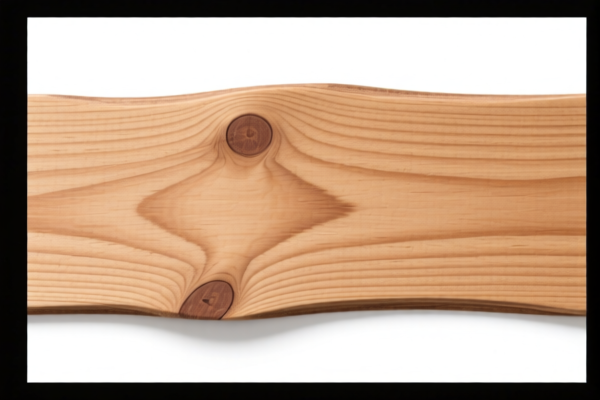
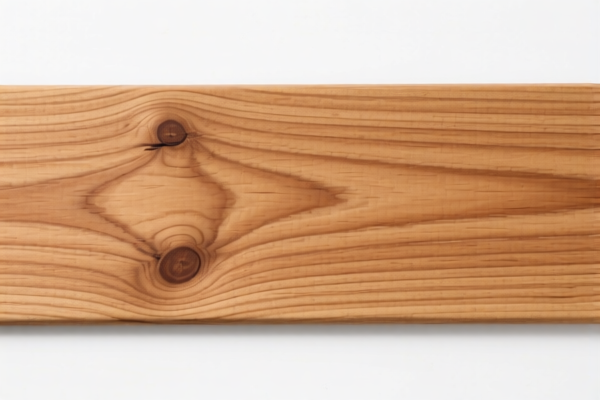
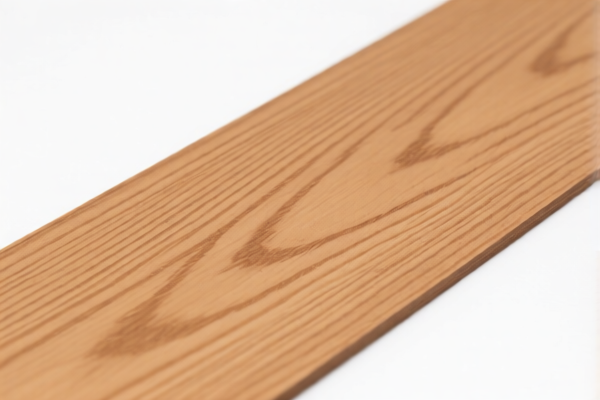
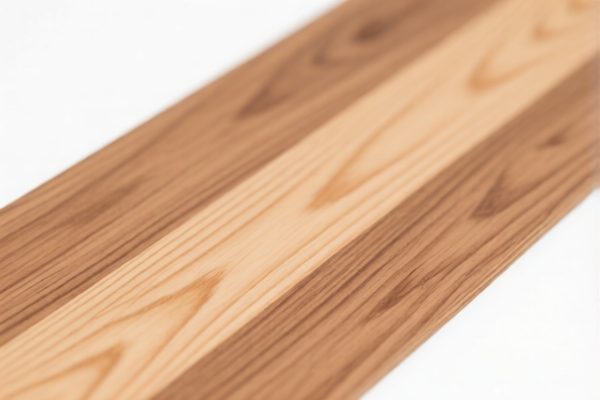
AI Analysis
🪵 Rough Beech Wood Veneer (Wood Sliced to < 6mm)
🌐 HS Code Reference & Customs Clearance Guide | 2026 Latest Tariff Analysis | Professional Clearance Strategy
📌 I. Product Definition & Classification: Do You Really Understand "Wood Veneer"?
Rough Beech Wood Veneer refers to thin slices of beech wood, typically obtained by slicing, peeling, or sawn lengthwise. In international trade, the classification hinges critically on thickness and processing level.
1. Thin Veneers (< 6mm):
Used for plywood manufacturing, laminated wood, or surface veneering. These are considered "semi-finished" wood products.
✅ Key Characteristic: Thickness is not exceeding 6 mm.
2. Thick Timber/Lumber (> 6mm):
If the beech wood is sawn but remains thicker than 6mm, it is classified as timber/lumber, not veneer.
❌ Not Applicable Here: Our data specifically targets veneers ≤ 6mm.
⚠ Critical Distinction:
- If the wood is ≤ 6mm and processed (sliced/peeled/sawn lengthwise) → Chapter 44 (Wood Veneers).
- If the wood is > 6mm → Chapter 44 (Other Wood, Semi-manufactured).
- If the wood is raw logs → Chapter 44 (Wood in the Rough).
This guide focuses strictly on the ≤ 6mm Veneer category as per the provided DATA.
📦 II. Detailed Hs Code Classification (2026 Latest Tariff Authority Comparison)
Based on the provided data, the specific classification for Rough Beech Wood Veneer (thickness ≤ 6mm, other than specific types) is:
| Hs Code | Product Description | Applicable Scenario | Key Condition |
|---|---|---|---|
| 4408.90.01.97 | Wood veneers (including sliced laminated wood), plywood, or similar laminated wood, sawn lengthwise, sliced, or peeled, whether or not planed, sanded, spliced, or end-jointed, of a thickness not exceeding 6 mm: Other | Rough beech veneer, uncolored, non-decorative, standard thickness ≤ 6mm | Thickness ≤ 6mm; Beech species (Other hardwood); Not specifically listed in more precise sub-headings |
🔍 Key Reminder:
- "Rough" implies it may not be finished with high-gloss varnish or decorative prints, but basic sanding or planing is allowed under this heading.
- "Beech" falls under "Other" hardwoods in this specific sub-heading (4408.90.01.97).
- Thickness Limit: Must be ≤ 6mm. If thicker, it reverts to general timber codes (e.g., 4407.21 for sawn beech).
💰 III. 2026 Latest Tariff Rate Breakdown (Detailed Policy & Surcharge Analysis)
✅ Applicable Country: United States (US)
✅ Origin: China (CN) (Assumed based on typical tariff query context; verify origin if different)
✅ Effective Time: Current as of 2026
🎯 1. 4408.90.01.97 —— Wood Veneers (Beech, ≤ 6mm, Other)
| Item | Content |
|---|---|
| Basic Tariff Rate | 0.0% (Ad Valorem) |
| Additional Surcharge Tariff | 0.0% |
| Total Tariff Rate | 0.0% |
| Calculation Basis | CIF Value × 0% = $0 Tax |
| Is De Minimis Applicable? | N/A (Since tax is 0%, entry is free regardless of value) |
| Legal Basis Path | HTSUS: 4408.90.01.97 → Section XII: Wood and Articles of Wood |
📌 Interpretation:
- Base Rate (0%): The United States generally imposes low or zero tariffs on raw wood veneers to support domestic furniture and plywood manufacturing.
- No Section 301 Tariff: Unlike many manufactured goods or steel/aluminum, wood veneers are NOT currently subject to the additional 25% tariff under Section 301 of the Trade Act of 1974.
- No IEEPA Surcharge: There is no additional 10% surcharge under the International紧急 Economic Powers Act for this specific wood product.
- Result: This is a duty-free import item, making it highly attractive for cost-sensitive supply chains.
🛠 IV. Customs Clearance Practical Advice (Real-World Pitfall Avoidance Guide)
✅ 1. Required Documentation Checklist (All Are Mandatory)
| Document | Must Provide | Explanation |
|---|---|---|
| ✅ Commercial Invoice | ✔ | Must clearly state "Wood Veneer, Beech, Thickness: X mm" |
| ✅ Packing List | ✔ | Must detail layering, wrapping, and total weight |
| ✅ Product Specification Sheet | ✔ | Must specify: Thickness (≤ 6mm), Processing Type (Sliced/Pealed/Sawn), Moisture Content |
| ✅ Phytosanitary Certificates | ✔ | CRITICAL: Proof of treatment against pests (fumigation or heat treatment) |
| ✅ ISPM 15 Marking | ✔ | If packed in wood pallets/crates, they must bear the IPPC stamp |
| ✅ Fumigation Report | ✔ | Required for raw wood products to prevent invasive species |
| ✅ Bill of Lading/Air Waybill | ✔ | Standard shipping document |
⚠ Warning:
- Wood products are heavily scrutinized for pests and fungi.
- Ensure Moisture Content is declared (usually < 20% for shipping).
- Beech is susceptible to blue stain; declare if treated.
✅ 2. Declaration Tips (Key Mnemonics)
🔥 "Thickness is King, Phytosanitary is Queen, Name Must Be Precise!"
| Situation | Correct Declaration | Wrong Practice |
|---|---|---|
| Veneer Rolls/Sheets | 4408.90.01.97 - "Wood Veneer, Beech, Sliced, 0.6mm thick" |
"Wood Planks" → Wrong code, higher risk |
| Thickness > 6mm | 4407.21.00.00 (Sawn Wood) |
Using veneer code → Rejection/Correction |
| Decorative Printed Veneer | Still 4408.90.01.97 (unless specific exclusion) |
Do not assume printing changes code unless specified |
| Unprocessed Logs | 4403.xx.xx (Timber) |
Using veneer code → Major discrepancy |
✅ 3. Special Cases Handling
| Situation | Handling Advice |
|---|---|
| Laminated Veneer Lumber (Lvl) Sheets | If cut from Lvl blocks, still 4408.90.01.97 if ≤ 6mm |
| End-Jointed Veneer | Allowed under this code; declare "End-Jointed" to avoid "reconstituted wood" confusion |
| Origin: Non-China | If from Vietnam/Thailand, same 0% tariff applies (no origin-based surcharge for wood) |
| USDA Inspection | Be prepared for potential physical inspection by USDA APHIS at port of entry |
🌍 V. Global Market Comparison (2026 Latest)
| Country/Region | Recommended Hs Code | Tariff Rate | Certification Requirement | Notes |
|---|---|---|---|---|
| 🇺🇸 USA | 4408.90.01.97 |
0.0% | Phytosanitary Cert, ISPM 15 | Duty-free, but strict biosecurity |
| 🇪🇺 EU | 4408 90 31 (Beech) |
0% | Fitosanitary Cert, EUTR Compliance | Zero duty, but illegal logging checks |
| 🇨🇳 China | 4408.90.01 |
Various (0-5%) | Fitosanitary Cert | Check current annual quota/tariff |
| 🇬🇧 UK | 4408 90 31 |
0% | Fitosanitary Cert | Post-Brexit rules similar to EU |
| 🇯🇵 Japan | 4408.90-000 |
0-6.5% | Fitosanitary Cert | Varies by processing level |
📌 Conclusion:
- The US market offers 0% duty for this product, making it competitive.
- The primary cost driver is not tariff, but logistics and compliance (fumigation, inspection fees).
- Biosecurity is the biggest hurdle, not tax.
📌 VI. Common Errors & Pitfall Guide (Blood Lessons)
❌ Error 1: Listing product as "Wooden Planks" or "Furniture Parts"
👉 Consequence: Wrong Hs Code → Customs delay, penalty, or re-routing to 4407 (which may have different duties).
❌ Error 2: Omitting Thickness in Description
👉 Consequence: Customs may classify as thicker timber (higher duty or stricter quotas). Always declare "Thickness: X mm".
❌ Error 3: No Phytosanitary Cert
👉 Consequence: Goods Rejected or Destroyed at port. USDA APHIS has zero tolerance for untreated wood.
❌ Error 4: Claiming "Decorative" Veneer without proof
👉 Consequence: If it’s just plain sliced beech, do not add "Decorative" unless it has special grain patterns or dyeing that changes classification. Stick to factual description.
✅ Best Practice Declaration:
"WOOD VENEER, BEECH, SLICED, THICKNESS 0.6MM, MOISTURE CONTENT 12%, FUMIGATED, NO. OF SHEETS: 500, GROSS WEIGHT: 500KG, ORIGIN: CHAINA"
🎯 VII. Conclusion: Professional Clearance, Save Time & Money!
🎯 Remember the Mnemonic:
🔹 "Thin is Veneer, Thick is Timber. 0% Duty, But Check Pests!"
🔹 "Hs Code 4408.90.01.97 means 0 Tax, but 100% Compliance on Biosecurity!"
📌 Tips:
- If your beech veneer is > 6mm, switch to 4407.21.00.00 (Sawn Wood), which may have different duty rates.
- Always request Phytosanitary Certificates from your supplier before shipment.
- Consider Pre-Clearance Inspection if importing large volumes to avoid port storage fees.
📣 Immediate Action:
📞 Contact your freight forwarder + Provide Fitosanitary Cert + Declare Exact Thickness
🚀 Ensure Duty-Free Entry, Smooth Biosecurity Clearance, and Zero Hidden Costs!
✨ Professional Clearance Starts with Accurate Classification!
💼 Every Piece of Wood Counts, Every Tax Dollar Matters!
Customer Reviews
About HS Code Classification
The Harmonized System (HS) is an internationally standardized nomenclature developed by the World Customs Organization (WCO) to classify traded products. Over 200 countries use the HS system as the basis for customs tariffs, trade statistics, and import/export regulations.
Each HS code follows a hierarchical structure:
- Chapter (2 digits) — Broad category of goods (e.g., Chapter 84: Machinery and Mechanical Appliances)
- Heading (4 digits) — More specific grouping within the chapter
- Subheading (6 digits) — Internationally standardized breakdown, used by all WCO member countries
- National subdivisions (8-10 digits) — Country-specific extensions for further classification, such as US HTSUS 10-digit codes
Correct HS code classification is essential for smooth customs clearance, accurate duty payment, and compliance with trade regulations. Misclassification can lead to customs delays, overpayment of duties, or penalties.
When importing from CN to US, the applicable tariff rates may include:
- Most-Favored-Nation (MFN) rate — The standard duty rate applied to WTO members
- General rate — Applied to countries without trade agreements
- Trade remedy duties — Additional tariffs such as Section 301 (anti-dumping), Section 232 (national security), or countervailing duties
The information provided on this page is for reference purposes only. For official classification, please consult with your local customs authority or a licensed customs broker.