rough coniferous logs fir and spruce
CN → US| HS Code | Tariff Rate | Origin | Destination | Doc |
|---|---|---|---|---|
| 4407120019 | 35.0% | CN | US | Official Doc |
| 4407120017 | 35.0% | CN | US | Official Doc |
| 4401110000 | 35.0% | CN | US | Official Doc |
| 4407120059 | 35.0% | CN | US | Official Doc |
| 4407120020 | 35.0% | CN | US | Official Doc |
| 4403240135 | 35.0% | CN | US | Official Doc |
Product Images
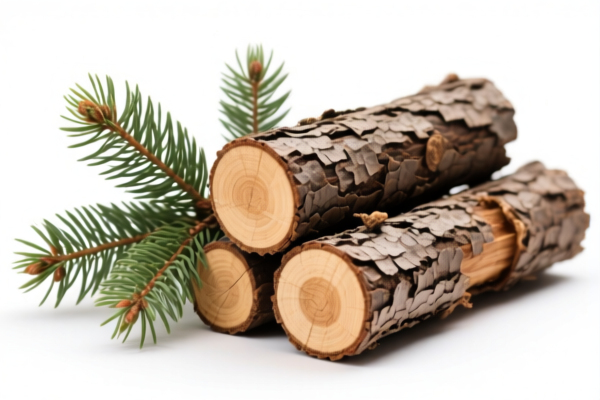
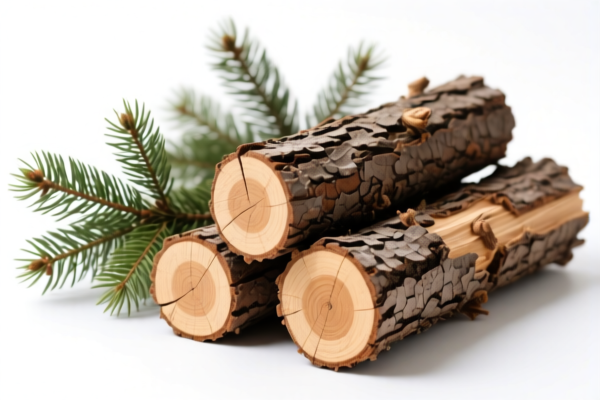
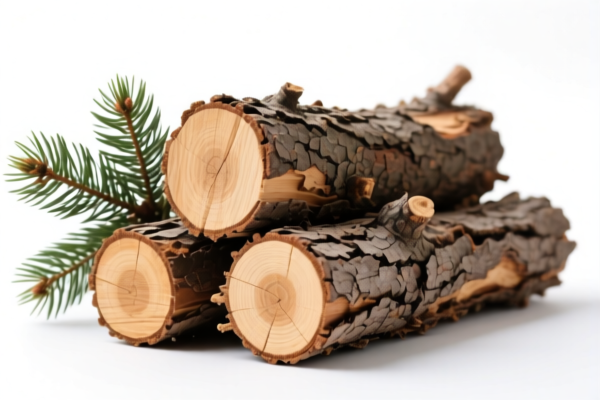
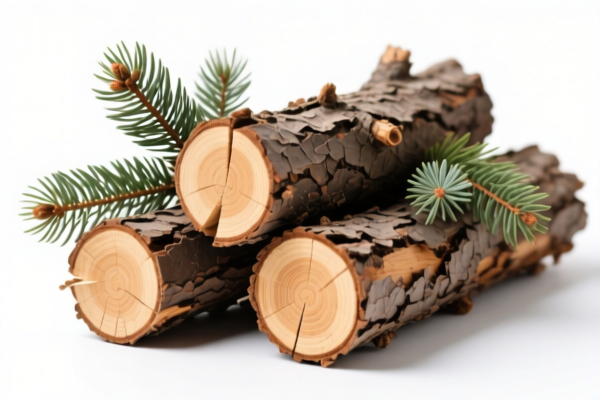
AI Analysis
🌲 Rough Coniferous Logs: Fir & Spruce (Unprocessed Timber)
🌐 HS Code Reference & Customs Clearance Guide | 2024/2025 Tariff Analysis | Professional Clearance Strategy
📌 I. Product Definition & Classification: What Exactly Are "Rough Coniferous Logs"?
Rough coniferous logs, specifically Fir (Abies) and Spruce (Picea), are unprocessed timber products primarily used for construction, paper pulp, or further processing. In international trade, the classification depends heavily on the degree of processing and form.
Key Distinctions:
- Logs/Raw Timber (4401/4403): Unbarked, roughly hewn, or simply trimmed at the ends. Often used as fuel or raw material for sawmills.
- Sawn Wood/Planks (4407): Longitudinally sawn, chipped, or split, with a thickness > 6mm. These are "processed" but not planed.
- Charcoal (4402): If carbonized (not applicable here as these are fresh logs).
⚠️ Critical Classification Point:
- If the wood is simply cut to length and retains its natural bark or rough surface → Often classified under 4401 (Fuel/Raw Logs) or 4403 (Preserved Logs).
- If the wood is sawn longitudinally (even if rough) → Classified under 4407 (Sawn Wood).
- Note: The provided DATA indicates a high tariff rate (35% total), which suggests these are subject to specific trade measures (e.g., Section 301 tariffs for US imports from China).
📦 II. HS Code Classification Details (Based on Provided DATA)
The following HS Codes are derived directly from the provided dataset. All items share the same tax structure due to their origin and material.
| HS Code | Product Description (Summary) | Key Characteristics | Processing Level |
|---|---|---|---|
| 4407.12.00.19 | Rough Spruce and Fir Logs | Material: Spruce/Fir. Form: Rough. Category: Unprocessed wood. | High (Sawn/Split, Rough Surface) |
| 4407.12.00.17 | Rough Spruce and Fir Logs | Unprocessed rough material. Species: Spruce & Fir. Coniferous feature. | High (Sawn/Split, Rough Surface) |
| 4401.11.00.00 | Fir and Spruce Raw Logs | Species: Coniferous. Form: Raw logs. Category: Fuel wood/Logs. | Low (Untreated, Round Logs) |
| 4407.12.00.59 | Fir and Spruce Raw Logs | Species: Fir & Spruce. Roughness: Not specified. Other sawn wood category. | Medium (Sawn, Thickness >6mm) |
| 4407.12.00.20 | Fir and Spruce Raw Logs | Material: Explicitly Fir and Spruce. Meets coniferous wood requirements. | Medium/High (Sawn/Chipped) |
| 4403.24.01.35 | Fir and Spruce Raw Logs | Material matches log form exactly. Coniferous classification. | Low/Medium (Preserved or Rough Logs) |
🔍 Important Note:
- 4407 Codes (19, 17, 59, 20): These refer to sawn wood (longitudinally sawn/chipped). Even if "rough," they are considered processed compared to raw logs (4401).
- 4401 Code (11.00.00): Refers to raw logs or wood in the rough, often used for fuel or pulping.
- 4403 Code (24.01.35): Refers to wood treated/preserved or specific rough logs, often with chemical treatment for durability.
💰 III. 2024/2025 Tariff Rate Breakdown (Including Surcharges)
✅ Applicable Country: United States (US)
✅ Origin: China (CN) [Inferred from "Section 122" and high tariff structure]
✅ Effective Time: Ongoing (Subject to Section 301 and IEEPA measures)
🎯 1. All Listed HS Codes (4407.12., 4401.11., 4403.24.*)
| Item | Content |
|---|---|
| Base Tariff | 0.0% (Ad valorem) |
| Section 301 Surcharge | +25.0% (USITC Footnote for Chinese imports) |
| Section 122 Tariff | +10.0% (Specific clause for certain wood products) |
| Total Tax Rate | 35.0% |
| Tax Calculation | CIF Value × 35% |
| De Minimis Exemption | ❌ Not Applicable (Deny de minimis for high-tariff goods) |
| Legal Basis Path | USITC:4407/4401/4403 → Section 301: 25% → Section 122: 10% |
📌 Explanation:
- The base duty is 0%, but the total landed cost includes 35% in tariffs.
- Section 301 (25%) is the major burden on Chinese-origin goods.
- Section 122 (10%) is an additional tariff on specific wood products, often related to trade remedies or specific bilateral agreements.
- Total 35% is a significant cost factor. Importers must calculate CIF (Cost, Insurance, Freight) accurately to avoid underpayment.
🛠️ IV. Customs Clearance Practical Advice (Risk Avoidance Guide)
✅ 1. Documentation Checklist (Mandatory)
| Document | Required? | Details |
|---|---|---|
| ✅ Commercial Invoice | ✔️ | Must specify: Species (Fir/Spruce), Form (Rough Logs/Sawn), Quantity, Volume (CBM/FT), Value. |
| ✅ Packing List | ✔️ | Detail weight, volume, and packaging type. |
| ✅ Phytosanitary Certificate | ✔️ | Crucial for wood products. Issued by the country of origin to prove freedom from pests (e.g., pine beetle). |
| ✅ Fumigation Certificate | ✔️ | Often required alongside phytosanitary certificate. |
| ✅ Bill of Lading/Air Waybill | ✔️ | Original copy required for release. |
| ✅ Proof of Origin | ✔️ | To determine if Section 301 tariffs apply (if origin is not China, rate may be lower). |
✅ 2. Declaration Tips (Key Mnemonics)
🔥 “Species Clear, Form Accurate, Pesticide Free, Tariff Calculated!”
| Scenario | Correct Declaration | Wrong Action |
|---|---|---|
| Raw Logs (Unbarked) | Use 4401.11.00.00 or 4403.24.01.35 | Misdeclare as "Sawn Wood" (4407) → Higher scrutiny. |
| Sawn Rough Boards | Use 4407.12.00.19/17/20/59 | Misdeclare as "Logs" (4401) → Penalty for misclassification. |
| Treated/Preserved Wood | Use 4403.24.01.35 | Omit treatment info → Risk of rejection for pests. |
| Mixed Species | Declare each species separately if possible | Declare as "General Coniferous" → Risk of audit. |
✅ 3. Special Considerations
| Situation | Handling Advice |
|---|---|
| High Tariff Impact (35%) | Factor this into your landed cost. Consider if sourcing from non-China origins (e.g., Canada, Russia) is viable to avoid Section 301 tariffs. |
| Phytosanitary Compliance | Ensure the wood is dry and fumigated. Wet wood or untreated logs will be rejected or destroyed. |
| Volume vs. Weight | Customs may audit based on volume (CBM). Ensure your invoice volume matches the physical shipment. |
| Section 122 Specifics | Verify if your specific product code falls under Section 122. Some wood products have additional duties beyond Section 301. |
🌍 V. Global Market Comparison (2024/2025)
| Country/Region | Recommended HS Code | Tariff Rate (China Origin) | Certification Requirements | Notes |
|---|---|---|---|---|
| 🇺🇸 USA | 4407/4401/4403 | 35% (Total) | Phytosanitary + Fumigation | High tariffs due to Section 301 + 122. |
| 🇨🇳 China | 4407/4401/4403 | 0-5% (Import Duty) | Phytosanitary | Lower barriers for import. |
| 🇪🇺 EU | 4407/4401/4403 | 0-6.5% | FLEGT License (for some) | No Section 301 tariffs. Strict environmental rules. |
| 🇬🇧 UK | 4407/4401/4403 | 0-6.5% | FLEGT License | Post-Brexit rules apply. |
| 🇨🇦 Canada | 4407/4401/4403 | 0% (CUSMA) | Phytosanitary | Free trade with US/Canada origin. |
📌 Conclusion:
- USA is the most expensive market for Chinese-origin fir/spruce logs due to 35% total tariffs.
- EU and UK have lower tariffs but stricter environmental compliance (FLEGT).
- China itself has low import duties, making it a potential sourcing hub.
📌 VI. Common Mistakes & Pitfalls (Lessons Learned)
❌ Mistake 1: Misclassifying "Sawn Wood" (4407) as "Raw Logs" (4401) to avoid higher duties.
👉 Consequence: Customs audit, back taxes, and fines. The processing level is easily verifiable by visual inspection.
❌ Mistake 2: Ignoring Phytosanitary Requirements.
👉 Consequence: Shipment held at port, fumigated at importer's cost, or destroyed. This is the #1 reason for wood product delays.
❌ Mistake 3: Underestimating Tariff Costs.
👉 Consequence: 35% tariff can erase profit margins. Always include tariff in landed cost calculations.
✅ Correct Approach:
"Fir & Spruce Logs, Rough/Unprocessed, Fumigated, Phytosanitary Certificate Attached, CIF Value $X, HS Code 4407.12.00.19, Origin: China"
🎯 VII. Conclusion: Professional Clearance, Cost Optimization!
🎯 Remember:
🔹 "35% Total Tariff: 25% Section 301 + 10% Section 122."
🔹 "Phytosanitary Certificate is Non-Negotiable!"
🔹 "Classify by Processing Level: Logs (4401) vs. Sawn (4407)."
📌 Pro Tip:
If your wood is sourced from Canada, Russia, or Europe, you can avoid the Section 301 (25%) tariff, reducing the total rate to 10% (Section 122 only). Always verify the Country of Origin on your certificate to optimize tariff liability.
📣 Immediate Action:
📞 Consult with a licensed customs broker.
📄 Ensure Phytosanitary and Fumigation certificates are issued before shipment.
💰 Recalculate your landed cost with the 35% tariff included.
✨ Professional clearance starts with accurate classification!
💼 Every dollar saved in tariffs is pure profit!
Customer Reviews
About HS Code Classification
The Harmonized System (HS) is an internationally standardized nomenclature developed by the World Customs Organization (WCO) to classify traded products. Over 200 countries use the HS system as the basis for customs tariffs, trade statistics, and import/export regulations.
Each HS code follows a hierarchical structure:
- Chapter (2 digits) — Broad category of goods (e.g., Chapter 84: Machinery and Mechanical Appliances)
- Heading (4 digits) — More specific grouping within the chapter
- Subheading (6 digits) — Internationally standardized breakdown, used by all WCO member countries
- National subdivisions (8-10 digits) — Country-specific extensions for further classification, such as US HTSUS 10-digit codes
Correct HS code classification is essential for smooth customs clearance, accurate duty payment, and compliance with trade regulations. Misclassification can lead to customs delays, overpayment of duties, or penalties.
When importing from CN to US, the applicable tariff rates may include:
- Most-Favored-Nation (MFN) rate — The standard duty rate applied to WTO members
- General rate — Applied to countries without trade agreements
- Trade remedy duties — Additional tariffs such as Section 301 (anti-dumping), Section 232 (national security), or countervailing duties
The information provided on this page is for reference purposes only. For official classification, please consult with your local customs authority or a licensed customs broker.