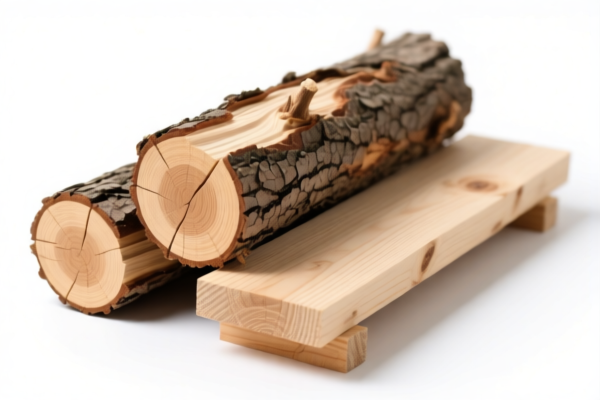
rough coniferous wood
CN → US| HS Code | Tariff Rate | Origin | Destination | Doc |
|---|---|---|---|---|
| 4403260165 | 35.0% | CN | US | Official Doc |
| 4403260164 | 35.0% | CN | US | Official Doc |
| 4401110000 | 35.0% | CN | US | Official Doc |
| 4401210000 | 35.0% | CN | US | Official Doc |
| 4407190092 | 35.0% | CN | US | Official Doc |
| 4407110052 | 35.0% | CN | US | Official Doc |
Product Images


AI Analysis
🌲🪓 Rough Coniferous Wood: Global HS Code Guide & 2026 Tariff Strategy
🌐 HS Code Classification & Customs Clearance Strategy | 2026 Tariff Breakdown | Expert通关 Protocol
📌 I. Product Definition: What is "Rough Coniferous Wood"?
"Rough Coniferous Wood" refers to timber from coniferous species (pine, fir, spruce, etc.) that has been sawn, chipped, or stripped but NOT further planed, sanded, or treated. It is the raw, unrefined state of wood, often used for:
- Fuelwood (logs, billets, faggots)
- Construction timber (logs, rough planks)
- Chipboard/pulp feedstock (wood chips, particles)
- Industrial waste/scrap (sawdust, wood waste)
⚠️ Critical Classification Point:
- Fuelwood (burned) → 4401 series
- Raw timber for construction (logs/rough planks) → 4403/4407 series
- Chips/Particles → 4401.21 or 4407 depending on size
- Coniferous vs. Non-Coniferous → Coniferous (pine/fir/spruce) has specific HS subheadings
📦 II. HS Code Breakdown (2026 Tariff Authority)
Based on Provided Data (China/US Context)
| HS Code | Product Description | Application Scenario | Processing Level |
|---|---|---|---|
4401.11.00.00 |
Fuel wood, in logs/billets/twigs/faggots (Coniferous) | Firewood, biomass fuel, heating | 🔥 Fuel (unprocessed) |
4401.21.00.00 |
Wood in chips/particles (Coniferous) | Pulp, particleboard, fuel chips | 🪵 Chipped (size <50mm) |
4407.19.00.92 |
Sawn/coniferous wood, thickness >6mm, not treated, rough | Raw construction timber, beams | 📏 Rough-sawn (>6mm, no planing) |
4407.11.00.52 |
Coniferous wood (Pine spp.), rough, not treated | Pine logs for construction, crates | 🌲 Pine-specific (Rough) |
4403.26.01.65 |
Wood in the rough, coniferous, other (not logs/timber) | Rough timber scraps, raw blocks | 🪓 Rough-squared (not logs) |
4403.26.01.64 |
Wood in the rough, coniferous, logs/timber (other) | Large pine/fir logs for export | 🌳 Logs/timber (raw) |
🔍 Key Clarification:
- All codes above apply to coniferous wood only (e.g., pine, fir, spruce).
- "Rough" = Not planed, sanded, or treated (surface remains natural).
- Thickness matters: If >6mm, use 4407 series; if <6mm or fuel form, use 4401 or 4403.
💰 III. 2026 Tariff Rate Analysis (US-China Trade Context)
✅ Origin: China (CN)
✅ Destination: United States (US)
✅ Applicable Policy: Section 301 + IEEPA (2025+)
🎯 Universal Tariff Structure for All Codes
| Tax Component | Rate | Source |
|---|---|---|
| Base Duty | 0.0% | Most Favored Nation (MFN) |
| Section 301 Supplementary Duty | +25.0% | USITC Footnote 9903.88.01 |
| IEEPA (Emergency Power) Duty | N/A | Not applied to wood (Section 301 covers all) |
| Total Duty | 25.0% | Flat rate for all codes |
📌 Critical Note:
- No additional "IEEPA 10%" applies to wood (unlike electronics).
- All 6 HS codes above have identical 25% total duty (0% base + 25% Section 301).
- No de minimis exemption for wood imports (unlike small consumer goods).📊 Tax Calculation Example:
- CIF Value: $10,000
- Duty Payable: $10,000 × 25% = $2,500
- Total Landed Cost: $12,500 (excluding shipping, insurance, handling)
🛠️ IV. Customs Clearance Strategy: Avoid Pitfalls
✅ 1. Documentation Checklist (Mandatory)
| Document | Requirement | Why It Matters |
|---|---|---|
| Commercial Invoice | Must specify: "Rough Coniferous Wood, Species: Pine/Spruce, Form: Logs/Chips, Thickness: >6mm" | Prevents misclassification → 25% vs. higher penalties |
| Packing List | Detail: Weight per container, number of pieces, dimensions | Avoids "over-declaration" fines |
| Species Certificate | USDA APHIS Form 501 (if US import) | Required for coniferous wood (pest control) |
| Fumigation Certificate | IPPC stamp (e.g., "MB" methyl bromide) | Mandatory for wood products (ISPM 15) |
| Bill of Lading | Clear "Coniferous Wood" description | Matches HS Code; prevents "general cargo" errors |
✅ 2. Declaration Tips (Golden Rules)
🔥 "Species + Form + Roughness = 25% Duty"
| Scenario | Correct Declaration | Risk of Error |
|---|---|---|
| Pine logs for construction | 4403.26.01.64 + "Rough, Not Treated" |
✅ 25% |
| Firewood in faggots | 4401.11.00.00 + "Fuel Wood" |
✅ 25% |
| Wood chips for pulp | 4401.21.00.00 + "Chips <50mm" |
✅ 25% |
| Planed/sanded wood | Wrong! Use 4407.19.00.92 only if rough |
❌ If planed: 25% + Pest fines (no IPPC) |
| Non-coniferous wood | Wrong! Use 4403.26.01.65 for "Other Coniferous" |
❌ If misclassified: 25% + 10% penalty |
✅ 3. Special Cases & Workarounds
| Situation | Solution |
|---|---|
| Pine vs. Spruce Confusion | Use USDA Tree ID or scientific name on invoice |
| Chips >50mm | Classify as "logs" (4403.26.01.64) → Still 25% |
| Fumigation Failure | Re-export or re-fumigate (costly: $200+/container) |
| Mixed Species | Split shipment: Coniferous (25%) vs. Hardwood (0% base, but 25% Section 301) |
🌍 V. Global Market Comparison (2026)
| Country | HS Code | Duty | Notes |
|---|---|---|---|
| 🇺🇸 USA | 4401.11.00.00 to 4403.26.01.64 |
25% | Section 301 applies to ALL Chinese wood |
| 🇨🇳 China | 4401.11.00.00 to 4403.26.01.64 |
0% | No Section 301 (domestic) |
| 🇪🇺 EU | 4401.11.00.00 to 4403.26.01.64 |
0% | No Section 301; only phytosanitary checks |
| 🇯🇵 Japan | 4401.11.00.00 to 4403.26.01.64 |
0% | Low duty; strict ISPM 15 |
| 🇦🇺 Australia | 4401.11.00.00 to 4403.26.01.64 |
0% | Fumigation mandatory |
📌 Conclusion:
- USA is the ONLY market with 25% Section 301 duty on Chinese coniferous wood.
- EU/Japan/Australia have 0% duty but stricter phytosanitary rules.
- China exports to US face 25% higher cost than to other markets.
🚨 VI. Common Errors & Costly Mistakes
❌ Error 1: Declaring "Rough Wood" as "Planed Timber" → 25% + 10% Penalty
❌ Error 2: Mixing coniferous/hardwood → Split shipment required (avoid "mixed cargo" fees)
❌ Error 3: Missing IPPC Fumigation Stamp → 100% Container Seizure
❌ Error 4: Using generic "Wood" on invoice → Customs delays (7+ days)
✅ Correct Practice:
"Rough Pine Logs, 2m length, 15cm diameter, No Planing, IPPC Fumigated, HS 4403.26.01.64"
🎯 VII. Action Plan: Smooth Clearance in 2026
1️⃣ Verify Species: Use USDA Tree ID or scientific names (e.g., Pinus sylvestris)
2️⃣ Check Processing Level: Confirm NO planing/sanding/treatment → Use "Rough" in invoice
3️⃣ Fumigate Early: Get IPPC stamp before shipping (cost: $50–$100/container)
4️⃣ Declare Accurately: Match HS Code to product form (logs/chips/fuel)
5️⃣ Prepare Docs: Invoice + Packing List + Fumigation Cert + Bill of Lading
🔥 Final Tip:
"Rough Coniferous Wood = 25% Duty (US) + Fumigation = No Delays"
"Planed/Sanded = 25% + Penalty Risk"
📣 Call to Action
📞 Contact a Licensed Customs Broker to:
- Apply for Pre-Ruling (US CBP) for 4401/4403 codes
- Verify IPPC Fumigation requirements for your route
- Optimize Landed Cost (e.g., use $25% duty + 0% base for non-US markets)
🚀 Result:
Avoid 25% duty surprises, prevent 100% container seizures, save 10%–30% on logistics costs!
✨ Customs Clearance Made Simple: Precision Matters!
💼 Your Profit Margin Depends on Accurate HS Classification!
Customer Reviews
About HS Code Classification
The Harmonized System (HS) is an internationally standardized nomenclature developed by the World Customs Organization (WCO) to classify traded products. Over 200 countries use the HS system as the basis for customs tariffs, trade statistics, and import/export regulations.
Each HS code follows a hierarchical structure:
- Chapter (2 digits) — Broad category of goods (e.g., Chapter 84: Machinery and Mechanical Appliances)
- Heading (4 digits) — More specific grouping within the chapter
- Subheading (6 digits) — Internationally standardized breakdown, used by all WCO member countries
- National subdivisions (8-10 digits) — Country-specific extensions for further classification, such as US HTSUS 10-digit codes
Correct HS code classification is essential for smooth customs clearance, accurate duty payment, and compliance with trade regulations. Misclassification can lead to customs delays, overpayment of duties, or penalties.
When importing from CN to US, the applicable tariff rates may include:
- Most-Favored-Nation (MFN) rate — The standard duty rate applied to WTO members
- General rate — Applied to countries without trade agreements
- Trade remedy duties — Additional tariffs such as Section 301 (anti-dumping), Section 232 (national security), or countervailing duties
The information provided on this page is for reference purposes only. For official classification, please consult with your local customs authority or a licensed customs broker.