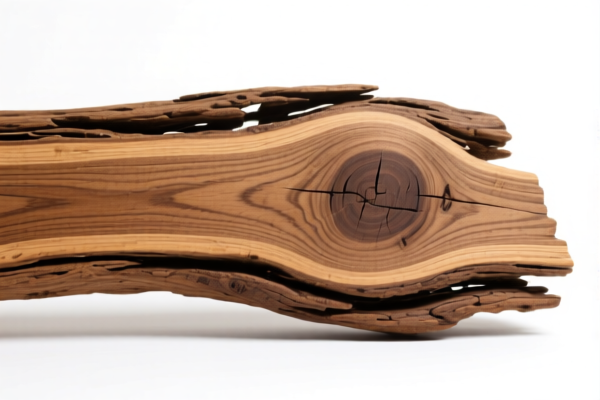
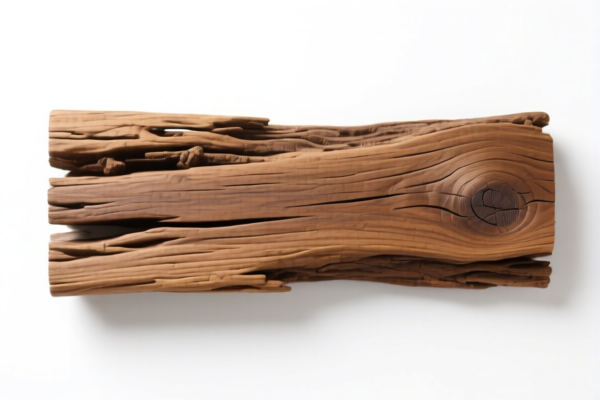
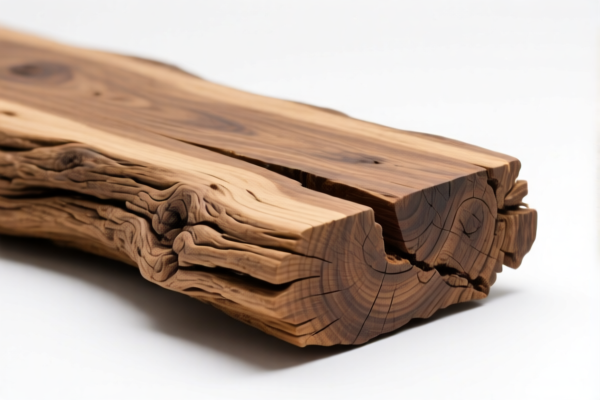
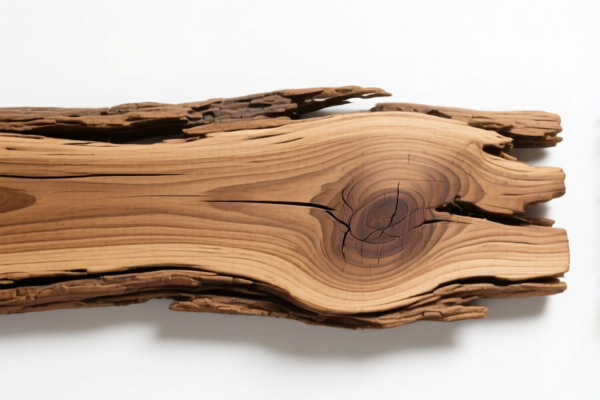
rough oak wood unstripped or roughly squared
CN → US| HS Code | Tariff Rate | Origin | Destination | Doc |
|---|---|---|---|---|
| 4407910022 | 35.0% | CN | US | Official Doc |
| 4407910063 | 35.0% | CN | US | Official Doc |
Product Images
AI Analysis
🌲 Rough Oak Wood (Unstripped or Roughly Squared)
🌐 HS Code Reference & Customs Clearance Guide | 2026 Latest Tariff Analysis | Professional Clearance Strategy
📌 I. Product Definition: What is "Rough Oak Wood"?
Rough oak wood refers to timber from Quercus species (Oak) that has undergone minimal processing. It is the primary raw material for furniture, flooring, and construction.
Key Characteristics: 1. Shape: Sawn, chipped lengthwise, sliced, or peeled. 2. Surface: Unstripped (bark removed but surface rough) OR Roughly Squared (edges squared off but surfaces not planed/sanded). 3. Thickness: Must exceed 6 mm. If ≤ 6 mm, it falls under different categories (e.g., veneer sheets). 4. Species: Specifically Oak (Quercus spp.).
⚠️ Critical Distinction: - If planed, sanded, or end-jointed → Falls under 4409 or 4421 (Finished/Joined Wood). - If bark is still attached and it is unprocessed log → Falls under 4403 (Wood in the Rough). - This guide applies specifically to: Sawn/chipped wood, >6mm thick, with bark removed OR edges squared, but NOT planed/sanded.
📦 II. HS Code Classification Details (Based on Provided Data)
According to the provided data, there are two specific HS Codes for Oak wood under heading 4407, distinguished by the end-use or specific variety (Red Oak vs. Other Oak).
| HS Code | Product Description | Specific Type | Key Condition |
|---|---|---|---|
| 4407.91.00.22 | Wood of oak (Quercus spp.), thickness > 6mm, planed/sanded/jointed | Red Oak | Specifically for Red Oak varieties. |
| 4407.91.00.63 | Wood of oak (Quercus spp.), thickness > 6mm, planed/sanded/jointed | Other Oak | For White Oak or other non-Red Oak varieties. |
🔍 Important Note on Description Match: The description in the data ("whether or not planed, sanded or end-jointed") is a general category for heading 4407. However, the specific subcodes 4407.91.00.22 and 4407.91.00.63 are used for Red Oak and Other Oak respectively. - "Unstripped" (bark removed) or "Roughly Squared" wood that is NOT planed or sanded still falls under 4407 as long as it is sawn or chipped lengthwise. - The "planed, sanded" part in the heading description is inclusive ("whether or not"), meaning it covers both rough and finished surfaces within this code block, but the subcode determination depends on the species type (Red vs. Other).
💰 III. Tariff Rate Analysis (2026 Latest)
✅ Applicable Countries: United States (US)
✅ Origin: China (CN)
✅ Effective Date: Current rates apply (Base: 0%, Additional: 25%)
🎯 1. HS Code: 4407.91.00.22 (Red Oak)
| Item | Detail |
|---|---|
| Base Tariff | 0.0% (Ad Valorem) |
| Section 301 Additional Tariff | +25.0% |
| Total Tariff Rate | 25.0% |
| Tax Calculation | CIF Value × 25% |
| De Minimis Exemption | ❌ Not Eligible (Section 301 goods are generally not exempt under de minimis for formal entries) |
| Legal Basis | HTSUS 4407.91.00.22 + USITC Footnote for Section 301 |
📌 Explanation: - Red Oak is heavily targeted in trade disputes. - The 25% additional tariff is imposed under Section 301 of the Trade Act of 1974. - There is no base tariff (0%), but the 301 surcharge makes the effective rate 25%.
🎯 2. HS Code: 4407.91.00.63 (Other Oak, e.g., White Oak)
| Item | Detail |
|---|---|
| Base Tariff | 0.0% (Ad Valorem) |
| Section 301 Additional Tariff | +25.0% |
| Total Tariff Rate | 25.0% |
| Tax Calculation | CIF Value × 25% |
| De Minimis Exemption | ❌ Not Eligible |
| Legal Basis | HTSUS 4407.91.00.63 + USITC Footnote for Section 301 |
📌 Explanation: - "Other Oak" includes White Oak and other non-Red Oak species. - Same tariff structure as Red Oak: 0% base + 25% additional = 25% total. - No difference in tariff rate between Red and Other Oak in this specific dataset, but classification must be accurate to avoid customs penalties.
🛠️ IV. Customs Clearance Practical Advice
✅ 1. Required Documentation Checklist
| Document | Required? | Purpose |
|---|---|---|
| ✅ Commercial Invoice | ✔️ | Must clearly state: "Rough Oak Wood, Unstripped/Roughly Squared, >6mm thickness, Species: Quercus spp. (Red/White)" |
| ✅ Packing List | ✔️ | Detail weight, volume, and number of packages. |
| ✅ Phytosanitary Certificate | ✔️ | Mandatory for wood products to prove treatment against pests (ISPM 15 compliant). |
| ✅ Fumigation/Treatment Certificate | ✔️ | Proof of heat treatment or methyl bromide fumigation. |
| ✅ Bill of Lading/Air Waybill | ✔️ | Original transport document. |
| ✅ Species Verification | ✔️ | If possible, provide scientific name (e.g., Quercus alba for White Oak, Quercus rubra for Red Oak) to avoid misclassification. |
✅ 2. Classification Tips (Key Pitfalls)
| Scenario | Correct HS Code | Risk if Incorrect |
|---|---|---|
| Red Oak, Rough, >6mm | 4407.91.00.22 |
Misclassifying as "Other Oak" may raise questions, but tax is same. |
| White Oak, Rough, >6mm | 4407.91.00.63 |
Misclassifying as "Red Oak" is less common but still requires accuracy. |
| Oak with Bark Attached | ❌ Not 4407 → 4403 | If bark is NOT removed, it is "Wood in the Rough" (4403), which has different tariffs (possibly lower, but requires different documentation). |
| Oak Slices <6mm Thick | ❌ Not 4407 → 4408 | Thin slices/veneer fall under heading 4408, with different tax rates. |
| Planed & Sanded Oak | ✅ 4407 | Still 4407, but may affect specific subcode if USITC has finer distinctions (based on data, 4407 covers both rough and planed). |
🔥 Golden Rule:
"Bark on = 4403; Bark off/Rough sawn = 4407; Thin slices = 4408; Furniture = 9403."
Ensure your product is >6mm thick and sawn/chipped lengthwise to stay in 4407.
✅ 3. Special Considerations
- ISPM 15 Compliance: All wood packaging and raw wood must be heat-treated or fumigated and marked with the IPPC logo. Failure to comply leads to rejection or destruction of goods.
- Species Identification: Customs may request wood core samples for DNA testing to verify if it is truly Quercus (Oak) and to distinguish between Red and White Oak. Keep specimens available.
- Value Declaration: Declare CIF value accurately. The 25% tariff is applied to the total value including freight and insurance.
🌍 V. Global Market Comparison (2026)
| Country/Region | HS Code | Tariff Rate | Notes |
|---|---|---|---|
| 🇺🇸 USA | 4407.91.00.22 / .63 |
25% (0% base + 25% 301) | High tariff due to Section 301. Phytosanitary strict. |
| 🇨🇳 China | 4407.91 |
Varies | Import duties may apply depending on origin. Check FTA benefits. |
| 🇪🇺 EU | 4407.91 |
~2.7% | Standard MFN rate. No additional trade war tariffs. CITES may apply for certain oak species. |
| 🇯🇵 Japan | 4407.91 |
~0-10% | Depends on free trade agreements. |
📌 Conclusion:
The US market is the most expensive due to the 25% additional tariff.
For exporters to the US, accurate classification (Red vs. Other Oak) is critical for record-keeping, even if the rate is the same.
For other markets, tariffs are significantly lower, but phytosanitary rules remain strict globally.
📌 VI. Common Mistakes & Avoidance
❌ Mistake 1: Declaring "Lumber" without specifying species.
👉 Result: Customs delays for species verification.
✅ Fix: Specify "Red Oak" or "White Oak" (Quercus spp.).
❌ Mistake 2: Shipping wood with bark attached under 4407.
👉 Result: Misclassification, potential fines, or rejection.
✅ Fix: Use 4403 for unprocessed logs with bark, or ensure bark is removed.
❌ Mistake 3: Ignoring ISPM 15 markings.
👉 Result: Cargo held at port, fumigation costs, or return shipment.
✅ Fix: Ensure all wood surfaces and packaging have valid IPPC stamps.
🎯 VII. Conclusion: Cost-Effective Clearance Strategy
🎯 Key Takeaway:
🔹 "25% Tax is Inevitable for US Imports, but Accurate Classification Prevents Fines."
🔹 "Red Oak (4407.91.00.22) and Other Oak (4407.91.00.63) share the same 25% rate, but species must be declared correctly."
🔹 "Phytosanitary Compliance is Non-Negotiable."
📌 Pro Tip:
If your oak wood is not from China (e.g., from Canada, EU, or Australia), the 25% Section 301 tariff may not apply. Check the Country of Origin carefully. Many countries have Free Trade Agreements (FTAs) with the US, potentially reducing tariffs to 0%.
📣 Action Step:
📞 Consult a Licensed Customs Broker for pre-classification ruling if unsure about species.
📄 Ensure ISPM 15 Compliance before shipping.
💡 Optimize Supply Chain by sourcing from non-China origins if possible to avoid the 25% surcharge.
✨ Precision in Classification Saves Millions!
💼 Your Wood Export, Streamlined and Compliant!
Customer Reviews
About HS Code Classification
The Harmonized System (HS) is an internationally standardized nomenclature developed by the World Customs Organization (WCO) to classify traded products. Over 200 countries use the HS system as the basis for customs tariffs, trade statistics, and import/export regulations.
Each HS code follows a hierarchical structure:
- Chapter (2 digits) — Broad category of goods (e.g., Chapter 84: Machinery and Mechanical Appliances)
- Heading (4 digits) — More specific grouping within the chapter
- Subheading (6 digits) — Internationally standardized breakdown, used by all WCO member countries
- National subdivisions (8-10 digits) — Country-specific extensions for further classification, such as US HTSUS 10-digit codes
Correct HS code classification is essential for smooth customs clearance, accurate duty payment, and compliance with trade regulations. Misclassification can lead to customs delays, overpayment of duties, or penalties.
When importing from CN to US, the applicable tariff rates may include:
- Most-Favored-Nation (MFN) rate — The standard duty rate applied to WTO members
- General rate — Applied to countries without trade agreements
- Trade remedy duties — Additional tariffs such as Section 301 (anti-dumping), Section 232 (national security), or countervailing duties
The information provided on this page is for reference purposes only. For official classification, please consult with your local customs authority or a licensed customs broker.