rough paulownia lumber
CN → US| HS Code | Tariff Rate | Origin | Destination | Doc |
|---|---|---|---|---|
| 4403210130 | 35.0% | CN | US | Official Doc |
| 4401120000 | 35.0% | CN | US | Official Doc |
| 4401110000 | 35.0% | CN | US | Official Doc |
| 4403220165 | 35.0% | CN | US | Official Doc |
| 4403960123 | 35.0% | CN | US | Official Doc |
Product Images
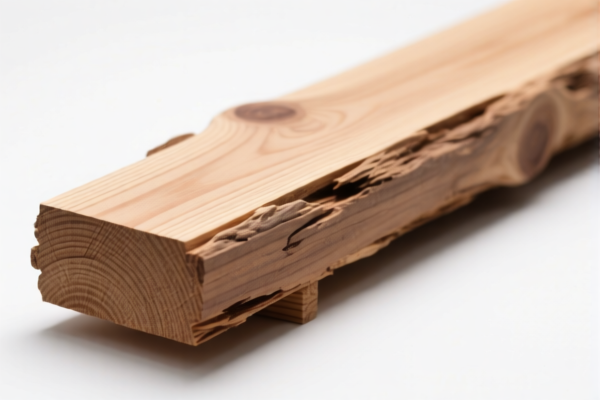
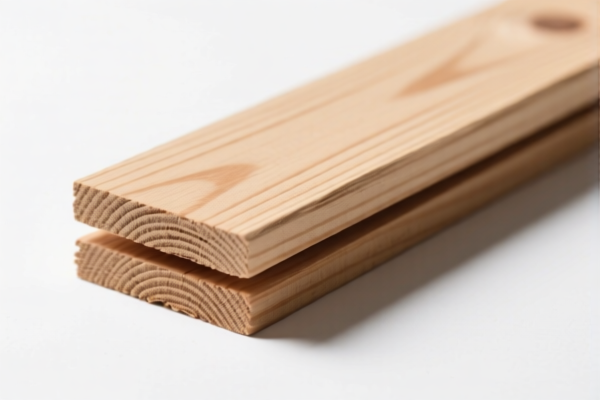
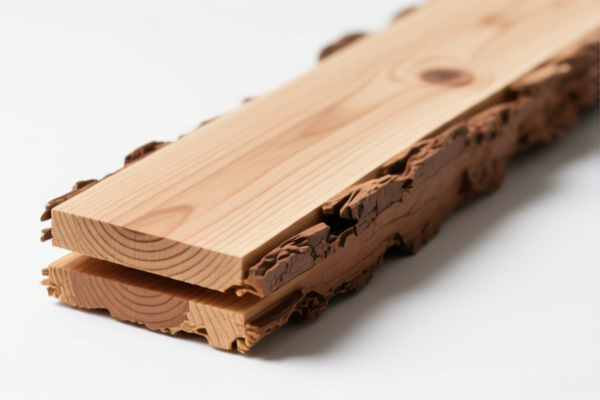
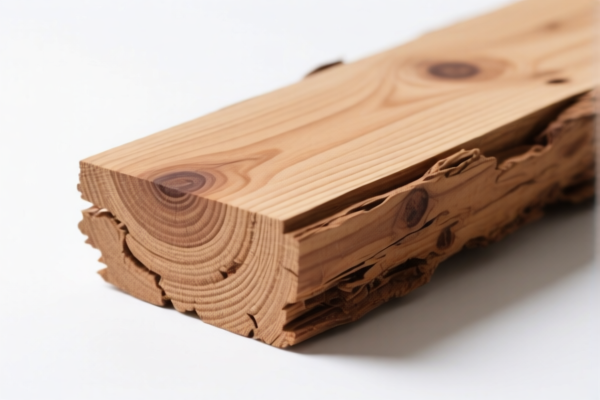
AI Analysis
🌳 Rough Paulownia Lumber (原木/粗木)
🌐 HS Code Reference & Customs Clearance Guide | 2026 Latest Tariff Analysis | Professional Clearance Strategy
📌 I. Product Definition & Classification: Understanding "Rough Paulownia Lumber"
Paulownia Lumber, often referred to as "Empress Wood," is a lightweight, softwood-like timber prized for its low density, resistance to warping, and ease of processing. In international trade, "Rough" indicates that the wood has been sawn or merely hewn, but not planed, tongued, grooved, or otherwise worked into specific profiles (like flooring or molding).
The classification depends heavily on the form of the lumber (logs vs. sawn timber) and whether it is classified as "fuel" or "structural/material."
⚠️ Key Distinction Point:
- If the material is in the form of Logs (round, unpeeled or peeled) intended for processing into planks later → Falls under 4403 or 4401 (if fuel).
- If the material is Sawn Rough Timber (planks/beams without finishing) → Falls under 4403 (if treated/wood type specific) or 4401 (if classified as generic wood waste/fuel).
- Paulownia is a specific hardwood species, but in rough form, it is often grouped under "Other" if not explicitly listed by species in certain subheadings, or matched to specific softwood-like categories depending on customs interpretation.
📦 II. HS Code Classification Details (2026 Latest Tariff Authority Comparison)
Based on the provided data, here are the exact matching HS Codes for Rough Paulownia Lumber:
| HS Code | Product Description | Application Scenario | Material/State Match |
|---|---|---|---|
4403.22.01.65 |
Rough Paulownia Logs/Timber (Specific Species Match) | Matches Paulownia type logs, peeled or debarked, rough state. | ✅ Best Fit for Paulownia logs |
4401.12.00.00 |
Wood in the form of logs, wood chips, or particles | Matches rough material consistent with "fuel wood" or generic log forms. | ✅ Generic Log/Fuel Match |
4401.11.00.00 |
Wood in the form of logs or wood chips | Matches rough material in log/block form for fuel. | ✅ Generic Log/Fuel Match |
4403.21.01.30 |
Other Rough Timber (Generic "Other" Category) | Matches rough timber when no specific species is indicated or falls into "Other" buckets. | ✅ Generic Rough Timber |
4403.96.01.23 |
Rough Timber of Other Hardwoods (Beech/Other Fallback) | Fallback category for rough hardwoods like Beech, applied by analogy if Paulownia is grouped with other light hardwoods. | ✅ Fallback/Analogy Match |
🔍 Key Reminder:
-4403.22.01.65is the most precise match for Paulownia logs if the customs system recognizes Paulownia under specific subheadings.
-4401codes are used if the lumber is declared as "rough wood" in a form typical of fuel or raw biomass, especially if it doesn't meet the specific structural timber criteria of 4403.
-4403codes are generally for wood that is treated or not treated, but not for fuel. Paulownia is often used for furniture/pallets, so 4403 is the primary target unless it's waste/fuel.
💰 III. 2026 Latest Tariff Rate Details (Including Additional Taxes & Policy Surcharges)
✅ Applicable Country: USA (US)
✅ Origin: China (CN)
✅ Effective Date: From November 10, 2025 onwards
🎯 1. 4403.22.01.65 —— Rough Paulownia Logs/Timber (Specific Species)
| Item | Content |
|---|---|
| Base Tariff Rate | 0% (ad valorem) |
| USITC Additional Tariff | +25% (Under USITC Footnote 9903.88.01 / Section 301) |
| IEEPA Additional Tariff | +10% (For China/HK products, effective Nov 10, 2025) |
| Total Tariff Rate | 35.0% |
| Tax Calculation | CIF Value × 35% |
| De Minimis Exemption Eligible? | ❌ No (deny_de_minimis) |
| Legal Basis Path | IEEPA:9903.01.25 → USITC:4403.22.01.65 → FOOTNOTE:9903.88.01 |
📌 Explanation:
- "USITC Additional Tariff 25%" comes from Section 301 of the Trade Act;
- "IEEPA 10%" is the additional tariff under the International Emergency Economic Powers Act for Chinese products;
- Total 35%, a high tariff for rough timber. Must be anticipated in cost structure!
🎯 2. 4401.12.00.00 & 4401.11.00.00 —— Wood in Log/Chip Form (Fuel/Generic)
| Item | Content |
|---|---|
| Base Tariff Rate | 0% |
| USITC Additional Tariff | +25% |
| IEEPA Additional Tariff | +10% |
| Total Tariff Rate | 35.0% |
| Tax Calculation | CIF × 35% |
| De Minimis Exemption Eligible? | ❌ No |
| Legal Basis Path | IEEPA:9903.01.24 → USITC:4401.12.00.00 → FOOTNOTE:9903.88.01 |
📌 Note:
- Same tax structure as above;
- Whether declared as "Paulownia logs" or "generic rough wood logs," if it falls under 4401 or 4403, the 35% total tariff applies for Chinese origin.
🎯 3. 4403.21.01.30 & 4403.96.01.23 —— Other/Rough Timber (Generic/Other Hardwoods)
| Item | Content |
|---|---|
| Base Tariff Rate | 0% |
| USITC Additional Tariff | +25% |
| IEEPA Additional Tariff | +10% |
| Total Tariff Rate | 35.0% |
| Tax Calculation | CIF × 35% |
| De Minimis Exemption Eligible? | ❌ No |
| Legal Basis Path | IEEPA:9903.01.25 → USITC:4403.96.01.23 → FOOTNOTE:9903.88.01 |
📌 Note:
- Even if misclassified or falling under "Other" categories, the 35% total tariff remains consistent for Chinese-origin rough wood imports under current US policy.
🛠️ IV. Customs Clearance Practical Advice (Battle-Tested Pitfall Guide)
✅ 1. Required Documentation Checklist (None Missing)
| Document | Mandatory | Explanation |
|---|---|---|
| ✅ Product Specification Sheet | ✔️ | Includes species (Paulownia), dimensions, moisture content, treatment status. |
| ✅ Phytosanitary Certificate | ✔️ | Crucial for wood products. Must be issued by origin country's plant protection agency. |
| ✅ Wood Species Declaration | ✔️ | Explicitly state "Paulownia" or "Paulownia spp." to avoid "Other" classification penalties. |
| ✅ Commercial Invoice | ✔️ | Clearly describe as "Rough Paulownia Lumber/Logs," not just "Wood." |
| ✅ Packing List | ✔️ | Detail net/gross weight, number of pieces, and pallets. |
| ✅ Fumigation Certificate | ✔️ | If required by destination or carrier (often required for ISPM 15 compliance). |
| ✅ Bill of Lading/Air Waybill | ✔️ | Standard shipping documents. |
✅ 2. Declaration Tips (Key Mantras)
🔥 "Species Clear, Rough Stated, Phyto Ready, Tariff Avoided!"
| Situation | Correct Declaration Method | Wrong Approach |
|---|---|---|
| Rough Paulownia Logs | 4403.22.01.65 "Rough Paulownia Logs, Unpeeled" |
Declaring as "Firewood" → Risk of fraud investigation |
| Sawn Rough Paulownia | 4403.22.01.65 or 4403.21.01.30 |
Declaring as "Finished Planks" → Wrong classification |
| Paulownia Chips/Waste | 4401.11.00.00 or 4401.12.00.00 |
Declaring as "Logs" → Mismatch in description |
| Unknown Hardwood Rough | 4403.96.01.23 |
Declaring as "Paulownia" falsely → Penalties for misdeclaration |
✅ 3. Special Cases Handling
| Situation | Handling Advice |
|---|---|
| ISPM 15 Compliance | Ensure all wood packaging (pallets/crates) is heat-treated and marked with IPPC logo. Non-compliant wood will be rejected. |
| Moisture Content | High moisture content may attract insects or cause mold. Declare accurately; customs may inspect for pest activity. |
| Treated vs. Untreated | If chemically treated, declare treatment method. If untreated, ensure phytosanitary certificate confirms no pests. |
| Mixed Species Shipment | If mixed with other woods, declare the primary species or all species. Mixing may complicate valuation and classification. |
🌍 V. Global Market Comparison for Rough Paulownia (2026 Latest)
| Country/Region | Recommended HS Code | Tariff (China Origin) | Certification Requirements | Remarks |
|---|---|---|---|---|
| 🇺🇸 USA | 4403.22.01.65 |
35% (25% Section 301 + 10% IEEPA) | Phytosanitary + ISPM 15 | High tariff cost; strict biosecurity. |
| 🇨🇳 China | 4403.22.01.65 |
0% (Import Duty) | N/A (Domestic) | N/A |
| 🇪🇺 EU | 4403 Category |
0% - 2.5% | FLEGT/EUTR Compliance | No major additional tariffs for Paulownia. |
| 🇬🇧 UK | 4403 Category |
0% - 2.5% | Post-Brexit Phytosanitary | Similar to EU post-Brexit rules. |
| 🇯🇵 Japan | 4403 Category |
0% - 5% | ISPM 15 | Strict on insect damage. |
📌 Conclusion:
- USA is the highest tariff market for Paulownia lumber from China due to 35% total duties.
- EU and Japan are more favorable, but have strict phytosanitary and wood packaging regulations.
- Cost Optimization: Consider sourcing Paulownia from non-China origins (e.g., Vietnam, Europe) for US entry to avoid the 35% tariff, if supply chain allows.
📌 VI. Common Mistakes & Pitfall Guide (Lessons Learned)
❌ Mistake 1: Declaring "Paulownia" as "Generic Wood"
👉 Consequence: May be assigned a higher general rate or flagged for inspection due to mismatched species data.
❌ Mistake 2: Ignoring Phytosanitary Certificate
👉 Consequence: Shipment rejected or destroyed by US CBP or USDA. Wood products are high-risk for invasive species.
❌ Mistake 3: Mislabeling "Rough" as "Finished"
👉 Consequence: Misclassification penalty. Rough wood has different tariff rates and inspection protocols than finished lumber.
❌ Mistake 4: Not declaring Moisture Content
👉 Consequence: May lead to disputes on valuation or quality claims. High moisture can cause mold, leading to rejection.
✅ Correct Practice:
"Rough Paulownia Logs, Unpeeled, Untreated, Phytosanitary Certified, Moisture Content <20%, ISPM 15 Pallets, HS Code 4403.22.01.65"
🎯 VII. Conclusion: Precise Declaration, Smoother Clearance, Cost Efficiency!
🎯 Remember the Mantra:
🔹 "Species Clear, Phytosanitary Ready, Rough Stated, Tariff Anticipated!"
🔹 "35% Total Duty for US Paulownia, Plan Ahead, Avoid Delays!"
📌 Tips:
- If your Paulownia lumber is originated from Vietnam, Europe, or North America, it may qualify for lower or zero additional tariffs under USMCA or general rates (check current FTAs).
- Recommend Applying for Advance Ruling for complex mixed-wood shipments.
- Partner with a seasoned customs broker experienced in wood products to handle phytosanitary inspections.
📣 Immediate Action:
📞 Contact a professional customs broker + Provide species certificate + Apply for phytosanitary inspection
🚀 Let your Paulownia lumber clear customs smoothly, reduce costs, and maximize profits!
✨ Professional Clearance Starts with Accurate Classification!
💼 Every cent of your cost deserves precise calculation!
Customer Reviews
About HS Code Classification
The Harmonized System (HS) is an internationally standardized nomenclature developed by the World Customs Organization (WCO) to classify traded products. Over 200 countries use the HS system as the basis for customs tariffs, trade statistics, and import/export regulations.
Each HS code follows a hierarchical structure:
- Chapter (2 digits) — Broad category of goods (e.g., Chapter 84: Machinery and Mechanical Appliances)
- Heading (4 digits) — More specific grouping within the chapter
- Subheading (6 digits) — Internationally standardized breakdown, used by all WCO member countries
- National subdivisions (8-10 digits) — Country-specific extensions for further classification, such as US HTSUS 10-digit codes
Correct HS code classification is essential for smooth customs clearance, accurate duty payment, and compliance with trade regulations. Misclassification can lead to customs delays, overpayment of duties, or penalties.
When importing from CN to US, the applicable tariff rates may include:
- Most-Favored-Nation (MFN) rate — The standard duty rate applied to WTO members
- General rate — Applied to countries without trade agreements
- Trade remedy duties — Additional tariffs such as Section 301 (anti-dumping), Section 232 (national security), or countervailing duties
The information provided on this page is for reference purposes only. For official classification, please consult with your local customs authority or a licensed customs broker.