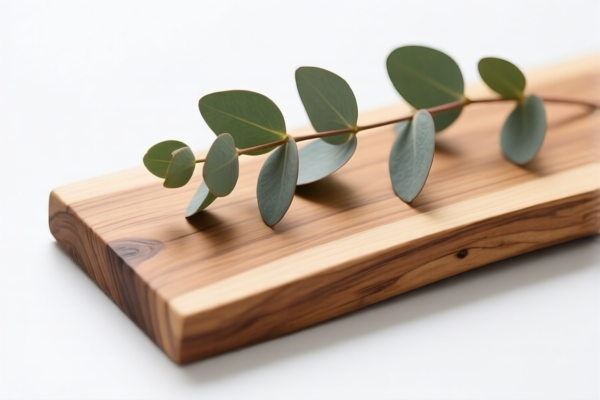
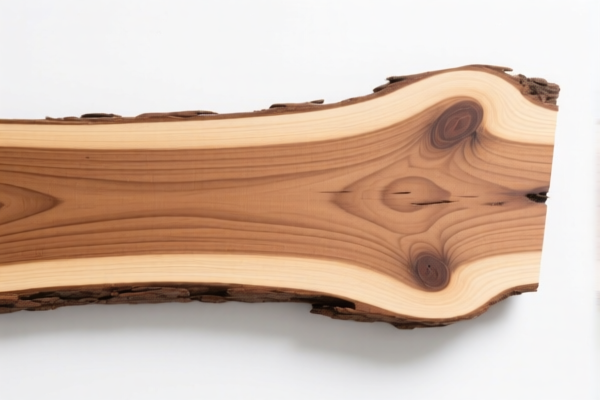
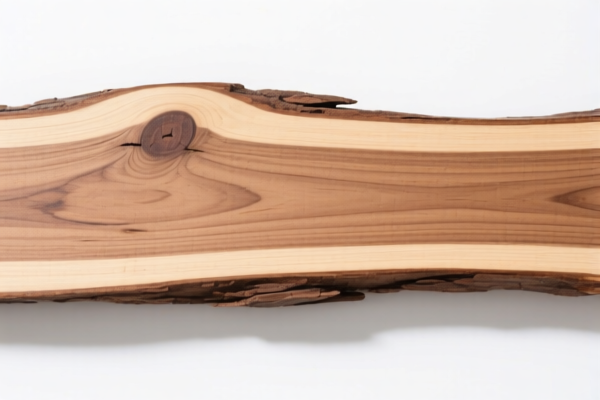
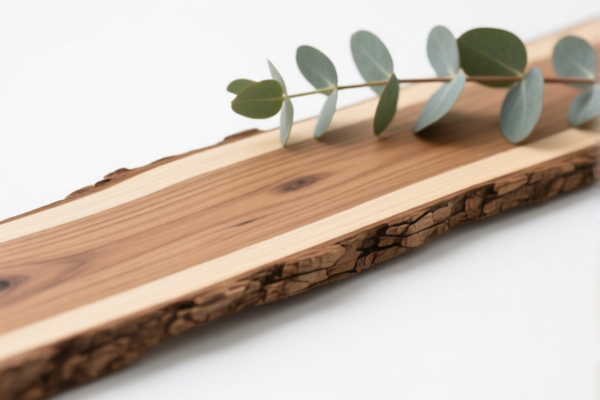
rough square eucalyptus wood
CN → US| HS Code | Tariff Rate | Origin | Destination | Doc |
|---|---|---|---|---|
| 4403980028 | 35.0% | CN | US | Official Doc |
| 4403980023 | 35.0% | CN | US | Official Doc |
Product Images
AI Analysis
🪵 Rough Square Eucalyptus Wood (Unprocessed Timber)
🌐 HS Code Reference & Customs Clearance Guide | 2026 Latest Tariff Analysis | Professional Entry Strategy
📌 I. Product Definition & Classification: Understanding "Rough Eucalyptus Wood"
Eucalyptus Wood (Rough Square), scientifically known as Eucalyptus spp., falls under the category of "Wood in the rough, whether or not stripped of bark or sap-wood, or roughly squared." In international trade, this raw material is primarily used for:
- Construction & Structural Use: Poles, piles, and posts for fencing, landscaping, or structural supports.
- Raw Material for Processing: Pulpwood for paper manufacturing or raw timber for further sawing into planks.
⚠️ Key Distinction Point:
- If the wood is squared off (even roughly) but retains its bark or sapwood, and is intended for structural posts/poles → Classified under 4403.98.00.28.
- If the wood is in rough form (not squared) or is specifically designated as pulpwood (intended for chemical/mechanical pulping) → Classified under 4403.98.00.23.
- Crucial Note: The term "Rough Square" in the user input implies it has been squared but not planed or finished. However, HS codes often distinguish based on the primary intended use (Poles/Piles vs. Pulpwood).
📦 II. HS Code Classification Details (2026 Latest Tariff Authority)
| HS Code | Product Description | Application Scenario | Key Feature |
|---|---|---|---|
4403.98.00.28 |
Of eucalyptus spp.: Poles, piles and posts | Fencing, landscaping posts, construction piles, rough-squared timber for structural use | ✅ Squared/Structural Use |
4403.98.00.23 |
Of eucalyptus spp.: Pulpwood | Paper mills, biomass energy, raw material for pulp processing | ✅ Raw/Chemical Processing Use |
🔍 Important Reminder:
- "Rough Square" typically implies a shape suitable for posts/poles, leaning towards 4403.98.00.28.
- If the wood is intended for pulp, even if slightly squared, it may fall under 4403.98.00.23.
- Do not mix classifications: Misdeclaring pulpwood as poles (or vice versa) can lead to customs delays or penalties.
💰 III. 2026 Latest Tariff Rate Breakdown (Including Surtaxes)
✅ Applicable Country: United States (US)
✅ Origin: China (CN) (Note: Tariff rates vary by country of origin; this analysis assumes Chinese origin for surtax applicability)
✅ Effective Time: Current trade policy (Subject to 301 Section & IEEPA regulations)
🎯 1. 4403.98.00.28 —— Eucalyptus Wood: Poles, Piles, and Posts
| Item | Content |
|---|---|
| Base Tariff Rate | 0.0% (ad valorem) |
| Additional Surcharge | +25.0% (Section 301 Tariff) |
| Total Tax Rate | 25.0% |
| Tax Calculation | CIF Value × 25% |
| De Minimis Exemption | ❌ Not Applicable (Subject to full assessment) |
| Legal Basis Path | HTSUS: 4403.98.00.28 → USITC Footnote: Section 301 |
📌 Explanation:
- Although the base tariff for many wood products is 0%, Section 301 tariffs impose an additional 25% on many Chinese-origin goods, including certain wood products.
- This is a high-cost import scenario compared to non-China origins.
🎯 2. 4403.98.00.23 —— Eucalyptus Wood: Pulpwood
| Item | Content |
|---|---|
| Base Tariff Rate | 0.0% (ad valorem) |
| Additional Surcharge | +25.0% (Section 301 Tariff) |
| Total Tax Rate | 25.0% |
| Tax Calculation | CIF Value × 25% |
| De Minimis Exemption | ❌ Not Applicable |
| Legal Basis Path | HTSUS: 4403.98.00.23 → USITC Footnote: Section 301 |
📌 Note:
- Both subheadings carry the same 25% total tax rate under current US-China trade policies.
- The distinction lies in the end-use description during customs declaration, not the tax burden.
🛠️ IV. Customs Clearance Practical Advice (Pitfall Avoidance Guide)
✅ 1. Required Documentation Checklist
| Document | Must Provide | Description |
|---|---|---|
| ✅ Commercial Invoice | ✔️ | Clearly state "Eucalyptus Wood, Rough Square, For [Poles/Pulp]" |
| ✅ Packing List | ✔️ | Detail dimensions, quantity, weight, and packaging type |
| ✅ Phytosanitary Certificate | ✔️ | Mandatory for wood products to prevent pest introduction |
| ✅ Wood Treatment Certificate | ✔️ | 证明木材经过熏蒸或热处理(如适用) |
| ✅ Certificate of Origin | ✔️ | To verify country of origin (critical for surtax application) |
| ✅ Bill of Lading | ✔️ | Standard shipping document |
✅ 2. Declaration Tips (Key Mantras)
🔥 "Shape & Use Determine Code, Phytosanitary is King!"
| Scenario | Correct Declaration | Wrong Practice |
|---|---|---|
| Wood squared for fencing/posts | 4403.98.00.28 with "Poles, Piles, Posts" |
Declaring as "Pulpwood" → Potential misclassification |
| Wood for paper pulp | 4403.98.00.23 with "Pulpwood" |
Declaring as "Poles" → Risk of rejection if end-use doesn't match |
| Wood with bark attached | Must specify "Bark Attached" or "Bark Removed" | Hiding bark status → Customs may reclassify and fine |
| Roughly Squared | Use term "Roughly Squared" in description | Using "Planed" or "Finished" → Wrong HS code entirely |
✅ 3. Special Handling for Wood Products
| Issue | Handling Advice |
|---|---|
| ISPM 15 Compliance | Ensure wood packaging (pallets, crates) is heat-treated and marked with ISPM 15 logo. Raw wood itself may require phytosanitary measures. |
| Fungi/Pest Control | Provide valid Phytosanitary Certificate from the country of origin. US Customs and Border Protection (CBP) strictly enforces this. |
| Origin Verification | Ensure the Certificate of Origin matches the actual country. If sourced from Vietnam/Thailand, surtaxes may not apply (check latest trade agreements). |
| Value Assessment | Declare accurate CIF value. Wood tariffs are ad valorem; under-declaring value triggers audits and penalties. |
🌍 V. Global Market Comparison (2026 Update)
| Country/Region | Recommended HS Code | Tariff (China Origin) | Certification Required | Notes |
|---|---|---|---|---|
| 🇺🇸 USA | 4403.98.00.28 / .23 |
25.0% (Total) | Phytosanitary + ISPM 15 | High surtax due to Section 301 |
| 🇨🇳 China | 4403.98.00.28 / .23 |
Varies (Import Duty) | Phytosanitary | Lower surtax, but import duties may apply |
| 🇪🇺 EU | 4403.98.00.28 / .23 |
0% - 6.5% | FLEGT / Due Diligence | Strict timber regulations (EUTR) |
| 🇦🇺 Australia | 4403.98.00.28 / .23 |
Varies | Biosecurity Permit | Very strict biosecurity rules |
📌 Conclusion:
- The US market imposes a 25% additional tariff on Chinese-origin eucalyptus wood.
- Phytosanitary compliance is the biggest hurdle. Failure to provide valid certificates will result in cargo rejection or destruction.
- Origin Diversification: Consider sourcing from non-China origins (e.g., Brazil, Australia) to avoid the 25% surtax if market access allows.
📌 VI. Common Errors & Pitfalls (Lessons Learned)
❌ Error 1: Missing Phytosanitary Certificate
👉 Consequence: Cargo held at port, potential destruction → Loss of cargo value!
❌ Error 2: Misdeclaring Pulpwood as Poles
👉 Consequence: Customs may suspect undervaluation or false declaration → Audits and fines
❌ Error 3: Ignoring Section 301 Surtax
👉 Consequence: Underpaying duties → Back taxes + Penalties
❌ Error 4: Using vague descriptions like "Wood"
👉 Consequence: Customs may assign a higher default duty rate → Unnecessary cost
✅ Correct Practice:
"Eucalyptus Wood, Roughly Squared, Stripped of Bark, For Use as Landscape Poles, Origin: China, Phytosanitary Cert No: XXX"
🎯 VII. Conclusion: Precision in Classification, Savings in Costs!
🎯 Remember the Mantra:
🔹 "Rough Square, Use Determines Code; 25% Tax Hits Hard, Origin Checks Well."
🔹 "Phytosanitary is Key, No Cert = No Entry, Avoid Delays, Be Ready!"
📌 Pro Tip:
- If your wood is sourced from non-China countries (e.g., Brazil, Indonesia), check for FTAs (Free Trade Agreements) that may reduce or eliminate the 25% surtax.
- Always apply for a Binding Ruling from US Customs if unsure about classification, to secure clarity and avoid post-import audits.
📣 Take Action Now:
📞 Consult a Licensed Customs Broker + Ensure Phytosanitary Docs are Ready
🚀 Smooth Clearance, Timely Delivery, Profit Maximization!
✨ Professional Clearance Starts with Accurate Classification!
💼 Every Percent of Tariff Matters in Wood Trade!
Customer Reviews
About HS Code Classification
The Harmonized System (HS) is an internationally standardized nomenclature developed by the World Customs Organization (WCO) to classify traded products. Over 200 countries use the HS system as the basis for customs tariffs, trade statistics, and import/export regulations.
Each HS code follows a hierarchical structure:
- Chapter (2 digits) — Broad category of goods (e.g., Chapter 84: Machinery and Mechanical Appliances)
- Heading (4 digits) — More specific grouping within the chapter
- Subheading (6 digits) — Internationally standardized breakdown, used by all WCO member countries
- National subdivisions (8-10 digits) — Country-specific extensions for further classification, such as US HTSUS 10-digit codes
Correct HS code classification is essential for smooth customs clearance, accurate duty payment, and compliance with trade regulations. Misclassification can lead to customs delays, overpayment of duties, or penalties.
When importing from CN to US, the applicable tariff rates may include:
- Most-Favored-Nation (MFN) rate — The standard duty rate applied to WTO members
- General rate — Applied to countries without trade agreements
- Trade remedy duties — Additional tariffs such as Section 301 (anti-dumping), Section 232 (national security), or countervailing duties
The information provided on this page is for reference purposes only. For official classification, please consult with your local customs authority or a licensed customs broker.