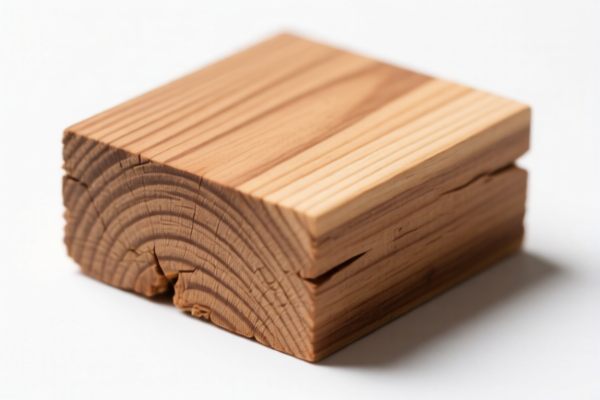
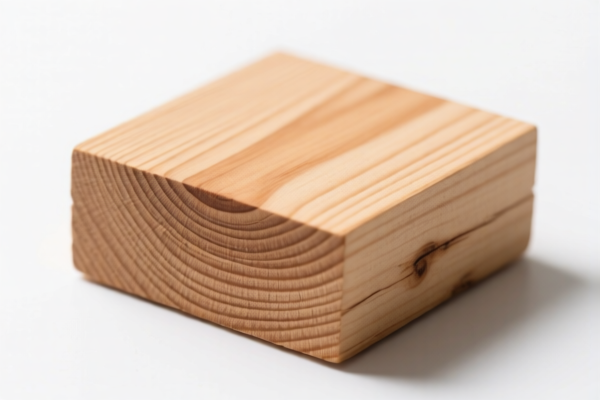
rough square pine wood
CN → US| HS Code | Tariff Rate | Origin | Destination | Doc |
|---|---|---|---|---|
| 4401110000 | 35.0% | CN | US | Official Doc |
| 4403220165 | 35.0% | CN | US | Official Doc |
| 4403210165 | 35.0% | CN | US | Official Doc |
| 4401210000 | 35.0% | CN | US | Official Doc |
| 4407110052 | 35.0% | CN | US | Official Doc |
Product Images


AI Analysis
🌲 Rough Square Pine Wood (Timber & Fuel Wood)
🌐 HS Code Reference & Customs Clearance Guide | 2026 Latest Tariff Full Analysis | Professional Clearance Strategy
📌 I. Product Definition & Classification: Do You Really Understand "Rough Square Pine"?
"Rough Square Pine Wood" is a broad category within the timber trade. In international trade, it is primarily classified based on its physical form and intended use. The key distinction lies in whether the wood is processed for construction/manufacturing or sold as raw fuel/raw material.
Raw Pine Wood (Fuel/Industrial Raw Material): Unprocessed logs, branches, or wood in a form primarily used for fuel or further industrial chipping. → Classified under Chapter 44.01.
Sawn Wood / Roughly Shaped Timber: Logs that have been debarked, roughly squared, or cut into rectangular shapes, still considered "rough" but intended for further processing (e.g., plywood, furniture). → Classified under Chapter 44.03.
⚠️ Key Distinction Point:
- If the wood is in the form of logs, chips, or excelsior primarily for fuel or pulp → Goes to 4401.xx.
- If the wood is in the form of logs, roughly squared beams, or rough planks (whether or not peeled/surface-treated) → Goes to 4403.xx.
- Note: All HS codes below are subject to significant US Import Tariffs (25% Section 301 + 10% Section 122/IEEPA equivalent).
📦 II. HS Code Classification Details (2026 Latest Tariff Authority Comparison)
| HS Code | Product Description | Applicable Scenario | Is it "Rough"? |
|---|---|---|---|
4401.11.00.00 |
Fuel Wood: Pine, roughly chopped or broken into pieces, or in logs. | Firewood, industrial fuel, raw biomass energy. | ✅ Yes (Fuel form) |
4401.21.00.00 |
Pine (Non-Fuel): Other pine, in the form of logs, chips, excelsior, or waste. | Raw material for pulp, particleboard, or other non-structural uses. | ✅ Yes (Raw form) |
4403.21.01.65 |
Rough Pine Timber: Roughly shaped pine (e.g., roughly squared logs/beams), whether or not peeled or edge-cut. | Construction framing, heavy timber, raw structural lumber. | ✅ Yes (Rough Structural) |
4403.22.01.65 |
Rough Pine Timber: Specifically for Pine species in log form, whether or not peeled or edge-cut. | General rough pine logs, debarked or partially processed. | ✅ Yes (Log Form) |
4407.11.00.52 |
Planed/Pushed Wood: Other pine, planed, tongued, grooved, finger-jointed, end-joined, or otherwise assembled. | Prefabricated wooden components, slightly processed timber ready for assembly. | ⚠️ Partially (Processed but "Pine" family) |
🔍 Critical Reminder:
- "Rough Square" typically implies 4403.21.01.65 or 4403.22.01.65 if it’s structural timber.
- If it’s simply "pine wood chips" or "fuel," it falls under 4401.
- 4407.11.00.52 applies if the wood has been planed or assembled, even if still considered "pine."
💰 III. 2026 Latest Tariff Rate Breakdown (Including Additional Taxes & Policy Surcharges)
✅ Applicable Country: United States (US)
✅ Origin: China (CN)
✅ Effective Date: November 10, 2025 onwards (including subsequent imports)
🎯 1. 4401.11.00.00 & 4401.21.00.00 (Fuel & Raw Pine Wood)
| Item | Details |
|---|---|
| Base Tariff Rate | 0% (ad valorem) |
| Section 301 Surcharge | +25% (USITC Footnote) |
| Section 122/IEEPA Surcharge | +10% (Targeting Chinese Products) |
| Total Tax Rate | 35.0% |
| Tax Calculation | CIF Value × 35% |
| De Minimis Exemption? | ❌ No (Not eligible for de minimis; high risk of seizure if undervalued) |
| Legal Basis Path | USITC:4401.11.00.00 → 301:25% → 122/IEEPA:10% |
📌 Explanation:
- "0% Base": Under normal MFN treatment, raw wood often has low base duties.
- "+25% Section 301": Standard tariff on Chinese timber products.
- "+10% Section 122": Additional levy on Chinese timber, especially logs and rough-sawn wood.
- Total 35%: This is a high-cost item. Importers must budget accordingly.
🎯 2. 4403.21.01.65 & 4403.22.01.65 (Rough Structural Pine Timber)
| Item | Details |
|---|---|
| Base Tariff Rate | 0% (ad valorem) |
| Section 301 Surcharge | +25% |
| Section 122/IEEPA Surcharge | +10% |
| Total Tax Rate | 35.0% |
| Tax Calculation | CIF Value × 35% |
| De Minimis Exemption? | ❌ No |
| Legal Basis Path | USITC:4403.21.01.65 → 301:25% → 122/IEEPA:10% |
📌 Note:
- Even though these are "structural" timbers, they fall under the same 35% total tariff as raw pine.
- "Roughly Shaped" (e.g., squared logs) does not qualify for lower processing tariffs due to trade restrictions.
🎯 3. 4407.11.00.52 (Processed/Assembled Pine Wood)
| Item | Details |
|---|---|
| Base Tariff Rate | 0% (ad valorem) |
| Section 301 Surcharge | +25% |
| Section 122/IEEPA Surcharge | +10% |
| Total Tax Rate | 35.0% |
| Tax Calculation | CIF Value × 35% |
| De Minimis Exemption? | ❌ No |
| Legal Basis Path | USITC:4407.11.00.52 → 301:25% → 122/IEEPA:10% |
📌 Warning:
- Even if the wood is planed, tongued, or assembled, the 35% total tariff still applies.
- Do not assume that processing reduces the tariff rate significantly under current US-China trade terms.
🛠️ IV. Customs Clearance Practical Advice (Battle-Tested Pitfall Guide)
✅ 1. Required Documentation Checklist (Non-Negotiable)
| Document | Mandatory? | Notes |
|---|---|---|
| ✅ Phytosanitary Certificate | ✔️ | Critical. Issued by China’s GACC. Must confirm wood is free from pests (e.g., pine beetles). |
| ✅ ISPM 15 Marking | ✔️ | Heat treatment (HT) or Fumigation (MB) mark is mandatory for rough wood. No mark = Rejection. |
| ✅ Commercial Invoice | ✔️ | Must clearly state: "Rough Pine Wood," HS Code, Value, Quantity. |
| ✅ Packing List | ✔️ | Detail dimensions, weight, and packaging type. |
| ✅ Bill of Lading | ✔️ | Clean on-board B/L. |
| ✅ Fumigation/Heat Treatment Certificate | ✔️ | Proof of ISPM 15 compliance. |
📌 Key Point:
- ISPM 15 compliance is the #1 clearance hurdle.
- If wood is found without proper marking or with live pests, it will be destroyed or returned at the importer’s expense.
✅ 2. Declaration Tips (Critical Mnemonic)
🔥 “Mark Clear, Pest Free, HS Precise, Tax 35%!”
| Situation | Correct Declaration | Wrong Practice |
|---|---|---|
| Rough Square Logs | 4403.21.01.65 or 4403.22.01.65 |
Misdeclare as "Fuel Wood" (4401) to save tax → Penalty! |
| Pine Chips/Waste | 4401.21.00.00 |
Misdeclare as "Structural Timber" → Overpay Tax |
| Planed/Assembled Pine | 4407.11.00.52 |
Misdeclare as "Raw Logs" → Incorrect Classification |
| No ISPM 15 Mark | N/A (Do Not Import) | Attempt to clear without mark → Seizure/Deportation |
✅ 3. Special Cases Handling
| Situation | Handling Advice |
|---|---|
| OEM Custom Shapes | Provide design drawings + specs. Ensure HS code reflects "roughly shaped" vs. "processed." |
| Mixed Shipments (Pine + Other) | Declare separately. Do not mix pine (35% tariff) with non-tariffed wood if possible, to avoid complex audits. |
| Wood with Bark | Clearly state "Debarked" or "Unbarked" on invoice. Some ports require additional inspection if bark is present. |
| High-Value Timber | Consider Advance Ruling from CBP to confirm HS code and tariff liability before shipment. |
🌍 V. Global Market Clearance Comparison (2026 Latest)
| Country/Region | Recommended HS Code | Tariff Rate | Certification | Notes |
|---|---|---|---|---|
| 🇺🇸 United States | 4403.21.01.65 / 4401.11.00.00 |
35% (25% + 10%) | ISPM 15 + GACC Cert | Highest Tariff Risk. Strict Phytosanitary checks. |
| 🇨🇳 China | 4403.21.00.00 |
0-5% | GACC Import Permit | Low tariff, but strict import quota. |
| 🇪🇺 European Union | 4403.21.00.00 |
0% (if FSC Certified) | EUTR + FSC | No additional tariffs. Focus on legal sourcing proof. |
| 🇯🇵 Japan | 4403.21.00.00 |
0-2% | IPPC Mark | Strict phytosanitary inspection. |
| 🇬🇧 United Kingdom | 4403.21.00.00 |
0-5% | UK Forestry Commission | Post-Brexit rules apply. |
📌 Conclusion:
- US is the most expensive market for Chinese pine wood due to 35% total tariff.
- EU and Japan are more favorable tariff-wise, but phytosanitary standards are equally strict.
- Strategy: If targeting the US, consider tariff engineering (e.g., processing into non-pine species if possible, or sourcing from non-China origins).
📌 VI. Common Errors & Pitfall Guide (Lessons Learned)
❌ Error 1: Assuming "Rough" means low tariff.
👉 Result: 35% tax hits hard → Profit Margin Erosion.
❌ Error 2: Shipping wood without ISPM 15 Mark.
👉 Result: Cargo Destroyed at US Port of Entry. Cost: High + Delay.
❌ Error 3: Misdeclaring "Rough Square Pine" as "Fuel Wood" (4401) to use a different HS.
👉 Result: Customs Audit. If found to be structural timber, back taxes + penalties.
❌ Error 4: Ignoring the 10% Section 122 Surcharge.
👉 Result: Underestimating landed cost → Cash Flow Crisis.
✅ Correct Action:
"Rough Square Pine Wood, Heat-Treated, ISPM 15 Marked, HS: 4403.21.01.65, Origin: China, Value: $X, Tariff: 35%."
🎯 VII. Conclusion: Precise Classification, Cost Control, Smooth Clearance!
🎯 Remember the Mantra:
🔹 "ISPM 15 is King, HS Code is Queen, 35% Tax is the Reality!"
🔹 "Don't guess the HS, don't skip the mark, or face the port authority's wrath!"
📌 Pro Tip:
- For US imports, consider Bonded Warehouses if immediate tax payment is challenging, but note that tariff liability remains.
- Pre-clearance Consultation: Engage a US customs broker before shipment to verify ISPM 15 compliance and HS code accuracy.
- Diversify Origins: If possible, source pine from Vietnam, Canada, or Russia (where applicable) to avoid China-specific 35% tariffs.
📣 Immediate Action:
📞 Contact a Licensed US Customs Broker + Provide Phytosanitary Certificate + Confirm ISPM 15 Marking
🚀 Ensure your pine wood, clears smoothly, avoids delays, and protects your margins!
✨ Professional Customs Clearance Starts with Accurate Classification!
💼 Every percentage point of tax counts!
Customer Reviews
About HS Code Classification
The Harmonized System (HS) is an internationally standardized nomenclature developed by the World Customs Organization (WCO) to classify traded products. Over 200 countries use the HS system as the basis for customs tariffs, trade statistics, and import/export regulations.
Each HS code follows a hierarchical structure:
- Chapter (2 digits) — Broad category of goods (e.g., Chapter 84: Machinery and Mechanical Appliances)
- Heading (4 digits) — More specific grouping within the chapter
- Subheading (6 digits) — Internationally standardized breakdown, used by all WCO member countries
- National subdivisions (8-10 digits) — Country-specific extensions for further classification, such as US HTSUS 10-digit codes
Correct HS code classification is essential for smooth customs clearance, accurate duty payment, and compliance with trade regulations. Misclassification can lead to customs delays, overpayment of duties, or penalties.
When importing from CN to US, the applicable tariff rates may include:
- Most-Favored-Nation (MFN) rate — The standard duty rate applied to WTO members
- General rate — Applied to countries without trade agreements
- Trade remedy duties — Additional tariffs such as Section 301 (anti-dumping), Section 232 (national security), or countervailing duties
The information provided on this page is for reference purposes only. For official classification, please consult with your local customs authority or a licensed customs broker.