rough square rubber construction grade
CN → US| HS Code | Tariff Rate | Origin | Destination | Doc |
|---|---|---|---|---|
| 4016996050 | 37.5% | CN | US | Official Doc |
| 4016990300 | 38.0% | CN | US | Official Doc |
Product Images
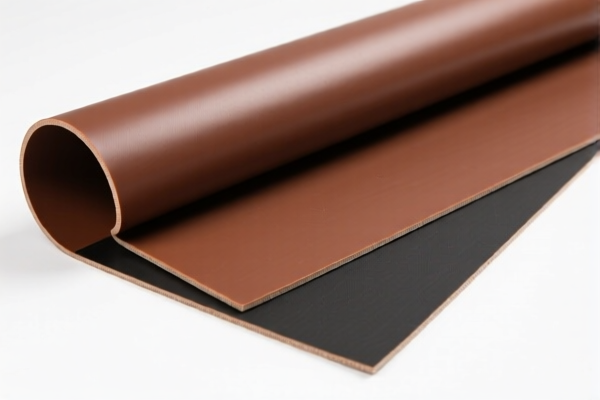
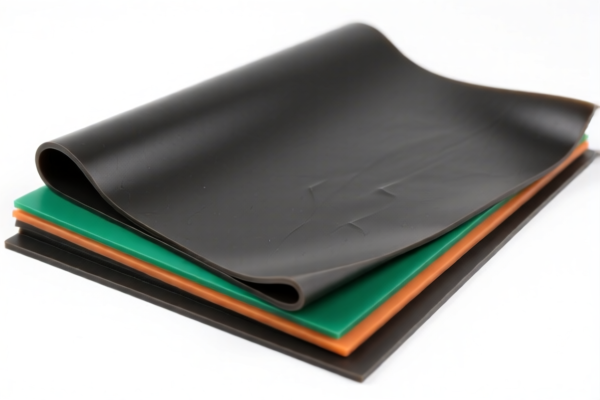


AI Analysis
🛡️ Rough Square Rubber: Construction Grade (Industrial Rubber Mats/Blocks)
🌐 HS Code Reference & Customs Clearance Guide | 2026 Latest Tariff Analysis | Professional Compliance Strategy
📌 I. Product Definition & Classification: What is "Rough Square Rubber"?
"Rough Square Rubber" in the construction industry typically refers to industrial rubber mats, pavers, anti-vibration pads, or heavy-duty flooring components. These are manufactured from vulcanized rubber (hardened via sulfur and heat) but are not "hard rubber" (ebonite/platonic rubber used for electrical insulation or mouthpieces).
In international trade, the critical distinction lies in: 1. Material State: It is vulcanized rubber (elastic, shock-absorbing) but not hard rubber (rigid, brittle). 2. Form: It is a shaped article (square blocks, mats, pads) rather than a raw sheet or tubing. 3. Specific Use Case: If these squares are specifically containers/packing materials (e.g., rubber pallets, protective corner blocks for shipping), they fall under a specific subheading. If they are general construction/installation products (flooring, dampers), they fall under "Other."
⚠️ Critical Distinction:
- If the square rubber acts as a container/packing unit (e.g., a reusable rubber pallet or a protective box insert for merchandise) → HS 4016.99.03.00
- If the square rubber is a general construction component (e.g., floor mat, vibration isolator, gasket, shim) → HS 4016.99.60.50
📦 II. HS Code Classification Details (2026 Latest Tariff Authority)
Based on your input, the relevant HS Codes are:
| HS Code | Product Description | Application Scenario | Key Feature |
|---|---|---|---|
4016.99.60.50 |
Other articles of vulcanized rubber other than hard rubber: Other: Other: Other: Other: Other | General construction rubber parts, mats, anti-slip pads, dampers, seals | General Purpose. No specific packing function. |
4016.99.03.00 |
Other articles of vulcanized rubber other than hard rubber: Other: Other: Containers, with or without their closures, of a kind used for the packing, transporting or marketing of merchandise | Rubber pallets, protective corner blocks for shipping, reusable rubber shipping containers | Packing/Transport Function. Used to package or transport goods. |
🔍 Key Reminder:
- Check the Function: If the "square rubber" is used to hold or protect merchandise during shipping (e.g., a rubber box frame), use 03.00.
- Check the Form: If it is simply a flooring tile, wall pad, or machine base pad, use 60.50.
- Do Not Misclassify: Do not classify under "Hard Rubber" (4016.91) unless the material is rigid ebonite. Most construction rubbers are vulcanized soft/rigid elastomers, fitting 4016.99.
💰 III. 2026 Latest Tariff Rate Details (Detailed Tax Breakdown)
✅ Applicable Region: United States (US)
✅ Origin: China (CN)
✅ Effective Date: 2025 onwards (Subject to current trade policies)
🎯 1. 4016.99.60.50 —— Other Rubber Articles (General Construction Grade)
| Item | Content |
|---|---|
| Base Tariff Rate | 0.0% (Ad Valorem) |
| Section 301 Additional Duty | 0.0% |
| Total Tax Rate | 0.0% |
| Tax Calculation | CIF Value × 0% = $0 |
| De Minimis Eligibility | ✅ Yes (Generally eligible if value < $800, subject to carrier policy) |
| Legal Basis Path | HTSUS:4016.99.60.50 → Section 301 List 4 (Exempted items often include general rubber goods not specified otherwise) |
📌 Explanation:
- This code generally benefits from zero tariffs in the current trade environment for most general-purpose vulcanized rubber articles.
- No 301 Tariffs: Unlike electronics or steel, many general rubber components are not targeted by aggressive Section 301 tariffs.
- Cost Advantage: This is a low-cost classification for imports, offering a significant competitive edge.
🎯 2. 4016.99.03.00 —— Rubber Containers/Packing Articles
| Item | Content |
|---|---|
| Base Tariff Rate | 0.0% (Ad Valorem) |
| Section 301 Additional Duty | 0.0% |
| Total Tax Rate | 0.0% |
| Tax Calculation | CIF Value × 0% = $0 |
| De Minimis Eligibility | ✅ Yes (Subject to carrier policy) |
| Legal Basis Path | HTSUS:4016.99.03.00 → Section 301 List 4 |
📌 Explanation:
- Rubber packaging aids (like reusable rubber pallets or protective blocks) are also classified at 0.0%.
- Strategic Note: If your product can be argued as a "packing/transport container" (e.g., heavy-duty rubber corner protectors), this code is equally tax-free. However, customs may scrutinize this if the item is clearly a floor mat. Be consistent in description.🔍 Important Policy Update:
- No IEEPA or 232 Tariffs apply to these rubber codes.
- No Anti-Dumping Duties (AD/CVD) are typically applied to general vulcanized rubber articles unless specifically listed (e.g., certain tires or specific industrial rubber compounds). Verify if your specific compound/form is under AD/CVD.
🛠️ IV. Customs Clearance Practical Advice (Battle-Tested Guide)
✅ 1. Documentation Checklist (Non-Negotiable)
| Document | Required | Purpose |
|---|---|---|
| ✅ Product Specification Sheet | ✔️ | Must state: "Vulcanized Rubber, Non-Hard Rubber," material composition (e.g., SBR, NBR, EPDM), and durometer (hardness). |
| ✅ Commercial Invoice | ✔️ | Must clearly state: "Vulcanized Rubber Square Mats/Blocks for Construction Use" or "Rubber Packing Containers." Avoid vague terms like "Rubber Piece." |
| ✅ Packing List | ✔️ | Detail weight, dimensions, and quantity. |
| ✅ Photo of Product & Label | ✔️ | Show the "rough" surface texture and square shape. Helps Customs verify it is not "hard rubber" or a tire. |
| ✅ Material Safety Data Sheet (MSDS) | Optional but Recommended | Proves no hazardous substances; useful for customs and port health checks. |
| ✅ Certificate of Origin (CO) | ✔️ | To prove origin (if claiming preferential treatment elsewhere, though US rate is 0% regardless for most). |
✅ 2. Declaration Best Practices (Key Tips)
🔥 "Describe the Function, Not Just the Shape!"
| Scenario | Correct Declaration | Wrong Declaration | Risk |
|---|---|---|---|
| General Construction Mats | "Vulcanized Rubber Square Mats, Construction Grade, for Floor Padding" | "Rubber Blocks" or "Miscellaneous Rubber" | High risk of inspection for incorrect classification. |
| Shipping Protection | "Rubber Containers/Packing Aids, Used for Transport Protection" | "Rubber Toys" or "Household Goods" | Misclassification leads to wrong duty rates or penalties. |
| Material Specificity | "Made of SBR Vulcanized Rubber, Non-Hard" | "Plastic Rubber" or "Hard Rubber" | "Hard Rubber" has different duties; "Plastic" may trigger plastic tariffs. |
✅ 3. Special Considerations
| Case | Handling Advice |
|---|---|
| Mixed Shipment | If rubber squares are mixed with plastic or metal parts, declare them separately by HS Code. Do not lump into one generic line. |
| Surface Treatment | If the "rough" surface is coated with another material (e.g., concrete, adhesive), the classification may change. Keep it pure rubber if possible. |
| Customs Examination | Customs may take a sample. Ensure the sample matches the declared "vulcanized, non-hard" characteristic. |
| Anti-Dumping Check | While rare for general rubber, verify if the specific compound is under AD/CVD. If unsure, request a Binding Ruling from CBP. |
🌍 V. Global Market Comparison (2026 Overview)
| Country/Region | Recommended HS Code | Tariff Rate | Certification/Notes |
|---|---|---|---|
| 🇺🇸 United States | 4016.99.60.50 or 03.00 |
0.0% | No 301 tariffs. Stable classification. |
| 🇨🇳 China | 4016.99.00.00 |
~5-10% | Import duties apply. VAT 13%. |
| 🇪🇺 EU | 4016.99.97 |
0% | Under EU CN Code. No import duties for most rubber goods. |
| 🇬🇧 UK | 4016.99.97 |
0% | Post-Brexit tariff schedule aligns closely with EU for general goods. |
| 🇨🇦 Canada | 4016.99.90.00 |
0% | USMCA eligible if originating in NA. |
📌 Conclusion:
- The US is highly favorable for these goods with 0% tariffs.
- Avoid misclassification as "Hard Rubber" (4016.91) which may have different duty implications.
- Documentation is key to proving it is "vulcanized rubber" and not "plastic" or "hard rubber."
📌 VI. Common Mistakes & Pitfalls (Learn from Others)
❌ Mistake 1: Declaring as "Plastic Sheets" or "Rubber Sheets"
👉 Consequence: Wrong HS Code. Sheets have different tariffs than "Articles" (shapes).
✅ Fix: Use "Articles" or "Mats/Blocks" in description.
❌ Mistake 2: Using "Hard Rubber" in description
👉 Consequence: Customs may classify under 4016.91 (Hard Rubber) and apply different duties or regulations.
✅ Fix: Explicitly state "Vulcanized Rubber, Non-Hard" or "Flexible Vulcanized Rubber."
❌ Mistake 3: Ignoring the "Packing" Function
👉 Consequence: If used for packing, using the general code (60.50) is acceptable but may be questioned if a more specific code (03.00) exists.
✅ Fix: If it’s a reusable shipping aid, mention "Packing/Transport" to justify 03.00 if preferred, but 60.50 is safer for general use.
🎯 VII. Conclusion: Professional Declaration for Seamless Clearance
🎯 Remember the Rule:
🔹 "Vulcanized, Not Hard, Square Shape = 4016.99"
🔹 "0% Tariff in US, but Document the Material!"
🔹 "Rough Surface is Fine, Just Don’t Call it Plastic!"
📌 Pro Tip:
If your rubber squares are custom-shaped for a specific machine part, provide a diagram to Customs to prove they are "articles" and not raw materials. This strengthens the case for 4016.99.60.50.
📣 Immediate Action:
📞 Consult a Customs Broker to confirm if your specific rubber compound is under any AD/CVD orders.
📝 Draft Invoice with precise description: "Vulcanized Rubber Square Mats, Construction Grade, Non-Hard, for Floor Vibration Damping."
🚀 Ensure Zero Duty Clearance with accurate HS Code4016.99.60.50.
✨ Precision in Classification Saves Thousands!
💼 Your Rubber Products, Clearing Smoothly at 0% Duty!
Customer Reviews
About HS Code Classification
The Harmonized System (HS) is an internationally standardized nomenclature developed by the World Customs Organization (WCO) to classify traded products. Over 200 countries use the HS system as the basis for customs tariffs, trade statistics, and import/export regulations.
Each HS code follows a hierarchical structure:
- Chapter (2 digits) — Broad category of goods (e.g., Chapter 84: Machinery and Mechanical Appliances)
- Heading (4 digits) — More specific grouping within the chapter
- Subheading (6 digits) — Internationally standardized breakdown, used by all WCO member countries
- National subdivisions (8-10 digits) — Country-specific extensions for further classification, such as US HTSUS 10-digit codes
Correct HS code classification is essential for smooth customs clearance, accurate duty payment, and compliance with trade regulations. Misclassification can lead to customs delays, overpayment of duties, or penalties.
When importing from CN to US, the applicable tariff rates may include:
- Most-Favored-Nation (MFN) rate — The standard duty rate applied to WTO members
- General rate — Applied to countries without trade agreements
- Trade remedy duties — Additional tariffs such as Section 301 (anti-dumping), Section 232 (national security), or countervailing duties
The information provided on this page is for reference purposes only. For official classification, please consult with your local customs authority or a licensed customs broker.