rough square rubber unpeeled
CN → US| HS Code | Tariff Rate | Origin | Destination | Doc |
|---|---|---|---|---|
| 4016996050 | 37.5% | CN | US | Official Doc |
| 4016990300 | 38.0% | CN | US | Official Doc |
| 4002190015 | 35.0% | CN | US | Official Doc |
| 4002190019 | 35.0% | CN | US | Official Doc |
Product Images
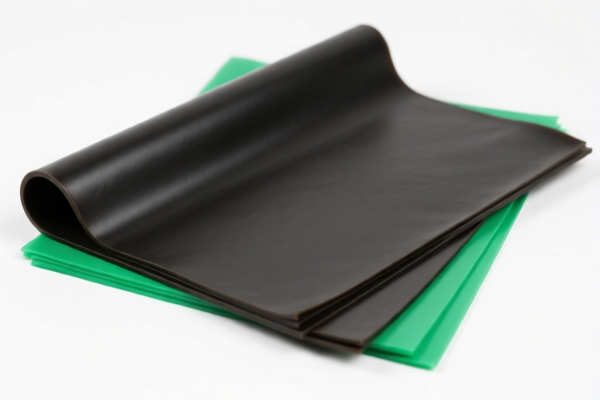
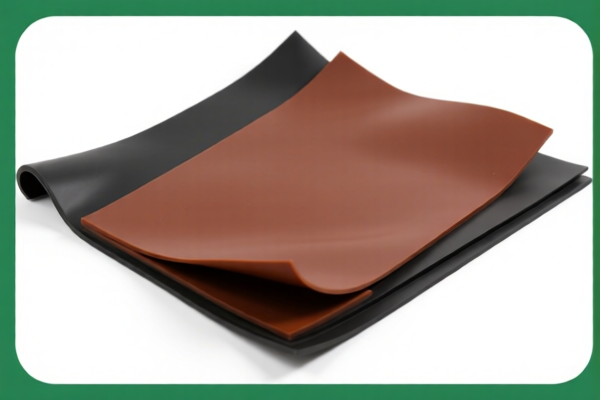

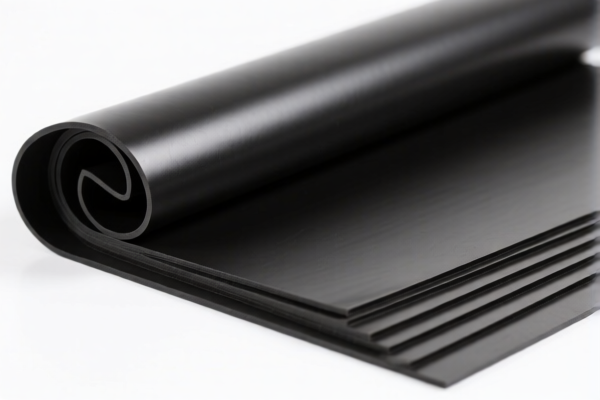
AI Analysis
🧱 Rough Square Rubber (Unpeeled) — Vulcanized Rubber Articles
🌐 HS Code Reference & Customs Clearance Guide | 2026 Latest Tariff Analysis | Professional-Level Classification Strategy
📌 I. Product Definition & Classification: What Exactly Is "Rough Square Rubber"?
Rough square rubber (unpeeled) typically refers to vulcanized rubber blocks or sheets that are cut into square or rectangular shapes, with a rough surface finish (often called "unpeeled" or "as-cut"), and without further processing into specific finished goods. In international trade, these are generally classified as articles of vulcanized rubber other than hard rubber, falling under Heading 4016.
⚠️ Key Distinction Points:
- If the rubber is simply cut into shapes (squares, blocks, sheets) and not yet incorporated into a specific end-use product (e.g., seals, gaskets, tires) → It is considered an "article" under 4016.
- If the rubber is still in primary forms (plates, sheets, strip) and not yet shaped → It may fall under 4001/4002 (rubber in primary forms).
- "Unpeeled" implies a rough, unpolished surface, which does not change its classification as a generic rubber article.
📦 II. HS Code Classification Details (2026 Latest Tariff Reference)
Based on the provided <DATA>, the following HS Codes apply to rough square rubber (unpeeled):
| HS Code | Product Description | Applicable Scenario | Tax Rate (Total) |
|---|---|---|---|
4016.99.60.50 |
Other articles of vulcanized rubber other than hard rubber: Other: Other: Other: Other: Other: Other | Generic rough square rubber blocks/sheets, no specific end-use defined | 0.0% |
4016.99.03.00 |
Other articles of vulcanized rubber other than hard rubber: Other: Other: Containers, with or without their closures, of a kind used for the packing, transporting or marketing of merchandise | If the rough square rubber is used as packaging material (e.g., rubber blocks for cushioning/padding in boxes) | 0.0% |
🔍 Critical Note:
- Both HS Codes have a 0.0% total tax rate (base tariff + additional tariffs).
- Do not confuse with synthetic rubber raw materials (e.g., SBR under4002.19.00.15or4002.19.00.19), which are subject to 25.0% additional tariffs. Those apply only to raw rubber compounds, not finished/vulcanized articles.
💰 III. 2026 Latest Tariff Rate Breakdown (Including Additional Duties)
✅ Applicable Country: United States (US)
✅ Country of Origin: China (CN)
✅ Effective Date: As per 2026 tariff schedule
🎯 1. 4016.99.60.50 — Other Articles of Vulcanized Rubber (Generic)
| Item | Details |
|---|---|
| Base Tariff | 0.0% |
| Additional Tariff (Section 301) | 0.0% |
| Total Tariff | 0.0% |
| Tax Calculation | CIF Value × 0.0% = $0 |
| De Minimis Eligibility | ✅ Yes (if value ≤ $800, may enter under Section 321) |
| Legal Basis | HTSUS 4016.99.60.50 |
📌 Explanation:
- This code covers generic vulcanized rubber articles not specified elsewhere.
- No additional tariffs apply to this subheading under current Section 301 lists.
- Ideal for industrial rubber blocks, padding, or unprocessed rubber squares.
🎯 2. 4016.99.03.00 — Rubber Containers for Packing/Transporting
| Item | Details |
|---|---|
| Base Tariff | 0.0% |
| Additional Tariff (Section 301) | 0.0% |
| Total Tariff | 0.0% |
| Tax Calculation | CIF Value × 0.0% = $0 |
| De Minimis Eligibility | ✅ Yes (if value ≤ $800) |
| Legal Basis | HTSUS 4016.99.03.00 |
📌 Explanation:
- This code applies only if the rubber is used as packaging material (e.g., rubber gaskets, pads, or containers for protecting goods during transit).
- If your "rough square rubber" is not intended for packaging, do not use this code.
⚠️ IV. What If It’s Raw Rubber Compound? (Common Mistake!)
If your product is not yet vulcanized (i.e., raw synthetic rubber like SBR in sheets/plates), it falls under:
| HS Code | Product Description | Total Tax |
|---|---|---|
4002.19.00.15 |
SBR Rubber, Emulsion Polymerized (E-SBR), ≤50% styrene, in bales | 25.0% |
4002.19.00.19 |
SBR Rubber, Other types, ≤50% styrene | 25.0% |
❌ Critical Warning:
- If you misclassify raw rubber as vulcanized articles (4016), you risk under-declaration, leading to penalties, back taxes, and shipment delays.
- Vulcanized rubber = cured, cross-linked, permanent shape.
- Raw rubber = uncured, pliable, still in primary forms.
🛠️ V. Customs Clearance Practical Advice (Real-World Pitfalls)
✅ 1. Documentation Checklist (Mandatory)
| Document | Required? | Notes |
|---|---|---|
| ✅ Commercial Invoice | ✔️ | Clearly state: "Vulcanized Rubber Blocks, Square, Rough Surface, Unpeeled" |
| ✅ Packing List | ✔️ | Specify quantity, weight, dimensions per block |
| ✅ Product Photos | ✔️ | Show square shape, rough texture, and lack of specific end-use features |
| ✅ Material Declaration | ✔️ | Confirm vulcanization status (cured vs. uncured) |
| ✅ Certificate of Origin | ✔️ | If claiming preferential rates under FTAs |
| ✅ SDS (Safety Data Sheet) | ✔️ | Required for chemical compliance (if applicable) |
✅ 2. Declaration Tips (Golden Rules)
🔥 "Vulcanized = 4016, Raw = 4002/4001. Misclassification = Penalty!"
| Scenario | Correct HS Code | Incorrect HS Code | Consequence |
|---|---|---|---|
| Vulcanized rubber squares (generic) | 4016.99.60.50 |
4002.19.00.15 |
Overpayment/underpayment risk |
| Rubber used for packaging | 4016.99.03.00 |
4016.99.60.50 |
Minor classification error |
| Raw SBR rubber sheets | 4002.19.00.15 |
4016.99.60.50 |
25% back tax + penalties |
✅ 3. Special Cases
| Case | Recommendation |
|---|---|
| Mixed Shipment (raw + vulcanized) | Declare separately to avoid classification ambiguity |
| Custom-Shaped Rubber Parts | Provide engineering drawings to prove they are "articles" not "raw material" |
| High-Volume Importers | Apply for Customs Ruling (Binding Ruling) to secure correct HS Code |
| De Minimis Shipments (<$800) | Can enter under Section 321, but still require accurate HS Code |
🌍 VI. Global Market Comparison (2026)
| Country/Region | Recommended HS Code | Tariff (China Origin) | Certification Required | Notes |
|---|---|---|---|---|
| 🇺🇸 United States | 4016.99.60.50 |
0.0% | No major certs | Avoid raw rubber misclassification |
| 🇨🇳 China | 4016.99.60.50 |
0.0% | GB Standards | Same as US |
| 🇪🇺 European Union | 4016.99.90 |
0.0% | REACH Compliance | Harmonized system differs slightly |
| 🇬🇧 United Kingdom | 4016.99.90 |
0.0% | UKCA Marking | Post-Brexit rules |
| 🇯🇵 Japan | 4016.99.90 |
0.0% | JIS Standards | No additional tariffs |
📌 Conclusion:
- US, China, EU, UK, Japan all apply 0% tariff for vulcanized rubber articles under4016.
- Key Risk: Misclassifying raw rubber as vulcanized articles leads to 25% extra tariffs in the US.
- Always confirm vulcanization status before declaring.
📌 VII. Common Mistakes & Pitfalls (Lessons Learned)
❌ Mistake 1: Declaring raw rubber as vulcanized articles
👉 Result: 25% back tax + penalties from CBP
❌ Mistake 2: Using packaging code (4016.99.03.00) for non-packaging rubber
👉 Result: Classification error, possible audit
❌ Mistake 3: Not providing vulcanization proof
👉 Result: Customs holds shipment for further review
❌ Mistake 4: Using vague descriptions like "rubber squares"
👉 Result: Ambiguity leads to random audits
✅ Best Practice:
"Vulcanized Rubber Blocks, Square Shape, Rough Surface, Unpeeled, For Industrial Use, Not for Packaging"
🎯 VIII. Conclusion: Accurate Classification Saves Money & Time
🎯 Remember:
🔹 "Vulcanized = 4016 (0%), Raw = 4002 (25%). Don’t mix them!"
🔹 "0% tariff is great, but only if your HS Code is right!"
🔹 "Documentation is your shield against customs audits."
📌 Pro Tip:
If you are unsure whether your rubber is vulcanized or raw, submit a Request for Advance Ruling to CBP (US) or equivalent authority. This provides legal certainty and prevents future disputes.
📣 Take Action Now:
📞 Consult a licensed customs broker
📸 Provide clear product photos + material specs
📝 Use precise HS Code:4016.99.60.50or4016.99.03.00
🚀 Ensure smooth clearance, zero penalties, maximum profit!
✨ Professional Clearance Starts with Accurate Classification!
💼 Your every dollar is worth precise calculation!
Customer Reviews
About HS Code Classification
The Harmonized System (HS) is an internationally standardized nomenclature developed by the World Customs Organization (WCO) to classify traded products. Over 200 countries use the HS system as the basis for customs tariffs, trade statistics, and import/export regulations.
Each HS code follows a hierarchical structure:
- Chapter (2 digits) — Broad category of goods (e.g., Chapter 84: Machinery and Mechanical Appliances)
- Heading (4 digits) — More specific grouping within the chapter
- Subheading (6 digits) — Internationally standardized breakdown, used by all WCO member countries
- National subdivisions (8-10 digits) — Country-specific extensions for further classification, such as US HTSUS 10-digit codes
Correct HS code classification is essential for smooth customs clearance, accurate duty payment, and compliance with trade regulations. Misclassification can lead to customs delays, overpayment of duties, or penalties.
When importing from CN to US, the applicable tariff rates may include:
- Most-Favored-Nation (MFN) rate — The standard duty rate applied to WTO members
- General rate — Applied to countries without trade agreements
- Trade remedy duties — Additional tariffs such as Section 301 (anti-dumping), Section 232 (national security), or countervailing duties
The information provided on this page is for reference purposes only. For official classification, please consult with your local customs authority or a licensed customs broker.