rough western red cedar wood
CN → US| HS Code | Tariff Rate | Origin | Destination | Doc |
|---|---|---|---|---|
| 4418500010 | 35.0% | CN | US | Official Doc |
| 4418500050 | 35.0% | CN | US | Official Doc |
| 4407190068 | 35.0% | CN | US | Official Doc |
| 4407190069 | 35.0% | CN | US | Official Doc |
Product Images
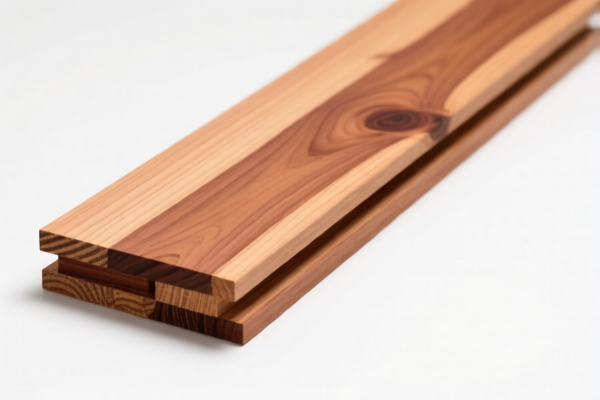
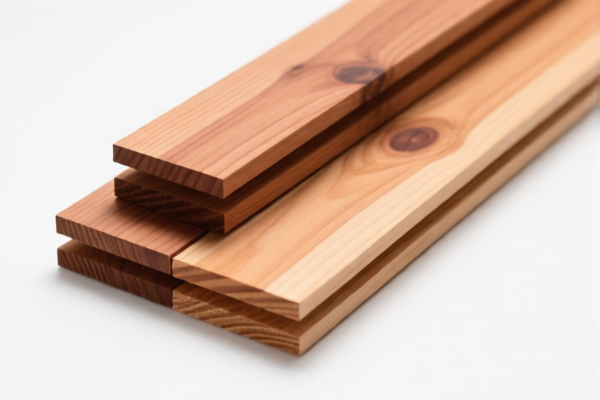
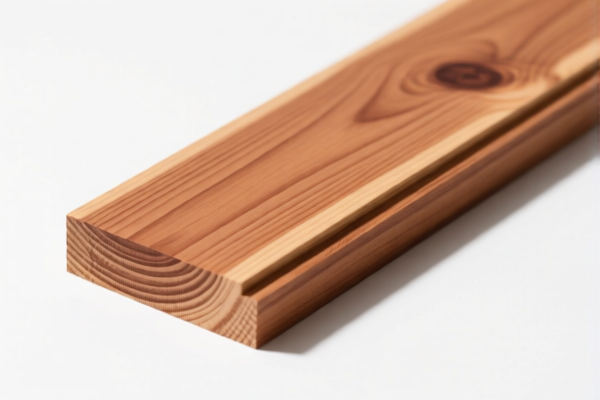
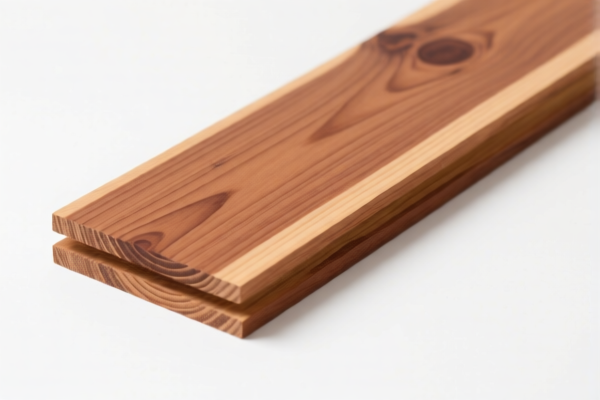
AI Analysis
🌲 Rough Western Red Cedar Wood (Unprocessed Lumber)
🌐 HS Code Reference & Customs Clearance Guide | 2026 Latest Tariff Analysis | Professional Clearance Strategy
📌 I. Product Definition & Classification: What Exactly is "Rough Western Red Cedar"?
Western Red Cedar (Thuja plicata) is a premium coniferous wood known for its natural resistance to rot, insects, and moisture, making it a favorite for outdoor decking, siding, and shingles. In international trade, the classification hinges on two critical factors:
1. Processing Level: "Rough" means the wood has been sawn, chipped, sliced, or peeled but has NOT been planed, sanded, or end-jointed. It retains its natural surface texture.
2. Species: It must be identified specifically as Western Red Cedar. If it is merely "cedar" without specifying the species, or if it is a different coniferous wood, it may fall under different subheadings.
⚠️ Key Distinction:
- Rough: No planing, no sanding, no end-joining. → HS Code 4407.19.00.68
- Finished/Treated: Planed, sanded, or pressure-treated. → Excluded from this specific group (may fall under different codes or require different descriptions).
- Other Western Red Cedar (Not Rough): If it is planed/sanded but not treated, it falls under 4407.19.00.69.
📦 II. HS Code Classification Details (2026 Latest Tariff Authority对照)
| HS Code | Product Description | Application Scenario | Processing State | Treatment Status |
|---|---|---|---|---|
4407.19.00.68 |
Wood sawn lengthwise... Western Red Cedar: Rough | Raw lumber for further processing, construction framing, outdoor structures | ✅ Rough (Unplaned/Unplaned) | ❌ Not Treated |
4407.19.00.69 |
Wood sawn lengthwise... Western Red Cedar: Other | Planed, sanded, or end-jointed cedar (but not treated) | ✅ Finished (Planed/Sanded) | ❌ Not Treated |
4418.50.00.10 |
Builders' joinery... Shingles and shakes: Of western red cedar | Pre-cut shingles/shakes for roofing or siding | ✅ Pre-cut/Profiled | ❌ Not Treated (usually) |
4418.50.00.50 |
Builders' joinery... Shingles and shakes: Other | Shingles/shakes made from non-cedar wood | ✅ Pre-cut/Profiled | ❌ Not Treated |
🔍 Critical Reminder:
- "Rough" is the key keyword for4407.19.00.68. If your lumber is planed or sanded, you MUST use4407.19.00.69. Misdeclaring finished wood as "rough" is a common customs error that leads to penalties.
- Shingles/Shakes (4418.50) are considered "Builders' Joinery" and are distinct from raw lumber (4407). Ensure you are not importing cut shingles but claiming them as raw lumber to avoid misclassification.
💰 III. 2026 Latest Tariff Rate Details (Detailed Breakdown)
✅ Applicable Country: United States (US)
✅ Origin: China (CN) (Note: Western Red Cedar is primarily harvested in North America, but if sourced from or transshipped through China, these tariffs apply to Chinese-origin goods)
✅ Effective Date: Tariffs are currently active as per Section 301 and IEEPA regulations.
🎯 1. 4407.19.00.68 —— Rough Western Red Cedar
| Item | Content |
|---|---|
| Base Tariff Rate | 0.0% (Ad Valorem) |
| USITC Additional Tariff (Section 301) | +25.0% |
| IEEPA Additional Tariff | +0.0% (Note: Wood products often fall under specific exclusions or different IEEPA footnotes compared to electronics. Based on the provided data, only the 25% USITC surcharge is listed for this specific code in the input data.) |
| Total Tax Rate | 25.0% |
| Tax Calculation | CIF Value × 25% |
| De Minimis Exemption | ❌ Not Applicable (De Minimis does not apply to goods subject to Section 301 tariffs) |
| Legal Basis Path | USITC:4407.19.00.68 → FOOTNOTE:301 |
📌 Explanation:
- The 25% tariff is imposed under Section 301 of the Trade Act of 1974, targeting specific Chinese imports.
- Unlike electronics (which may have a 45% total rate due to both IEEPA and Section 301), the provided data for Western Red Cedar shows a total tax of 25.0%.
- Crucial: Even though the base rate is 0%, the 25% surcharge is significant. Importers must budget for this cost.
🎯 2. 4407.19.00.69 —— Other Western Red Cedar (Planed/Sanded)
| Item | Content |
|---|---|
| Base Tariff Rate | 0.0% |
| USITC Additional Tariff (Section 301) | +25.0% |
| Total Tax Rate | 25.0% |
| Tax Calculation | CIF Value × 25% |
| De Minimis Exemption | ❌ Not Applicable |
| Legal Basis Path | USITC:4407.19.00.69 → FOOTNOTE:301 |
📌 Note:
- Same tariff structure as "Rough." The processing level (planed vs. rough) does not change the tariff rate for Western Red Cedar in this classification.
🎯 3. 4418.50.00.10 —— Western Red Cedar Shingles/Shakes
| Item | Content |
|---|---|
| Base Tariff Rate | 0.0% |
| USITC Additional Tariff (Section 301) | +25.0% |
| Total Tax Rate | 25.0% |
| Tax Calculation | CIF Value × 25% |
| De Minimis Exemption | ❌ Not Applicable |
| Legal Basis Path | USITC:4418.50.00.10 → FOOTNOTE:301 |
🎯 4. 4418.50.00.50 —— Other Shingles/Shakes
| Item | Content |
|---|---|
| Base Tariff Rate | 0.0% |
| USITC Additional Tariff (Section 301) | +25.0% |
| Total Tax Rate | 25.0% |
| Tax Calculation | CIF Value × 25% |
| De Minimis Exemption | ❌ Not Applicable |
📌 Conclusion: All listed Western Red Cedar wood products and shingles face a flat 25% additional tariff under Section 301. There is no base tariff, but the surcharge is substantial.
🛠️ IV. Customs Clearance Practical Advice (Real-World Pitfall Guide)
✅ 1. Required Documentation Checklist
| Document | Must Provide | Description |
|---|---|---|
| ✅ Commercial Invoice | ✔️ | Must explicitly state: "Rough Western Red Cedar Lumber" or "Western Red Cedar Shingles". Vague terms like "Wood" or "Timber" are insufficient. |
| ✅ Packing List | ✔️ | Detail the dimensions, quantity, and weight. Specify if boards are "Rough" (unplaned) vs. "Dressed" (planed). |
| ✅ Species Identification | ✔️ | Certificate of Species or Supplier Declaration confirming Thuja plicata (Western Red Cedar). Misidentification leads to wrong HS Code. |
| ✅ ISF Filing (10+2) | ✔️ | Must be filed 24 hours before loading. Incorrect product description can cause delays. |
| ✅ Fumigation Certificate | ✔️ | Required by USDA APHIS to prevent pest introduction. Must be issued by the country of origin. |
| ✅ Phytosanitary Certificate | ✔️ | Mandatory for all wood imports. |
✅ 2. Declaration Tips (Key Mantra)
🔥 "Be Specific: Species + Process State + Product Form"
| Scenario | Correct Declaration | Wrong Declaration |
|---|---|---|
| Raw, unplaned boards | "Rough Western Red Cedar Lumber, 2x4, Unplaned" |
"Wood Planks" or "Cedar Boards" |
| Planed/Sanded boards | "Western Red Cedar Lumber, Planed and Sanded" |
"Rough Cedar" |
| Pre-cut shingles | "Western Red Cedar Roof Shingles" |
"Lumber" or "Wood Pieces" |
| Mixed woods | "Assorted Lumber" |
"Western Red Cedar" (If not 100% WRC) |
📌 Why it matters:
- If you declare "Western Red Cedar" but it is actually "Redwood" or "Cypress," you face misdeclaration penalties.
- If you declare "Rough" but it is planed, you may be flagged for undervaluation (finished wood is often more valuable, but the tariff rate is the same here, so the risk is compliance, not just tax).
✅ 3. Special Cases
| Case | Handling Advice |
|---|---|
| Canadian Origin | If the cedar is harvested in Canada and shipped directly, NO Section 301 Tariff. Base rate 0%. Ensure Certificate of Origin is clear. |
| Transshipment via China | If Canadian cedar is shipped to China, processed, and then to the US, it may be considered Chinese origin. 25% Tariff Applies. |
| Fumigation Issues | If the wood shows signs of pest damage, USDA will inspect and potentially reject. Ensure proper fumigation before shipment. |
🌍 V. Global Market Comparison (2026)
| Country/Region | Recommended HS Code | Tariff (if CN Origin) | Certification Required | Notes |
|---|---|---|---|---|
| 🇺🇸 USA | 4407.19.00.68 / .69 |
25% (Section 301) | ISF, Phytosanitary, Fumigation | High compliance demand |
| 🇨🇦 Canada | 4407.19 |
0% (USMCA/CUSMA) | None | Duty-free for Canadian-origin |
| 🇪🇺 EU | 4407.19 |
3.1% (Standard) | Fumigation (IPPC Mark) | No Section 301, but phytosanitary strict |
| 🇬🇧 UK | 4407.19 |
3.1% (Standard) | Fumigation (IPPC Mark) | Post-Brexit rules apply |
| 🇯🇵 Japan | 4407.19 |
3.4% (Standard) | Fumigation (IPPC Mark) | Strict on moisture content |
📌 Conclusion:
- USA is the most expensive market due to the 25% Section 301 tariff on Chinese-origin Western Red Cedar.
- Canadian origin is preferred for the US market to avoid tariffs.
- EU/UK/Japan have standard tariffs but strict phytosanitary requirements.
📌 VI. Common Errors & Pitfall Guide (Lessons Learned)
❌ Error 1: Declaring "Western Red Cedar" when the wood is actually "Western Hemlock" or "Douglas Fir"
👉 Consequence: Customs penalty, seizure, or reclassification with potential higher tariffs.
✅ Fix: Verify species with a lab test or supplier certificate.
❌ Error 2: Declaring "Rough" when wood is planed/sanded
👉 Consequence: Discrepancy in physical inspection, delays, and potential misdeclaration fines.
✅ Fix: Accurately describe the surface finish in the invoice and packing list.
❌ Error 3: Missing Fumigation Certificate
👉 Consequence: Shipment held at port, re-exported, or destroyed.
✅ Fix: Ensure fumigation is done at the origin and the certificate is included in the shipment documents.
❌ Error 4: Ignoring ISF Filing
👉 Consequence: $5,000 fine per violation for late or inaccurate ISF filing.
✅ Fix: File ISF 24 hours before loading at the foreign port.
🎯 VII. Conclusion: Professional Declaration, Save Cost, Save Time!
🎯 Remember the Mantra:
🔹 "Rough vs. Planed: Know the State!"
🔹 "Western Red Cedar: 25% Tariff on CN Origin!"
🔹 "Fumigation is Key: No Certificate, No Entry!"
📌 Pro Tip:
If your Western Red Cedar is Canadian-origin, ensure the Bill of Lading and Certificate of Origin clearly state "Canada" to claim 0% duty under USMCA/CUSMA. Do not mix Canadian and Chinese-origin wood in the same shipment if you want to avoid complexity.
📣 Immediate Action:
📞 Contact a licensed customs broker to verify your HS Code based on the exact product specs.
🚀 Clear Customs Smoothly, Avoid Penalties, Maximize Profit!
✨ Professional Clearance Starts with Accurate Classification!
💼 Every Tariff Dollar Saved is Pure Profit!
Customer Reviews
About HS Code Classification
The Harmonized System (HS) is an internationally standardized nomenclature developed by the World Customs Organization (WCO) to classify traded products. Over 200 countries use the HS system as the basis for customs tariffs, trade statistics, and import/export regulations.
Each HS code follows a hierarchical structure:
- Chapter (2 digits) — Broad category of goods (e.g., Chapter 84: Machinery and Mechanical Appliances)
- Heading (4 digits) — More specific grouping within the chapter
- Subheading (6 digits) — Internationally standardized breakdown, used by all WCO member countries
- National subdivisions (8-10 digits) — Country-specific extensions for further classification, such as US HTSUS 10-digit codes
Correct HS code classification is essential for smooth customs clearance, accurate duty payment, and compliance with trade regulations. Misclassification can lead to customs delays, overpayment of duties, or penalties.
When importing from CN to US, the applicable tariff rates may include:
- Most-Favored-Nation (MFN) rate — The standard duty rate applied to WTO members
- General rate — Applied to countries without trade agreements
- Trade remedy duties — Additional tariffs such as Section 301 (anti-dumping), Section 232 (national security), or countervailing duties
The information provided on this page is for reference purposes only. For official classification, please consult with your local customs authority or a licensed customs broker.