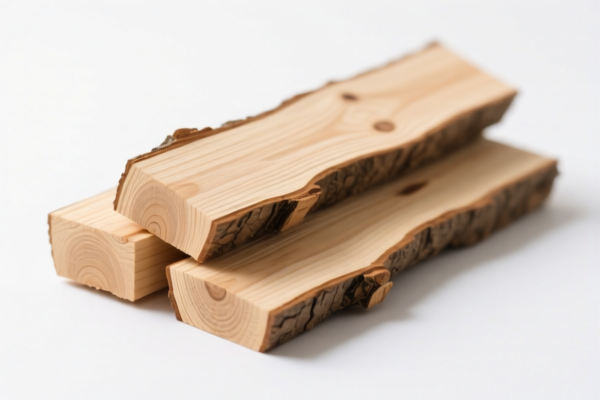
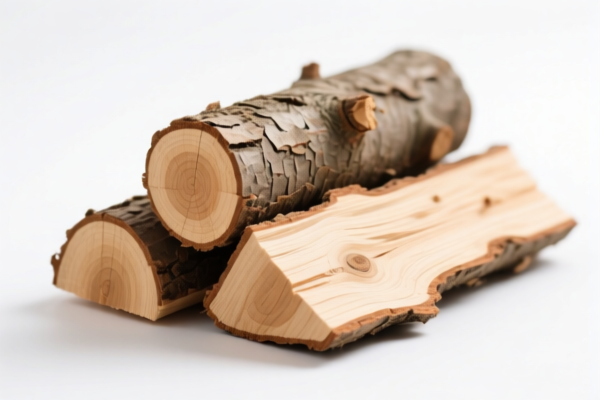
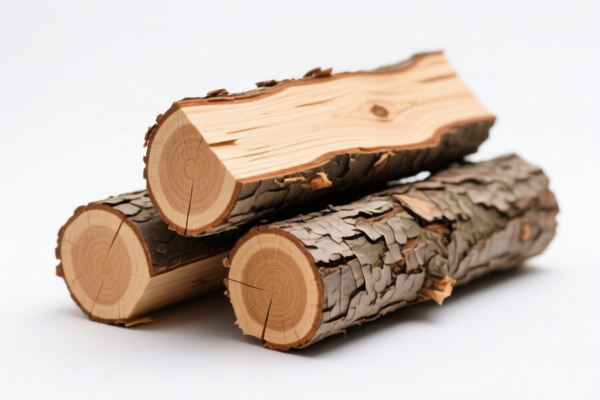
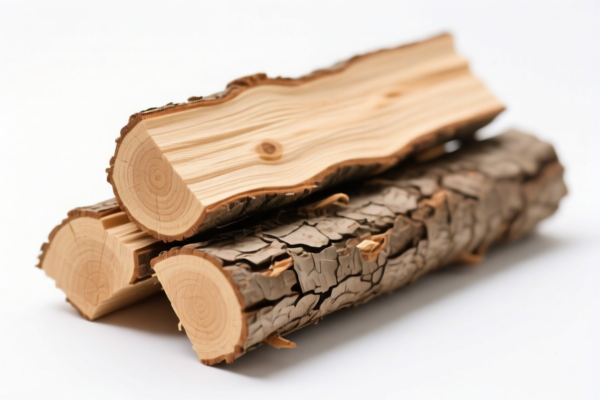
roughly processed wood preliminary processing
CN → US| HS Code | Tariff Rate | Origin | Destination | Doc |
|---|---|---|---|---|
| 4407110043 | 35.0% | CN | US | Official Doc |
| 4407190092 | 35.0% | CN | US | Official Doc |
Product Images
AI Analysis
🪵 Rough Sawn Timber (Eastern White & Red Pine)
🌐 HS Code Reference & Clearance Guide | 2026 Latest Tariff Analysis | Professional Customs Strategy
📌 1. Product Definition & Classification: What is "Rough Sawn Wood"?
Rough sawn wood refers to timber that has been sawn, chipped, or split lengthwise but has not been planed, sanded, or further refined beyond basic shaping. In international trade, specifically under Chapter 44 (Wood and articles of wood), this category is strictly defined by its physical state and species.
For this specific request ("roughly processed wood preliminary processing"), the classification hinges on two key factors: 1. Thickness: Must exceed 6 mm. 2. Species: Must be Coniferous (specifically Pinus spp. like Eastern White Pine or Red Pine in the provided data). 3. Condition: "Rough" means it has not been treated (chemically) and has not been planed/sanded smooth.
⚠️ Critical Distinction:
- If the wood is planed, sanded, or end-jointed → It may move to different sub-headings or require different descriptions.
- If the wood is less than 6mm thick → It falls under Chapter 44 but different HS codes (not covered in ).
- If the wood is treated (chemically preserved) → It is excluded from "Not treated" categories.
📦 2. HS Code Classification Details (2026 Latest Tariff Authority)
Based strictly on the provided <DATA>, there are two applicable HS codes depending on the specific pine species.
| HS Code | Product Description | Key Characteristics | Species Specifics |
|---|---|---|---|
| 4407.11.00.43 | Wood, lengthwise sawn/chipped, >6mm, Coniferous, Pine spp., Eastern White Pine (Pinus strobus) & Red Pine (Pinus resinosa), Rough, Not treated | Raw lumber, unplaned, unsmoothed, untreated | 🌲 Eastern White Pine 🌲 Red Pine |
| 4407.19.00.92 | Wood, lengthwise sawn/chipped, >6mm, Coniferous, Other Pine spp., Rough, Not treated | Raw lumber, unplaned, unsmoothed, untreated | 🌲 Other Pine Species (e.g., Loblolly, Slash, etc.) |
🔍 Key Reminder:
- "Rough" implies the surface is not finished. It retains the saw marks from the initial cutting.
- "Not treated" means no chemical preservation (e.g., no CCA, ACQ, or other wood preservatives).
- Both codes require the wood to be Coniferous and >6mm thick.
💰 3. 2026 Latest Tariff Rate Details (Including Surtaxes)
✅ Applicable Country: United States (US)
✅ Origin: China (CN) (Assumed based on standard tariff queries; verify origin)
✅ Effective Date: Current USITC/USMF rules apply.
🎯 1. 4407.11.00.43 —— Rough Sawn Eastern White & Red Pine
| Item | Detail |
|---|---|
| Base Tariff | 0.0% (Ad Valorem) |
| Additional Surtax (Section 301/USMF) | +25.0% |
| Total Tariff Rate | 25.0% |
| Tax Calculation | CIF Value × 25% |
| De Minimis Exemption | ❌ Not Applicable (Wood products generally do not qualify for de minimis under current rules for high-value commercial shipments, but verify specific low-value parcel rules) |
| Legal Basis | HTSUS 4407.11.00.43 → Section 301 Surtax List 4 |
📌 Explanation:
- The 0% base rate reflects the standard Most-Favored-Nation (MFN) duty for rough sawn wood.
- The 25% surtax is the critical cost driver, applied due to U.S. trade policies on Chinese-origin goods.
- Total Liability: For every $1,000 of CIF value, expect $250 in duties.
🎯 2. 4407.19.00.92 —— Rough Sawn Other Pine Species
| Item | Detail |
|---|---|
| Base Tariff | 0.0% (Ad Valorem) |
| Additional Surtax (Section 301/USMF) | +25.0% |
| Total Tariff Rate | 25.0% |
| Tax Calculation | CIF Value × 25% |
| De Minimis Exemption | ❌ Not Applicable |
| Legal Basis | HTSUS 4407.19.00.92 → Section 301 Surtax List 4 |
📌 Explanation:
- Same tariff structure as the Pine spp. code.
- Used for any Pinus species not classified as Eastern White or Red Pine.
🛠️ 4. Customs Clearance Practical Advice (Pitfall Avoidance Guide)
✅ 1. Required Documentation Checklist
| Document | Mandatory? | Notes |
|---|---|---|
| ✅ Commercial Invoice | ✔️ | Must clearly state: "Rough Sawn Wood," Thickness, Species (e.g., Pinus strobus), Quantity, Value. |
| ✅ Packing List | ✔️ | Detail pallets, bundles, and weight. |
| ✅ Phytosanitary Certificate | ✔️ | CRITICAL: Wood is subject to ISPM 15 regulations. Must certify no pests. |
| ✅ Fumigation Certificate | ✔️ | Often required alongside Phytosanitary cert. |
| ✅ Bill of Lading/Air Waybill | ✔️ | Standard shipping docs. |
| ❌ Treatment Records | ❌ | Since these are "Not treated," you do not provide chemical treatment records. Do not list any preservatives. |
✅ 2. Declaration Best Practices
🔥 "Be Specific on Species, Be Honest on 'Rough' Status"
| Scenario | Correct Declaration | Incorrect Declaration | Risk |
|---|---|---|---|
| Eastern White Pine | "Rough Sawn Lumber, Eastern White Pine (Pinus strobus), >6mm, Not Treated" | "Wood Planks" or "Lumber" | Misclassification → 25% + Penalties |
| Other Pine | "Rough Sawn Lumber, Pine spp. (Other), >6mm, Not Treated" | "Hardwood Lumber" | Wrong Chapter → 0% or higher errors |
| Treated Wood | Should not use these HS Codes | "Rough Sawn... Not Treated" (False) | Fraud/Smuggling charges |
| Thickness < 6mm | Should not use these HS Codes | "Rough Sawn... >6mm" (False) | Misdeclaration → Seizure |
✅ 3. Special Considerations for Wood Products
| Issue | Advice |
|---|---|
| ISPM 15 Compliance | Ensure wooden packaging (pallets/crates) is heat-treated and marked. Raw wood itself must be pest-free. |
| Species Verification | Customs may require botanical identification. Keep samples or detailed species lists. Misidentifying "Red Pine" as "Other Pine" can lead to audits. |
| Moisture Content | Not directly affecting HS code, but affects weight and value. Declare accurately. |
| End-Jointed? | If the wood is end-jointed, it may still fall under 4407, but ensure the description matches "whether or not planed, sanded or end-jointed." If it's only end-jointed and not planed, it’s still "Rough." |
🌍 5. Global Market Comparison (2026)
| Country | Recommended HS Code | Tariff Rate | Notes |
|---|---|---|---|
| 🇺🇸 USA | 4407.11.00.43 or 4407.19.00.92 |
25.0% | High surtax due to Section 301. |
| 🇨🇳 China | 4407.11.00 or 4407.19.00 |
~5-8% | Standard MFN rate, no surtax. |
| 🇪🇺 EU | 4407.10.00 |
~6.5% | Standard EU tariff for coniferous wood. |
| 🇨🇦 Canada | 4407.10.00 |
0% (USMCA) | If originating in US/Canada/Mexico. |
| 🇲🇽 Mexico | 4407.10.00 |
0% (USMCA) | If originating in US/Canada/Mexico. |
📌 Conclusion:
- The 25% U.S. surtax is the dominant cost factor.
- No duty-free exemption exists for this product from China to the US.
- Phytosanitary compliance is as important as tariff compliance.
📌 6. Common Errors & Pitfalls
❌ Error 1: Declaring "Planed" wood as "Rough"
👉 Consequence: Misclassification. Planed wood may have different regulatory requirements or duties.
👉 Fix: Ensure surface is truly unplaned/sanded.
❌ Error 2: Ignoring the "Not Treated" clause
👉 Consequence: If wood is chemically treated, it cannot use "Not treated" HS codes.
👉 Fix: Verify no preservatives were used. If treated, find the correct HS for "Treated Wood."
❌ Error 3: Failing to specify Species
👉 Consequence: Customs may assign a default "Other" code with higher scrutiny or different duties.
👉 Fix: Always list the scientific name (Pinus strobus, Pinus resinosa, etc.).
❌ Error 4: Assuming De Minimis Applies
👉 Consequence: For commercial shipments, de minimis does not apply. For low-value parcels, check current CBP thresholds.
👉 Fix: Prepare full duty payments for all commercial imports.
🎯 7. Final Recommendations
🎯 Key Takeaway:
- Tariff: 25% Total (0% Base + 25% Surtax).
- Documentation: Phytosanitary Cert is mandatory.
- Description: Must include "Rough," "Not Treated," and specific Pine species.📞 Action Step:
1. Verify the exact Pine species.
2. Confirm wood is >6mm and unplaned.
3. Obtain Phytosanitary Certificate.
4. Budget for 25% duty on CIF value.
✨ Professional Clearance Starts with Accurate Classification!
💼 Every Percentage Point Matters in Lumber Trade!
Customer Reviews
About HS Code Classification
The Harmonized System (HS) is an internationally standardized nomenclature developed by the World Customs Organization (WCO) to classify traded products. Over 200 countries use the HS system as the basis for customs tariffs, trade statistics, and import/export regulations.
Each HS code follows a hierarchical structure:
- Chapter (2 digits) — Broad category of goods (e.g., Chapter 84: Machinery and Mechanical Appliances)
- Heading (4 digits) — More specific grouping within the chapter
- Subheading (6 digits) — Internationally standardized breakdown, used by all WCO member countries
- National subdivisions (8-10 digits) — Country-specific extensions for further classification, such as US HTSUS 10-digit codes
Correct HS code classification is essential for smooth customs clearance, accurate duty payment, and compliance with trade regulations. Misclassification can lead to customs delays, overpayment of duties, or penalties.
When importing from CN to US, the applicable tariff rates may include:
- Most-Favored-Nation (MFN) rate — The standard duty rate applied to WTO members
- General rate — Applied to countries without trade agreements
- Trade remedy duties — Additional tariffs such as Section 301 (anti-dumping), Section 232 (national security), or countervailing duties
The information provided on this page is for reference purposes only. For official classification, please consult with your local customs authority or a licensed customs broker.