round baking paper
CN → US| HS Code | Tariff Rate | Origin | Destination | Doc |
|---|---|---|---|---|
| 4823610020 | 35.0% | CN | US | Official Doc |
| 4823690020 | 35.0% | CN | US | Official Doc |
Product Images
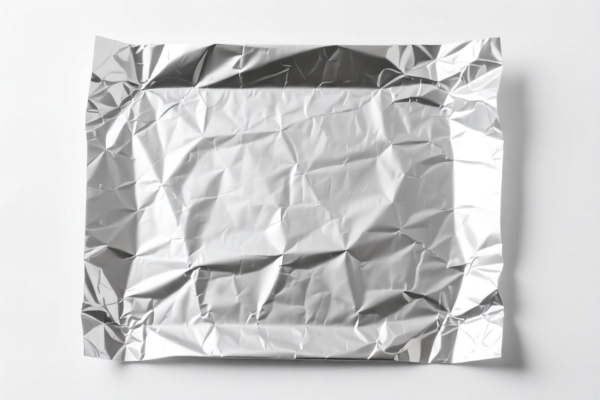
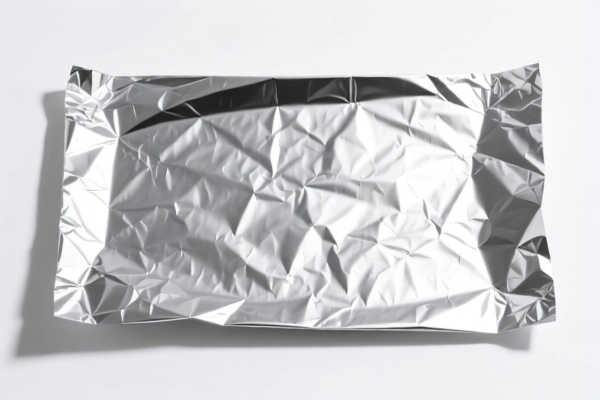
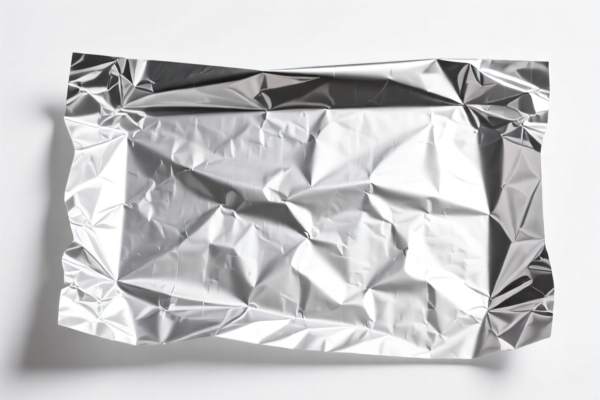
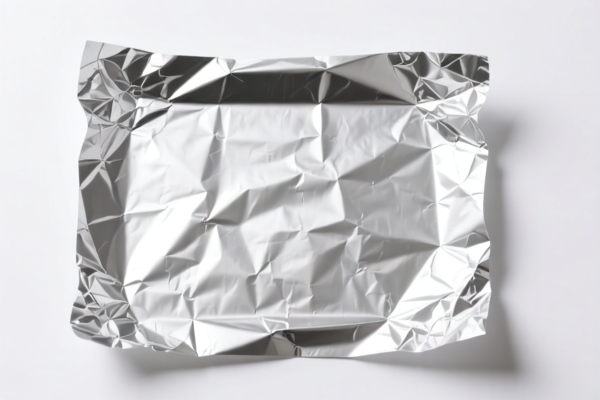
AI Analysis
🍽️ Round Baking Paper & Bamboo Disposable Tableware (Cups, Containers, Trays)
🌐 HS Code Reference & Customs Clearance Guide | 2026 Latest Tariff Analysis | Professional Clearance Strategy
📌 I. Product Definition & Classification: What Exactly Is "Round Baking Paper"?
In international trade, "Round Baking Paper" often overlaps with or is confused with other paper-based food service items. While the user input specifies "Baking Paper," the provided <DATA> exclusively covers paper/paperboard trays, dishes, plates, cups, and round nested food containers.
Crucially, the data distinguishes between products made of Bamboo and those made of Other Paper/Paperboard. This distinction is critical for tariff determination.
⚠️ Key Distinction Point:
- If the product is a cup or round nested food container made specifically of Bamboo → It falls under4823.61.00.20.
- If the product is a cup or round nested food container made of Other Paper/Paperboard (including standard baking paper formats shaped into containers, or other paper cups/containers not specified as bamboo) → It falls under4823.69.00.20.
- Note: Standard flat "baking sheets" or non-nested baking paper might fall under different headings (e.g., 4823.90), but based strictly on the<DATA>provided, we are analyzing trays, dishes, plates, cups, and round nested food containers.
📦 II. HS Code Classification Details (2026 Latest Tariff Authority Match)
| HS Code | Product Description | Material Composition | Applicable Scenario |
|---|---|---|---|
4823.61.00.20 |
Cups and round nested food containers | Of Bamboo | Bamboo cups, bamboo-pulp round food containers, eco-friendly bamboo take-out cups |
4823.69.00.20 |
Cups and round nested food containers | Other (Paper/Paperboard) | Standard paper cups, PLA-lined paper cups, non-bamboo paper food containers, paper trays |
🔍 Critical Reminder:
- The term "Baking Paper" in the user input may refer to paper used for baking (often flat sheets). However, the<DATA>only lists shaped articles (cups, containers). If your product is a flat sheet of baking paper, it does not match these HS codes.
- If your "Round Baking Paper" refers to round paper food containers (like pizza boxes or nested dessert cups), it matches the codes above.
- Bamboo content is the key differentiator. Even if it looks like paper, if the primary material is bamboo pulp/fiber, it goes to4823.61. Otherwise, it goes to4823.69.
💰 III. 2026 Latest Tariff Rate Detailed Explanation (Including Surcharge Policies)
✅ Applicable Country: USA (US)
✅ Country of Origin: China (CN)
✅ Effective Date: Current rates apply as per provided data.
🎯 1. 4823.61.00.20 —— Cups and round nested food containers (Of Bamboo)
| Item | Detail |
|---|---|
| Base Tariff Rate | 0.0% (ad valorem) |
| Section 301 Surcharge | 0.0% |
| Total Tariff Rate | 0.0% |
| Tax Calculation | CIF Value × 0% = $0 |
| De Minimis Eligibility | ❌ No (Subject to full inspection regardless of value) |
| Legal Basis | HTSUS 4823.61.00.20 |
📌 Explanation:
- Bamboo-based paper products (cups/containers) currently enjoy zero tariff from both the base rate and the Section 301 surcharge in the provided data.
- This makes bamboo-based disposable tableware a low-cost alternative compared to other paper goods if surcharges apply to them.
🎯 2. 4823.69.00.20 —— Cups and round nested food containers (Other Paper)
| Item | Detail |
|---|---|
| Base Tariff Rate | 0.0% (ad valorem) |
| Section 301 Surcharge | +25.0% |
| Total Tariff Rate | 25.0% |
| Tax Calculation | CIF Value × 25% |
| De Minimis Eligibility | ❌ No (Subject to full inspection regardless of value) |
| Legal Basis | HTSUS 4823.69.00.20 |
📌 Explanation:
- Standard paper/paperboard cups and containers (non-bamboo) are subject to a 25% Section 301 surcharge on top of the 0% base rate.
- This is a high tariff burden. For every $100 CIF value, you pay $25 in duties.
- Many common "baking paper" shaped products (like paper muffin liners, paper pie plates, or standard paper cups) fall here unless made of bamboo.
🛠️ IV. Customs Clearance Practical Advice (Battle-Tested Pitfall Avoidance)
✅ 1. Document Checklist (Non-Negotiable)
| Document | Required | Notes |
|---|---|---|
| ✅ Product Specification Sheet | ✔️ | Must explicitly state material: "100% Bamboo" vs. "Wood Pulp/Paper". This is the #1 reason for misclassification. |
| ✅ Composition Analysis Report | ✔️ | Third-party lab report confirming bamboo fiber content (>50% or primary structural material). |
| ✅ Product Photos | ✔️ | Clear images of the product, packaging, and any biodegradable/compostable labels. |
| ✅ Commercial Invoice | ✔️ | Describe as "Bamboo Fiber Cup" or "Paper Food Container" accurately. Do not use vague terms like "Eco-friendly paper." |
| ✅ Packing List | ✔️ | Detailed breakdown of quantities and weights. |
✅ 2. Declaration Tips (Key Mantra)
🔥 "Material Dictates Code, Bamboo Means Zero, Paper Means Twenty-Five!"
| Scenario | Correct Declaration | Wrong Approach |
|---|---|---|
| Bamboo Cup/Container | 4823.61.00.20 + "Of Bamboo" |
Declaring as "Paper" → 25% Tax |
| Standard Paper Cup | 4823.69.00.20 + "Other Paper" |
Declaring as "Bamboo" → Penalty & Retrospective Tax |
| Flat Baking Paper (Not Shaped) | ❌ Not in Data | Do not force into 4823.61/69. Check 4823.90. |
| Mixed Materials | Primary Material Rule | If >50% bamboo, try 4823.61. If mixed, consult customs broker. |
✅ 3. Special Handling
| Situation | Advice |
|---|---|
| "Bamboo Paper" Claim | Ensure the product is truly made from bamboo pulp/fiber. Recycled paper with trace bamboo does not qualify for 4823.61. |
| Lined Containers | If the paper/bamboo is lined with PLA (Polylactic Acid) or PE, it still generally falls under these HS codes if the paper structure is dominant. |
| Round Nested Containers | Ensure the description highlights "nested" to match the HS text, which implies stackable takeaway containers. |
🌍 V. Global Market Comparison (2026 Latest)
| Market | Recommended HS Code (if Bamboo) | Tariff (Bamboo) | Tariff (Other Paper) | Notes |
|---|---|---|---|---|
| 🇺🇸 USA | 4823.61.00.20 |
0.0% | 25.0% | Bamboo offers significant tariff advantage. |
| 🇨🇳 China | 4823.61.00.20 |
0% | 0% | Domestic trade may differ; check local codes. |
| 🇪🇺 EU | Similar Code | Often 0% | Often 0% | EU has different HS structure (8-digit), but general trend is lower duties on paper. |
| 🇬🇧 UK | Similar Code | 0% | 0% | Post-Brexit tariffs may vary; check UK Trade Tariff. |
📌 Conclusion:
- For the US market, switching from standard paper (4823.69) to bamboo-based (4823.61) for cups and containers can save 25% in duties.
- If your product is indeed "Round Baking Paper" (flat sheets), neither code above applies. You must check Heading 4823 for other shapes.
📌 VI. Common Errors & Pitfalls (Lessons Learned)
❌ Error 1: Declaring standard paper cups as "Bamboo" to avoid 25% tax.
👉 Consequence: Customs audit, penalty, and retroactive payment of 25% + interest.
❌ Error 2: Declaring flat baking paper sheets under 4823.61 or 4823.69.
👉 Consequence: Misclassification. These codes are for shaped articles (cups, trays). Flat sheets may fall under 4823.90 or 4823.61 if "cut to shape" but not "cups/containers". Check specific HTS for flat sheets.
❌ Error 3: Vague description "Eco-friendly Paper Container."
👉 Consequence: CBP (Customs and Border Protection) will request clarification, leading to delayed release. Be specific: "Bamboo Fiber Takeout Cup" or "Paper Pie Plate."
✅ Correct Practice:
"Bamboo Fiber Round Food Container, 100% Biodegradable, No Plastic Lining, Model: BC-100"
vs.
"Paper Cup, Wax Lined, 8oz, Model: PC-800"
🎯 VII. Conclusion: Strategic Clearance for Cost Efficiency
🎯 Remember the Mantra:
🔹 "Bamboo = Zero Duty. Other Paper = 25% Duty. Flat Paper = Different Code."
🔹 "Declare Material Precisely. Ambiguity Costs Money."
📌 Pro Tip:
If you are shipping Round Baking Paper that is flat sheets, do not use 4823.61 or 4823.69. These are for cups and containers. Look for HS codes under 4823.90 (Other) or 4823.61/69 only if they are specifically cut to shape as dishes/trays/cups.
📣 Immediate Action:
📞 Confirm with your supplier: "Is this product made of bamboo pulp or standard wood pulp paper?"
📦 Verify the form factor: "Is it a cup/container (HS 4823.61/69) or a flat sheet (different HS)?"
🚀 Save 25% by choosing Bamboo for US imports!
✨ Professional clearance starts with precise classification!
💼 Your tariff bill is determined by material and shape!
Customer Reviews
About HS Code Classification
The Harmonized System (HS) is an internationally standardized nomenclature developed by the World Customs Organization (WCO) to classify traded products. Over 200 countries use the HS system as the basis for customs tariffs, trade statistics, and import/export regulations.
Each HS code follows a hierarchical structure:
- Chapter (2 digits) — Broad category of goods (e.g., Chapter 84: Machinery and Mechanical Appliances)
- Heading (4 digits) — More specific grouping within the chapter
- Subheading (6 digits) — Internationally standardized breakdown, used by all WCO member countries
- National subdivisions (8-10 digits) — Country-specific extensions for further classification, such as US HTSUS 10-digit codes
Correct HS code classification is essential for smooth customs clearance, accurate duty payment, and compliance with trade regulations. Misclassification can lead to customs delays, overpayment of duties, or penalties.
When importing from CN to US, the applicable tariff rates may include:
- Most-Favored-Nation (MFN) rate — The standard duty rate applied to WTO members
- General rate — Applied to countries without trade agreements
- Trade remedy duties — Additional tariffs such as Section 301 (anti-dumping), Section 232 (national security), or countervailing duties
The information provided on this page is for reference purposes only. For official classification, please consult with your local customs authority or a licensed customs broker.