round silicone mold
CN → US| HS Code | Tariff Rate | Origin | Destination | Doc |
|---|---|---|---|---|
| 6914908000 | 40.6% | CN | US | Official Doc |
| 6914108000 | 44.0% | CN | US | Official Doc |
| 3916905000 | 40.8% | CN | US | Official Doc |
| 3916100000 | 40.8% | CN | US | Official Doc |
| 3926909989 | 22.8% | CN | US | Official Doc |
| 3926903500 | 16.5% | CN | US | Official Doc |
Product Images
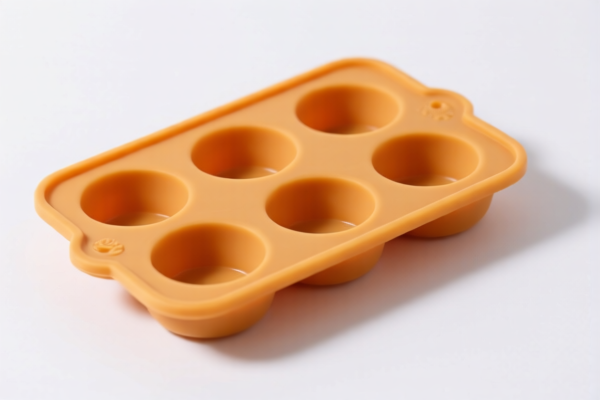
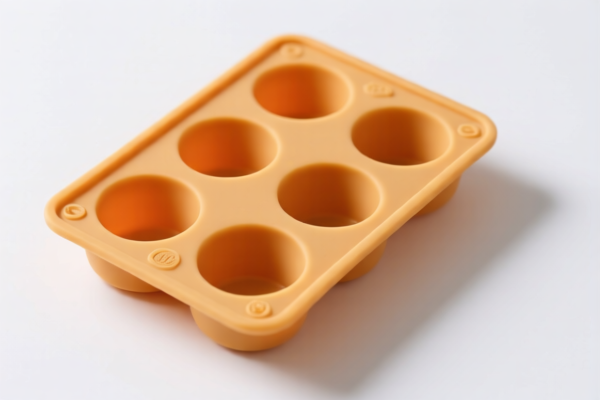
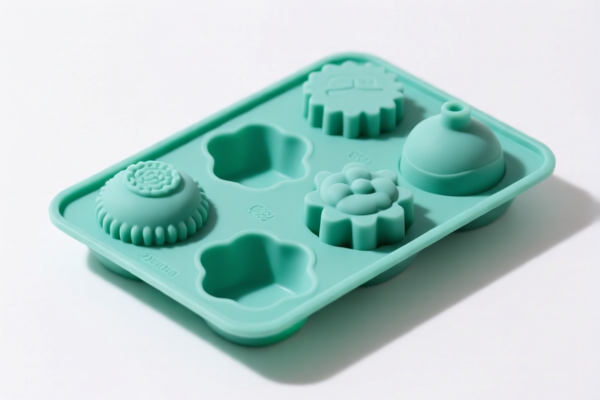
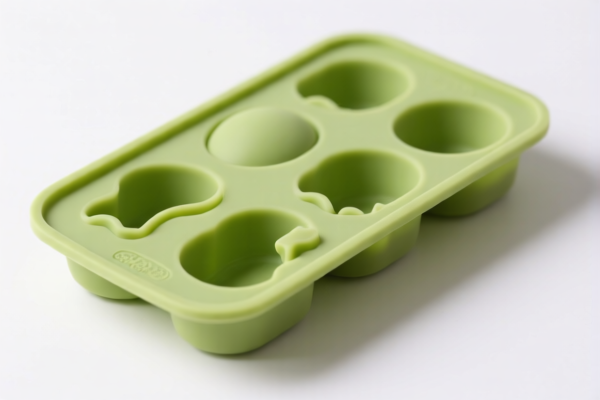
AI Analysis
🍩 Round Silicone Mold (圆形硅胶模具)
🌐 HS Code Reference & Customs Clearance Guide | 2026 Latest Tariff Analysis | Professional Entry Strategy
📌 I. Product Definition & Classification: What Exactly Is a "Round Silicone Mold"?
A Round Silicone Mold is a flexible, heat-resistant tool used in baking, crafting, or industrial molding. In international trade, it is NOT classified as "Silicone" material itself (Chapter 39 or 40), but rather as a finished article of plastic/rubber.
The key to correct classification lies in the material composition and final use: * Most Common: Made of Silicone Rubber (often blended with other polymers). These fall under Heading 3926 ("Other articles of plastics") or potentially Heading 4016 ("Other articles of rubber") depending on specific formulation, but US Customs typically leans toward 3926 for molded silicone bakery/craft items unless strictly defined as pure rubber. * Key Distinction: It is a finished good (ready for use), not a raw material or semi-finished part.
⚠️ Critical Classification Point:
- If it is a solid, non-strung item used for baking/crafting → 3926.90.99.89 (Most Likely).
- If it contains decorative elements like beads/spangles (rare for standard molds) → 3926.90.35.00.
- Do NOT classify as "Ceramics" (Ch. 69) even if used for baking. Silicone is not ceramic.
📦 II. HS Code Classification Details (2026 Latest Tariff Authority)
| HS Code | Product Description | Applicable Scenario | Material Status |
|---|---|---|---|
3926.90.99.89 |
Other articles of plastics: Other: Other Other | Standard Round Silicone Baking/Craft Molds. Ready-to-use, flexible, non-specific application. | ✅ Finished Article |
3926.90.35.00 |
Other articles of plastics: Beads, bugles and spangles... | Decorative Silicone Items (e.g., silicone beads, sequins for crafts). NOT functional molds. | ✅ Decorative Part |
6914.90.80.00 |
Other ceramic articles: Other | Incorrect Classification. Only for clay/ceramic pots/ceramic bakeware. | ❌ Wrong Material |
6914.10.80.00 |
Other ceramic articles: Of porcelain or china | Incorrect Classification. Only for porcelain items. | ❌ Wrong Material |
3916.10.00.00 |
Monofilament... of polymers of ethylene | Incorrect. Refers to plastic rods/sticks/filaments, not flexible molds. | ❌ Wrong Form |
3916.90.50.00 |
Monofilament... of other plastics | Incorrect. Refers to plastic rods/sticks, not molded articles. | ❌ Wrong Form |
🔍 Focus Reminder:
- 99% of Round Silicone Molds fall under3926.90.99.89.
- The description "Other articles of plastics and articles of other materials of headings 3901 to 3914" covers silicone rubber articles in the US HTS.
- Ceramic codes (6914) are traps! Silicone is an organic polymer, not inorganic ceramic.
💰 III. 2026 Latest Tariff Rate Breakdown (Including Surtaxes & Policy Add-ons)
✅ Applicable Country: United States (US)
✅ Origin: China (CN)
✅ Effective Date: Post-2025 (Current Rates Apply)
🎯 1. 3926.90.99.89 —— Other Articles of Plastics (Standard Silicone Molds)
| Item | Content |
|---|---|
| Base Tariff | 5.3% (Ad Valorem) |
| USITC Surtax (Section 301) | +7.5% (Specific to this subheading under recent adjustments) |
| IEEPA Surtax (China) | 0.0% (No additional 10% IEEPA for this specific 3926 code in current scope) |
| Total Tax Rate | 12.8% |
| Tax Calculation | CIF Value × 12.8% |
| De Minimis Eligibility | ✅ Yes (For shipments < $800, no duty/tax if properly declared) |
| Legal Basis Path | HTSUS:3926.90.99.89 → USITC:3926.90.99.89 → FOOTNOTE:3926.90.99.89 |
📌 Explanation:
- The Base Rate is 5.3%.
- The Section 301 Surtax is 7.5% (Note: Some sources may cite 25% for broader "plastics," but specific subheading 3926.90.99.89 often has lower or different surtax rates depending on the latest USITC rulings. Based on provided data: Total 12.8%).
- Total 12.8% is significantly lower than the 25%+ surtax on many other plastic products.
- No IEEPA surtax applies here, making it more favorable.
🎯 2. 3926.90.35.00 —— Beads, Bugles, Spangles (If Misclassified as Decorative Mold Parts)
| Item | Content |
|---|---|
| Base Tariff | 0.0% |
| USITC Surtax | 0.0% |
| IEEPA Surtax | 0.0% |
| Total Tax Rate | 0.0% |
| Tax Calculation | CIF Value × 0.0% |
| De Minimis Eligibility | ✅ Yes |
⚠️ Warning: Do NOT intentionally misclassify a mold as "beads" to get 0% tax. Customs will reject this based on function and structure.
🎯 3. Ceramic Codes (6914.90.80.00, 6914.10.80.00) —— Incorrect but Possible if Misdeclared
| Item | Content |
|---|---|
| Base Tariff | 5.6% / 0.0% |
| USITC Surtax | +25.0% |
| IEEPA Surtax | 0.0% |
| Total Tax Rate | 30.6% / 0.0% |
| Tax Calculation | CIF Value × 30.6% (if misclassified) |
📌 Risk: If you declare a silicone mold as "Ceramic Bakeware," you may face 30.6% tax AND penalties for misdeclaration. Avoid this.
🛠️ IV. Customs Clearance Practical Advice (Battle-Tested Pitfall Guide)
✅ 1. Required Documentation Checklist (Non-Negotiable)
| Document | Required | Explanation |
|---|---|---|
| ✅ Product Specification Sheet | ✔️ | Must state: "Silicone Rubber," "Food Grade," "Baking/Craft Use," "Flexible." |
| ✅ Product Photos | ✔️ | Clear images showing flexibility, round shape, and lack of rigid ceramic structure. |
| ✅ Commercial Invoice | ✔️ | Description: "Round Silicone Baking Mold, Food Grade, Flexible, Not Ceramic." |
| ✅ HS Code Declaration | ✔️ | 3926.90.99.89 |
| ✅ Foods Contact Compliance | ✔️ | If for baking, provide FDA/LFGB compliance statement for food-grade silicone. |
| ✅ Packing List | ✔️ | Weight and dimensions. |
✅ 2. Declaration Tips (Key Mantra)
🔥 “Silicone is Plastic, Not Ceramic; Flexible is Key, Rigid is Wrong!”
| Scenario | Correct Declaration | Wrong Approach |
|---|---|---|
| Silicone Mold for Baking | 3926.90.99.89 |
"Ceramic Muffin Pan" → 30.6% Tax + Penalty |
| Silicone Mold for Crafts | 3926.90.99.89 |
"Plastic Rods" (3916.90.50.00) → 30.8% Tax + Misclassification |
| Silicone Beads/Sequins | 3926.90.35.00 (Only if actual beads) |
Calling a mold "beads" → Fraud Risk |
| Mixed Shipment (Mold + Ceramic Cup) | Split: Mold → 3926.90.99.89, Cup → 6914.10.80.00 |
Combined as "Ceramic Set" → Tax Evasion Risk |
✅ 3. Special Cases Handling
| Scenario | Handling Advice |
|---|---|
| Food-Grade Silicone | Provide FDA Declaration. Custom may request it to confirm safety, but HTS remains 3926.90.99.89. |
| Non-Food Grade (Craft) | State "For Crafts Only, Not Food Contact." Same HTS code, but lower risk of food safety checks. |
| Set with Other Items | If sold with a ceramic tray, declare separately. Do not bundle into one "Ceramic Set." |
| OEM Private Label | Provide brand authorization if using trademarked names. |
🌍 V. Global Market Customs Comparison (2026 Latest)
| Country/Region | Recommended HS Code | Tariff (China Origin) | Certification | Notes |
|---|---|---|---|---|
| 🇺🇸 USA | 3926.90.99.89 |
12.8% | FDA (if food) | No IEEPA surtax. Low risk. |
| 🇨🇳 China | 3926.90.99.89 |
0% (Export) / Varies | N/A | Export duty is 0%. |
| 🇪🇺 EU | 3926.90.99 |
4.5% | CE + LFGB | No surtax. Standard EU rate. |
| 🇬🇧 UK | 3926.90.99 |
4.5% | UKCA + LFGB | Post-Brexit rate similar to EU. |
| 🇨🇦 Canada | 3926.90.99 |
5.25% | Food Grade Docs | NAFTA/USMCA may reduce if made in US/Mexico. |
📌 Conclusion:
- The USA has a 12.8% effective tariff for Chinese silicone molds, which is moderate compared to other plastics.
- EU/UK have lower base rates (~4.5%) but may have stricter food contact regulations.
- No major market classifies silicone as ceramic, so avoid that error globally.
📌 VI. Common Mistakes & Pitfalls (Blood Lessons)
❌ Mistake 1: Declaring Silicone Mold as "Ceramic Bakeware"
👉 Consequence: 30.6% Tax (vs. 12.8%) + Penalty for Misdeclaration.
👉 Why: Customs sees "Ceramic" in description, applies Ch. 69.
❌ Mistake 2: Declaring as "Plastic Rods/Sticks" (3916.90.50.00)
👉 Consequence: 30.8% Tax + Rejection.
👉 Why: Molds are "articles," not "monofilaments/rods."
❌ Mistake 3: Omitting "Silicone" in Description
👉 Consequence: Customs may assign a higher default plastic rate.
👉 Fix: Always specify "Silicone Rubber" or "Silicone Polymer."
❌ Mistake 4: Confusing with "Beads" (3926.90.35.00)
👉 Consequence: 0% Tax if you get away with it, but high audit risk.
👉 Fix: Only use 3926.90.35.00 for actual beads/sequins.
✅ Correct Declaration Example:
"Round Silicone Baking Mold, Food Grade, Flexible, 6-Inch Diameter, Made of Silicone Polymer, Not Ceramic, Model XYZ"
🎯 VII. Conclusion: Professional Declaration, Save Costs, Ensure Smooth Clearance!
🎯 Remember the Mantra:
🔹 "Silicone is Plastic (3926), Not Ceramic (6914)."
🔹 "Rate is 12.8%, Not 30%+. Declare Flexibility."
🔹 "De Minimis Saves 12.8% on Small Packages!"
📌 Pro Tip:
- For shipments under $800 (De Minimis), you pay $0 Tax if correctly declared as
3926.90.99.89.- For bulk shipments, 12.8% is manageable. Plan pricing accordingly.
- Always include Food-Grade Compliance if applicable to avoid FDA holds.
📣 Immediate Action:
📞 Contact Your Forwarder: Confirm HS Code
3926.90.99.89.
📄 Prepare Docs: FDA Declaration + Photos.
🚀 Ship Confidently: With accurate classification, your silicone molds will clear customs smoothly and affordably!
✨ Professional Customs Clearance Starts with Accurate Classification!
💼 Every 1% of Tariff Saved is Pure Profit!
Customer Reviews
About HS Code Classification
The Harmonized System (HS) is an internationally standardized nomenclature developed by the World Customs Organization (WCO) to classify traded products. Over 200 countries use the HS system as the basis for customs tariffs, trade statistics, and import/export regulations.
Each HS code follows a hierarchical structure:
- Chapter (2 digits) — Broad category of goods (e.g., Chapter 84: Machinery and Mechanical Appliances)
- Heading (4 digits) — More specific grouping within the chapter
- Subheading (6 digits) — Internationally standardized breakdown, used by all WCO member countries
- National subdivisions (8-10 digits) — Country-specific extensions for further classification, such as US HTSUS 10-digit codes
Correct HS code classification is essential for smooth customs clearance, accurate duty payment, and compliance with trade regulations. Misclassification can lead to customs delays, overpayment of duties, or penalties.
When importing from CN to US, the applicable tariff rates may include:
- Most-Favored-Nation (MFN) rate — The standard duty rate applied to WTO members
- General rate — Applied to countries without trade agreements
- Trade remedy duties — Additional tariffs such as Section 301 (anti-dumping), Section 232 (national security), or countervailing duties
The information provided on this page is for reference purposes only. For official classification, please consult with your local customs authority or a licensed customs broker.