rubber auxiliary agent dtdm paste
CN → US| HS Code | Tariff Rate | Origin | Destination | Doc |
|---|---|---|---|---|
| 3824992900 | 41.5% | CN | US | Official Doc |
| 3824405000 | 40.0% | CN | US | Official Doc |
| 3824992500 | 41.5% | CN | US | Official Doc |
| 3824992600 | 35.0% | CN | US | Official Doc |
| 3824992900 | 41.5% | CN | US | Official Doc |
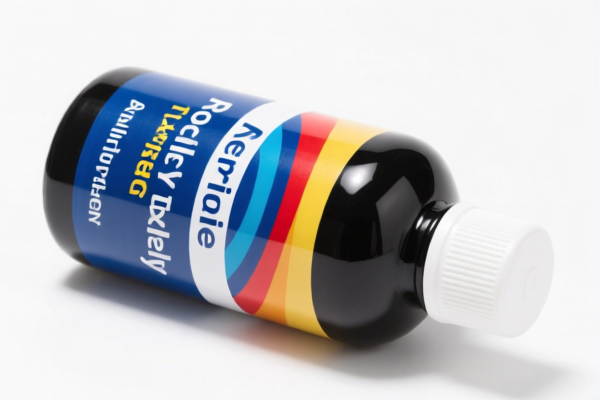
Product Images



AI Analysis
🧪 Rubber Auxiliary Agent DTDM Paste (Chemical Additives)
🌐 HS Code Reference & Customs Clearance Guide | 2026 Latest Tariff Analysis | Professional-Level Clearance Strategy
📌 I. Product Definition & Classification: What is "DTDM Paste"?
DTDM (2,2'-Dithiobis(benzothiazole)) Paste is a specialized vulcanization accelerator and antioxidant widely used in the rubber industry. In international trade, it falls under Chapter 38: Miscellaneous Chemical Products. It is not classified as a pure chemical substance (Chapter 29) but rather as a preparation/mixture due to its paste formulation and auxiliary nature.
⚠️ Key Classification Logic:
- If classified as a "Miscellaneous Chemical Product" → HS 3824.99.29.00 (Tax: 41.5%)
- If classified as a "Preparation for Rubber/Plastic Processing" → HS 3824.40.50.00 (Tax: 40.0%)
- ⚠️ Critical Note: Classification depends on the exact formulation intent stated in customs declaration. Misclassification can lead to significant tariff discrepancies.
📦 II. HS Code Classification Details (2026 Latest Tariff Authority Comparison)
| HS Code | Product Description | Application Scenario | Tariff Rate (CN Origin) |
|---|---|---|---|
3824.99.29.00 |
Miscellaneous chemical products (not elsewhere specified). DTDM Paste matches "other chemical products" logic. | General rubber auxiliary, antioxidant accelerator paste. | 41.5% |
3824.40.50.00 |
Preparations for the rubber or plastic industries. DTDM Paste fits "chemical industrial preparations." | Specific rubber processing additives, mixing aids. | 40.0% |
3824.99.25.00 |
TTD Rubber Additive (Alternative Classification). Matches "other chemical products" fallback logic. | If DTDM is misidentified or substituted with similar TTD paste. | 41.5% |
3824.99.26.00 |
Chemical preparations and mixtures. Lower base tariff scenario. | If specific exemption or lower-base formulation is certified. | 35.0% |
🔍 Important Reminder:
- HS 3824.99.29.00 is the most common classification for DTDM paste as a "miscellaneous chemical product."
- HS 3824.40.50.00 is applicable if the product is explicitly declared as a "preparation for rubber processing" and meets specific functional criteria.
- Do not classify as pure chemicals (Chapter 29) unless it is a 100% pure chemical compound without any carrier or formulation.
💰 III. 2026 Latest Tariff Rate Detailed Explanation (Including Surcharges & Policy Add-ons)
✅ Applicable Country: United States (US)
✅ Origin: China (CN)
✅ Effective Date: November 10, 2025 (and subsequent imports)
🎯 1. 3824.99.29.00 —— Miscellaneous Chemical Products (Most Common)
| Item | Content |
|---|---|
| Base Tariff | 6.5% (ad valorem) |
| Section 301 Surcharge | +25.0% (Added tariff for Chinese goods) |
| Section 122 Tariff | +10.0% (Specific additional tariff) |
| Total Tariff | 41.5% |
| Tax Calculation | CIF Value × 41.5% |
| De Minimis Eligibility | ❌ No (Not eligible for de minimis exemption) |
| Legal Basis Path | Section 301: 3824.99.29.00 → Section 122: 3824.99.29.00 → Base: 3824.99.29.00 |
📌 Explanation:
- Base 6.5%: Standard US tariff for miscellaneous chemical products.
- Section 301 25%: Imposed under the U.S. Trade Representative (USTR) list for Chinese chemical goods.
- Section 122 10%: Additional tariff targeting specific chemical categories.
- Total 41.5%: This is a high tariff category. Importers must account for this in pricing and supply chain decisions.
🎯 2. 3824.40.50.00 —— Preparations for Rubber/Plastic Industries
| Item | Content |
|---|---|
| Base Tariff | 5.0% |
| Section 301 Surcharge | +25.0% |
| Section 122 Tariff | +10.0% |
| Total Tariff | 40.0% |
| Tax Calculation | CIF Value × 40.0% |
| De Minimis Eligibility | ❌ No |
| Legal Basis Path | Section 301: 3824.40.50.00 → Section 122: 3824.40.50.00 → Base: 3824.40.50.00 |
📌 Note:
- Savings: This classification saves 1.5% compared to3824.99.29.00.
- Requirement: Must prove the product is specifically prepared for rubber/plastic processing (e.g., SDS, technical data sheet).
- Risk: Customs may challenge this classification if the product is not exclusively for rubber use.
🎯 3. 3824.99.26.00 —— Chemical Preparations & Mixtures (Lowest Tax Scenario)
| Item | Content |
|---|---|
| Base Tariff | 0.0% |
| Section 301 Surcharge | +25.0% |
| Section 122 Tariff | +10.0% |
| Total Tariff | 35.0% |
| Tax Calculation | CIF Value × 35.0% |
| De Minimis Eligibility | ❌ No |
| Legal Basis Path | Section 301: 3824.99.26.00 → Section 122: 3824.99.26.00 → Base: 3824.99.26.00 |
📌 Special Case:
- Only applicable if the product strictly fits the definition of "other chemical preparations" with no base tariff.
- High Risk: Customs often reclassifies this to3824.99.29.00if the specific formulation is not clearly documented.
🛠️ IV. Customs Clearance Practical Advice (Battle-Tested Pitfall Guide)
✅ 1. Documentation Checklist (Missing Items = Delays)
| Document | Required | Explanation |
|---|---|---|
| ✅ Safety Data Sheet (SDS) | ✔️ | Must specify composition, especially if claiming HS 3824.40.50.00 |
| ✅ Technical Data Sheet | ✔️ | Confirms usage in rubber processing |
| ✅ Product Photo | ✔️ | Clear image of packaging, label, and paste consistency |
| ✅ Commercial Invoice | ✔️ | Must state "Rubber Auxiliary Agent DTDM Paste" accurately |
| ✅ Packing List | ✔️ | Detail weight, volume, and number of packages |
| ✅ Origin Certificate | ✔️ | If eligible for any preferential treatment (rare for CN origin here) |
| ✅ Import License | ✔️ | Check if EPA or other agencies require prior approval for chemical imports |
✅ 2. Declaration Tips (Key Mantra)
🔥 "Classify as Preparation, Not Pure Chemical; Declare Usage, Not Just Name!"
| Scenario | Correct Declaration | Wrong Practice |
|---|---|---|
| DTDM Paste for Rubber | 3824.40.50.00 (40.0%) |
Misdeclare as 2934.99.00 (Pure Chemical) → Penalty + Back Tariff |
| DTDM Paste General Use | 3824.99.29.00 (41.5%) |
Use vague term "Chemical Mixture" → Audit Risk |
| TTD Alternative Paste | 3824.99.25.00 (41.5%) |
Confuse DTDM with TTD → HS Code Error |
| Low-Tax Classification | 3824.99.26.00 (35.0%) |
Without proof of 0% base tariff → Reclassification to 41.5% |
✅ 3. Special Situation Handling
| Situation | Handling Advice |
|---|---|
| OEM/Private Label | Provide contract showing supplier’s technical specs. Do not hide formulation details. |
| Mixed Shipments | Declare DTDM Paste separately. Do not bundle with low-tariff items. |
| Sample Shipments | Still subject to tariffs. Declare correctly even for samples. |
| Re-Export | If imported under 3824.40.50.00, ensure end-use is verified to avoid penalty. |
🌍 V. Global Market Customs Comparison (2026 Latest)
| Country/Region | Recommended HS Code | Tariff (CN Origin) | Certification Requirement | Notes |
|---|---|---|---|---|
| 🇺🇸 USA | 3824.40.50.00 / 3824.99.29.00 |
40.0% - 41.5% | EPA Registration (if applicable) | High tariffs due to Section 301 & 122 |
| 🇨🇳 China | 3824.99.29.00 |
6.5% | None | No surcharges |
| 🇪🇺 EU | 3824.99.98 |
6.5% | REACH Registration | No Section 301 |
| 🇦🇺 Australia | 3824.99.99 |
5.0% | NICNAS/GHS | Moderate tariffs |
| 🇯🇵 Japan | 3824.99.00 |
6.0% | PHAMA/Chemical Control | Stable rates |
📌 Conclusion:
- USA is the most costly market due to layered tariffs (Base + 301 + 122).
- EU and Japan offer more predictable and lower tax structures for chemical products.
- Supply Chain Strategy: Consider sourcing from non-China origins if shipping to the US to avoid Section 301 tariffs.
📌 VI. Common Errors & Pitfall Guide (Blood-Teaching Lessons)
❌ Error 1: Declaring DTDM Paste as a "Pure Chemical" (Chapter 29)
👉 Consequence: Customs reclassifies to Chapter 38 → Back taxes + penalties + delay.
❌ Error 2: Using "Chemical Mixture" without technical data
👉 Consequence: Customs assumes highest duty rate (41.5%) → Cost overrun.
❌ Error 3: Ignoring Section 122 Tariff
👉 Consequence: Underpayment by 10% → Audit flag.
❌ Error 4: Mislabeling TTD as DTDM
👉 Consequence: Incorrect HS Code (3824.99.25.00 vs 3824.99.29.00) → Compliance issue.
✅ Correct Practice:
"DTDM Paste, Rubber Auxiliary Agent, 2,2'-Dithiobis(benzothiazole) Preparation, HS 3824.40.50.00, SDS Available, EPA Compliant"
🎯 VII. Conclusion: Precision Classification Saves Money!
🎯 Remember Mantra:
🔹 "Paste is Preparation, Not Pure Chemical; 301 & 122 Apply, 41.5% is Standard!"
🔹 "SDS is King, Technical Data is Queen, Misclassification is Death!"
📌 Pro Tip:
- If your DTDM Paste is originating from Vietnam, Mexico, or Thailand, you may qualify for tariff exemptions or lower rates under USMCA or other trade agreements.
- Apply for Advance Ruling from US Customs before shipment to lock in the correct HS Code and tariff rate.
📣 Act Now:
📞 Contact a licensed customs broker + Provide SDS + Apply for HS Code Advance Ruling
🚀 Ensure smooth clearance, avoid penalties, and optimize your supply chain cost!
✨ Professional clearance starts with accurate classification!
💼 Every cent in taxes deserves precise calculation!
Customer Reviews
About HS Code Classification
The Harmonized System (HS) is an internationally standardized nomenclature developed by the World Customs Organization (WCO) to classify traded products. Over 200 countries use the HS system as the basis for customs tariffs, trade statistics, and import/export regulations.
Each HS code follows a hierarchical structure:
- Chapter (2 digits) — Broad category of goods (e.g., Chapter 84: Machinery and Mechanical Appliances)
- Heading (4 digits) — More specific grouping within the chapter
- Subheading (6 digits) — Internationally standardized breakdown, used by all WCO member countries
- National subdivisions (8-10 digits) — Country-specific extensions for further classification, such as US HTSUS 10-digit codes
Correct HS code classification is essential for smooth customs clearance, accurate duty payment, and compliance with trade regulations. Misclassification can lead to customs delays, overpayment of duties, or penalties.
When importing from CN to US, the applicable tariff rates may include:
- Most-Favored-Nation (MFN) rate — The standard duty rate applied to WTO members
- General rate — Applied to countries without trade agreements
- Trade remedy duties — Additional tariffs such as Section 301 (anti-dumping), Section 232 (national security), or countervailing duties
The information provided on this page is for reference purposes only. For official classification, please consult with your local customs authority or a licensed customs broker.