rubber chemical intermediate
CN → US| HS Code | Tariff Rate | Origin | Destination | Doc |
|---|---|---|---|---|
| 3403112000 | 35.2% | CN | US | Official Doc |
| 3403115000 | 36.4% | CN | US | Official Doc |
| 3824992900 | 41.5% | CN | US | Official Doc |
| 4005200000 | 35.0% | CN | US | Official Doc |
| 4005100000 | 35.0% | CN | US | Official Doc |
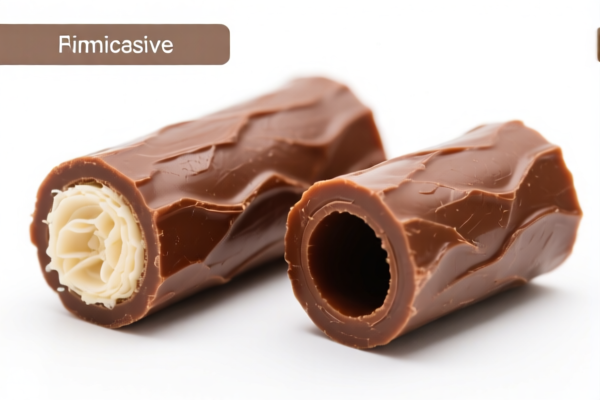
Product Images


AI Analysis
🧪 Rubber Chemical Intermediates: Precision Classification & 2026 U.S. Customs Strategy
🌐 HS Code Reference & Customs Clearance Guide | 2026 Latest Tariff Analysis | Strategic Compliance for Rubber Compounds 📌 I. Product Definition & Classification: What Are You Actually Importing?
Rubber Chemical Intermediates are complex mixtures of chemicals used in the processing, curing, or treating of rubber materials. In international trade, the distinction between "chemical preparations" and "rubber products" is critical because it determines whether you face lower base tariffs or higher punitive trade measures.
The key differentiator is the physical state and intended use: * Chemical Preparations (Chapter 34/38): Mixtures that act as additives (e.g., accelerators, antioxidants, plasticizers) before the rubber is vulcanized. * Rubber Products (Chapter 40): Mixtures that are the rubber itself (e.g., unvulcanized compounded rubber, masterbatches) ready for molding.
⚠️ Critical Distinction Point:
- If the product is a chemical mixture acting on the material but not is the rubber →归类 to 3403 or 3824.
- If the product is unvulcanized compounded rubber (a rubber mass with additives mixed in) → 归类 to 4005.
📦 II. HS Code Classification Matrix (2026 Official Tariff Schedule)
| HS Code | Product Description | Applicable Scenario | Material Status |
|---|---|---|---|
3403.11.20.00 |
Chemical preparations for treating rubber, containing oils ≥70% | Rubber processing agents, lubricants for molds | ✅ Chemical Mixture |
3403.11.50.00 |
Other chemical preparations for treating rubber | General rubber chemical mixtures, surface treatment agents | ✅ Chemical Mixture |
3824.99.29.00 |
Prepared binders for foundry molds, other chemical preparations | Generic chemical additives, no specific oil content data | ✅ Chemical Preparation |
4005.20.00.00 |
Other unvulcanized compounded rubber (non-plate/sheet) | Masterbatches, compounded rubber blocks, raw rubber mixtures | ✅ Rubber Material |
4005.10.00.00 |
Unvulcanized rubber plates, sheets, strip (incl. extruded but not cut) | Rubber sheets, strips, pre-formed rubber compounds | ✅ Rubber Material |
🔍 Key Reminder:
- Chapter 40 (4005) items are considered "Rubber Materials". Even if they contain chemicals, they are treated as the base rubber product.
- Chapter 34/38 (3403/3824) items are "Chemical Preparations". They are additives to the rubber, not the rubber itself.
- Misclassification Risk: Declaring a compounded rubber block (4005) as a chemical agent (3403) can lead to audits and back-tariffs.
💰 III. 2026 U.S. Tariff Rate Breakdown (Detailed Tax Analysis)
✅ Applicable Country: United States (US)
✅ Country of Origin: China (CN)
✅ Effective Date: November 10, 2025 (and subsequent imports)
🎯 1. 3403.11.20.00 – Chemical Preparations for Rubber (Oil-Heavy)
| Item | Detail |
|---|---|
| Base Duty | 0.2% (ad valorem) |
| Section 301 Duty | +25.0% (U.S. Trade Law, Footnote 9903.88.01) |
| IEEPA Surcharge | +10.0% (China/HK origin, effective Nov 10, 2025) |
| Total Tax Rate | 35.2% |
| Calculation | CIF Value × 35.2% |
| De Minimis Exemption | ❌ Not Eligible (deny_de_minimis applies) |
| Legal Path | IEEPA:9903.01.25 → Section 301:9903.88.01 → USITC:3403.11.20.00 |
📌 Explanation:
- The 25% Section 301 duty is the standard punitive tariff on Chinese goods.
- The 10% IEEPA duty is an additional surcharge for Chinese-origin chemicals/preparations.
- Total: 35.2%. This is high, but lower than some other chemical classifications.
🎯 2. 3403.11.50.00 – Other Chemical Preparations for Rubber
| Item | Detail |
|---|---|
| Base Duty | 1.4% (ad valorem) |
| Section 301 Duty | +25.0% |
| IEEPA Surcharge | +10.0% |
| Total Tax Rate | 36.4% |
| Calculation | CIF Value × 36.4% |
| De Minimis Exemption | ❌ Not Eligible |
| Legal Path | IEEPA:9903.01.25 → Section 301:9903.88.01 → USITC:3403.11.50.00 |
📌 Note:
- Only 1.2% higher than the previous code due to the higher base rate (1.4% vs 0.2%).
- Applies to rubber chemicals that are not oil-heavy or don't meet the specific criteria for3403.11.20.
🎯 3. 3824.99.29.00 – Other Chemical Preparations (General)
| Item | Detail |
|---|---|
| Base Duty | 6.5% (ad valorem) |
| Section 301 Duty | +25.0% |
| IEEPA Surcharge | +10.0% |
| Total Tax Rate | 41.5% |
| Calculation | CIF Value × 41.5% |
| De Minimis Exemption | ❌ Not Eligible |
| Legal Path | IEEPA:9903.01.25 → Section 301:9903.88.01 → USITC:3824.99.29.00 |
📌 Warning:
- This is the highest risk classification for rubber chemicals.
- It applies when the product doesn't fit neatly into "rubber treating preparations" (Chapter 34) but is still a chemical mixture.
- Avoid this if possible; try to classify under Chapter 34 if the product is specifically for rubber treatment.
🎯 4. 4005.20.00.00 – Other Unvulcanized Compounded Rubber
| Item | Detail |
|---|---|
| Base Duty | 0.0% (ad valorem) |
| Section 301 Duty | +25.0% |
| IEEPA Surcharge | +10.0% |
| Total Tax Rate | 35.0% |
| Calculation | CIF Value × 35.0% |
| De Minimis Exemption | ❌ Not Eligible |
| Legal Path | IEEPA:9903.01.25 → Section 301:9903.88.01 → USITC:4005.20.00.00 |
📌 Key Insight:
- Even though it’s a "rubber product," the 25% + 10% surcharges still apply to Chinese origin.
- Total: 35.0%. This is the lowest total tax rate among all options if the product qualifies as "unvulcanized compounded rubber."
🎯 5. 4005.10.00.00 – Unvulcanized Rubber Plates/Sheets/Strips
| Item | Detail |
|---|---|
| Base Duty | 0.0% (ad valorem) |
| Section 301 Duty | +25.0% |
| IEEPA Surcharge | +10.0% |
| Total Tax Rate | 35.0% |
| Calculation | CIF Value × 35.0% |
| De Minimis Exemption | ❌ Not Eligible |
| Legal Path | IEEPA:9903.01.25 → Section 301:9903.88.01 → USITC:4005.10.00.00 |
📌 Note:
- Same tax rate as4005.20.
- Applies specifically to sheet, strip, or plate forms. If your product is in lump or block form, use4005.20. If it’s rolled sheets, use4005.10.
🛠️ IV. Customs Clearance Operational Advice (Pitfall Avoidance)
✅ 1. Essential Documentation Checklist (Mandatory)
| Document | Required | Purpose |
|---|---|---|
| ✅ Technical Data Sheet (TDS) | ✔️ | Proves chemical composition vs. rubber compound status |
| ✅ Formula/Ingredient List | ✔️ | Determines if it’s a "preparation" (34/38) or "rubber" (40) |
| ✅ Product Photos | ✔️ | Visual proof of form (liquid, powder, sheet, block) |
| ✅ Commercial Invoice | ✔️ | Must clearly state: "Unvulcanized Compounded Rubber" OR "Chemical Preparation for Rubber" |
| ✅ Certificate of Origin (CO) | ✔️ | Critical for proving Chinese origin and applying surcharges |
| ✅ MSDS (Safety Data Sheet) | ✔️ | Required for chemical handling and classification verification |
✅ 2. Classification Strategy & Declaration Tips
🔥 "Form Follows Function: Liquid is Chemical, Solid is Rubber"
| Scenario | Recommended HS Code | Why? | Risk if Misclassified |
|---|---|---|---|
| Liquid/Powder Additive (e.g., accelerator, oil mix) | 3403.11.20.00 |
It’s a chemical agent, not the rubber base | Overpaying if 4005 eligible, or Underpaying if 3824 |
| Unvulcanized Rubber Blocks/Granules | 4005.20.00.00 |
It’s the rubber material itself | 41.5% if misclassified as 3824.99.29 |
| Rubber Sheets/Strips | 4005.10.00.00 |
Physical form dictates classification | 41.5% if misclassified as 3824.99.29 |
| Generic Chemical Mixture (Unclear use) | 3824.99.29.00 |
Fallback classification for uncertain chemical mixes | Highest tax burden (41.5%) |
✅ 3. Special Handling Notes
| Situation | Recommendation |
|---|---|
| OEM Custom Compounds | Provide customer formula + spec sheet. If >50% rubber by weight, argue for 4005. |
| Masterbatches (Colorants) | If rubber-based carrier → 4005. If wax/plastic carrier → 3403 or 3824. |
| Small Samples (<$800) | ❌ NO DE MINIMIS. All these HS codes are subject to deny_de_minimis. Do NOT use 80/86 forms. |
| Origin Marking | Clearly mark "Made in China" on packaging to avoid sudden penalties for origin fraud. |
🌍 V. Global Market Comparison (2026 Update)
| Region | Recommended HS Code | Total Tariff (CN Origin) | Key Requirement |
|---|---|---|---|
| 🇺🇸 USA | 4005.20.00.00 (Best) |
35.0% | Must prove unvulcanized state |
| 🇺🇸 USA | 3824.99.29.00 (Worst) |
41.5% | Avoid if possible |
| 🇪🇺 EU | 4005 |
~0-2% | CE/RoHS not always required for raw rubber |
| 🇨🇳 China | 4005 |
5% | CCC certification may apply for finished goods |
| 🇲🇽 Mexico | 4005 |
0% (USMCA) | Proven origin in USMCA territory |
📌 Conclusion:
- USA is the most expensive market due to Section 301 + IEEPA.
- Strategy: If possible, classify as4005(Rubber Material) to secure the 35.0% rate instead of 41.5% for chemicals.
- Supply Chain: Consider sourcing from Vietnam, Thailand, or Mexico to avoid Chinese surcharges entirely.
📌 VI. Common Errors & Blood-Curdling Lessons
❌ Error 1: Declaring "Rubber Masterbatch" as 3824 (41.5%) when it’s actually 4005 (35.0%).
👉 Result: Overpaying 6.5% tax on every shipment.
❌ Error 2: Using "De Minimis" (Section 321) for shipments under $800.
👉 Result: Seizure, fines, and blacklisting because these HS codes are deny_de_minimis.
❌ Error 3: Vague Description: "Rubber Chemicals."
👉 Result: Customs assigns 3824.99.29.00 by default → 41.5% tax. Always specify: "Unvulcanized Compounded Rubber Block."
❌ Error 4: Ignoring IEEPA 10% Surcharge.
👉 Result: Under-declaring value/tax → Penalties up to 3x the evaded duty.
✅ Correct Declaration Example:
"Unvulcanized Compounded Rubber Blocks, SBR/NR Blend, Color Black, Model RUB-01, Made in China. HS Code: 4005.20.00.00"
🎯 VII. Conclusion: Master Your Rubber Imports
🎯 Key Takeaway:
🔹 "If it’s rubber, it’s 4005. If it’s a chemical, it’s 3403/3824."
🔹 "4005 is cheapest (35.0%). 3824 is most expensive (41.5%)."
🔹 "Never use De Minimis for these items."
📌 Pro Tip:
If your product is a custom compound with >50% rubber content, push for
4005.
If it’s a liquid additive or powder accelerator, use3403.11.20.00.
Always verify with a licensed customs broker before shipping.
📣 Immediate Action:
📞 Contact a Customs Broker for a Pre-Ruling on
4005vs3403eligibility.
📄 Prepare TDS and MSDS for every shipment.
🚀 Minimize Tax, Maximize Speed, Stay Compliant.
✨ Precision Classification = Profit Protection
💼 Every percentage point counts in 2026!
Customer Reviews
About HS Code Classification
The Harmonized System (HS) is an internationally standardized nomenclature developed by the World Customs Organization (WCO) to classify traded products. Over 200 countries use the HS system as the basis for customs tariffs, trade statistics, and import/export regulations.
Each HS code follows a hierarchical structure:
- Chapter (2 digits) — Broad category of goods (e.g., Chapter 84: Machinery and Mechanical Appliances)
- Heading (4 digits) — More specific grouping within the chapter
- Subheading (6 digits) — Internationally standardized breakdown, used by all WCO member countries
- National subdivisions (8-10 digits) — Country-specific extensions for further classification, such as US HTSUS 10-digit codes
Correct HS code classification is essential for smooth customs clearance, accurate duty payment, and compliance with trade regulations. Misclassification can lead to customs delays, overpayment of duties, or penalties.
When importing from CN to US, the applicable tariff rates may include:
- Most-Favored-Nation (MFN) rate — The standard duty rate applied to WTO members
- General rate — Applied to countries without trade agreements
- Trade remedy duties — Additional tariffs such as Section 301 (anti-dumping), Section 232 (national security), or countervailing duties
The information provided on this page is for reference purposes only. For official classification, please consult with your local customs authority or a licensed customs broker.