rubber cushion tires corrosion resistant
CN → USProduct Images
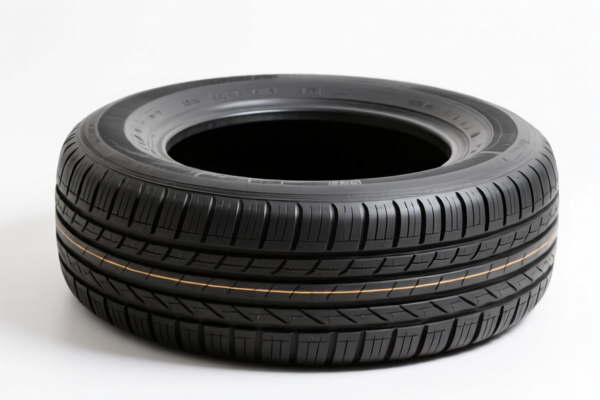
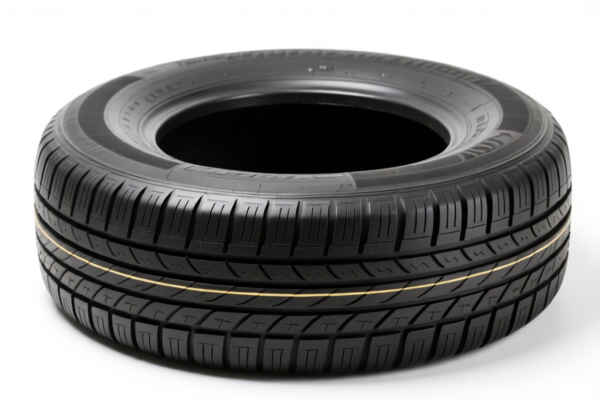
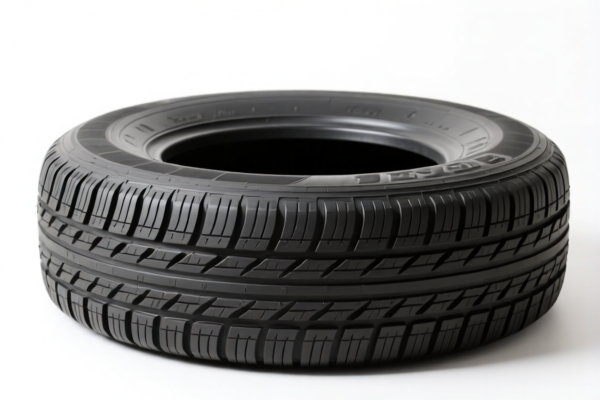
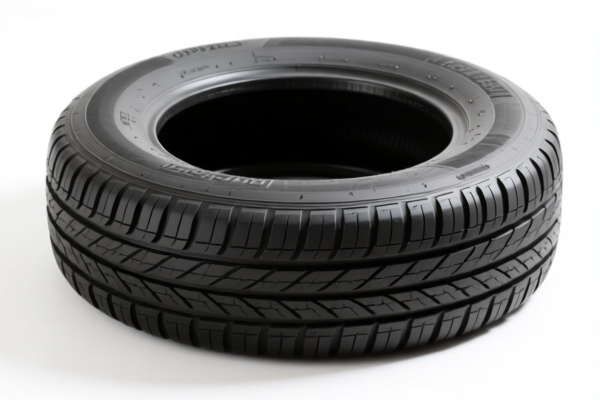
AI Analysis
Based on the input "rubber cushion tires corrosion resistant," here is the detailed classification, tax analysis, and customs clearance guidance following the requested Wiki-style format.
⚠️ Important Clarification on Input Terms:
The term "Rubber Cushion Tires" typically refers to solid rubber tires (often used on forklifts, warehouse pallet jacks, or industrial equipment) where the "cushion" design implies a flat, solid tread for indoor stability. The phrase "Corrosion Resistant" likely refers to steel wheel hubs or rim assemblies included in the set, or potentially additives in the rubber compound. However, under HS Code classification principles, rubber tires are classified by the vehicle they serve, not by the material of the rim or corrosion resistance of metal parts.
🛞 Rubber Cushion Tires (Industrial/Solid Rubber Tires)
Corrosion-Resistant Wheels/Rims Included
🌐 HS Code Reference & Customs Clearance Guide | 2026 Latest Tariff Analysis | Professional Clearance Strategy
📌 I. Product Definition & Classification: What Exactly Is a "Cushion Tire"?
A Cushion Tire is a type of solid rubber tire characterized by a smooth, flat tread surface. Unlike pneumatic (air-filled) tires, it contains no air chamber. It is primarily designed for indoor industrial use (warehouses, factories) where floor protection and stability are critical.
Key Characteristics: - Material: Solid rubber (possibly with synthetic blends), NOT pneumatic. - Application: Used on forklifts, pallet jacks, industrial carts, and material handling equipment. - "Corrosion Resistant" Aspect: This usually describes the steel rim/wheel hub attached to the tire. However, the tire itself does not corrode (rubber is inert). The classification remains based on the tire, not the rim.
⚠️ Critical Distinction:
- If it is solid rubber (no air) → Classified under Chapter 40 (Rubber).
- If it is pneumatic (air-filled, even if used on industrial trucks) → Classified under Chapter 87 (Vehicles) or Chapter 40 depending on type, but usually 40.11 if for motor vehicles.
- "Cushion" specifically implies solid, so we are looking at 40.11.
📦 II. HS Code Classification Details (2026 Latest Tariff Authority Match)
| HS Code | Product Description | Application | Pneumatic? | Corrosion Note |
|---|---|---|---|---|
4011.20.00.00 |
Pneumatic tires of a kind used on motor cars | Passenger vehicles | ✅ Yes | N/A |
4011.61.00.00 |
Pneumatic tires of a kind used on buses or trucks | Heavy-duty trucks | ✅ Yes | N/A |
4011.62.00.00 |
Pneumatic tires of a kind used on buses or trucks (New) | Heavy-duty trucks | ✅ Yes | N/A |
4011.91.00.00 |
Pneumatic tires of a kind used on aircraft | Aviation | ✅ Yes | N/A |
4011.92.00.00 |
Pneumatic tires of a kind used on motorcycles | Motorcycles | ✅ Yes | N/A |
4011.93.00.00 |
Solid or cushion tires | Forklifts, Pallet Jacks, Industrial Carts | ❌ No | Relevant |
4011.99.00.00 |
Other tires (solid/cushion) for other vehicles | Heavy machinery, tractors | ❌ No | Relevant |
🔍 重点提醒 (Key Reminder)
- "Cushion Tire" = Solid Rubber Tire. It does not contain air.
- If the tire is used on a forklift or industrial truck, it falls under4011.93.00.00(Solid/Cushion Tires for Motor Vehicles of Heading 87.01 to 87.05).
- If the tire is used on non-motorized carts (e.g., manual pallet jacks), it may still fall under4011.93.00.00or4011.99.00.00depending on national interpretation, but4011.93is the most common for industrial solid tires.
- "Corrosion Resistant": This is a product feature, not a classification factor. It does not change the HS Code. The steel rim is considered an accessory/part of the wheel assembly, but the tire is classified separately unless sold as a complete wheel assembly (in which case, it may still be classified by the tire under GRI 3(b)).
💰 III. 2026 Latest Tariff Rate Breakdown (Including Surcharges)
✅ Applicable Country: United States (US)
✅ Country of Origin: China (CN)
✅ Effective Date: November 10, 2025 (Includes subsequent imports)
🎯 1. 4011.93.00.00 —— Solid or Cushion Tires (For Motor Vehicles 87.01-87.05)
| Item | Content |
|---|---|
| Base Rate | 0% (ad valorem) |
| USITC Surcharge | +25% (from USITC Footnote 9903.88.01, Section 301) |
| IEEPA Surcharge | +10% (对华加征关税, IEEPA 9903.01.25) |
| Total Rate | 35% |
| Tax Calculation | CIF Value × 35% |
| De Minimis Eligibility | ❌ No (deny_de_minimis) |
| Legal Authority Path | IEEPA:9903.01.25 → USITC:4011.93.00.00 → FOOTNOTE:9903.88.01 |
📌 Explanation:
- Solid tires are considered industrial rubber products.
- They are subject to Section 301 Tariffs (+25%) and IEEPA Tariffs (+10%).
- Total 35% is a significant cost. Must be factored into landed cost.
🎯 2. 4011.99.00.00 —— Other Solid or Cushion Tires (For Non-Section 87 Vehicles)
| Item | Content |
|---|---|
| Base Rate | 0% |
| USITC Surcharge | +25% |
| IEEPA Surcharge | +10% |
| Total Rate | 35% |
| Tax Calculation | CIF Value × 35% |
| De Minimis Eligibility | ❌ No |
| Legal Authority Path | IEEPA:9903.01.25 → USITC:4011.99.00.00 → FOOTNOTE:9903.88.01 |
📌 Note:
- Even if the tire is for a manual cart (non-motorized), it often still falls under4011.99and is subject to the same 35% rate.
- There is no preferential rate for "corrosion-resistant" tires.
🛠️ IV. Customs Clearance Practical Advice (Avoiding Pitfalls)
✅ 1. Required Documentation Checklist
| Document | Required? | Notes |
|---|---|---|
| ✅ Product Specification Sheet | ✔️ | Must specify: Solid/Cushion, Diameter, Width, Load Rating, Application (e.g., "Forklift Tire") |
| ✅ Photos | ✔️ | Clear shot of the tire showing no valve stem (if solid) or valve stem (if pneumatic). "Cushion" usually has no valve. |
| ✅ Material Composition | ✔️ | State: "100% Solid Rubber, No Air Chamber." Mention if reinforced with steel belts. |
| ✅ Commercial Invoice | ✔️ | Must explicitly state: "Solid Rubber Cushion Tire" and "Not Pneumatic". Avoid vague terms like "Industrial Tire." |
| ✅ Origin Certificate | ✔️ | If not from China, may avoid IEEPA surcharge. |
| ✅ Declaration of Non-Pneumatic | ✔️ | Strongly recommended to include a letter stating: "This product is a solid cushion tire, not pneumatic." |
✅ 2. Declaration Tips (Key Mnemonic)
🔥 "Solid No Air, 4011.93, 35% Tax, Declare 'Cushion'!"
| Scenario | Correct Declaration | Wrong Practice |
|---|---|---|
| Solid Forklift Tire | 4011.93.00.00 - "Solid Rubber Cushion Tire for Forklifts" |
Declaring as "Motor Vehicle Part" → May face scrutiny |
| Pneumatic Industrial Tire | 4011.61.00.00 or 4011.92.00.00 |
Declaring as "Solid" → Misclassification Risk |
| Tire + Steel Rim | Tire only (4011.93.00.00) |
Declaring as "Wheel Assembly" → May shift to Ch. 87, changing duty |
| "Corrosion Resistant" | Ignore in HS Code, mention in description | Do NOT use "Corrosion Resistant" as a classification trigger |
⚠️ Critical:
- If the tire is sold with a steel rim as a single unit, the US CBP may classify the entire assembly under8708.99.95(Parts and Accessories of Motor Vehicles) if it is considered a "wheel." However, GRI 3(b) often favors the tire classification if it gives the essential character.
- Safer Approach: Declare the tire separately as4011.93.00.00and the rim as8307.90.00.00or similar, unless they are permanently assembled and marketed as a single "wheel." If assembled, consult a customs broker.
✅ 3. Special Cases
| Situation | Handling Advice |
|---|---|
| OEM Custom Tires | Provide customer PO and design specs. Label as "Custom Solid Cushion Tire." |
| "Corrosion-Resistant" Rims | Clarify that the tire is rubber. The rim's corrosion resistance is a feature, not a classification factor. |
| Mixed Shipment | If shipping pneumatic and solid tires together, separate entries are required. Do not combine. |
| Origin: Vietnam/Mexico | IEEPA Surcharge (+10%) may be exempt. Only USITC (+25%) applies. Total 25%. |
🌍 V. Global Market Clearance Comparison (2026 Latest)
| Country/Region | Recommended HS Code | Tariff | Certification | Notes |
|---|---|---|---|---|
| 🇺🇸 USA | 4011.93.00.00 |
35% (China) | None | High tariff due to Section 301. |
| 🇨🇳 China | 4011.93.00.00 |
0% | None | Import duty is 0%. |
| 🇪🇺 EU | 4011.93.00.00 |
0% (if non-pneumatic) | CE (if applicable) | No extra surcharges. |
| 🇦🇺 Australia | 4011.93.00.00 |
5% | RCM | Standard MFN rate. |
| 🇯🇵 Japan | 4011.93.00.00 |
0% | PSE | Zero tariff. |
📌 Conclusion:
- USA is the most expensive market due to Section 301 + IEEPA.
- China, EU, Japan, and Australia have 0-5% rates.
- "Corrosion Resistant" does not affect tariff in any major market.
📌 VI. Common Errors & Pitfalls (Lessons Learned)
❌ Error 1: Declaring Solid Tires as "Motor Vehicle Parts" (8708.99)
👉 Consequence: Misclassification. CBP may reject or reclassify, causing delays. Solid tires are rubber products (Ch. 40), not auto parts (Ch. 87), unless part of a complete wheel assembly.
❌ Error 2: Ignoring "Cushion" Terminology
👉 Consequence: If you just say "Rubber Tire," CBP may assume pneumatic. Must explicitly state "Solid" or "Cushion".
❌ Error 3: Combining Pneumatic and Solid Tires in One Entry
👉 Consequence: Different HS Codes, different tariffs. Must be separate line items.
❌ Error 4: Assuming "Corrosion Resistant" Lowers Tariff
👉 Consequence: No such provision. Focus on material (Rubber) and type (Solid).
✅ Correct Declaration:
"Solid Rubber Cushion Tire, Non-Pneumatic, For Industrial Forklifts, Model XYZ, 6.50-10, 1500kg Load Capacity"
🎯 VII. Conclusion: Professional Clearance for Solid Tires
🎯 Remember the Mnemonic:
🔹 "Solid No Air, 4011.93, 35% Tax, Declare 'Cushion'!"
🔹 "Corrosion is a Feature, Not a Code!"
🔹 "Separate Pneumatic from Solid, Avoid CBP Scrutiny!"
📌 Pro Tip:
If your tires are originating from Vietnam, Mexico, Thailand, or Malaysia, you can avoid the 10% IEEPA surcharge. The total tariff will be 25% instead of 35%.
👉 Action: Ensure Country of Origin is clearly stated on the commercial invoice and bill of lading.
📣 Immediate Action:
📞 Contact a licensed customs broker for Advance Ruling if shipping large volumes.
🚀 Label Clearly: "Solid Rubber Cushion Tire - Not Pneumatic."
💼 Cost Savings: Consider shifting production to non-China origins if shipping to the US.
✨ Professional Clearance Starts with Accurate Classification!
💼 Every Percentage Point Counts in Landed Cost!
Customer Reviews
About HS Code Classification
The Harmonized System (HS) is an internationally standardized nomenclature developed by the World Customs Organization (WCO) to classify traded products. Over 200 countries use the HS system as the basis for customs tariffs, trade statistics, and import/export regulations.
Each HS code follows a hierarchical structure:
- Chapter (2 digits) — Broad category of goods (e.g., Chapter 84: Machinery and Mechanical Appliances)
- Heading (4 digits) — More specific grouping within the chapter
- Subheading (6 digits) — Internationally standardized breakdown, used by all WCO member countries
- National subdivisions (8-10 digits) — Country-specific extensions for further classification, such as US HTSUS 10-digit codes
Correct HS code classification is essential for smooth customs clearance, accurate duty payment, and compliance with trade regulations. Misclassification can lead to customs delays, overpayment of duties, or penalties.
When importing from CN to US, the applicable tariff rates may include:
- Most-Favored-Nation (MFN) rate — The standard duty rate applied to WTO members
- General rate — Applied to countries without trade agreements
- Trade remedy duties — Additional tariffs such as Section 301 (anti-dumping), Section 232 (national security), or countervailing duties
The information provided on this page is for reference purposes only. For official classification, please consult with your local customs authority or a licensed customs broker.