rubber gloves fingerless
CN → US| HS Code | Tariff Rate | Origin | Destination | Doc |
|---|---|---|---|---|
| 3926204050 | 16.5% | CN | US | Official Doc |
| 3926204010 | 16.5% | CN | US | Official Doc |
Product Images
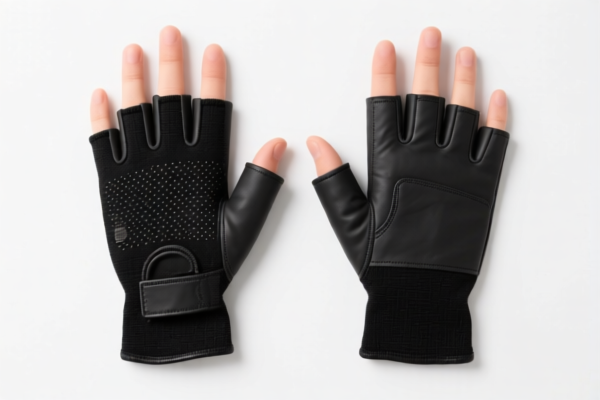
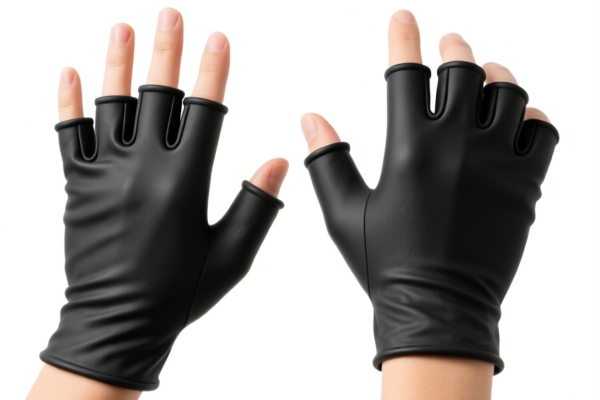
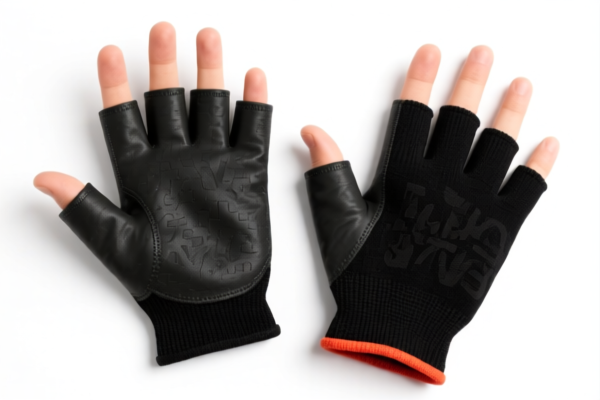
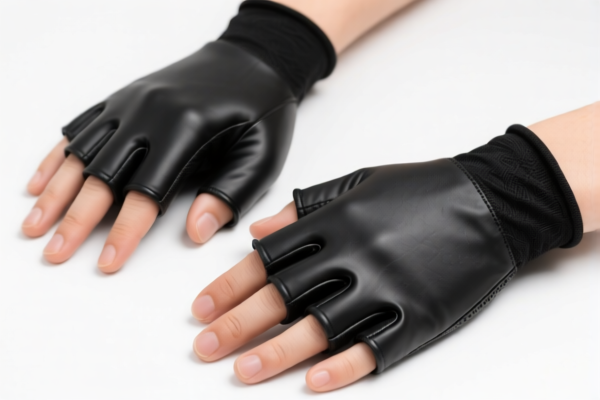
AI Analysis
🧤 Rubber Gloves, Fingerless (Non-Disposable)
🌐 HS Code Reference & Customs Clearance Guide | 2026 Latest Tariff Analysis | Professional Clearance Strategy
📌 1. Product Definition & Classification: Are You Sure It’s “Fingerless Rubber Gloves”?
Fingerless gloves, typically made of rubber or plastic, fall under the broad category of “Articles of Apparel and Clothing Accessories” made from plastics. In international trade, the key distinction lies in whether the product is disposable or reusable/general purpose.
- Reusable/General Fingerless Gloves: Thick, durable, intended for mechanical work, gardening, or industrial handling. No packaging for single use.
- Disposable Fingerless Gloves: Thin, often packaged individually or in bulk rolls, intended for medical, laboratory, or temporary use.
⚠️ Key Classification Point:
- If the gloves are not intended for single use (i.e., reusable, durable) → Classified under3926.20.40.50
- If the gloves are intended for single use (i.e., disposable) → Classified under3926.20.40.10
📦 2. HS Code Classification Details (2026 Latest Tariff Authority Comparison)
| HS Code | Product Description | Usage Scenario | Reusability |
|---|---|---|---|
3926.20.40.50 |
Other gloves, mittens, and mitts (Other) | Reusable fingerless gloves for work, gardening, industrial handling | ✅ Reusable |
3926.20.40.10 |
Other gloves, mittens, and mitts (Other) - Disposable | Disposable fingerless gloves for medical, lab, or temporary use | ❌ Disposable |
🔍 Important Reminder:
- Both codes fall under Heading 3926: Other articles of plastics and articles of other materials of headings 3901 to 3914.
- The critical difference is disposability. If unsure, provide product samples or detailed specifications to customs.
💰 3. 2026 Latest Tariff Rate Breakdown (Including Additional Taxes & Policy Surcharges)
✅ Applicable Country: United States (US)
✅ Country of Origin: China (CN)
✅ Effective Date: 2025 onwards (subject to current trade policies)
🎯 1. 3926.20.40.50 —— Reusable Fingerless Rubber Gloves
| Item | Detail |
|---|---|
| Base Tariff Rate | 6.5% (ad valorem) |
| Additional Tariff (USITC 301) | 0% |
| IEEPA Surcharge | 0% |
| Total Tariff Rate | 6.5% |
| Tax Calculation | CIF Value × 6.5% |
| De Minimis Exemption | ❌ Not Applicable (if value > $800, full duty applies; if < $800, exempt under Section 321) |
| Legal Basis Path | HTSUS:3926.20.40.50 → USITC:3926.20.40.50 → FOOTNOTE:None |
📌 Explanation:
- The base tariff for non-disposable plastic gloves is 6.5%.
- Currently, no additional 25% or 10% tariffs apply to this specific HS code under the 301/IEEPA lists for most plastic glove categories.
- Total cost impact is low, making it a favorable classification for importers.
🎯 2. 3926.20.40.10 —— Disposable Fingerless Rubber Gloves
| Item | Detail |
|---|---|
| Base Tariff Rate | 6.5% (ad valorem) |
| Additional Tariff (USITC 301) | 0% |
| IEEPA Surcharge | 0% |
| Total Tariff Rate | 6.5% |
| Tax Calculation | CIF Value × 6.5% |
| De Minimis Exemption | ❌ Not Applicable (if value > $800, full duty applies; if < $800, exempt under Section 321) |
| Legal Basis Path | HTSUS:3926.20.40.10 → USITC:3926.20.40.10 → FOOTNOTE:None |
📌 Note:
- Disposable gloves also fall under 6.5% base tariff.
- No additional surcharges apply.
- Ensure the product is clearly labeled as “Disposable” in commercial invoices to avoid misclassification.
🛠️ 4. Customs Clearance Practical Advice (Pitfall Avoidance Guide)
✅ 1. Required Documentation Checklist (All Must Be Provided)
| Document | Required | Explanation |
|---|---|---|
| ✅ Product Specifications | ✔️ | Material (e.g., nitrile, latex, PVC), thickness, size |
| ✅ Product Photos | ✔️ | Clear images of gloves, packaging, labels |
| ✅ Commercial Invoice | ✔️ | Must specify “Fingerless Gloves, Non-Disposable” or “Disposable” |
| ✅ Packing List | ✔️ | Quantity per carton, total weight, dimensions |
| ✅ Certificate of Origin (if applicable) | ✔️ | For potential preferential treatment under FTAs |
| ✅ FDA Registration (if medical/laboratory) | ✔️ | For disposable gloves intended for medical use |
✅ 2. Declaration Tips (Key Mnemonic)
🔥 “Material + Use Case = Correct HS Code”
| Scenario | Correct Declaration | Incorrect Practice |
|---|---|---|
| Reusable fingerless gloves for industrial use | 3926.20.40.50 – “Non-Disposable Fingerless Gloves” |
Misdeclared as disposable → Potential audit risk |
| Disposable fingerless gloves for medical use | 3926.20.40.10 – “Disposable Fingerless Gloves” |
Misdeclared as reusable → Underpayment risk |
| Mixed shipment (reusable + disposable) | Split HS Codes in declaration | Combined under one code → Classification error |
✅ 3. Special Case Handling
| Scenario | Handling Advice |
|---|---|
| OEM Custom Gloves | Provide client order + design specs to confirm reusability |
| Packaging for Single Use | If individually wrapped and intended for one-time use, classify as disposable (3926.20.40.10) |
| Mixed Material Gloves | If >50% rubber/plastic by weight, classify under Heading 3926 |
| Medical Grade Disposable Gloves | Ensure FDA 510(k) clearance if intended for medical use |
🌍 5. Global Major Market Clearance Comparison (2026 Latest)
| Country/Region | Recommended HS Code | Tariff Rate | Certification Required | Notes |
|---|---|---|---|---|
| 🇺🇸 USA | 3926.20.40.50 / 3926.20.40.10 |
6.5% | None (unless medical) | No additional tariffs |
| 🇨🇳 China | 3926.20.40.50 / 3926.20.40.10 |
6.5% | CCC (if applicable) | No surcharges |
| 🇪🇺 EU | 3926.20.40.50 / 3926.20.40.10 |
6.5% | CE Marking (if medical) | VAT varies by country |
| 🇬🇧 UK | 3926.20.40.50 / 3926.20.40.10 |
6.5% | UKCA Marking (if medical) | Post-Brexit rules apply |
| 🇦🇺 Australia | 3926.20.40.50 / 3926.20.40.10 |
5% | TGA (if medical) | No surcharges |
📌 Conclusion:
- USA and China both apply 6.5% base tariff with no additional surcharges.
- EU and UK may require CE/UKCA marking for medical-grade disposable gloves.
- Australia offers a slightly lower rate (5%) but requires TGA compliance for medical use.
📌 6. Common Mistakes & Pitfall Guide (Lessons Learned)
❌ Mistake 1: Declaring reusable gloves as disposable to avoid inspection
👉 Consequence: Customs may reject declaration, leading to delays, fines, or return of goods.
❌ Mistake 2: Misidentifying material (e.g., calling latex gloves “rubber” without specifying)
👉 Consequence: Potential misclassification if material affects tariff treatment.
❌ Mistake 3: Failing to specify “disposable” vs. “non-disposable” in invoice
👉 Consequence: Customs uncertainty → Increased scrutiny, potential audit.
❌ Mistake 4: Ignoring medical regulations for disposable gloves
👉 Consequence: FDA/CE non-compliance → Product blocked at border.
✅ Correct Practice:
“Fingerless Gloves, Made of Nitrile Rubber, Non-Disposable, For Industrial Use, Model XYZ, Packaged in Box of 12”
🎯 7. Conclusion: Professional Declaration Saves Time, Money, and Hassle!
🎯 Remember This Mnemonic:
🔹 “Reusable = .50, Disposable = .10, Rate = 6.5%, No Surcharge!”
🔹 “Specify Material + Use Case = Smooth Clearance!”
📌 Pro Tip:
If your gloves are intended for medical or laboratory use, ensure they meet FDA (US) or CE (EU) standards.
For large shipments, consider applying for Advance Ruling to confirm classification.
📣 Take Action Now:
📞 Contact Professional Customs Broker + Provide Product Specs + Confirm HS Code
🚀 Ensure Smooth Clearance, Low Cost, and Full Compliance!
✨ Professional Clearance Starts with Accurate Classification!
💼 Every Cent Saved Matters!
Customer Reviews
About HS Code Classification
The Harmonized System (HS) is an internationally standardized nomenclature developed by the World Customs Organization (WCO) to classify traded products. Over 200 countries use the HS system as the basis for customs tariffs, trade statistics, and import/export regulations.
Each HS code follows a hierarchical structure:
- Chapter (2 digits) — Broad category of goods (e.g., Chapter 84: Machinery and Mechanical Appliances)
- Heading (4 digits) — More specific grouping within the chapter
- Subheading (6 digits) — Internationally standardized breakdown, used by all WCO member countries
- National subdivisions (8-10 digits) — Country-specific extensions for further classification, such as US HTSUS 10-digit codes
Correct HS code classification is essential for smooth customs clearance, accurate duty payment, and compliance with trade regulations. Misclassification can lead to customs delays, overpayment of duties, or penalties.
When importing from CN to US, the applicable tariff rates may include:
- Most-Favored-Nation (MFN) rate — The standard duty rate applied to WTO members
- General rate — Applied to countries without trade agreements
- Trade remedy duties — Additional tariffs such as Section 301 (anti-dumping), Section 232 (national security), or countervailing duties
The information provided on this page is for reference purposes only. For official classification, please consult with your local customs authority or a licensed customs broker.