rubber impregnated/coated cotton/man made fiber work gloves without fourchettes
CN → US| HS Code | Tariff Rate | Origin | Destination | Doc |
|---|---|---|---|---|
| 4015191110 | 38.0% | CN | US | Official Doc |
| 6216002410 | 30.7% | CN | US | Official Doc |
| 6216002425 | 30.7% | CN | US | Official Doc |
| 4015195100 | 49.0% | CN | US | Official Doc |
| 6116105520 | 30.7% | CN | US | Official Doc |
Product Images
AI Analysis
🧤 Rubber-impregnated/coated Cotton/Man-made Fiber Work Gloves Without Fourchettes
🌐 HS Code Reference & Customs Clearance Guide | 2026 Latest Tariff Analysis | Professional Entry Strategy
📌 I. Product Definition & Classification: Do You Really Understand "Work Gloves"?
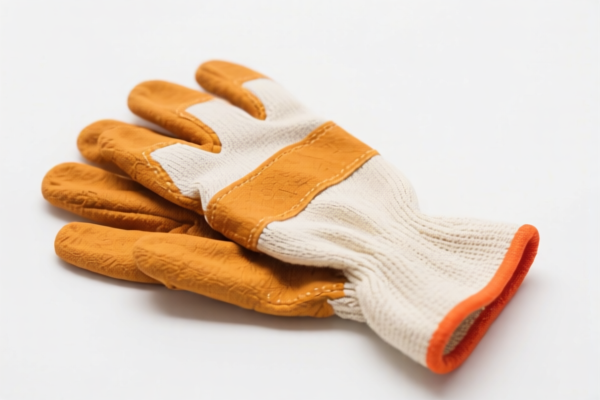
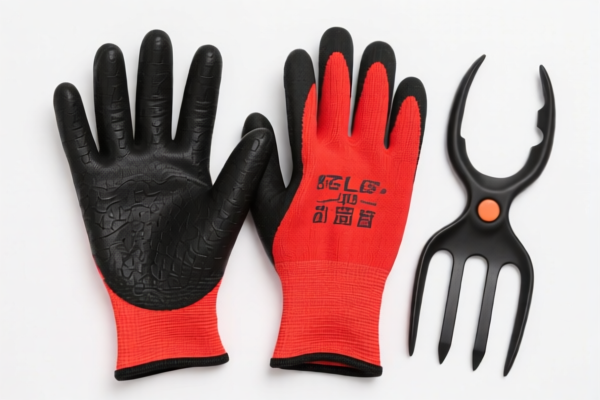
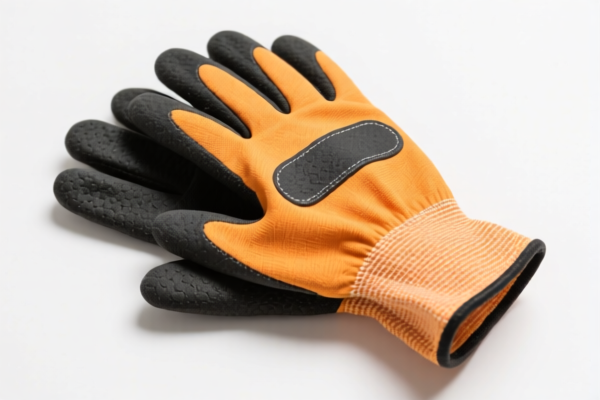
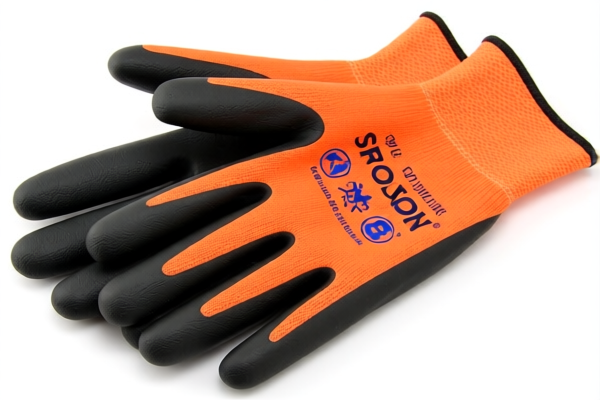
Work gloves are essential protective equipment in industrial, construction, and manufacturing sectors. In international trade, they are strictly categorized by material composition and construction method (knitted vs. seamless/other). The key differentiator here is "Without Fourchettes" (No Gusset/No Fourchette), which implies a specific structural design, and the material mix of rubber coating/impregnation on cotton or man-made fibers.
⚠️ Key Distinction Point:
- If the base material is rubber (e.g., latex, nitrile, neoprene) and not coated, it falls under Chapter 40.
- If the base material is textile (cotton, synthetic fiber) and is coated/impregnated with rubber, it falls under Chapter 61 (Knitted) or Chapter 62 (Non-knitted).
- "Without Fourchettes" typically refers to gloves where the fingers are not separated by a gusset, or it refers to a specific seamless construction. This detail is critical for distinguishing between HS 4015 (Rubber) and HS 6216/6116 (Textile-based).
📦 II. HS Code Classification Details (2026 Latest Tariff Authority Comparison)
Based on the input data, the following HS Codes are relevant for Rubber-impregnated/coated Cotton/Man-made Fiber Work Gloves Without Fourchettes:
| HS Code | Product Description | Key Characteristics | Construction Type |
|---|---|---|---|
6216.00.24.10 |
Rubber-impregnated/coated gloves of cotton or man-made fibers, without fourchettes | Base: Cotton/Synthetic; Coating: Rubber; Structure: No fourchettes | Non-knitted (Woven/Other) |
6216.00.24.25 |
Rubber-impregnated/coated gloves of cotton or man-made fibers, without separate palms | Base: Cotton/Synthetic; Coating: Rubber; Structure: No separate palm panels | Non-knitted (Woven/Other) |
6116.10.55.20 |
Knitted or crocheted gloves of cotton/man-made fibers, impregnated/coated with rubber, without side seams | Base: Cotton/Synthetic; Coating: Rubber; Structure: Knitted, No side seams | Knitted |
🔍 Important Note:
- Chapter 62 vs. Chapter 61: If the glove is knitted (looped yarn), use6116.10.55.20. If it is woven or made from other textile materials (non-knitted), use6216.00.24.10or6216.00.24.25.
- "Without Fourchettes" vs. "Without Separate Palms": These terms often describe similar structural efficiencies but may have specific legal interpretations in customs rulings. Ensure the physical structure matches the description precisely.
- Exclude Chapter 40: Codes like4015.19.11.10and4015.19.51.00refer to Rubber gloves (e.g., latex/nitrile dipped gloves), NOT rubber-coated textile gloves. Do NOT use these codes for cotton/synthetic base gloves.
💰 III. 2026 Latest Tariff Rate Details (Including Surtaxes & Policy Surcharges)
✅ Applicable Country: USA (US)
✅ Origin: China (CN)
✅ Effective Date: From November 10, 2025 (and subsequent imports)
🎯 1. 6216.00.24.10 —— Rubber-impregnated/coated gloves of cotton/man-made fiber, without fourchettes
| Item | Detail |
|---|---|
| Base Tariff | 13.2% (ad valorem) |
| Section 301 Surtax | +7.5% |
| IEEPA Surtax (Section 122/Other) | +10% |
| Total Tariff Rate | 30.7% |
| Tax Calculation | CIF Value × 30.7% |
| De Minimis Exemption | ❌ Not Eligible (deny_de_minimis) |
| Legal Basis Path | USITC:6216.00.24.10 → FOOTNOTE:301 → IEEPA:9903.01.24 |
📌 Explanation:
- The 13.2% base rate applies to gloves of textile materials impregnated with rubber.
- The 7.5% Section 301 surtax is the standard rate for many textile/glove categories under current trade policies.
- The 10% IEEPA surtax is applied to Chinese-origin goods under specific emergency powers.
- Total 30.7% is a significant cost factor. Ensure accurate material declaration to avoid misclassification into Chapter 40 (which has higher rates).
🎯 2. 6216.00.24.25 —— Rubber-impregnated/coated gloves of cotton/man-made fiber, without separate palms
| Item | Detail |
|---|---|
| Base Tariff | 13.2% (ad valorem) |
| Section 301 Surtax | +7.5% |
| IEEPA Surtax (Section 122/Other) | +10% |
| Total Tariff Rate | 30.7% |
| Tax Calculation | CIF Value × 30.7% |
| De Minimis Exemption | ❌ Not Eligible (deny_de_minimis) |
| Legal Basis Path | USITC:6216.00.24.25 → FOOTNOTE:301 → IEEPA:9903.01.24 |
📌 Note:
- This code is structurally similar to6216.00.24.10but differs in the specific construction detail ("without separate palms").
- The tax rate is identical (30.7%).
- Choose the code that best matches the physical structure of your product. Misclassification can lead to penalties.
🎯 3. 6116.10.55.20 —— Knitted gloves of cotton/man-made fiber, impregnated/coated with rubber, without side seams
| Item | Detail |
|---|---|
| Base Tariff | 13.2% (ad valorem) |
| Section 301 Surtax | +7.5% |
| IEEPA Surtax (Section 122/Other) | +10% |
| Total Tariff Rate | 30.7% |
| Tax Calculation | CIF Value × 30.7% |
| De Minimis Exemption | ❌ Not Eligible (deny_de_minimis) |
| Legal Basis Path | USITC:6116.10.55.20 → FOOTNOTE:301 → IEEPA:9903.01.24 |
📌 Note:
- This code applies ONLY to knitted gloves.
- If your gloves are woven or non-knitted, do not use this code.
- The 30.7% rate applies to all three textile-based codes in the provided data.
🛠️ IV. Customs Clearance Practical Advice (Practical Pitfall Avoidance Guide)
✅ 1. Preparation Checklist (All Required)
| Document | Must Provide | Explanation |
|---|---|---|
| ✅ Product Specification Sheet | ✔️ | Must specify: Base material (Cotton/Synthetic), Coating material (Rubber type), Knitted vs. Non-knitted, Presence/absence of fourchettes or side seams. |
| ✅ Material Composition Certificate | ✔️ | Proof of % cotton vs. man-made fiber, and % rubber coating weight. |
| ✅ Product Photos (Clear & Detailed) | ✔️ | Must show: Texture of the glove, coating layer, finger construction (gusset/fourchette presence/absence), and side seams. |
| ✅ Commercial Invoice | ✔️ | Must explicitly state: "Rubber-coated Cotton Gloves, Without Fourchettes, HS 6216.00.24.10" (or applicable code). |
| ✅ Packing List | ✔️ | Detailing quantity, weight, and package dimensions. |
| ✅ Certificate of Origin (CO) | ✔️ | If claiming any preferential treatment (though unlikely for China origin in this context). |
✅ 2. Declaration Tips (Key Mantra)
🔥 “Material First, Structure Second, Code Precision Saves Money!”
| Scenario | Correct Declaration | Wrong Practice |
|---|---|---|
| Textile Base + Rubber Coating | 6216.00.24.10 or 6116.10.55.20 |
Misclassifying as 4015.19.11.10 (Rubber Gloves) → 49% Tax |
| Knitted Gloves | 6116.10.55.20 |
Misclassifying as 6216 (Non-knitted) → Potential Audit |
| Woven Gloves | 6216.00.24.10 |
Misclassifying as 6116 (Knitted) → Potential Audit |
| "Without Fourchettes" | Clearly state in description | Vague description → Delays |
✅ 3. Special Situation Handling
| Situation | Handling Advice |
|---|---|
| Mixed Materials | If the glove has leather parts, it may fall under a different code. Ensure the primary material is cotton/man-made fiber. |
| OEM Custom Gloves | Provide client design sheets to prove "without fourchettes" or "without side seams" structure. |
| High Risk of Misclassification | Apply for a Pre-Ruling from US Customs (CBP) before shipment. This is crucial for high-value batches. |
| Chapter 40 Confusion | If the glove is 100% rubber (e.g., latex dipped), use 4015.19.11.10 (49% tax). If it is textile with rubber coating, use 6216/6116 (30.7% tax). Do not mix them up. |
🌍 V. Global Market Comparison (2026 Latest)
| Country/Region | Recommended HS Code | Tariff Rate (China Origin) | Certification Requirements | Notes |
|---|---|---|---|---|
| 🇺🇸 USA | 6216.00.24.10 / 6116.10.55.20 |
30.7% | None specific (General) | High tariff due to Section 301 & IEEPA |
| 🇨🇳 China | 6216.00.24.10 |
13.2% (Import Duty) | CCC (if applicable) | No surtax for imports into China |
| 🇪🇺 EU | 6216.00.24 |
3.7% (Standard) | CE (if PPE) | No Section 301 equivalent |
| 🇬🇧 UK | 6216.00.24 |
3.7% (Standard) | UKCA | Post-Brexit alignment with EU |
| 🇦🇺 Australia | 6216.00.24 |
5.0% | SAA | No major surtax |
📌 Conclusion:
- USA is the only major market with 30.7% total tariff for these goods.
- EU/UK/AU have significantly lower rates (3.7%-5%).
- For US imports, cost optimization strategies (like supply chain diversification) are critical.
📌 VI. Common Mistakes & Pitfall Avoidance (Blood & Tears Lessons)
❌ Mistake 1: Misclassifying Rubber-Coated Textile Gloves as Rubber Gloves (4015.19.11.10)
👉 Consequence: Tariff jumps from 30.7% to 49%. Extra cost: 18.3% per unit!
❌ Mistake 2: Not distinguishing between Knitted (6116) and Non-Knitted (6216)
👉 Consequence: Customs may reject the declaration, causing delays, fines, or re-inspection.
❌ Mistake 3: Vague Description: "Work Gloves"
👉 Consequence: Customs cannot determine the correct code. Shipment held for examination.
❌ Mistake 4: Ignoring "Without Fourchettes"
👉 Consequence: If the glove actually has fourchettes but is declared as "without," it may be considered fraudulent misdeclaration.
✅ Correct Practice:
"Knitted/Cotton/Man-Made Fiber Gloves, Impregnated with Rubber, Without Side Seams, Model XYZ, 100% Cotton Palm, Nitrile Coated Fingers"
🎯 VII. Conclusion: Professional Declaration, Save Time, Reduce Costs!
🎯 Remember the Mantra:
🔹 "Textile Base + Rubber Coat = 30.7% (HS 6216/6116)"
🔹 "Pure Rubber = 49% (HS 4015)"
🔹 "Knitted = 6116, Woven = 6216"
🔹 "Be Precise, Avoid the 18.3% Penalty!"
📌 Pro Tip:
If your product is knitted, ensure the documentation clearly states "Knitted." If it is woven, state "Woven" or "Non-knitted." The difference between 6116 and 6216 is structural, not just material.
For high-volume shipments, apply for a CBP Pre-Ruling. It provides legal certainty and prevents unexpected tariffs.
📣 Immediate Action:
📞 Contact your Customs Broker + Provide Product Photos + Apply for HS Code Pre-Ruling
🚀 Ensure your gloves clear US Customs smoothly, minimize costs, and maximize profit!
✨ Professional Customs Clearance Starts with Accurate Classification!
💼 Every cent of your cost deserves precise calculation!
Customer Reviews
About HS Code Classification
The Harmonized System (HS) is an internationally standardized nomenclature developed by the World Customs Organization (WCO) to classify traded products. Over 200 countries use the HS system as the basis for customs tariffs, trade statistics, and import/export regulations.
Each HS code follows a hierarchical structure:
- Chapter (2 digits) — Broad category of goods (e.g., Chapter 84: Machinery and Mechanical Appliances)
- Heading (4 digits) — More specific grouping within the chapter
- Subheading (6 digits) — Internationally standardized breakdown, used by all WCO member countries
- National subdivisions (8-10 digits) — Country-specific extensions for further classification, such as US HTSUS 10-digit codes
Correct HS code classification is essential for smooth customs clearance, accurate duty payment, and compliance with trade regulations. Misclassification can lead to customs delays, overpayment of duties, or penalties.
When importing from CN to US, the applicable tariff rates may include:
- Most-Favored-Nation (MFN) rate — The standard duty rate applied to WTO members
- General rate — Applied to countries without trade agreements
- Trade remedy duties — Additional tariffs such as Section 301 (anti-dumping), Section 232 (national security), or countervailing duties
The information provided on this page is for reference purposes only. For official classification, please consult with your local customs authority or a licensed customs broker.