rubber mold release agent compound
CN → US| HS Code | Tariff Rate | Origin | Destination | Doc |
|---|---|---|---|---|
| 3403112000 | 35.2% | CN | US | Official Doc |
| 3403115000 | 36.4% | CN | US | Official Doc |
| 3824994140 | 39.6% | CN | US | Official Doc |
| 3910000000 | 38.0% | CN | US | Official Doc |
| 3824999397 | 40.0% | CN | US | Official Doc |
Product Images
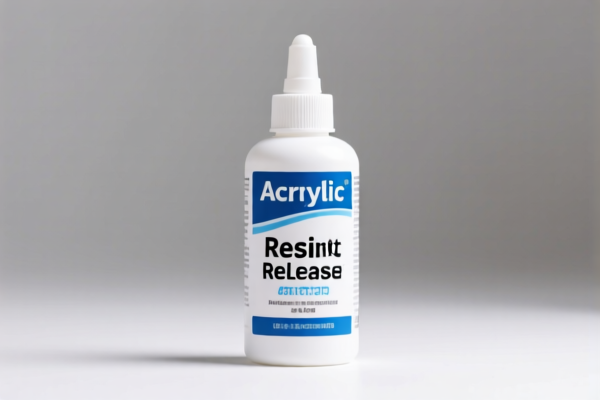
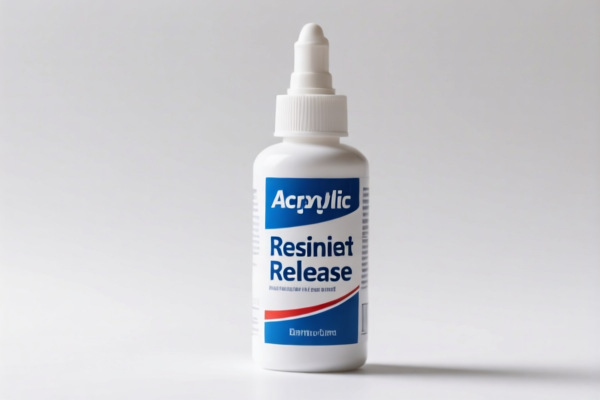
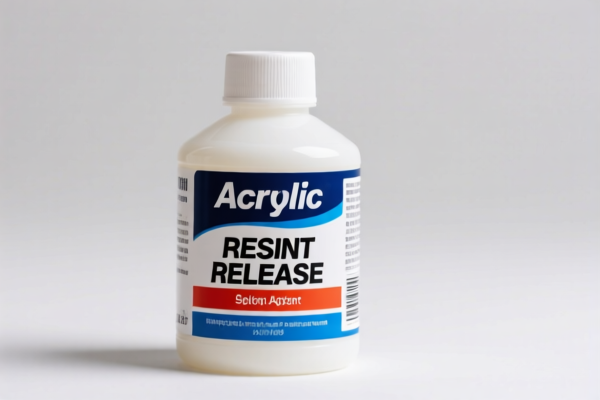
AI Analysis
🧴 Natural Rubber Mold Release Agent Compound (天然橡胶脱模剂)
🌐 HS Code Classification & Customs Clearance Guide | 2026 Latest Tariff Analysis | Strategic Import Strategy
📌 I. Product Definition & Classification Logic: Is It a Rubber Product or a Chemical?
The "Natural Rubber Mold Release Agent Compound" is a specialized chemical formulation designed to prevent natural rubber goods from sticking to molds during the vulcanization process. In international trade, its classification hinges on its chemical nature and primary function.
Two Main Classification Paths:
Path A: Preparations for Working Rubber (Chapter 34)
If the product is specifically formulated for processing rubber and derives its identity from its application to rubber, it falls under Chapter 34. This is often the most direct classification for specialized rubber processing aids.
* Key Feature: Specific purpose for rubber.
* Likely Codes: 3403.11.20.00 or 3403.11.50.00.
Path B: Miscellaneous Chemical Products (Chapter 38 or 39)
If the product is considered a complex chemical mixture, a silicone-based compound, or a general industrial lubricant not specific enough to Chapter 34, it may fall under Chapter 38 (Miscellaneous Chemical Products) or Chapter 39 (Plastics/Rubber Products in primary forms).
* Key Feature: General chemical mixture, silicone base, or fatty acid ester composition.
* Likely Codes: 3824.99.41.40, 3910.00.00.00, or 3824.99.93.97.
⚠️ Critical Distinction Point:
- If the product is an oil-based or petroleum-based preparation specifically for rubber → 3403.11
- If the product is a silicone or fatty acid ester chemical mixture not strictly defined as a "rubber working preparation" → 3824.99 / 3910
- Misclassification Risk: Declaring a chemical mixture as a simple rubber accessory can lead to incorrect duty assessments.
📦 II. HS Code Classification Details (2026 Latest Tariff Reference)
| HS Code | Product Description & Logic | Application Scenario | Material Composition |
|---|---|---|---|
3403.11.20.00 |
Preparations for working rubber: Based on petroleum oils or petroleum oils obtained from bituminous minerals. | Standard oil-based release agents for natural rubber molding. | Petroleum-based oils or bitumen derivatives. |
3403.11.50.00 |
Preparations for working rubber: Other preparations (non-petroleum or mixed). | Release agents containing small amounts of petroleum or non-petroleum lubricants. | Non-petroleum oils or mixtures with minor petroleum components. |
3824.99.41.40 |
Chemical Products: Fatty acid esters or oil/grease mixtures. | Chemical release agents based on fatty acid esters. | Fatty acid esters or complex oil/grease mixtures. |
3910.00.00.00 |
Silicones in primary forms or in plates, sheets, or strip. | Silicone-based release agents. | Silicone compounds (chemical precursor form). |
3824.99.93.97 |
Miscellaneous Chemical Products: Catch-all for chemical preparations. | Complex chemical mixtures not fitting other specific categories. | General chemical mixtures (fallback classification). |
🔍 Key Insight:
-3403.11is the preferred classification if the product is explicitly marketed and formulated as a "rubber working preparation." It typically carries the lowest base tariff. -3824.99and3910.00are alternatives if the product is more of a general chemical or silicone product. These often have higher base tariffs due to their chemical complexity.
💰 III. 2026 Latest Tariff Rate Breakdown (Including Additional Duties)
✅ Applicable Country: United States (US)
✅ Country of Origin: China (CN)
✅ Effective Date: From November 10, 2025 (including subsequent imports)
🎯 1. 3403.11.20.00 — Rubber Working Preparations (Petroleum-based)
| Item | Content |
|---|---|
| Base Tariff Rate | 0.2% (ad valorem) |
| USITC Additional Duty | +25.0% (under Section 301) |
| Section 122 Duty | +10.0% (Specific provision for certain chemical/rubber products) |
| Total Tariff Rate | 35.2% |
| Tax Calculation | CIF Value × 35.2% |
| De Minimis Exemption | ❌ Not Eligible (deny_de_minimis) |
| Legal Basis Path | USITC:3403.11.20.00 → Section 301: +25% → Section 122: +10% |
📌 Explanation:
- Base 0.2%: Low base duty for basic rubber preparations.
- +25%: Standard Section 301 tariff on Chinese goods.
- +10%: Additional "Section 122" duty often applied to specific industrial chemicals/rubber products.
- Total 35.2%: This is the lowest total tariff among the provided options.
🎯 2. 3403.11.50.00 — Rubber Working Preparations (Other/Non-Petroleum)
| Item | Content |
|---|---|
| Base Tariff Rate | 1.4% (ad valorem) |
| USITC Additional Duty | +25.0% |
| Section 122 Duty | +10.0% |
| Total Tariff Rate | 36.4% |
| Tax Calculation | CIF Value × 36.4% |
| De Minimis Exemption | ❌ Not Eligible |
| Legal Basis Path | USITC:3403.11.50.00 → Section 301: +25% → Section 122: +10% |
📌 Note:
- Slightly higher base duty (1.4% vs 0.2%) due to being "other" preparations.
- Total tariff is 1.2% higher than3403.11.20.00.
🎯 3. 3824.99.41.40 — Chemical Products (Fatty Acid Esters)
| Item | Content |
|---|---|
| Base Tariff Rate | 4.6% (ad valorem) |
| USITC Additional Duty | +25.0% |
| Section 122 Duty | +10.0% |
| Total Tariff Rate | 39.6% |
| Tax Calculation | CIF Value × 39.6% |
| De Minimis Exemption | ❌ Not Eligible |
| Legal Basis Path | USITC:3824.99.41.40 → Section 301: +25% → Section 122: +10% |
📌 Note:
- Classified under "Miscellaneous Chemical Products."
- Higher base duty (4.6%) leads to a significantly higher total tariff.
🎯 4. 3910.00.00.00 — Silicones in Primary Forms
| Item | Content |
|---|---|
| Base Tariff Rate | 3.0% (ad valorem) |
| USITC Additional Duty | +25.0% |
| Section 122 Duty | +10.0% |
| Total Tariff Rate | 38.0% |
| Tax Calculation | CIF Value × 38.0% |
| De Minimis Exemption | ❌ Not Eligible |
| Legal Basis Path | USITC:3910.00.00.00 → Section 301: +25% → Section 122: +10% |
📌 Note:
- Classified as "Silicones."
- Base duty is 3.0%, which is moderate but still higher than Chapter 34 options.
🎯 5. 3824.99.93.97 — Miscellaneous Chemical Products (Fallback)
| Item | Content |
|---|---|
| Base Tariff Rate | 5.0% (ad valorem) |
| USITC Additional Duty | +25.0% |
| Section 122 Duty | +10.0% |
| Total Tariff Rate | 40.0% |
| Tax Calculation | CIF Value × 40.0% |
| De Minimis Exemption | ❌ Not Eligible |
| Legal Basis Path | USITC:3824.99.93.97 → Section 301: +25% → Section 122: +10% |
📌 Note:
- This is a catch-all classification for chemical preparations that don't fit elsewhere.
- Highest total tariff (40%) due to the highest base duty (5.0%). Avoid if a more specific classification (like 3403) is applicable.
🛠️ IV. Customs Clearance Practical Advice (Actionable Pitfall Guide)
✅ 1. Documentation Checklist (Essential)
| Document | Mandatory? | Purpose |
|---|---|---|
| ✅ Technical Data Sheet (TDS) | ✔️ | To prove composition (e.g., % petroleum oil, silicone content). |
| ✅ Material Safety Data Sheet (MSDS) | ✔️ | For safety classification and handling requirements. |
| ✅ Product Photos (Label & Container) | ✔️ | To verify labeling matches declared HS Code. |
| ✅ Commercial Invoice | ✔️ | Must clearly state "Mold Release Agent for Natural Rubber." |
| ✅ Certificate of Origin (CO) | ✔️ | To confirm Chinese origin (subject to tariffs). |
| ✅ Bill of Lading/Air Waybill | ✔️ | Standard shipping documents. |
| ✅ Usage Statement | ✔️ | Explicitly state: "Used for releasing natural rubber from molds." |
✅ 2. Declaration Tips (Crucial for Cost Saving)
🔥 "Specificity Saves Money: Rubber Prep > Chemical Fallback!"
| Scenario | Correct Declaration | Wrong Declaration | Consequence |
|---|---|---|---|
| Oil-based release agent | 3403.11.20.00 |
3824.99.93.97 |
Save 4.8% (35.2% vs 40%) |
| Silicone-based agent | 3910.00.00.00 |
3824.99.93.97 |
Save 2.0% (38.0% vs 40%) |
| Fatty acid ester agent | 3824.99.41.40 |
3824.99.93.97 |
Save 0.4% (39.6% vs 40%) |
| Any release agent | Full Import | De Minimis (800 USD) | Avoid De Minimis: All codes are deny_de_minimis. Small shipments will still be taxed and detained. |
✅ 3. Special Cases & Risk Management
| Scenario | Recommendation |
|---|---|
| OEM/Private Label | Provide a letter from the manufacturer confirming the formula matches the declared HS Code logic. |
| Multi-purpose Product | If the product is used for both rubber and plastics, declare based on principal use (rubber) to justify Chapter 34. |
| Silicone-Based | If it's purely silicone, 3910.00.00.00 is appropriate. Do not force it into 3403 if it lacks rubber-working specific properties. |
| High Volume Imports | Consider applying for an Exclusion under Section 301 (if available for this product category) or consult a customs broker for a Pre-Ruling. |
🌍 V. Global Market Comparison (2026)
| Country/Region | Recommended HS Code | Tariff (China Origin) | Certification/Notes |
|---|---|---|---|
| 🇺🇸 USA | 3403.11.20.00 |
35.2% | Highest tariff due to 301 + 122 duties. |
| 🇨🇳 China | 3403.11.20.00 |
Low/Exempt | Internal trade, no export tariffs. |
| 🇪🇺 EU | 3403.11.00.00 |
Varies (e.g., 0-3%) | No US-style additional duties. |
| 🇯🇵 Japan | 3403.11.00.00 |
0-3% | Generally favorable for chemical preparations. |
📌 Conclusion:
- USA is the most challenging market due to additional duties.
- Chapter 34 (3403) is the optimal classification for minimizing costs compared to Chapter 38/39 fallbacks.
📌 VI. Common Errors & Pitfalls (Lessons Learned)
❌ Error 1: Declaring as "General Chemical Lubricant" (3824.99.93.97)
👉 Result: 40% tariff instead of 35.2%. Loss: 4.8% on CIF value.
❌ Error 2: Attempting De Minimis (Under $800)
👉 Result: Customs Hold. All listed codes are explicitly denied de minimis status. Delay and storage fees apply.
❌ Error 3: Misidentifying Silicone as Petroleum-Based
👉 Result: Incorrect HS Code 3403.11.20.00 for a silicone product. Risk of audit, fines, and retrospective duty adjustment.
❌ Error 4: Ignoring "Section 122" Duty
👉 Result: Underpaying duties by 10%. Penalties and interest will be charged.
✅ Correct Practice:
"Mold Release Agent for Natural Rubber, Oil-Based, Chemical Composition: [Insert Formula], HS Code: 3403.11.20.00"
🎯 VII. Conclusion: Precision in Classification = Profit Protection
🎯 Key Takeaway:
🔹 "Chapter 34 is King for Rubber Prep."
🔹 "3403.11.20.00 is the cheapest at 35.2%.
🔹 "Fallback codes (3824/3910) add 3-5% extra cost."
🔹 "No De Minimis! Full declaration required."
📌 Pro Tip:
If your product is silicone-based, ensure it is correctly classified under 3910.00.00.00 to avoid misclassification penalties.
For petroleum-based agents, 3403.11.20.00 is your best bet.
Always request a Pre-Ruling from CBP if the product composition is complex or borderline.
📣 Immediate Action:
📞 Engage a licensed customs broker.
📄 Prepare TDS and MSDS.
📝 Apply for CBP Pre-Ruling for high-value shipments.
🚀 Ensure smooth clearance and optimize duty costs!
✨ Professional Clearance Starts with Accurate Classification!
💼 Every percentage point of duty saved is pure profit gained!
Customer Reviews
About HS Code Classification
The Harmonized System (HS) is an internationally standardized nomenclature developed by the World Customs Organization (WCO) to classify traded products. Over 200 countries use the HS system as the basis for customs tariffs, trade statistics, and import/export regulations.
Each HS code follows a hierarchical structure:
- Chapter (2 digits) — Broad category of goods (e.g., Chapter 84: Machinery and Mechanical Appliances)
- Heading (4 digits) — More specific grouping within the chapter
- Subheading (6 digits) — Internationally standardized breakdown, used by all WCO member countries
- National subdivisions (8-10 digits) — Country-specific extensions for further classification, such as US HTSUS 10-digit codes
Correct HS code classification is essential for smooth customs clearance, accurate duty payment, and compliance with trade regulations. Misclassification can lead to customs delays, overpayment of duties, or penalties.
When importing from CN to US, the applicable tariff rates may include:
- Most-Favored-Nation (MFN) rate — The standard duty rate applied to WTO members
- General rate — Applied to countries without trade agreements
- Trade remedy duties — Additional tariffs such as Section 301 (anti-dumping), Section 232 (national security), or countervailing duties
The information provided on this page is for reference purposes only. For official classification, please consult with your local customs authority or a licensed customs broker.