rubber solid tire
CN → US| HS Code | Tariff Rate | Origin | Destination | Doc |
|---|---|---|---|---|
| 4012904500 | 39.2% | CN | US | Official Doc |
| 4012901000 | 35.0% | CN | US | Official Doc |
| 4016993000 | 35.0% | CN | US | Official Doc |
| 4012118000 | 38.4% | CN | US | Official Doc |
| 4012124035 | 39.0% | CN | US | Official Doc |
Product Images
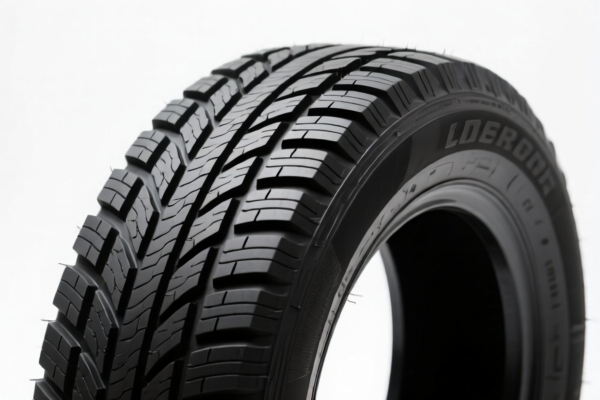
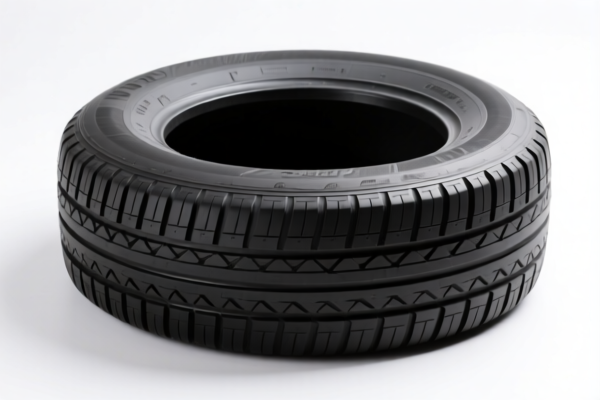
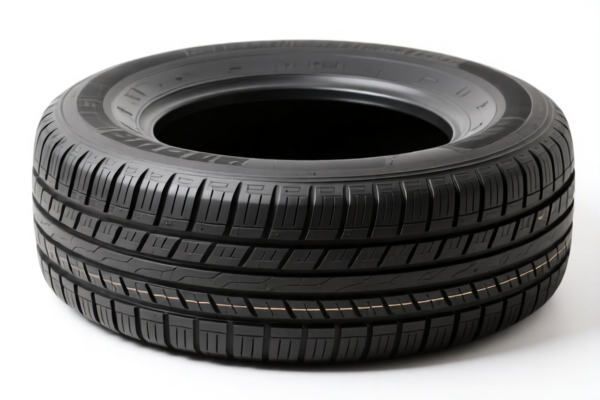
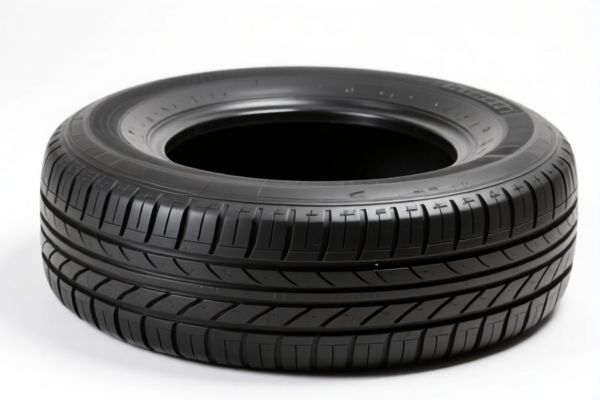
AI Analysis
🛞 Rubber Solid Tire (Forklift & Industrial Equipment)
🌐 HS Code Reference & Customs Clearance Guide | 2026 Latest Tariff Analysis | Professional Clearance Strategy
📌 1. Product Definition & Classification: Do You Really Understand "Rubber Solid Tires"?
Rubber Solid Tires are non-pneumatic tires made primarily of natural or synthetic rubber, designed for industrial vehicles (such as forklifts) and heavy machinery. Unlike pneumatic tires, they do not require inflation and offer superior puncture resistance and load-bearing capacity.
In international trade, they are classified based on their material composition, structure (solid vs. pneumatic), and specific application. The key distinction lies in whether they are categorized as general rubber tires (Chapter 40.12) or specialized rubber articles (Chapter 40.16/40.13).
⚠️ Critical Classification Point:
- If the tire is explicitly a solid forklift tire made of natural rubber, it may qualify for specific subheadings under 4012.90 or 4013.10 depending on precise material specs.
- If it is a generic solid rubber tire used for vibration damping or general industrial equipment, it may fall under 4016.99.
- Misclassification Risk: Declaring a solid tire as a pneumatic tire or misidentifying the rubber type can lead to significant duty discrepancies and customs delays.
📦 2. HS Code Classification Details (2026 Latest Tariff Authority)
| HS Code | Product Description | Application/Logic | Duty Structure |
|---|---|---|---|
4012.11.80.00 |
Rubber tires, material: rubber, form: tire | General rubber tire classification; meets basic classification requirements. | Base: 3.4% + Add. 25% + Sec 301: 10% |
4012.12.40.35 |
Rubber tires, material: rubber, form: tire | Matched by other category rules; general industrial tire. | Base: 4.0% + Add. 25% + Sec 301: 10% |
4013.10.00.10 |
Rubber tires, material & use consistent with core elements | Specialized rubber tire category; consistent with core classification elements. | Base: 3.7% + Add. 25% + Sec 301: 10% |
4012.90.45.00 |
Natural Rubber Forklift Solid Tire | Material, form, and use fully comply with classification requirements for solid forklift tires. | Base: 4.2% + Add. 25% + Sec 301: 10% |
4012.90.10.00 |
Natural Rubber Forklift Solid Tire | Solid form and natural rubber material meet specific requirements. | Base: 0.0% + Add. 25% + Sec 301: 10% |
4016.99.30.00 |
Rubber Solid Tire (General) | Material: rubber; functions as a damping/shock-absorbing product; aligns with category logic. | Base: 0.0% + Add. 25% + Sec 301: 10% |
🔍 Key Insight:
- The most advantageous HS Codes are4012.90.10.00and4016.99.30.00, which have a 0% base tariff.
- However, all codes are subject to additional duties (See Section 3).
-4012.90.45.00is specifically for natural rubber forklift tires, ensuring precise compliance for heavy-duty industrial applications.
💰 3. 2026 Latest Tariff Rate Breakdown (Including Surtaxes)
✅ Applicable Country: United States (US)
✅ Origin: China (CN)
✅ Effective Time: 2025–2026 (Current regulations)
All rubber tires imported from China to the US are subject to a complex duty structure consisting of: 1. Base MFN Tariff (Varies by HS Code) 2. Section 301 Additional Tariff: +25.0% (Standard for most rubber products from China) 3. 122 Clause / IEEPA Surcharge: +10.0% (Specific surcharge for certain Chinese imports)
🎯 1. 4012.11.80.00 —— General Rubber Tire
| Item | Detail |
|---|---|
| Base Tariff | 3.4% |
| Section 301 Surcharge | +25.0% |
| 122 Clause Surcharge | +10.0% |
| Total Effective Rate | 38.4% |
| Calculation | CIF Value × 38.4% |
| De Minimis Exemption | ❌ Not Applicable |
| Legal Path | HTSUS:4012.11.80.00 → USITC Footnote → IEEPA Surtax |
📌 Explanation:
This is a standard classification for general rubber tires. The high base rate (3.4%) combined with mandatory surcharges results in a 38.4% total duty. Suitable for general-purpose industrial tires not specifically identified as natural rubber forklift tires.
🎯 2. 4012.12.40.35 —— Other Rubber Tires
| Item | Detail |
|---|---|
| Base Tariff | 4.0% |
| Section 301 Surcharge | +25.0% |
| 122 Clause Surcharge | +10.0% |
| Total Effective Rate | 39.0% |
| Calculation | CIF Value × 39.0% |
| De Minimis Exemption | ❌ Not Applicable |
📌 Note:
This code is used when the tire does not fit the specific "new retreaded" or other specific subcategories but is still a rubber tire. The 4.0% base rate makes it slightly more expensive than4012.11.80.00.
🎯 3. 4013.10.00.10 —— Specialized Rubber Tires
| Item | Detail |
|---|---|
| Base Tariff | 3.7% |
| Section 301 Surcharge | +25.0% |
| 122 Clause Surcharge | +10.0% |
| Total Effective Rate | 38.7% |
| Calculation | CIF Value × 38.7% |
| De Minimis Exemption | ❌ Not Applicable |
📌 Note:
This code applies when the material and use are consistent with core classification elements but fall under a different chapter structure (40.13). Useful for specialized tires that don't fit the standard 40.12 definitions perfectly.
🎯 4. 4012.90.45.00 —— Natural Rubber Forklift Solid Tire (High Specificity)
| Item | Detail |
|---|---|
| Base Tariff | 4.2% |
| Section 301 Surcharge | +25.0% |
| 122 Clause Surcharge | +10.0% |
| Total Effective Rate | 39.2% |
| Calculation | CIF Value × 39.2% |
| De Minimis Exemption | ❌ Not Applicable |
📌 Critical Compliance:
Must provide proof of Natural Rubber content and Forklift specific usage. This is the most precise code for heavy-duty industrial solid tires but has the highest base rate among the options.
🎯 5. 4012.90.10.00 —— Natural Rubber Forklift Solid Tire (Optimal Base Rate)
| Item | Detail |
|---|---|
| Base Tariff | 0.0% |
| Section 301 Surcharge | +25.0% |
| 122 Clause Surcharge | +10.0% |
| Total Effective Rate | 35.0% |
| Calculation | CIF Value × 35.0% |
| De Minimis Exemption | ❌ Not Applicable |
| Legal Path | HTSUS:4012.90.10.00 → IEEPA:9903.01.24 |
📌 Optimization Tip:
If your product is a natural rubber forklift solid tire, this code offers the lowest total duty (35.0%) because the base tariff is 0%. This is the recommended code for cost optimization, provided the material is strictly natural rubber.
🎯 6. 4016.99.30.00 —— General Rubber Solid Tire (Damping Use)
| Item | Detail |
|---|---|
| Base Tariff | 0.0% |
| Section 301 Surcharge | +25.0% |
| 122 Clause Surcharge | +10.0% |
| Total Effective Rate | 35.0% |
| Calculation | CIF Value × 35.0% |
| De Minimis Exemption | ❌ Not Applicable |
📌 Strategic Classification:
If the tire is used as a shock absorber or damping element rather than a primary vehicle tire, it may be classified here. Like4012.90.10.00, it has a 0% base rate, resulting in a 35.0% total duty. This is a viable alternative if the "forklift" specific designation cannot be strictly proven.
🛠️ 4. Customs Clearance Practical Advice (Risk Avoidance Guide)
✅ 1. Required Documentation Checklist
| Document | Mandatory? | Description |
|---|---|---|
| ✅ Product Specification Sheet | ✔️ | Must specify: Material (Natural/Synthetic Rubber), Structure (Solid), Load Rating, Size, Application (Forklift/Industrial). |
| ✅ Material Composition Proof | ✔️ | Lab report or manufacturer declaration confirming Natural Rubber content if claiming 4012.90.10.00. |
| ✅ Product Photos | ✔️ | Clear images showing tread pattern, sidewall markings, and overall structure (solid, no air valve). |
| ✅ Commercial Invoice | ✔️ | Must accurately describe the item as "Rubber Solid Tire" or "Forklift Tire," not just "Rubber Part." |
| ✅ Packing List | ✔️ | Detailing quantity and weight. |
| ✅ Proof of Use | ✔️ | If claiming 4012.90.10.00 or 4016.99.30.00, provide evidence of use in forklifts or damping equipment. |
✅ 2. Declaration Best Practices
🔥 "Be Specific, Be Accurate, Avoid Generic Terms!"
| Scenario | Correct Declaration | Incorrect Declaration | Consequence |
|---|---|---|---|
| Forklift Solid Tire | "Natural Rubber Forklift Solid Tire, Model XYZ" | "Rubber Tire" or "Car Tire" | Risk of misclassification (38.4–39.2%) or audit. |
| General Solid Tire | "Industrial Rubber Solid Tire for Vibration Damping" | "Forklift Tire" | If not for forklifts, 4012.90.10.00 may be rejected. |
| Material Claim | "100% Natural Rubber" | "Rubber" | If synthetic, 4012.90.10.00 (0% base) is invalid. |
📌 Key Tip:
- Do not use vague terms like "Rubber Parts."
- Clearly distinguish between Pneumatic (air-filled) and Solid (non-pneumatic). Confusion here is a major cause of detention.
✅ 3. Special Scenarios & Solutions
| Scenario | Handling Advice |
|---|---|
| Mixed Materials | If the tire has steel belts or other materials, declare the primary rubber composition. Steel reinforcement is usually included in the tire classification. |
| Used/Remanufactured | New tires are covered above. Used tires have different regulations and may face stricter import bans or different HS codes. Ensure goods are New. |
| OEM Custom Tires | Provide OEM agreements and design drawings to prove specific use (e.g., forklift) to support 4012.90.10.00. |
| High-Value Imports | Consider applying for an Advance Ruling from US Customs and Border Protection (CBP) if the volume is significant. This locks in the HS Code and duty rate. |
🌍 5. Global Market Comparison (2026 Update)
| Region | Recommended HS Code | Total Duty (China Origin) | Key Requirement | Note |
|---|---|---|---|---|
| 🇺🇸 USA | 4012.90.10.00 / 4016.99.30.00 |
35.0% | Proof of Natural Rubber/Damping Use | Lowest base rate (0%) is critical. |
| 🇺🇸 USA | 4012.11.80.00 |
38.4% | General Declaration | Higher base rate (3.4%). |
| 🇪🇺 EU | Varies (typically 40.12) | ~3.0–5.0% | CE Marking, REACH Compliance | No Section 301 equivalent; lower duties. |
| 🇨🇳 China | 40.12 | ~3.0–4.0% | CCC Certification (if applicable) | Import duties vary; generally lower than US. |
📌 Conclusion for US Market:
The 35.0% duty rate under4012.90.10.00or4016.99.30.00is significantly cheaper than the 38.4–39.2% rates for generic rubber tires. Optimization through precise classification is highly recommended.
📌 6. Common Mistakes & Pitfalls (Lessons Learned)
❌ Mistake 1: Declaring a Solid Tire as a Pneumatic Tire (40.11)
👉 Result: Customs inspection will reveal the lack of air valves, leading to reclassification and penalties.
❌ Mistake 2: Using 4012.90.10.00 for Synthetic Rubber Tires
👉 Result: If the rubber is synthetic, the 0% base rate is invalid. Customs will reassess at 3.7–4.2% base + surcharges, leading to back taxes and interest.
❌ Mistake 3: Vague Description "Rubber Tire"
👉 Result: CBP may assign the highest applicable duty code or delay clearance for additional documentation.
✅ Correct Approach:
"Natural Rubber Forklift Solid Tire, 7x9-12, Load Rating 2000kg, New Condition, Model ABC"
🎯 7. Conclusion: Precision Saves Money!
🎯 Key Takeaway:
🔹 For Forklift Solid Tires: Aim for
4012.90.10.00(35.0% total) by proving Natural Rubber content.
🔹 For General Industrial Solid Tires: Aim for4016.99.30.00(35.0% total) by proving Damping/Shock Absorption use.
🔹 Avoid Generic Codes:4012.11.80.00and4012.12.40.35cost 38.4–39.0%, which is 3–4% more expensive.
📌 Pro Tip:
If your product qualifies for
4012.90.10.00, ensure your Bill of Lading and Commercial Invoice explicitly state "Natural Rubber" and "Solid Tire" to justify the 0% base rate during automated risk screening.
📣 Immediate Action:
📞 Consult a Customs Broker to verify the Rubber Composition and Intended Use.
🚀 File for an Advance Ruling if importing high volumes to secure the 35.0% duty rate.
💼 Optimize Your Supply Chain by selecting the correct HS Code to save 3–4% on every shipment.
✨ Professional Clearance Starts with Accurate Classification!
💼 Every percentage point counts in global trade!
Customer Reviews
About HS Code Classification
The Harmonized System (HS) is an internationally standardized nomenclature developed by the World Customs Organization (WCO) to classify traded products. Over 200 countries use the HS system as the basis for customs tariffs, trade statistics, and import/export regulations.
Each HS code follows a hierarchical structure:
- Chapter (2 digits) — Broad category of goods (e.g., Chapter 84: Machinery and Mechanical Appliances)
- Heading (4 digits) — More specific grouping within the chapter
- Subheading (6 digits) — Internationally standardized breakdown, used by all WCO member countries
- National subdivisions (8-10 digits) — Country-specific extensions for further classification, such as US HTSUS 10-digit codes
Correct HS code classification is essential for smooth customs clearance, accurate duty payment, and compliance with trade regulations. Misclassification can lead to customs delays, overpayment of duties, or penalties.
When importing from CN to US, the applicable tariff rates may include:
- Most-Favored-Nation (MFN) rate — The standard duty rate applied to WTO members
- General rate — Applied to countries without trade agreements
- Trade remedy duties — Additional tariffs such as Section 301 (anti-dumping), Section 232 (national security), or countervailing duties
The information provided on this page is for reference purposes only. For official classification, please consult with your local customs authority or a licensed customs broker.