rubber supports
CN → US| HS Code | Tariff Rate | Origin | Destination | Doc |
|---|---|---|---|---|
| 4016995500 | 37.5% | CN | US | Official Doc |
| 4016993000 | 35.0% | CN | US | Official Doc |
| 3926305000 | 22.8% | CN | US | Official Doc |
| 4008111000 | 35.0% | CN | US | Official Doc |
| 4016996050 | 37.5% | CN | US | Official Doc |
Product Images
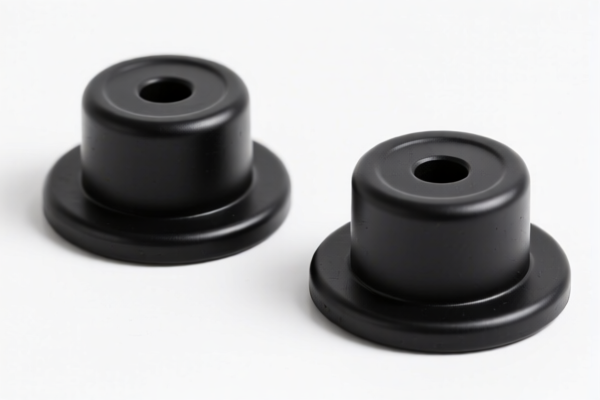
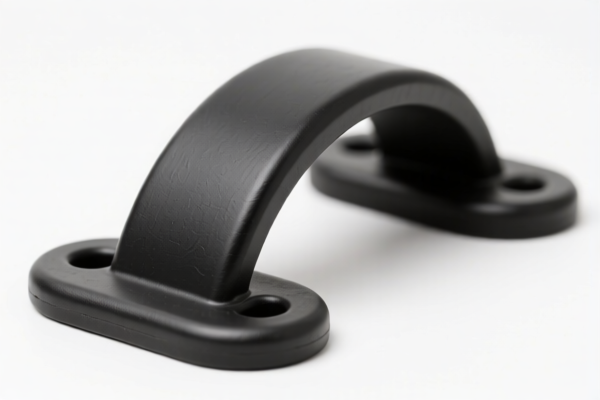
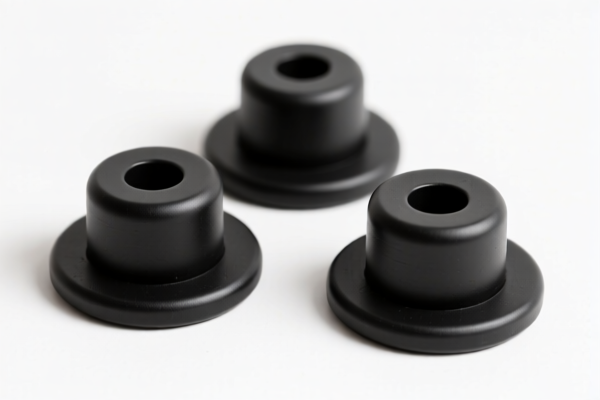
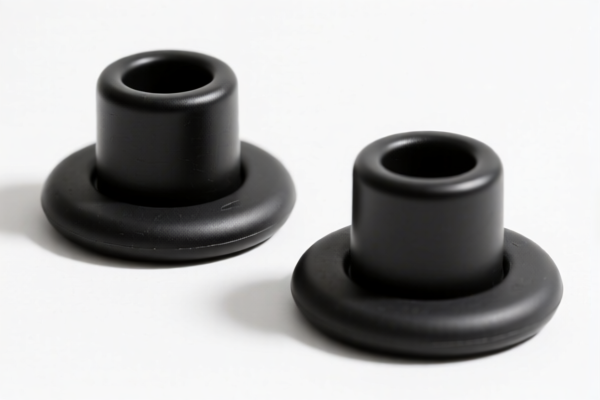
AI Analysis
🛑 Rubber Supports (Rubber Mounts/Pads)
🌐 HS Code Reference & Customs Clearance Guide | 2026 Latest Tariff Analysis | Professional Clearance Strategy
📌 I. Product Definition & Classification: What Exactly Are "Rubber Supports"?
Rubber Supports are critical damping and isolation components used in automotive, industrial machinery, and structural applications. They are designed to absorb vibration, reduce noise, and provide stability. In international trade, the classification depends heavily on material composition and specific end-use.
⚠️ Key Classification Distinction:
- If the support is a general-purpose vulcanized rubber item (e.g., for shock absorption/control) → Look at Chapter 40.
- If it is a protective pad (e.g., for equipment protection rather than active vibration control) → Look at Chapter 40 or potentially Chapter 39 (if material inference suggests otherwise).
- Crucial Note: The provided data indicates these items are subject to significant additional tariffs (Section 301 + IEEPA), making accurate HS Code selection vital for cost control.
📦 II. HS Code Classification Details (2026 Latest Tariff Authority Mapping)
Based on the provided dataset, here are the specific HS Codes, summaries, and tax implications for "Rubber Supports" and related rubber items.
| HS Code | Product Description & Summary | Key Characteristics | Total Tax Rate (US Import from CN) |
|---|---|---|---|
| 4016.99.55.00 | Rubber Support: Material: Vulcanized Rubber; Form: Support; Category: Shock Absorption/Control Component. | Active Damping: Used for vibration control in vehicles or machinery. | 37.5% |
| 4016.99.30.00 | Rubber Support: Material: Rubber; Form: Support; Application: Vehicle Shock Absorption Products. | Vehicle Specific: Explicitly for vehicle suspension/shock systems. | 35.0% |
| 3926.30.50.00 | Rubber Support: Inferred Material: Other Material Products; Form: Connector/Component Use. | Material Ambiguity: If classified as "Other Plastic/Rubber Goods" rather than pure rubber Chapter 40. | 22.8% |
| 4008.11.10.00 | Rubber Protection Pad: Form: Pad; Material: Natural Rubber; Category: Plate, Sheet, Strip Application. | Passive Protection: Natural rubber pads, often used for static support or protection rather than dynamic damping. | 35.0% |
| 4016.99.60.50 | Rubber Protection Pad: Material: Vulcanized Rubber; Form: Pad-shaped Article; Category: Non-specific Vulcanized Rubber Article. | General Purpose: Vulcanized rubber pads not otherwise specified. | 37.5% |
🔍 Critical Observation:
- The lowest tax rate (22.8%) applies to HS 3926.30.50.00, which implies the goods might be classified under "Other articles of plastics" or a different sub-category if the material composition allows for interpretation as "other materials" or if the specific duty structure for this code is lower.
- HS 4016.99.30.00 offers a slightly better rate (35.0%) than the general vulcanized support (37.5%) if the product is strictly for vehicle shock absorption.
- Natural Rubber (4008) vs. Vulcanized Rubber (4016): Both attract high tariffs (35-37.5%), but the application (Pad vs. Support) differs.
💰 III. Detailed Breakdown of 2026 Tariff Rates (Including Surcharges & Policy Add-ons)
✅ Applicable Country: United States (US)
✅ Origin: China (CN)
✅ Effective Date: 2025/2026 (Current Trade Environment)
🎯 1. 4016.99.55.00 – Rubber Support (Vulcanized, Shock Control)
| Item | Detail |
|---|---|
| Base Duty Rate | 2.5% |
| Section 301 Surcharge | 25.0% |
| IEEPA Surcharge (122 Clause) | 10.0% |
| Total Effective Rate | 37.5% |
| Tax Calculation | CIF Value × 37.5% |
| De Minimis Exemption? | ❌ NO (High risk of audit/seizure if split shipments) |
| Legal Basis Path | USITC:4016.99.55.00 → Section 301: 25% → IEEPA 122: 10% |
📌 Explanation:
- This code falls under 4016 (Other articles of vulcanized rubber other than hard rubber).
- The 35% total additional tariff (25% + 10%) makes this a high-cost item.
- Why 37.5%? Base 2.5% + 25% (Section 301) + 10% (IEEPA 122).
🎯 2. 4016.99.30.00 – Rubber Support (Vehicle Shock Absorption)
| Item | Detail |
|---|---|
| Base Duty Rate | 0.0% |
| Section 301 Surcharge | 25.0% |
| IEEPA Surcharge (122 Clause) | 10.0% |
| Total Effective Rate | 35.0% |
| Tax Calculation | CIF Value × 35.0% |
| De Minimis Exemption? | ❌ NO |
| Legal Basis Path | USITC:4016.99.30.00 → Section 301: 25% → IEEPA 122: 10% |
📌 Why this is cheaper:
- The Base Duty is 0%, saving 2.5% compared to the general support code.
- Strategic Tip: If your product is strictly for vehicle suspension, ensure documentation explicitly states "Vehicle Shock Absorption Support" to justify this HS Code and save 2.5%.
🎯 3. 3926.30.50.00 – Rubber Support (Inferred Other Material)
| Item | Detail |
|---|---|
| Base Duty Rate | 5.3% |
| Section 301 Surcharge | 7.5% |
| IEEPA Surcharge (122 Clause) | 10.0% |
| Total Effective Rate | 22.8% |
| Tax Calculation | CIF Value × 22.8% |
| De Minimis Exemption? | ❌ NO |
| Legal Basis Path | USITC:3926.30.50.00 → Section 301: 7.5% → IEEPA 122: 10% |
📌 Strategic Advantage:
- This is the lowest tax rate (22.8%) in the dataset.
- Risk: Classifying rubber as "3926" (Articles of Plastics/Other Materials) requires strong technical justification that the item does not fit the specific "Vulcanized Rubber" definitions in Chapter 40, or that it is a composite item classified as "Other."
- Action: Consult a customs broker to confirm if your product's material composition (e.g., rubber-plastic composite) allows for this classification without triggering fraud allegations.
🎯 4. 4008.11.10.00 & 4016.99.60.50 – Rubber Protection Pads
| HS Code | Total Rate | Base | Sec 301 | IEEPA | Notes |
|---|---|---|---|---|---|
| 4008.11.10.00 (Natural Rubber Pad) | 35.0% | 0.0% | 25.0% | 10.0% | Natural rubber, sheet/strip form. |
| 4016.99.60.50 (Vulcanized Pad) | 37.5% | 2.5% | 25.0% | 10.0% | Vulcanized rubber, general pad. |
📌 Key Takeaway:
- Protection Pads are taxed similarly to Supports.
- If the item is a Pad rather than a Support (structural mount), it may fall under 4008 (Natural Rubber) or 4016.99.60 (Other Vulcanized).
- The distinction between "Support" and "Pad" is functional: Supports absorb dynamic forces; Pads provide static isolation or protection.
🛠️ IV. Customs Clearance Practical Advice (Real-World Pitfall Avoidance)
✅ 1. Documentation Checklist (Non-Negotiable)
| Document | Required? | Purpose |
|---|---|---|
| ✅ Product Technical Data Sheet | ✔️ | Must specify Material (Vulcanized vs. Natural vs. Composite) and Hardness (Shore A). |
| ✅ Function Statement | ✔️ | Clearly state: "Vibration Damping Support for Vehicle Chassis" or "Static Protection Pad." |
| ✅ Bill of Lading & Invoice | ✔️ | Description must match HS Code summary (e.g., do not just write "Rubber Part"; write "Vulcanized Rubber Shock Absorber Support"). |
| ✅ Material Composition Report | ✔️ | If claiming HS 3926.30.50.00, you MUST provide a lab report proving the item is classified as "Other Material" or has a plastic/rubber mix that justifies Chapter 39. |
| ✅ Origin Certificate | ✔️ | Essential for determining Section 301 applicability. |
✅ 2. Classification Strategy & Warnings
🔥 "Material Matters, Function Dictates, Documentation Saves!"
| Scenario | Recommended HS Code | Why? | Risk Level |
|---|---|---|---|
| Vehicle Suspension Mount | 4016.99.30.00 |
Specific use case (Vehicle) = Lower Base Duty (0%). | 🟡 Medium |
| General Industrial Vibration Pad | 4016.99.55.00 |
Standard vulcanized rubber support. | 🔴 High (37.5%) |
| Composite/Non-Pure Rubber Item | 3926.30.50.00 |
If material allows, saves 14.7% vs. standard rubber. | 🟠 High (Audit Risk) |
| Static Protection Pad (Natural) | 4008.11.10.00 |
Natural rubber, sheet form. | 🟡 Medium |
| General Vulcanized Pad | 4016.99.60.50 |
Catch-all for vulcanized pads. | 🔴 High (37.5%) |
✅ 3. Common Mistakes & How to Avoid Them
❌ Mistake 1: Using "Rubber Part" as the description.
👉 Consequence: Customs will assign the highest general duty code (often 4016.99.55.00 at 37.5%) and may delay shipment for clarification.
✅ Fix: Use precise terms: "Vulcanized Rubber Shock Absorber Support, Model XYZ."
❌ Mistake 2: Misclassifying Natural Rubber as Vulcanized (or vice versa).
👉 Consequence: If you declare Natural Rubber (4008) but the product is Vulcanized, you face fraud penalties and back taxes.
✅ Fix: Provide a material safety data sheet (MSDS) or lab analysis confirming vulcanization status.
❌ Mistake 3: Ignoring the IEEPA 122 Clause (10%).
👉 Consequence: Many importers forget that all rubber articles from China are subject to this 10% surcharge on top of Section 301.
✅ Fix: Factor 10% into your landed cost calculation immediately. Do not assume exemptions.
❌ Mistake 4: Trying to use 3926.30.50.00 for pure rubber items.
👉 Consequence: High audit risk. CBP will reject "Plastic" classification for pure rubber.
✅ Fix: Only use 3926 if the item is composite (e.g., rubber-covered plastic) or if a legal ruling supports it. Otherwise, stick to Chapter 40.
🌍 V. Global Market Comparison (2026 Snapshot)
| Region | HS Code Range | Est. Total Duty (China Origin) | Notes |
|---|---|---|---|
| 🇺🇸 USA | 4016 / 3926 | 22.8% – 37.5% | Heavy Section 301 + IEEPA 122 tariffs. |
| 🇨🇳 China (Import) | 4016 | ~5-10% | Lower base duties, no US-style surcharges. |
| 🇪🇺 EU | 4016 | ~4-6% | No Section 301 equivalents. |
| 🇨🇦 Canada | 4016 | ~0-5% | Often duty-free under CUSMA for qualifying goods. |
📌 Conclusion:
- The US market is the most expensive for rubber supports due to layered tariffs.
- Cost Saving Strategy: If possible, explore HS 3926.30.50.00 (22.8%) by engineering composite materials, or ensure HS 4016.99.30.00 (35.0%) eligibility for vehicle-specific parts.
📌 VI. Actionable Recommendations
- Audit Your BOM (Bill of Materials): Confirm if the rubber is Vulcanized or Natural. This dictates between Chapter 40 codes.
- Define End-Use: If for vehicles, push for
4016.99.30.00(35.0%). If general industrial, you face 37.5%. - Evaluate Composite Options: Can the support be designed with a plastic/rubber mix to qualify for
3926.30.50.00(22.8%)? Consult a legal expert before changing design. - Prepare for IEEPA 122: Budget for the 10% surcharge regardless of the base HS Code.
- Seek Advance Rulings: If there is ambiguity between
3926and4016, file a CBP Advance Ruling to lock in the classification and avoid future penalties.
🎯 VII. Conclusion: Precision in Classification = Profit Protection
🎯 Key Takeaway:
🔹 Rubber Supports are NOT a single category.
🔹 37.5% vs. 22.8% is a 14.7% margin difference on high-volume shipments.
🔹 Documentation is your shield. Vague descriptions lead to misclassification and audits.
📌 Pro Tip:
For high-volume imports, consider transshipment to a neutral country (if legal and compliant with rules of origin) or supplier restructuring to diversify origin, but be aware of US Customs Anti-Circumvention Laws. Always prioritize legal classification via Advance Rulings.
📣 Immediate Next Step:
📞 Contact a Licensed Customs Broker with your product samples and technical specs.
📄 Request a Pre-Ruling for4016.99.30.00or3926.30.50.00.
🚀 Optimize your landed cost before the next shipment.
✨ Classify Correctly. Clear Faster. Pay Less.
💼 Your Bottom Line Depends on the First Digits of Your HS Code.
Customer Reviews
About HS Code Classification
The Harmonized System (HS) is an internationally standardized nomenclature developed by the World Customs Organization (WCO) to classify traded products. Over 200 countries use the HS system as the basis for customs tariffs, trade statistics, and import/export regulations.
Each HS code follows a hierarchical structure:
- Chapter (2 digits) — Broad category of goods (e.g., Chapter 84: Machinery and Mechanical Appliances)
- Heading (4 digits) — More specific grouping within the chapter
- Subheading (6 digits) — Internationally standardized breakdown, used by all WCO member countries
- National subdivisions (8-10 digits) — Country-specific extensions for further classification, such as US HTSUS 10-digit codes
Correct HS code classification is essential for smooth customs clearance, accurate duty payment, and compliance with trade regulations. Misclassification can lead to customs delays, overpayment of duties, or penalties.
When importing from CN to US, the applicable tariff rates may include:
- Most-Favored-Nation (MFN) rate — The standard duty rate applied to WTO members
- General rate — Applied to countries without trade agreements
- Trade remedy duties — Additional tariffs such as Section 301 (anti-dumping), Section 232 (national security), or countervailing duties
The information provided on this page is for reference purposes only. For official classification, please consult with your local customs authority or a licensed customs broker.