rubberwood sawdust
CN → USProduct Images
AI Analysis
🪵 Rubberwood Sawdust (Industrial Biomass by-product)
🌐 HS Code Reference & Customs Clearance Guide | 2026 Latest Tariff Analysis | Professional-Level Strategy for Raw Materials
📌 I. Product Definition & Classification: What Exactly is "Rubberwood Sawdust"?
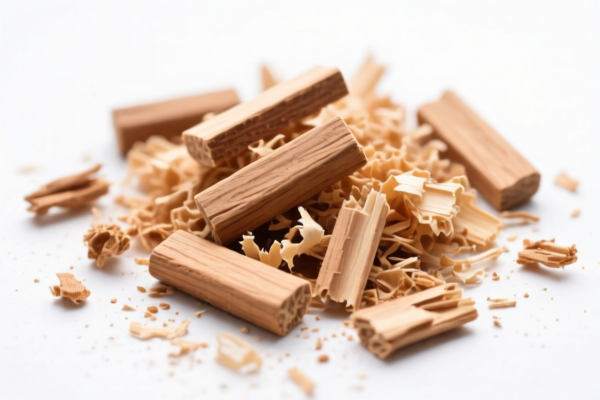
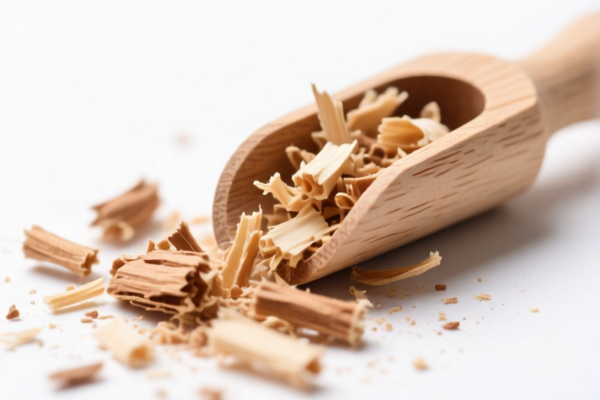
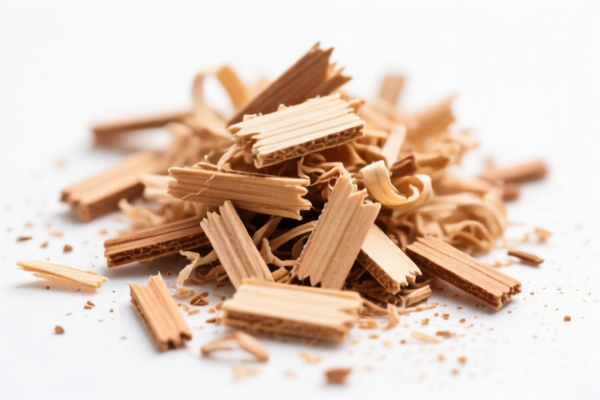
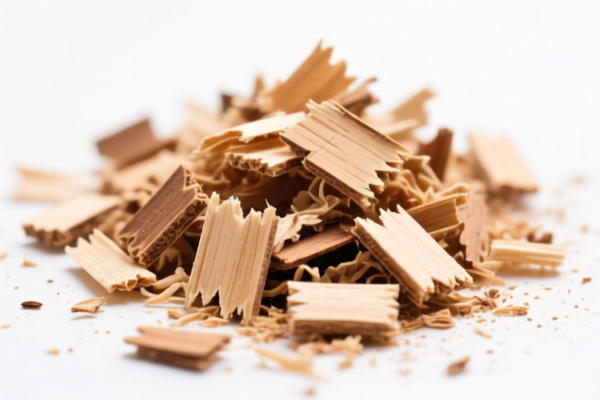
Rubberwood (also known as Hevea brasiliensis) sawdust is the fine particulate residue generated during the milling, planing, or cutting of rubberwood timber. As an agricultural by-product of the latex industry, it has transitioned from waste to a valuable resource for: 1. Biomass Fuel: Used in industrial boilers for heat/energy generation. 2. Fiberboard/Plywood: Raw material for medium-density fiberboard (MDF) or particleboard. 3. Activated Carbon: Precursor for high-efficiency filtration media.
⚠️ Critical Distinction:
- Raw Sawdust: Unprocessed, unbound wood particles → Classified under Chapter 44.
- Processed Pellets/Bricks: Compressed, bound biomass fuel → May be classified under Chapter 44 (4401.30) or specific energy product codes depending on density and additives.
- Chemically Treated Sawdust: If impregnated with preservatives → May shift to Chapter 44 (4401.00) with specific notes or even Chapter 38 if heavily chemical-dosed.
📦 II. HS Code Classification Details (2026 Latest Tariff Authority对照)
| HS Code | Product Description | Applicable Scenario | Processing Level |
|--------|----------|--------------------------|
| 4401.40.00.00 | Wood in the form of sawdust or wood waste and scrap (other than chips) | Raw rubberwood sawdust, untreated, for fuel or board making | ✅ Unprocessed |
| 4401.30.00.00 | Wood pellets and other agglomerated wood fuel (in the form of pellets, briquettes, logs, etc.) | Compressed rubberwood biomass pellets for industrial boilers | ✅ Compressed |
| 4401.00.00.00 | Other wood sawdust (if not specified as chips/waste) | General category fallback for non-standard forms | ⚠️ Check local customs interpretation |
| 4403.49.90.00 | Other wood (if classified as "wood waste" rather than sawdust) | Coarser wood waste, not fine sawdust | ❌ Avoid if truly "sawdust" |
| 3801.90.00.00 | Active carbon or other carbonaceous products (if processed) | Sawdust converted into activated carbon | ✅ Processed |
🔍 Key Reminder:
-4401.40.00.00is the standard HS Code for uncompressed sawdust.
- If the sawdust is compressed into pellets, use4401.30.00.00.
- Moisture Content matters: Wet sawdust vs. Dry sawdust may affect valuation but not classification.
- Origin Declaration: Must specify "Rubberwood" (Hevea brasiliensis) to avoid misclassification as other timber species.
💰 III. 2026 Latest Tariff Rate Breakdown (Including Surcharges & Policy Add-ons)
✅ Applicable Country: United States (US)
✅ Country of Origin: China (CN)
✅ Effective Date: From November 10, 2025 (including subsequent imports)
🎯 1. 4401.40.00.00 —— Wood in the form of sawdust or wood waste and scrap
| Item | Content |
|---|---|
| Base Tariff Rate | 0% (ad valorem) |
| USITC Additional Tariff | +25% (under USITC Footnote 9903.88.01 for certain wood products) |
| IEEPA Additional Tariff | +10% (China/HK products, effective from Nov 10, 2025) |
| Total Tariff Rate | 35% |
| Tax Calculation | CIF Value × 35% |
| De Minimis Exemption Available? | ❌ No (deny_de_minimis) |
| Legal Basis Path | IEEPA:9903.01.25 → IEEPA:9903.01.24 → USITC:4401.40.00.00 → FOOTNOTE:9903.88.01 |
📌 Explanation:
- The 25% USITC tariff applies to certain wood products including sawdust and waste under Section 301.
- The 10% IEEPA tariff is a general surcharge on Chinese-origin goods.
- Total 35% is high for a raw material. Ensure your supplier provides accurate origin documentation.
🎯 2. 4401.30.00.00 —— Wood pellets and other agglomerated wood fuel
| Item | Content |
|---|---|
| Base Tariff Rate | 0% |
| USITC Additional Tariff | +25% |
| IEEPA Additional Tariff | +10% |
| Total Tariff Rate | 35% |
| Tax Calculation | CIF × 35% |
| De Minimis Exemption Available? | ❌ No |
| Legal Basis Path | IEEPA:9903.01.25 → IEEPA:9903.01.24 → USITC:4401.30.00.00 → FOOTNOTE:9903.88.01 |
📌 Note:
- Compressed pellets are still subject to the same surcharges as raw sawdust.
- Density and moisture content must be declared accurately to avoid reclassification disputes.
🛠️ IV. Customs Clearance Practical Advice (Battle-Tested Pitfall Avoidance)
✅ 1. Required Documentation Checklist (Non-negotiable)
| Document | Mandatory | Notes |
|---|---|---|
| ✅ Product Specification Sheet | ✔️ | Must specify: Rubberwood (Hevea brasiliensis), particle size, moisture content (<15% recommended for fuel). |
| ✅ Phytosanitary Certificate | ✔️ | CRITICAL: Wood products require phytosanitary certification to prove pest-free status. |
| ✅ Commercial Invoice | ✔️ | Clearly state: "Rubberwood Sawdust, Unprocessed, HS Code 4401.40.00.00". |
| ✅ Packing List | ✔️ | Specify net weight vs. gross weight. Note: Heavy moisture = high GW. |
| ✅ Bill of Lading | ✔️ | Ensure commodity description matches invoice. |
| ✅ Certificate of Origin | ✔️ | Essential for verifying Chinese origin and applying correct tariffs. |
| ✅ Test Report | ✔️ | If claimed as "fuel grade," provide heating value report (BTU/kg). |
✅ 2. Declaration Tips (Key Mnemonics)
🔥 "Wood Dust, Pests Check, Phytosanitary, Don't Sketch!"
| Scenario | Correct Declaration | Wrong Practice |
|---|---|---|
| Raw Rubberwood Sawdust | 4401.40.00.00 |
Misdeclare as "Chips" (4401.21) → Lower duty but audit risk |
| Compressed Pellets | 4401.30.00.00 |
Misdeclare as "Sawdust" → Different tax calculation |
| Treated Sawdust | 4401.00.00.00 or 3801 |
Fail to declare treatment → Seizure for biosecurity violation |
| Mixed Wood Waste | Specify species | Declare as "Generic Wood Waste" → Rejection by CBP |
✅ 3. Special Case Handling
| Scenario | Handling Advice |
|---|---|
| High Moisture Content | Declare moisture % accurately. CBP may adjust value or require drying proof. |
| OEM/Custom Sizing | Provide sieve analysis report to prove particle size distribution. |
| Export to Non-US Markets | EU requires FSC/PEFC certification for sustainable sourcing; check local rules. |
| Small Samples (< $800) | Still taxable if HS code is restricted. Do not rely on de minimis for wood products. |
🌍 V. Global Major Market Customs Comparison (2026 Latest)
| Country/Region | Recommended HS Code | Tariff | Certification Requirements | Notes |
|---|---|---|---|---|
| 🇺🇸 USA | 4401.40.00.00 |
35% | Phytosanitary + ISPM 15 (if pallets) | High tariff due to 301/IEEPA |
| 🇨🇳 China | 4401.40.00.00 |
0-5% | Phytosanitary | Low tariff for domestic recycling |
| 🇪🇺 EU | 4401.40 |
0-6.5% | FSC/PEFC + Phytosanitary | Sustainability documentation critical |
| 🇦🇺 Australia | 4401.40 |
5% | Phytosanitary + Biosecurity | Strict quarantine checks |
| 🇯🇵 Japan | 4401.40 |
3.2% | Phytosanitary | High demand for fuel-grade sawdust |
📌 Conclusion:
- USA is the most costly market due to 35% combined tariffs.
- Biosecurity is the biggest non-tariff barrier globally. Phytosanitary Certificate is mandatory for all major markets.
📌 VI. Common Mistakes & Pitfall Guide (Lessons Learned)
❌ Mistake 1: Forgetting the Phytosanitary Certificate
👉 Consequence: Goods held at port, fumigated at owner's cost, or returned. Delays of 2-4 weeks.
❌ Mistake 2: Misdeclaring "Sawdust" as "Chips" (4401.21)
👉 Consequence: Audit for false declaration. Penalties + back taxes. CBP uses sieve analysis to verify.
❌ Mistake 3: Not declaring Moisture Content
👉 Consequence: Dispute over value adjustment. CBP may assume 30% moisture if not stated, inflating duty base.
❌ Mistake 4: Using "Wood Waste" as generic description
👉 Consequence: Ambiguity leads to classification error. Specify "Rubberwood Sawdust" and provide species proof.
✅ Correct Practice:
"Rubberwood Sawdust (Hevea brasiliensis), Unprocessed, Moisture Content <15%, For Industrial Fuel, HS Code 4401.40.00.00, Phytosanitary Cert No. XYZ"
🎯 VII. Conclusion: Precision in Classification, Profit in Clearance
🎯 Remember:
🔹 "Wood Dust, Bio Security First; Tariff 35%, Plan Ahead."
🔹 "Phytosanitary is Key, No Cert = No Entry."
🔹 "HS Code 4401.40 is Standard, Don't Gamble with Chips."
📌 Pro Tip:
If your rubberwood sawdust is processed into activated carbon, the HS Code shifts to 3801.90.00.00. Consult a customs broker for this reclassification, as tariffs and regulations differ significantly.
📣 Immediate Action:
📞 Engage a licensed customs broker + Provide Phytosanitary Certificate + Apply for Advance Ruling if volume is high.
🚀 Ensure your rubberwood sawdust, cleared smoothly, bio-secure, and cost-efficient.
✨ Professional Customs Clearance Starts with Precise Classification!
💼 Your every dollar of savings, deserves precise calculation!
Customer Reviews
About HS Code Classification
The Harmonized System (HS) is an internationally standardized nomenclature developed by the World Customs Organization (WCO) to classify traded products. Over 200 countries use the HS system as the basis for customs tariffs, trade statistics, and import/export regulations.
Each HS code follows a hierarchical structure:
- Chapter (2 digits) — Broad category of goods (e.g., Chapter 84: Machinery and Mechanical Appliances)
- Heading (4 digits) — More specific grouping within the chapter
- Subheading (6 digits) — Internationally standardized breakdown, used by all WCO member countries
- National subdivisions (8-10 digits) — Country-specific extensions for further classification, such as US HTSUS 10-digit codes
Correct HS code classification is essential for smooth customs clearance, accurate duty payment, and compliance with trade regulations. Misclassification can lead to customs delays, overpayment of duties, or penalties.
When importing from CN to US, the applicable tariff rates may include:
- Most-Favored-Nation (MFN) rate — The standard duty rate applied to WTO members
- General rate — Applied to countries without trade agreements
- Trade remedy duties — Additional tariffs such as Section 301 (anti-dumping), Section 232 (national security), or countervailing duties
The information provided on this page is for reference purposes only. For official classification, please consult with your local customs authority or a licensed customs broker.