rug
CN → US| HS Code | Tariff Rate | Origin | Destination | Doc |
|---|---|---|---|---|
| 6807900050 | 37.7% | CN | US | Official Doc |
| 5705002090 | 38.3% | CN | US | Official Doc |
| 5705002030 | 38.3% | CN | US | Official Doc |
| 5705002090 | 38.3% | CN | US | Official Doc |
Product Images
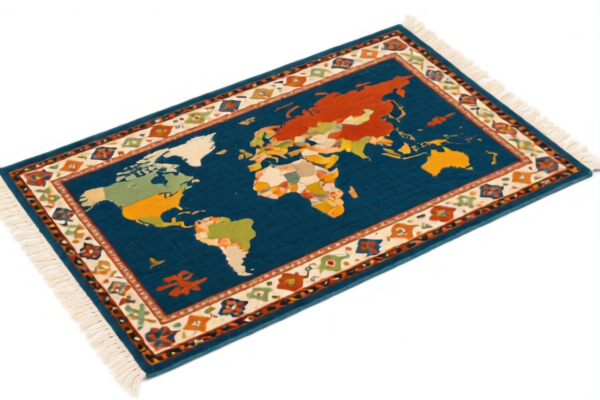
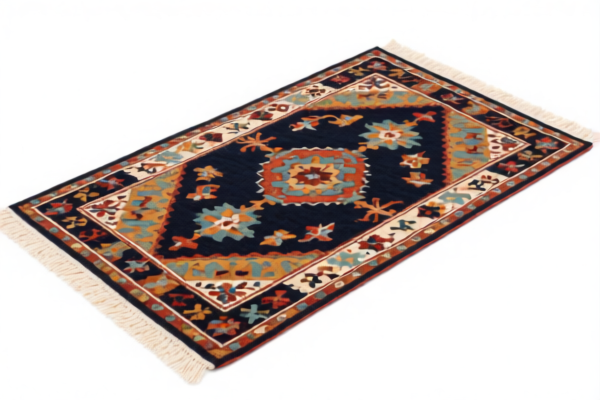
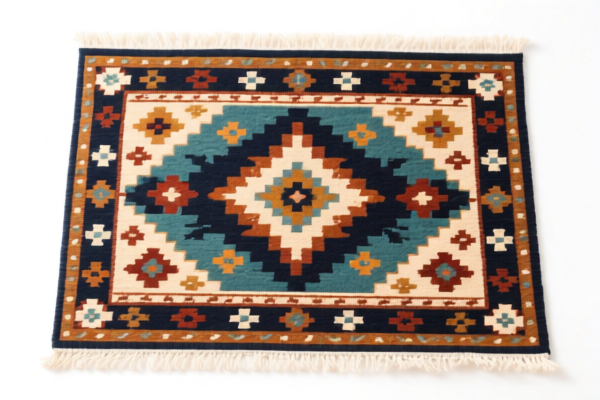

AI Analysis
🖼️ Rug (Carpet Tiles/Floor Coverings)
🌐 HS Code Reference & Customs Clearance Guide | 2026 Latest Tariff Analysis | Professional Strategy for "Rug" Products 📌 I. Product Definition & Classification: What Exactly is a "Rug"?
In international trade, the term "Rug" (specifically Carpet Tiles or Rug Stickers as per common e-commerce/commercial listings) is broad. To ensure accurate customs clearance and tariff optimization, it must be classified based on its material composition and physical form.
1. Textile-Based Floor Coverings (Most Common) - Includes: Carpet tiles, rugs made of synthetic fibers (polyester, nylon, acrylic), or natural fibers. - Key Logic: If the product is a textile floor covering not elsewhere specified, it falls under Chapter 57.
2. Bitumen/Asphalt-Based Products (Niche/Industrial) - Includes: Self-adhesive rug backs, bituminous felts, or non-textile sticky mats. - Key Logic: If the primary material is bitumen or similar materials used for adhesion or waterproofing, it falls under Chapter 68.
⚠️ Critical Distinction Point: - Is it a textile fabric laid on the floor? → Chapter 57 (Lower Base Duty). - Is it a bituminous/asphaltic sticky sheet or backing? → Chapter 68 (Higher Base Duty). - Note: Most consumer "Rug Tiles" are textile-based. Industrial "Rug Backing" might be bituminous.
📦 II. HS Code Classification Details (2026 Latest Tariff Authority)
Based on the provided data, here are the precise HS Codes for "Rug" products, categorized by material logic:
| HS Code | Product Description | Material Logic | Tax Rate (Total) |
|---|---|---|---|
| 5705.00.20.90 | Other carpets and other textile floor coverings, whether or not made up (Other Textile) | Textile/Composite: Fabric-based rugs, carpet tiles, or textile floor coverings that do not fit specific sub-categories like tufted wool. | 38.3% |
| 5705.00.20.30 | Other carpets and other textile floor coverings, made of man-made fibers | Man-Made Fiber: Specifically synthetic rugs (polyester, nylon, etc.). Common for affordable, durable carpet tiles. | 38.3% |
| 6807.90.00.50 | Articles of asphalt or of similar material (e.g., bitumen) | Bitumen/Asphalt: If the "Rug" is primarily a bituminous adhesive sheet, felt, or non-textile sticky material. Not a typical textile rug. | 37.7% |
🔍 Priority Recommendation: - 90% of "Rug" products (especially carpet tiles) are Textile-Based. - Choose 5705.00.20.30 (Man-Made Fibers) if the rug is synthetic (most common). - Choose 5705.00.20.90 (Other Textile) if the material is mixed, natural, or unspecified textile. - Only use 6807.90.00.50 if the product is explicitly bitumen/asphalt-based (e.g., industrial roofing felt used as a non-slip mat).
💰 III. 2026 Latest Tariff Rate Breakdown (US Market)
✅ Applicable Country: United States (US)
✅ Origin: China (CN)
✅ Effective Time: Ongoing (Section 301 & IEEPA)
Both textile (Ch 57) and bitumen (Ch 68) rugs face significant tariffs due to trade tensions.
🎯 1. 5705.00.20.30 – Other Carpet/Textile Floor Coverings (Man-Made Fibers)
| Item | Detail |
|---|---|
| Base Duty | 3.3% |
| Section 301 Duty | +25.0% |
| Section 122 Duty (IEEPA) | +10.0% |
| Total Tariff Rate | 38.3% |
| Calculation Basis | CIF Value × 38.3% |
| De Minimis Eligibility | ❌ No (High duty rate denies de minimis exemption for CN origin) |
| Legal Path | Base Tariff: 3.3% → Section 301: +25% → IEEPA Sec 122: +10% |
📌 Explanation: - Base (3.3%): Standard MFN duty for textile floor coverings. - Section 301 (25%): Trade-war tariff on Chinese textiles and floor coverings. - IEEPA Sec 122 (10%): Additional tariff on Chinese goods under international emergency powers. - Total 38.3%: A high tariff burden. Cost calculation must include this fully.
🎯 2. 5705.00.20.90 – Other Carpet/Textile Floor Coverings (Other Textile)
| Item | Detail |
|---|---|
| Base Duty | 3.3% |
| Section 301 Duty | +25.0% |
| Section 122 Duty (IEEPA) | +10.0% |
| Total Tariff Rate | 38.3% |
| Calculation Basis | CIF Value × 38.3% |
| De Minimis Eligibility | ❌ No |
| Legal Path | Base Tariff: 3.3% → Section 301: +25% → IEEPA Sec 122: +10% |
📌 Note: - Same rate as synthetic rugs. Whether "Man-Made" (30) or "Other Textile" (90), the Section 301 and IEEPA surcharges are identical. - The distinction lies in customs verification of material (fiber content). Misclassification leads to penalties.
🎯 3. 6807.90.00.50 – Articles of Asphalt/Bitumen
| Item | Detail |
|---|---|
| Base Duty | 2.7% |
| Section 301 Duty | +25.0% |
| Section 122 Duty (IEEPA) | +10.0% |
| Total Tariff Rate | 37.7% |
| Calculation Basis | CIF Value × 37.7% |
| De Minimis Eligibility | ❌ No |
| Legal Path | Base Tariff: 2.7% → Section 301: +25% → IEEPA Sec 122: +10% |
📌 Caution: - Only 0.6% lower than textile rugs. - Risk: If you declare a textile rug as "Bitumen" (6807) to save 0.6%, customs will inspect the material. If found to be textile, you face misdeclaration penalties, back taxes, and potential fraud charges. - Use only if the product is genuinely bitumen-based.
🛠️ IV. Customs Clearance Practical Advice (Avoid Pitfalls)
✅ 1. Required Documentation Checklist
| Document | Mandatory? | Purpose |
|---|---|---|
| Product Specifications | ✔️ | Must state Fiber Content (e.g., 100% Polyester, Wool Blend, etc.) or Material (e.g., Bitumen, Asphalt). |
| Product Photos | ✔️ | Clear images of front, back, and cross-section (to prove material). |
| Commercial Invoice | ✔️ | Must list "Rug/Carpet Tile" with specific material description. |
| Packing List | ✔️ | Weight and dimensions. |
| Certificate of Origin (CO) | ✔️ | Proves Chinese origin (triggers Section 301/IEEPA). |
| Material Test Report | ✔️ | Optional but highly recommended for "Rugs" to prove fiber content. |
✅ 2. Declaration Tips (Key Mantras)
🔥 "Material Determines Code, Fiber Content is King!"
| Scenario | Correct HS Code | Error to Avoid |
|---|---|---|
| Synthetic Carpet Tiles (Polyester/Nylon) | 5705.00.20.30 | Misdeclaring as "Rug" without fiber content → Delayed Customs |
| Wool or Mixed Fiber Rug | 5705.00.20.90 | Misdeclaring as Synthetic → Penalty for false declaration |
| Bitumen Backing/Roofing Felt | 6807.90.00.50 | Misdeclaring Textile as Bitumen → 37.7% vs 38.3% Savings is RISKY (only 0.6% diff, high penalty risk) |
| Complete Rug with Pad | 5705.00.20.30/90 | Splitting rug and pad into different codes → Complexity, no benefit |
✅ 3. Special Situations
| Situation | Handling Advice |
|---|---|
| "Rug Stickers" (Peel & Stick) | If the adhesive is on a textile backing → 5705. If the entire product is a rubber/bitumen sheet → 6807. |
| Custom Design/Logo | Does not change HS Code. Must still declare fiber content. |
| Dropshipping (De Minimis) | ❌ Not Eligible. Even under $800, Chinese-origin rugs with >25% duty cannot use de minimis exemption. |
🌍 V. Global Market Comparison (2026)
| Country | Recommended HS Code | Total Tariff (China Origin) | Notes |
|---|---|---|---|
| 🇺🇸 USA | 5705.00.20.30 / 5705.00.20.90 |
38.3% | High tariffs due to Section 301 & IEEPA. |
| 🇨🇳 China | 5705.00.20.30 / 5705.00.20.90 |
~10-13% | Import duty is lower. |
| 🇪🇺 EU | 5705.00.20.30 / 5705.00.20.90 |
~12% | No Section 301, but anti-dumping may apply. |
| 🇯🇵 Japan | 5705.00.20.30 / 5705.00.20.90 |
~10-15% | Stable tariffs. |
📌 Conclusion: - The US market is the most expensive due to the 38.3% effective duty rate. - Cost Planning: Ensure your pricing model includes at least 38.3% duty + logistics + profit. - Alternative: Consider sourcing from Vietnam, India, or Turkey to avoid Section 301 tariffs (0-5% duty), but verify Country of Origin rules strictly.
📌 VI. Common Mistakes & Pitfalls (Lessons Learned)
❌ Mistake 1: Declaring all "Rugs" as 6807.90.00.50 to save 0.6% 👉 Consequence: Customs inspection reveals textile content → Penalty, Back Taxes, and Audit. The 0.6% saving is not worth the risk.
❌ Mistake 2: Using vague descriptions like "Home Decor Item" 👉 Consequence: Customs assigns default higher tariff codes or demands extensive documentation → Clearance Delay.
❌ Mistake 3: Ignoring Fiber Content in Documentation
👉 Consequence: Cannot determine if 5705.20.30 (Man-Made) or 5705.20.90 (Other) is correct → Classification Dispute.
✅ Correct Approach:
"Carpet Tile, 18x18 inch, 100% Polyester, Tufted, with Latex Backing, Model ABC, Made in China"
🎯 VII. Conclusion: Precise Classification Saves Money
🎯 Remember the Mantra:
🔹 "Textile Rugs: 5705.38.3% (Synthetic) or 38.3% (Other)" 🔹 "Bitumen Mats: 6807.37.7% (Only if truly Bitumen)" 🔹 "Don't Risk 0.6% Savings for Fraud Risk!"
📌 Pro Tip: If your volume is high, apply for an Advance Ruling from US Customs (CBP) to confirm the correct HS Code. This provides legal protection against future audits.
📣 Take Action Now:
📞 Consult a licensed Customs Broker 📄 Verify Material Composition (Fiber % or Bitumen %) 🚀 Ensure accurate HS Code selection to avoid delays and penalties.
✨ Professional Clearance Starts with Accurate Classification!
💼 Your Cost Efficiency Depends on the Right HS Code!
Customer Reviews
About HS Code Classification
The Harmonized System (HS) is an internationally standardized nomenclature developed by the World Customs Organization (WCO) to classify traded products. Over 200 countries use the HS system as the basis for customs tariffs, trade statistics, and import/export regulations.
Each HS code follows a hierarchical structure:
- Chapter (2 digits) — Broad category of goods (e.g., Chapter 84: Machinery and Mechanical Appliances)
- Heading (4 digits) — More specific grouping within the chapter
- Subheading (6 digits) — Internationally standardized breakdown, used by all WCO member countries
- National subdivisions (8-10 digits) — Country-specific extensions for further classification, such as US HTSUS 10-digit codes
Correct HS code classification is essential for smooth customs clearance, accurate duty payment, and compliance with trade regulations. Misclassification can lead to customs delays, overpayment of duties, or penalties.
When importing from CN to US, the applicable tariff rates may include:
- Most-Favored-Nation (MFN) rate — The standard duty rate applied to WTO members
- General rate — Applied to countries without trade agreements
- Trade remedy duties — Additional tariffs such as Section 301 (anti-dumping), Section 232 (national security), or countervailing duties
The information provided on this page is for reference purposes only. For official classification, please consult with your local customs authority or a licensed customs broker.