rugs
CN → US| HS Code | Tariff Rate | Origin | Destination | Doc |
|---|---|---|---|---|
| 6807900050 | 37.7% | CN | US | Official Doc |
| 5705002090 | 38.3% | CN | US | Official Doc |
| 5705002030 | 38.3% | CN | US | Official Doc |
| 5705002090 | 38.3% | CN | US | Official Doc |
Product Images
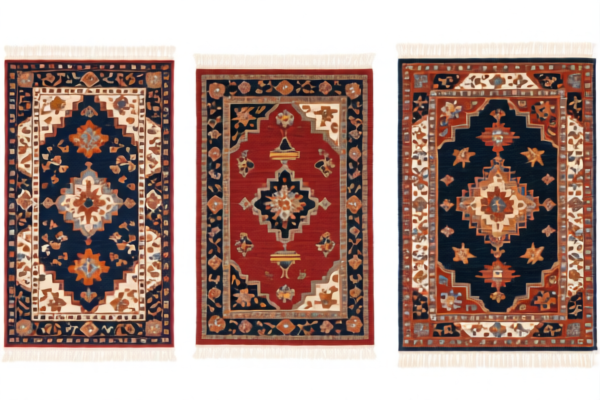
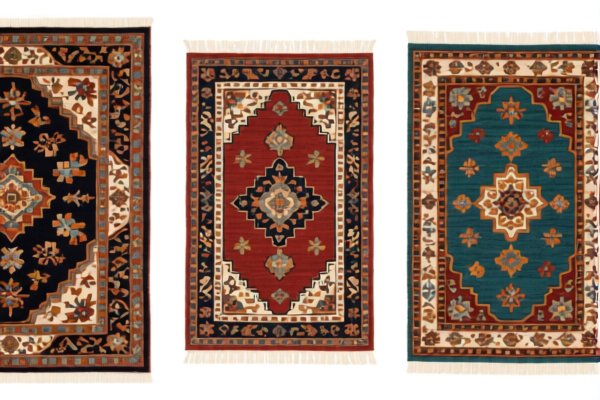
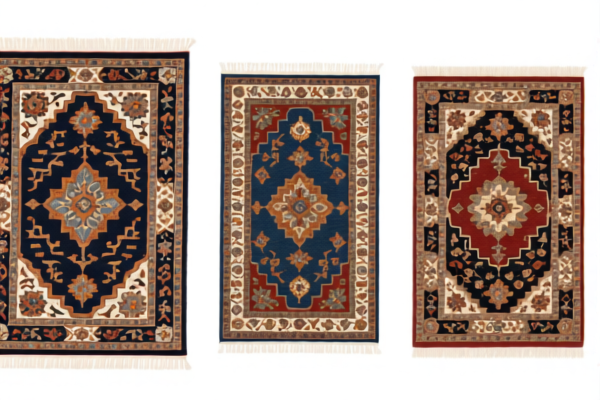
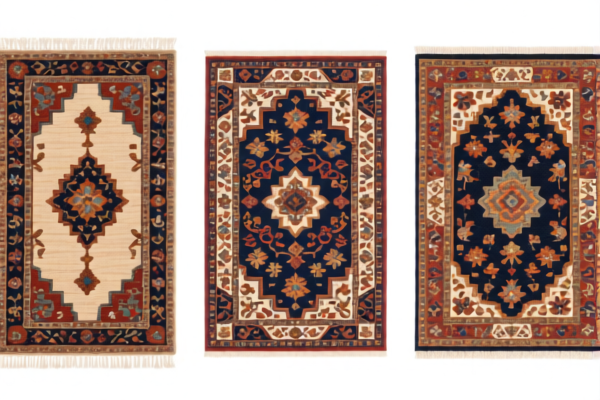
AI Analysis
🧶 Rugs (Carpet & Textile Floor Coverings)
🌐 HS Code Reference & Customs Clearance Guide | 2026 Latest Tariff Analysis | Professional Compliance Strategy
📌 I. Product Definition & Classification: What Exactly Is a "Rug" in Trade Terms?
In international trade, "Rugs" generally fall under Chapter 57: Carpets and other textile floor coverings. The classification depends heavily on the material composition and whether they are specialized roofing/walling materials versus general floor coverings.
⚠️ Critical Distinction:
- If the product is asphalt-based or similar viscous material (often mislabeled as "rug" in industrial contexts or specific adhesive mats) → It belongs to Chapter 68.
- If the product is a textile floor covering, carpet, or rug accessory (like "rug stickers/patches") → It belongs to Chapter 57.
📦 II. HS Code Classification Details (2026 Latest Tariff Authority Comparison)
Based on common sense inference and logical deduction for the input product "Rugs" (and related items like "Rug Stickers/Tiles"), here are the two primary classification paths found in the data:
| HS Code | Product Description | Material Inference | Logical Deduction |
|---|---|---|---|
6807.90.00.50 |
Articles of asphalt or similar materials (Not for roofs/walls) | Asphalt or viscous similar material | If "Rug" refers to an industrial mat or sticky sheet made of asphalt-like materials, it fits "Other" categories since it's not for roofing/walling. |
5705.00.20.90 |
Other carpets and other textile floor coverings | Textile or composite material | For "Rug stickers" or auxiliary textile floor coverings. No material conflict; fits the "Other" category for textile floor coverings. |
5705.00.20.30 |
Other carpets made of man-made fibers | Man-made fibers/Synthetic | If the rug is explicitly made of synthetic/man-made fibers, it falls here. Fits the "Other" catch-all logic for textile floors. |
🔍 Key Note:
- "Rug Stickers" (地毯贴) are considered auxiliary/attached items to carpets. They are typically classified under Chapter 57 as textile floor coverings due to their material nature (textile/composite).
- Asphalt-based mats are classified under Chapter 68, not textiles.
💰 III. 2026 Latest Tariff Rate Breakdown (Including Additional Taxes)
✅ Applicable Country: United States (US)
✅ Origin: China (CN)
✅ Effective Date: Post-2025 (Current active rates)
🎯 1. 6807.90.00.50 —— Articles of Asphalt or Similar Materials
| Item | Details |
|---|---|
| Base Tariff | 2.7% |
| Section 301 Tariff | +25.0% |
| Section 122 Tariff | +10.0% |
| Total Tariff Rate | 37.7% |
| Tax Calculation | CIF Value × 37.7% |
| Legal Basis | Specific to asphalt/viscous articles not for roofing/walling |
📌 Explanation:
- This category is for industrial or non-construction asphalt articles.
- High tariff due to combined base, Section 301, and Section 122 duties.
🎯 2. 5705.00.20.90 —— Other Carpets and Textile Floor Coverings
| Item | Details |
|---|---|
| Base Tariff | 3.3% |
| Section 301 Tariff | +25.0% |
| Section 122 Tariff | +10.0% |
| Total Tariff Rate | 38.3% |
| Tax Calculation | CIF Value × 38.3% |
| Legal Basis | Textile floor coverings (non-specialized) |
📌 Explanation:
- This applies to most standard rugs, carpets, and rug accessories (like rug stickers) made of textile materials.
- Note the slight difference in base tariff (3.3%) compared to asphalt articles (2.7%).
🎯 3. 5705.00.20.30 —— Other Carpets Made of Man-Made Fibers
| Item | Details |
|---|---|
| Base Tariff | 3.3% |
| Section 301 Tariff | +25.0% |
| Section 122 Tariff | +10.0% |
| Total Tariff Rate | 38.3% |
| Tax Calculation | CIF Value × 38.3% |
| Legal Basis | Man-made fiber carpets |
📌 Explanation:
- If your rug is specifically made of synthetic fibers (polypropylene, nylon, etc.), this code may apply.
- Tariff is identical to 5705.00.20.90 in this scenario.
🛠️ IV. Customs Clearance Practical Advice (Pitfall Avoidance Guide)
✅ 1. Document Checklist (Must-Have)
| Document | Required? | Notes |
|---|---|---|
| ✅ Product Specification Sheet | ✔️ | Must specify material (Asphalt vs. Textile vs. Synthetic Fiber) |
| ✅ Photos of Product | ✔️ | Clear images showing texture, thickness, and any labels |
| ✅ Commercial Invoice | ✔️ | Describe accurately: "Rug" vs. "Asphalt Mat" vs. "Rug Sticker" |
| ✅ Packing List | ✔️ | Confirm quantity and weight |
| ✅ Material Composition Statement | ✔️ | Crucial for distinguishing between Ch. 57 and Ch. 68 |
✅ 2. Declaration Tips (Key Mantras)
🔥 “Material First, Application Second! Don’t Mix Asphalt with Textiles!”
| Scenario | Correct Declaration | Wrong Practice |
|---|---|---|
| Textile Rug/Rug Sticker | 5705.00.20.90 or 5705.00.20.30 |
Calling it "Asphalt Mat" → Wrong Chapter |
| Industrial Asphalt Mat | 6807.90.00.50 |
Calling it "Rug" without material clarification → Risk of Misclassification |
| Roofing Felt (Asphalt) | Not 6807.90.00.50 |
Incorrectly using "Other" category → Should be in specific roofing subheadings |
⚠️ Critical Warning:
- Misclassification Risk: If you declare a textile rug as asphalt, or vice versa, Customs may reclassify it, leading to additional duties, penalties, and delays.
- "Rug Stickers": These are auxiliary items. Ensure they are declared as part of the textile floor covering category (5705), not as general adhesive products.
✅ 3. Special Cases
| Case | Handling Advice |
|---|---|
| Mixed Material Rugs | If made of both textile and non-textile parts, consult the "Essential Character" rule. Usually, textile dominates → 5705. |
| Non-Woven Carpets | Still fall under 5705 if used as floor coverings. |
| Custom/Made-to-Order | Provide design specs to prove material composition. |
🌍 V. Global Market Clearance Comparison (2026 Update)
| Country/Region | Recommended HS Code | Estimated Tariff | Key Certifications | Notes |
|---|---|---|---|---|
| 🇺🇸 USA | 5705.00.20.90 / 6807.90.00.50 |
37.7% - 38.3% | No specific certs needed for basic clearance | High due to Section 301 & 122 |
| 🇨🇳 China | 5705.00.20.90 |
~10-15% | N/A | Lower base tariffs, no Section 301 |
| 🇪🇺 EU | 5703.90 / 5705.00 |
0-4% | REACH (if chemical contents) | No Section 301 equivalent |
| 🇬🇧 UK | 5705.00.20 |
0-5% | UKCA (if applicable) | Post-Brexit rules apply |
📌 Conclusion:
- USA is the most expensive market due to Section 301 (25%) and Section 122 (10%) tariffs.
- Material accuracy is paramount. A simple change from "Asphalt" to "Textile" shifts the HS Code from6807to5705, slightly altering the base rate but not the additional duties in this specific data set.
📌 VI. Common Errors & Pitfalls (Lessons Learned)
❌ Error 1: Declaring a textile rug as "General Carpet" without specifying material
👉 Result: Customs may request detailed material proof → Delay in clearance.
❌ Error 2: Mixing "Rug Stickers" with "Rugs" in one line item without clarification
👉 Result: Confusion over HS Code selection → Potential underpayment or overpayment.
❌ Error 3: Ignoring Section 122 Tariff (10%)
👉 Result: Under-declaration of duties → Penalties and fines.
❌ Error 4: Assuming all "Asphalt" products are for roofing
👉 Result: Wrong HS Code → Reclassification and back-taxes.
✅ Correct Approach:
- For Textile Rugs/Rug Stickers: Use
5705.00.20.90or5705.00.20.30.- For Asphalt Mats: Use
6807.90.00.50if not for roofing/walling.- Always declare: "Rug, Textile, Made of [Material], for Floor Covering" or "Mat, Asphalt-based, Industrial Use".
🎯 VII. Conclusion: Precision Classification Saves Money!
🎯 Remember:
🔹 "Material Defines Code: Textile = 5705, Asphalt = 6807."
🔹 "Section 301 + 122 = High Cost. Declare Accurately to Avoid Delays."
🔹 "Rug Stickers are Textile Accessories, Not General Adhesives."
📌 Pro Tip:
If you are importing Rug Stickers or Textile Rugs, ensure your supplier provides a Material Composition Certificate. This will streamline customs clearance and avoid disputes over the HS Code between 5705 and other chapters.
📣 Take Action Now:
📞 Consult a Customs Broker before shipping.
🚀 Accurate Declaration = Smooth Clearance + Cost Control!
✨ Professional Customs Clearance Starts with Precise Classification!
💼 Your Cost Efficiency Depends on the First 8 Digits of Your HS Code!
Customer Reviews
About HS Code Classification
The Harmonized System (HS) is an internationally standardized nomenclature developed by the World Customs Organization (WCO) to classify traded products. Over 200 countries use the HS system as the basis for customs tariffs, trade statistics, and import/export regulations.
Each HS code follows a hierarchical structure:
- Chapter (2 digits) — Broad category of goods (e.g., Chapter 84: Machinery and Mechanical Appliances)
- Heading (4 digits) — More specific grouping within the chapter
- Subheading (6 digits) — Internationally standardized breakdown, used by all WCO member countries
- National subdivisions (8-10 digits) — Country-specific extensions for further classification, such as US HTSUS 10-digit codes
Correct HS code classification is essential for smooth customs clearance, accurate duty payment, and compliance with trade regulations. Misclassification can lead to customs delays, overpayment of duties, or penalties.
When importing from CN to US, the applicable tariff rates may include:
- Most-Favored-Nation (MFN) rate — The standard duty rate applied to WTO members
- General rate — Applied to countries without trade agreements
- Trade remedy duties — Additional tariffs such as Section 301 (anti-dumping), Section 232 (national security), or countervailing duties
The information provided on this page is for reference purposes only. For official classification, please consult with your local customs authority or a licensed customs broker.