ruler under 1 cm
CN → US| HS Code | Tariff Rate | Origin | Destination | Doc |
|---|---|---|---|---|
| 9017800000 | 40.3% | CN | US | Official Doc |
| 9017208080 | 39.6% | CN | US | Official Doc |
| 3926100000 | 15.3% | CN | US | Official Doc |
| 3926909989 | 22.8% | CN | US | Official Doc |
Product Images
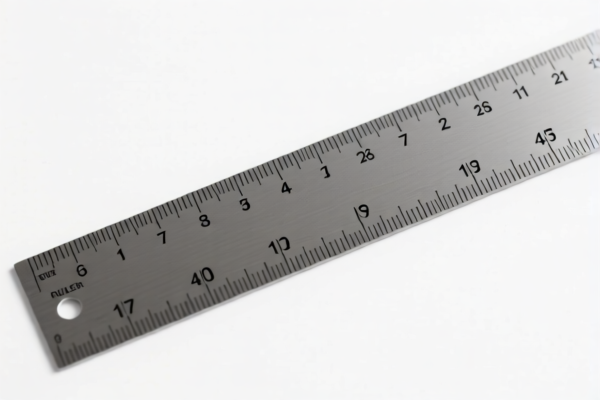
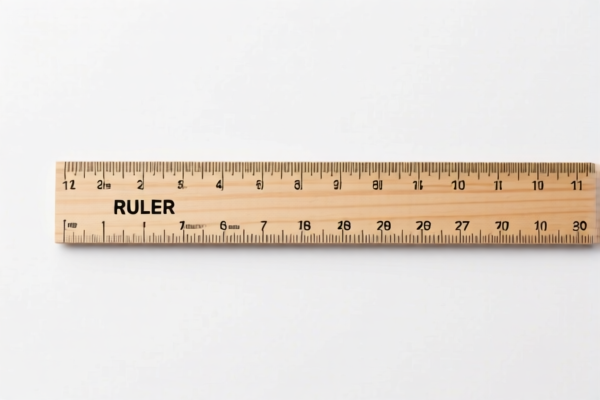
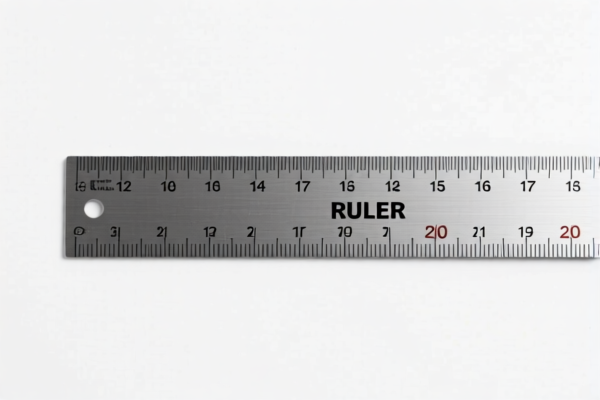
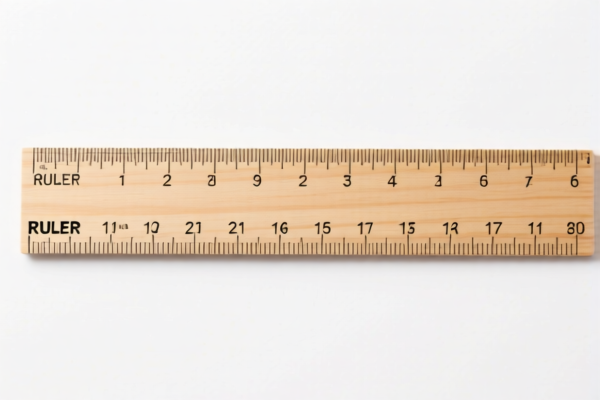
AI Analysis
📏 Ruler Under 1 cm (Less than 1 Centimeter)
🌐 HS Code Classification & Tariff Guide | 2026 Updated | Expert Customs Clearance Strategy
📌 One, Product Definition & Classification: What Exactly Is a Ruler Under 1 cm?
A ruler under 1 cm is a miniature hand-held measuring instrument, typically used for precision drafting, technical drawing, or educational purposes. Despite its small size, it falls under the same category as standard rulers due to its primary function: measuring length with precision.
⚠️ Key Distinction:
- If it’s a mechanical or rigid tool designed to measure length by hand → HS Code 9017.80.00.00 or 9017.20.80.80
- If it’s a plastic-based non-measuring item (e.g., novelty, decorative, or non-functional) → HS Code 3926.10.00.00 or 3926.90.99.89✅ Critical Insight:
Even if the ruler is under 1 cm, function determines classification — not size. A functional measuring tool is still a measuring instrument, regardless of length.
📦 Two, HS Code Classification Details (2026 Official Tariff Breakdown)
| HS Code | Product Description | Functional Use | Material | Key Features |
|---|---|---|---|---|
9017.80.00.00 |
Hand-held length measuring instruments & drafting/scribing tools | Precision measurement, drafting, technical drawing | Metal, plastic, wood | Includes rulers, straightedges, scales |
9017.20.80.80 |
Other hand-held length measuring instruments | Manual measurement, school/office use | Plastic, metal | Must meet “tool” criteria under 9017.20 |
3926.10.00.00 |
Plastic office or school supplies | Non-functional or decorative use | Plastic | No measuring function, not intended for accuracy |
3926.90.99.89 |
Other plastic articles not elsewhere specified | General plastic items, non-measuring | Plastic | Often used for packaging, accessories |
🔍 Critical Note:
- A ruler under 1 cm is still a measuring tool if it has graduated markings and is used for measurement → must be classified under 9017 series. - If it has no markings, not used for measuring, or is a novelty item → can be classified under 3926.
💰 Three, 2026 Updated Tariff Breakdown (Including附加 Taxes & Legal Basis)
✅ Applicable Country: United States (US)
✅ Origin: China (CN)
✅ Effective Date: November 10, 2025 (and onward)
🎯 1. 9017.80.00.00 — Hand-held Length Measuring Instruments & Drafting Tools
| Item | Details |
|---|---|
| Base Duty | 5.3% (ad valorem) |
| Section 301 Tariff (USITC) | +25.0% |
| Section 122 Tariff (IEEPA) | +10.0% |
| Total Effective Duty | 40.3% |
| Tax Calculation | CIF Value × 40.3% |
| De Minimis Exemption | ❌ Not applicable (denied under U.S. law) |
| Legal Basis Path | IEEPA:9903.01.25 → IEEPA:9903.01.24 → USITC:9017.80.00.00 → FOOTNOTE:9903.88.01 |
📌 Explanation:
- Section 301 (25%): Imposed under the U.S. Trade Act of 1974 due to China’s unfair trade practices.
- Section 122 (10%): Enacted under the International Emergency Economic Powers Act (IEEPA), targeting goods from China and Hong Kong.
- Total = 40.3% — one of the highest tariffs for small measuring tools.
🎯 2. 9017.20.80.80 — Hand-held Length Measuring Instruments (Tool Category)
| Item | Details |
|---|---|
| Base Duty | 4.6% |
| Section 301 Tariff (USITC) | +25.0% |
| Section 122 Tariff (IEEPA) | +10.0% |
| Total Effective Duty | 39.6% |
| Tax Calculation | CIF Value × 39.6% |
| De Minimis Exemption | ❌ Not applicable |
| Legal Basis Path | IEEPA:9903.01.25 → IEEPA:9903.01.24 → USITC:9017.20.80.80 → FOOTNOTE:9903.88.01 |
📌 Note:
- This code applies to tools with measuring function, even if small.
- Slight difference in base duty (4.6% vs 5.3%) due to specific subheading classification.
- Still subject to 25% + 10% — same high-risk structure.
🎯 3. 3926.10.00.00 — Plastic Office/School Supplies (Non-Measuring)
| Item | Details |
|---|---|
| Base Duty | 5.3% |
| Section 301 Tariff (USITC) | +0.0% (No additional tariff) |
| Section 122 Tariff (IEEPA) | +10.0% |
| Total Effective Duty | 15.3% |
| Tax Calculation | CIF Value × 15.3% |
| De Minimis Exemption | ✅ Applicable (if value < $800) |
| Legal Basis Path | IEEPA:9903.01.24 → FOOTNOTE:9903.88.01 |
📌 Key Point:
- Only applies if the item is NOT a measuring tool.
- If it has no markings, no function, or is decorative, this is the only safe classification.
🎯 4. 3926.90.99.89 — Other Plastic Articles (Non-Standard)
| Item | Details |
|---|---|
| Base Duty | 5.3% |
| Section 301 Tariff (USITC) | +7.5% |
| Section 122 Tariff (IEEPA) | +10.0% |
| Total Effective Duty | 22.8% |
| Tax Calculation | CIF Value × 22.8% |
| De Minimis Exemption | ✅ Applicable |
| Legal Basis Path | IEEPA:9903.01.24 → USITC:3926.90.99.89 → FOOTNOTE:9903.88.01 |
📌 Use Case:
- For plastic items that don’t fit into other subheadings.
- Often used for packaging, accessories, or non-functional items.
🛠️ Four, Customs Clearance Best Practices (Pro Tips to Avoid Penalties)
✅ 1. Required Documentation (Must-Have Checklist)
| Document | Required? | Purpose |
|---|---|---|
| ✅ Product Specification Sheet | ✔️ | Shows markings, material, function |
| ✅ Product Photos (with markings visible) | ✔️ | Prove it's a measuring tool |
| ✅ Commercial Invoice | ✔️ | Clearly state "Hand-held ruler, 0.8 cm, for drafting" |
| ✅ Origin Certificate (CO) | ✔️ | If from non-China, may reduce tariffs |
| ✅ Test Report (if applicable) | ✔️ | For compliance with ASTM, ISO, or CE |
| ✅ Packing List | ✔️ | Shows quantity, packaging, and function |
✅ 2.申报技巧 (Declaration Tips – Golden Rules)
🔥 "Function Over Size, Markings Over Material!"
| Scenario | Correct HS Code | Wrong Code | Risk |
|---|---|---|---|
| Ruler under 1 cm with graduated markings, used for measurement | 9017.80.00.00 or 9017.20.80.80 |
3926.10.00.00 |
40.3% → 15.3% → $25K+ loss |
| Ruler with no markings, used as a paperweight | 3926.10.00.00 |
9017.80.00.00 |
15.3% → 40.3% → Overpayment & audit risk |
| Ruler made of plastic, no function, sold as a toy | 3926.90.99.89 |
9017.20.80.80 |
22.8% → 39.6% → Overcharged |
✅ 3. Special Cases & How to Handle
| Situation | Recommended Action |
|---|---|
| Ruler under 1 cm with no markings | Declare as 3926.10.00.00 or 3926.90.99.89 — only if non-functional |
| Ruler with markings but used for art, not measurement | Still must be declared as measuring tool — function matters |
| Ruler sold in a novelty set | If used for measurement, classify as 9017.80.00.00 — do not split |
| Ruler with electronic display | Not applicable — this would be a different category (e.g., digital caliper) |
🌍 Five, Global Market Comparison (2026 Update)
| Country/Region | Recommended HS Code | Duty Rate | Certification | Notes |
|---|---|---|---|---|
| 🇺🇸 United States | 9017.80.00.00 |
40.3% (China) | None (but must be accurate) | Highest tariff — avoid if possible |
| 🇨🇳 China | 9017.80.00.00 |
5% | CCC | No extra tariffs |
| 🇪🇺 EU | 9017.80.00.00 |
0% (if CE) | CE, RoHS | No 301/122 tariffs |
| 🇦🇺 Australia | 9017.80.00.00 |
5% | RCM | No extra tariffs |
| 🇯🇵 Japan | 9017.80.00.00 |
0% | PSE | No extra tariffs |
📌 Takeaway:
- Only the U.S. applies 301 + 122 tariffs — China-origin rulers face 40.3%. - EU, Japan, Australia are much more favorable — consider shifting supply chain.
📌 Six, Common Mistakes & How to Avoid Them (Real-World Pitfalls)
❌ Mistake 1: Classifying a functional ruler under 1 cm as 3926.10.00.00
👉 Result: 40.3% duty instead of 15.3% → huge overpayment
❌ Mistake 2: Declaring a non-functional plastic piece as 9017.80.00.00
👉 Result: 40.3% duty instead of 15.3% → illegal classification
❌ Mistake 3: Not including photos of markings in invoice
👉 Result: Customs may reject or delay release
❌ Mistake 4: Using generic name like “plastic stick” or “mini ruler”
👉 Result: Misclassification risk — must specify function
✅ Correct Declaration Example:
"Hand-held ruler, 0.8 cm, graduated in mm, for technical drafting, made of plastic, with functional markings, model XYZ"
🎯 Seven, Conclusion: Precision Starts with Accurate Classification
🎯 Remember the Golden Rule:
🔹 "Size doesn’t matter — function does!"
🔹 "If it measures, it’s a tool. If it doesn’t, it’s a plastic item."
🔹 "40.3% vs 15.3% — a 25-point difference in duty!"
📌 Pro Tip:
✅ Apply for an Advance Ruling (Pre-Approval) from U.S. Customs before shipping.
✅ Use a qualified customs broker with experience in measuring instruments.
✅ Test your product’s function — if it measures, it’s a tool.
📣 Act Now!
📞 Contact a licensed customs broker + Submit product photos + Request HS Code pre-ruling
🚀 Avoid delays, penalties, and massive tax overpayments
✨ Accurate HS Code = Smooth Clearance = Profit Protection!
💼 Your next shipment starts with the right classification!
Customer Reviews
About HS Code Classification
The Harmonized System (HS) is an internationally standardized nomenclature developed by the World Customs Organization (WCO) to classify traded products. Over 200 countries use the HS system as the basis for customs tariffs, trade statistics, and import/export regulations.
Each HS code follows a hierarchical structure:
- Chapter (2 digits) — Broad category of goods (e.g., Chapter 84: Machinery and Mechanical Appliances)
- Heading (4 digits) — More specific grouping within the chapter
- Subheading (6 digits) — Internationally standardized breakdown, used by all WCO member countries
- National subdivisions (8-10 digits) — Country-specific extensions for further classification, such as US HTSUS 10-digit codes
Correct HS code classification is essential for smooth customs clearance, accurate duty payment, and compliance with trade regulations. Misclassification can lead to customs delays, overpayment of duties, or penalties.
When importing from CN to US, the applicable tariff rates may include:
- Most-Favored-Nation (MFN) rate — The standard duty rate applied to WTO members
- General rate — Applied to countries without trade agreements
- Trade remedy duties — Additional tariffs such as Section 301 (anti-dumping), Section 232 (national security), or countervailing duties
The information provided on this page is for reference purposes only. For official classification, please consult with your local customs authority or a licensed customs broker.