running bag
CN → USProduct Images
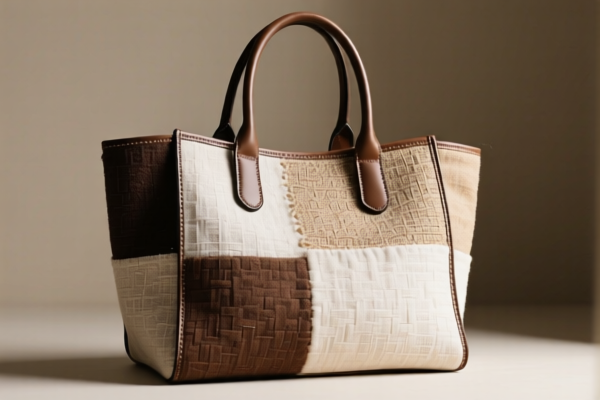

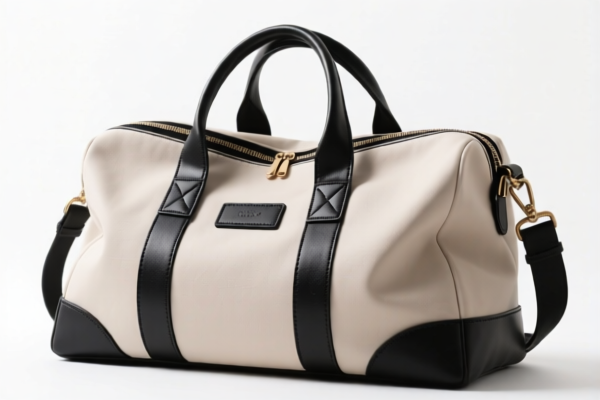
AI Analysis
🏃♂️ Running Bag (Sporting Goods for Track and Field, Running, and Athletics)
🌐 HS Code Reference & Customs Clearance Guide | 2026 Updated Tariff Analysis | Professional Export Strategy
📌 One, Product Definition & Classification: Do You Really Know What a "Running Bag" Is?
A running bag is a specialized sports accessory designed for athletes and fitness enthusiasts to carry essentials during training, races, or travel. It is not merely a backpack — it’s engineered for performance, comfort, and function.
In international trade, running bags are categorized based on material, design, intended use, and presence of functional features such as hydration pockets, shoe compartments, or reflective elements.
⚠️ Critical Distinction:
- If it’s a simple fabric bag with no athletic-specific features → may fall under general luggage (HS 4202)
- If it includes functional sport design (e.g., water bottle pockets, ventilated shoe compartment, reflective strips, adjustable straps) → must be classified under HS 6216.00.00.00
- If it’s part of a running kit (e.g., with shoes, clothing, or gear) → may be treated as a set, affecting tariff treatment
📦 Two, HS Code Classification Details (2026 Official Tariff Authority Comparison)
| HS Code | Product Description | Applicable Use | Key Features |
|---|---|---|---|
6216.00.00.00 |
Sportswear and accessories for running, track & field, and athletics | Running bags, training packs, race-day gear carriers | ✅ Functional design: mesh pockets, shoe compartment, hydration sleeve, reflective strips |
4202.12.00.00 |
Travel bags, suitcases, and briefcases made of textile (e.g., nylon, polyester) | General-purpose travel bags, non-sporting backpacks | ❌ No athletic-specific design |
4202.92.00.00 |
Other travel bags and containers made of textile (e.g., tote, duffel) | Casual or lifestyle bags, non-performance use | ❌ Lacks sport functionality |
6217.90.00.00 |
Other clothing and accessories (not for sports) | General accessories like belts, hats, or non-sport bags | ❌ Not intended for athletics |
9405.40.00.00 |
Parts and accessories for furniture (e.g., bag holders, straps) | Non-applicable unless used in furniture systems | ❌ Not relevant |
🔍 Key Insight:
- Only running-specific bags with performance features qualify for6216.00.00.00
- A plain nylon backpack with no sport-specific design → must be declared under4202.12.00.00
- Do not misclassify a functional running bag as a “travel bag” — this can trigger audits or penalties.
💰 Three, 2026 Updated Tariff Rate Breakdown (With Additional Duties & Policy Clauses)
✅ Applicable Country: United States (US)
✅ Origin: China (CN)
✅ Effective Date: November 10, 2025 (including future imports)
🎯 1. 6216.00.00.00 — Sportswear & Accessories for Running & Athletics
| Item | Details |
|---|---|
| Base Duty Rate | 0% (ad valorem) |
| USITC Section 301 Additional Duty | +25% (from USITC Footnote 9903.88.01) |
| IEEPA Additional Duty | +10% (for goods from China/Hong Kong, effective Nov 10, 2025) |
| Total Effective Rate | 45% |
| Tax Calculation | CIF Value × 45% |
| De Minimis Threshold | ❌ Not eligible (denied under US law) |
| Legal Basis Path | IEEPA:9903.01.25 → IEEPA:9903.01.24 → USITC:6216.00.00.00 → FOOTNOTE:9903.88.01 |
📌 Explanation:
- The 25% USITC duty stems from the U.S. Trade Act of 1974, Section 301, targeting Chinese goods deemed unfair due to IP or trade practices.
- The 10% IEEPA duty is under the International Emergency Economic Powers Act — imposed on imports from China for national security concerns.
- Combined total: 45% — one of the highest tariff rates in the apparel sector.
🎯 2. 4202.12.00.00 — Travel Bags (Non-Sporting, Textile)
| Item | Details |
|---|---|
| Base Duty Rate | 0% |
| USITC Section 301 Duty | +25% |
| IEEPA Duty | +10% |
| Total Effective Rate | 45% |
| Tax Calculation | CIF × 45% |
| De Minimis | ❌ Not eligible |
| Legal Path | IEEPA:9903.01.25 → IEEPA:9903.01.24 → USITC:4202.12.00.00 → FOOTNOTE:9903.88.01 |
📌 Important Note:
- Even non-sporting travel bags from China face the same 45% rate if misclassified as "running bags" — but the reverse is also dangerous.
- If you misclassify a functional running bag as a travel bag, you may be under-taxed — leading to back duties, penalties, and audits.
🛠️ Four, Customs Clearance Best Practices (Pro Tips to Avoid Costly Mistakes)
✅ 1. Required Documentation Checklist (No Exceptions!)
| Document | Must Provide | Why It Matters |
|---|---|---|
| ✅ Product Specification Sheet | ✔️ | Includes material, dimensions, weight, features (e.g., shoe compartment, hydration sleeve) |
| ✅ Product Photos (Front, Back, Side, Interior) | ✔️ | Shows functional design — critical for correct HS code |
| ✅ Circuit Diagram / Material List (if applicable) | ✔️ | Proves no electronic components (to avoid misclassification as tech item) |
| ✅ Third-Party Certifications | ✔️ | FCC, CE, RoHS (if applicable), or ISO 9001 for quality |
| ✅ Commercial Invoice | ✔️ | Must clearly state: “Running Bag, 30L, Mesh Pocket, Shoe Compartment, Reflective Strips, for Athletics” |
| ✅ Certificate of Origin (CO) | ✔️ | If from Vietnam, Mexico, or Thailand → may qualify for IEEPA exemption |
| ✅ Packing List | ✔️ | Shows contents, prevents "split shipment" risks |
✅ 2. Declaration Strategy (Golden Rules)
🔥 “Function Defines Code, Not Name — Label Smart, Declare Right!”
| Scenario | Correct HS Code | Wrong Practice |
|---|---|---|
| Running bag with shoe compartment, hydration sleeve, reflective strips | 6216.00.00.00 |
Mislabeling as “backpack” → 45% |
| Plain nylon duffel bag (no sport features) | 4202.12.00.00 |
Calling it a “running bag” → 45% |
| Running bag + shoes + socks in one pack | Declare as a set → 6216.00.00.00 |
Splitting into separate items → each taxed at 45% |
| Bag with logo of a major brand (Nike, Adidas) | Still 6216.00.00.00 |
Don’t assume brand = higher duty |
✅ 3. Special Cases & Solutions
| Situation | Recommended Action |
|---|---|
| OEM/White-label running bags | Provide design specs + client PO — avoid “generic” classification |
| Bag with built-in water bottle holder | Still 6216.00.00.00 — this is a standard feature |
| Bag used in military/paramilitary training | May qualify for “non-commercial” exemption — require official letter |
| Bag with RFID-blocking lining | Does not change HS code — remains 6216.00.00.00 |
| Bag sold with a running app subscription | Treat as accessory — does not affect HS code |
🌍 Five, Global Market Comparison (2026 Updated)
| Country/Region | Recommended HS Code | Tariff | Certification Required | Notes |
|---|---|---|---|---|
| 🇺🇸 United States | 6216.00.00.00 |
45% (China origin) | FCC, RoHS | 45% is extremely high — plan for cost impact |
| 🇨🇳 China | 6216.00.00.00 |
5% | CCC, RoHS | No extra duties — ideal for domestic sales |
| 🇪🇺 European Union | 6216.00.00.00 |
0% (if CE compliant) | CE, REACH | No additional tariffs — favorable |
| 🇦🇺 Australia | 6216.00.00.00 |
5% | RCM | No extra duties |
| 🇯🇵 Japan | 6216.00.00.00 |
0% | PSE | No extra duties |
📌 Key Takeaway:
- The U.S. is the only major market imposing 45% tariffs on running bags from China
- Vietnam, Mexico, Thailand, and Malaysia — if origin changes, IEEPA exemption applies → tariff drops to 0–5%
📌 Six, Common Mistakes & Risk Warnings (Learn from Others’ Failures)
❌ Mistake 1: Labeling a functional running bag as a “travel bag”
👉 Result: Under-taxed → back duties + 20% penalty + audit risk
❌ Mistake 2: Splitting a running bag + shoes + socks into separate shipments
👉 Result: Each item taxed at 45% → total cost exceeds 135%!
❌ Mistake 3: Using “sports backpack” as the product name without showing functional features
👉 Result: Customs may reclassify as 4202.12.00.00 → higher risk of audit
❌ Mistake 4: Not providing photos of interior design (e.g., shoe compartment)
👉 Result: Customs cannot verify function → delayed release or rejection
✅ Correct Approach:
“Running Bag, 30L, Mesh Ventilation, Shoe Compartment, Hydration Sleeve, Reflective Strips, for Marathon Training, Brand: XYZ, CE & RoHS Certified”
🎯 Seven, Conclusion: Accurate Classification = Profit Protection!
🎯 Remember the Mantra:
🔹 “Function Defines Code — Not Name!”
🔹 “45% on China? Yes — but only if misclassified!”
🔹 “Splitting = Disaster. Bundling = Savings.”
📌 Pro Tip:
If your running bag is originated in Vietnam, Mexico, Thailand, or Malaysia, you can apply for IEEPA exemption — reducing the tariff from 45% to 0–5%.
👉 Apply for Advance Ruling (Pre-Clearance) before shipment to avoid surprises.
📣 Take Action Now:
📞 Contact a licensed customs broker + Submit product photos + Request HS Code Pre-Ruling
🚀 Ensure your running bag clears customs fast, avoids penalties, and keeps your margins healthy!
✨ Smart Exporting Starts with Smart Classification!
💼 Your next shipment’s success begins with one correct HS code.
Customer Reviews
About HS Code Classification
The Harmonized System (HS) is an internationally standardized nomenclature developed by the World Customs Organization (WCO) to classify traded products. Over 200 countries use the HS system as the basis for customs tariffs, trade statistics, and import/export regulations.
Each HS code follows a hierarchical structure:
- Chapter (2 digits) — Broad category of goods (e.g., Chapter 84: Machinery and Mechanical Appliances)
- Heading (4 digits) — More specific grouping within the chapter
- Subheading (6 digits) — Internationally standardized breakdown, used by all WCO member countries
- National subdivisions (8-10 digits) — Country-specific extensions for further classification, such as US HTSUS 10-digit codes
Correct HS code classification is essential for smooth customs clearance, accurate duty payment, and compliance with trade regulations. Misclassification can lead to customs delays, overpayment of duties, or penalties.
When importing from CN to US, the applicable tariff rates may include:
- Most-Favored-Nation (MFN) rate — The standard duty rate applied to WTO members
- General rate — Applied to countries without trade agreements
- Trade remedy duties — Additional tariffs such as Section 301 (anti-dumping), Section 232 (national security), or countervailing duties
The information provided on this page is for reference purposes only. For official classification, please consult with your local customs authority or a licensed customs broker.