sacks and bags other
CN → US| HS Code | Tariff Rate | Origin | Destination | Doc |
|---|---|---|---|---|
| 4819400040 | 35.0% | CN | US | Official Doc |
| 4819300040 | 35.0% | CN | US | Official Doc |
| 3923290000 | 38.0% | CN | US | Official Doc |
| 3923210095 | 38.0% | CN | US | Official Doc |
| 6305390000 | 25.9% | CN | US | Official Doc |
| 6305900000 | 23.7% | CN | US | Official Doc |
Product Images
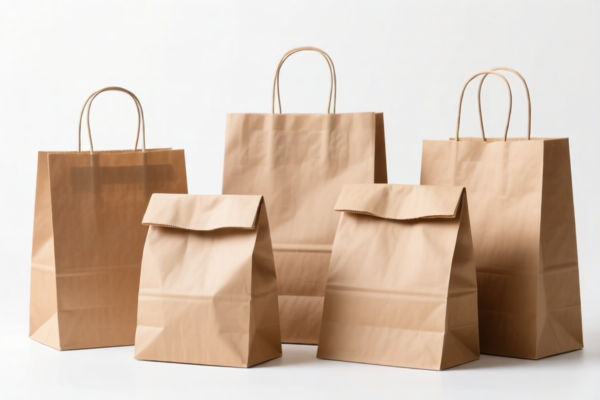
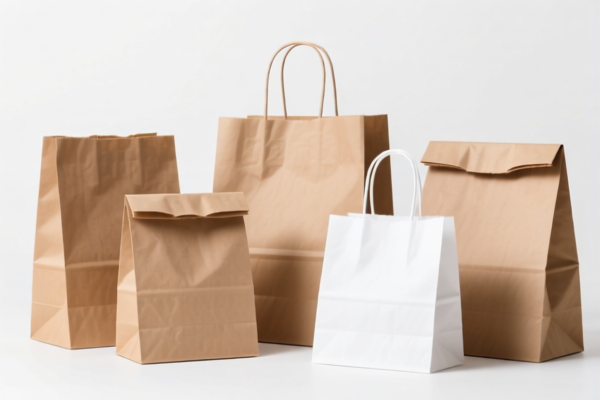
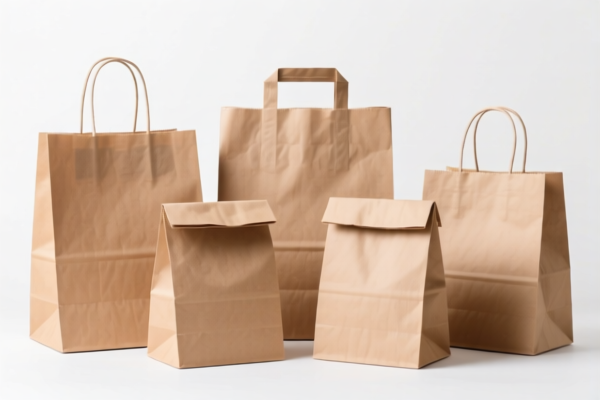
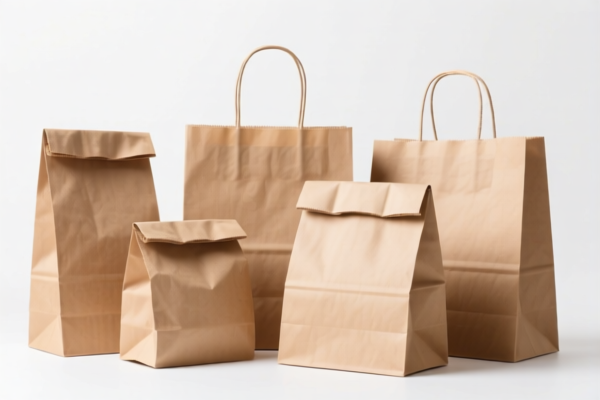
AI Analysis
🎒 Sacks and Bags (Other)
🌐 HS Code Reference & Customs Clearance Guide | 2026 Latest Tariff Breakdown | Pro-Level Import Strategy
📌 One, Product Definition & Classification: Do You Really Know “Sacks and Bags”?
Sacks and bags are among the most frequently traded packaging and carrying goods in global trade — but their classification is far more nuanced than it appears. In customs terminology, “sacks and bags” are not just “bags” — they include:
- Textile sacks (e.g., jute, cotton, polypropylene)
- Plastic bags (polyethylene, polypropylene, LDPE/HDPE)
- Paper bags (kraft, coated, laminated)
- Non-woven bags (PP, PET, recycled fibers)
- Composite or multi-material bags (e.g., plastic + paper, plastic + metal foil)
- Specialty bags: shopping bags, garbage bags, industrial packaging, luggage, etc.
⚠️ Critical Distinction:
- If made entirely of textile → HS 5601–5603
- If made entirely of plastic → HS 3923.21–3923.29
- If made of paper → HS 4819.20–4819.40
- If mixed materials or not covered by specific subheadings → HS 6305.32.00.00 (the “Other” category)
📦 Two, HS Code Classification Details (2026 Official Tariff Matrix)
| HS Code | Product Description | Use Case | Material Type | Contains Non-Textile Components? |
|---|---|---|---|---|
6305.32.00.00 |
Sacks and bags, other, of textile materials (not elsewhere specified) | General-purpose bags, tote bags, reusable shopping bags, non-technical sacks | Mixed or non-standard textile (e.g., cotton + polyester, canvas + plastic coating) | ✅ Yes (if not fully textile) |
6305.39.00.00 |
Sacks and bags, other, of non-textile materials (not elsewhere specified) | Plastic bags, paper bags, composite bags, laminated bags | Plastic, paper, non-woven, or hybrid materials | ✅ Yes |
5601.90.00.00 |
Sacks and bags, of textile materials, not elsewhere specified | Industrial sacks, bulk bags, grain sacks, burlap sacks | 100% natural or synthetic textile (e.g., PP woven fabric) | ❌ No |
3923.21.00.00 |
Plastic sacks and bags, of polyethylene (PE), not elsewhere specified | Grocery bags, shopping bags, retail packaging | PE (LDPE/HDPE) | ❌ No |
4819.20.00.00 |
Paper sacks and bags, not elsewhere specified | Kraft paper bags, gift bags, food packaging | Paper (kraft, coated, laminated) | ❌ No |
6307.90.90.00 |
Other made-up textile articles (not elsewhere specified) | Luggage, backpacks, cosmetic bags, travel accessories | Textile-based but not classified as sacks | ✅ Yes (non-sack use) |
🔍 Key Insight:
- If a bag has mixed materials (e.g., plastic-coated canvas, paper with plastic lining) → Must be classified under6305.39.00.00
- If a bag is not covered by a specific subheading → Default to6305.32.00.00or6305.39.00.00
- Do not use “bags” as a generic name — it leads to misclassification and penalties.
💰 Three, 2026 Latest Tariff Breakdown (With附加 Taxes & Policy Clauses)
✅ Applicable Country: United States (US)
✅ Origin: China (CN)
✅ Effective Date: November 10, 2025 (including subsequent imports)
🎯 1. 6305.32.00.00 — Sacks and Bags, Other, of Textile Materials
| Item | Details |
|---|---|
| Base Duty | 0% (ad valorem) |
| USITC Additional Duty | +25% (under Section 301) |
| IEEPA Additional Duty | +10% (China/HK products, effective Nov 10, 2025) |
| Total Duty Rate | 45% |
| Tax Calculation | CIF Value × 45% |
| De Minimis Exemption | ❌ Not applicable (denied under US law) |
| Legal Pathway | IEEPA:9903.01.25 → IEEPA:9903.01.24 → USITC:6305.32.00.00 → FOOTNOTE:9903.88.01 |
📌 Explanation:
- Even if your bag is 100% cotton, but not listed in a specific textile subheading, it falls under this “Other” category. - The 45% rate applies due to the combination of IEEPA + USITC tariffs. - No de minimis relief — even if value is under $800, you must pay full duty.
🎯 2. 6305.39.00.00 — Sacks and Bags, Other, of Non-Textile Materials
| Item | Details |
|---|---|
| Base Duty | 0% |
| USITC Additional Duty | +25% |
| IEEPA Additional Duty | +10% |
| Total Duty Rate | 45% |
| Tax Calculation | CIF × 45% |
| De Minimis Exemption | ❌ Not allowed |
| Legal Pathway | IEEPA:9901.25 → IEEPA:9903.01.24 → USITC:6305.39.00.00 → FOOTNOTE:9903.88.01 |
📌 Important Note:
- This includes plastic bags, paper bags with plastic lining, composite bags, and non-woven bags. - Even biodegradable or compostable bags are subject to 45% if they fall under this category. - No exceptions — unless you qualify for a special exemption (e.g., medical, humanitarian, or export control).
🛠️ Four, Customs Clearance Best Practices (Pro Tips to Avoid Penalties)
✅ 1. Required Documentation (Must-Have Checklist)
| Document | Required? | Notes |
|---|---|---|
| ✅ Product Specification Sheet | ✔️ | Include material composition, dimensions, weight, use case |
| ✅ Material Test Report | ✔️ | e.g., ASTM, ISO, REACH, RoHS (if applicable) |
| ✅ Product Photos (Clear, with Label) | ✔️ | Show material, stitching, printing, seams |
| ✅ Commercial Invoice | ✔️ | Must state “Sack and Bag, Not Elsewhere Specified” |
| ✅ Certificate of Origin (CO) | ✔️ | Critical for tariff eligibility |
| ✅ Packing List | ✔️ | Show quantity, packaging type, net/gross weight |
| ✅ Third-Party Certification (FCC, CE, etc.) | ✔️ | If used in regulated sectors (e.g., medical, food) |
✅ 2.申报技巧 (Pro申报 Tips)
🔥 “Material First, Use Second, Name Last — Or You’ll Pay 45%!”
| Scenario | Correct HS Code | Wrong Approach |
|---|---|---|
| Plastic-coated cotton sack | 6305.39.00.00 |
6305.32.00.00 → wrong material |
| Paper bag with plastic lining | 6305.39.00.00 |
4819.20.00.00 → only if fully paper |
| Reusable shopping bag (PP + cotton) | 6305.32.00.00 |
6305.39.00.00 → wrong material |
| Non-woven bag (PP fiber) | 6305.39.00.00 |
5601.90.00.00 → only if 100% textile |
| Luggage (textile, but not a sack) | 6307.90.90.00 |
6305.32.00.00 → wrong category |
✅ 3. Special Cases & Solutions
| Situation | Recommended Action |
|---|---|
| OEM bags for retailers | Provide customer PO + design drawings to prove intended use |
| Bags with logos or branding | Declare as “Custom-Printed Sack” — avoid “generic” |
| Bags used in food packaging | Apply for FDA compliance — may affect classification |
| Bags for medical or hazardous materials | Apply for special import license — may qualify for reduced duty |
| Bags exported from China to Mexico | Use USMCA — may qualify for 0% duty if rules of origin met |
🌍 Five, Global Market Comparison (2026 Latest)
| Country/Region | Recommended HS Code | Duty Rate | Certification Required | Notes |
|---|---|---|---|---|
| 🇺🇸 USA | 6305.32.00.00 / 6305.39.00.00 |
45% (China origin) | FCC, RoHS, REACH | No de minimis |
| 🇨🇳 China | 6305.32.00.00 / 6305.39.00.00 |
5% | CCC, RoHS | No extra tariffs |
| 🇪🇺 EU | 6305.32.00.00 / 6305.39.00.00 |
0% (if CE compliant) | CE, REACH, RoHS | No additional tariffs |
| 🇦🇺 Australia | 6305.39.00.00 |
5% | RCM | No extra duties |
| 🇯🇵 Japan | 6305.32.00.00 |
0% | PSE | No extra duties |
📌 Key Takeaway:
- The U.S. is the only major market imposing 45% on "Other" sacks and bags from China. - China, EU, Australia, Japan have no additional tariffs — ideal for export diversification.
📌 Six, Common Mistakes & How to Avoid Them (Real-World Pitfalls)
❌ Mistake 1: Calling a plastic-coated canvas bag “cotton sack”
👉 Result: Misclassified as 6305.32.00.00 → 45% duty even if plastic is dominant → overpayment & audit risk
❌ Mistake 2: Not declaring material composition on invoice
👉 Result: Customs cannot determine if it’s textile or non-textile → delayed release or seizure
❌ Mistake 3: Using “bag” as a generic term in申报
👉 Result: No clarity → automatic fallback to 45% rate
❌ Mistake 4: Assuming “reusable” means “exempt”
👉 Result: Still subject to 45% if not covered by a specific subheading
✅ Correct Way to Declare:
“Reusable Shopping Bag, 100% Polypropylene Non-Woven Fabric with Cotton Reinforcement, 12x14 inches, Printed Logo, Not Elsewhere Specified, For Retail Use, CE & RoHS Certified”
🎯 Seven, Final Verdict: Accurate Classification = Cost Control
🎯 Remember the Mantra:
🔹 “Material First, Use Second, Name Last — Or You’ll Pay 45%!”
🔹 “If it’s not listed, it’s ‘Other’ — and ‘Other’ is 45% in the U.S.!”
📌 Pro Tip:
If your sacks and bags are originating from Vietnam, Thailand, Mexico, or Malaysia, you may qualify for IEEPA exemption — duty drops to 0%–5%.
👉 Apply for Advance Ruling (Pre-Approval) before shipment to avoid surprises.
📣 Act Now!
📞 Contact a certified customs broker + provide product photos + request HS Code pre-ruling
🚀 Ship smarter, pay less, and avoid costly delays!
✨ Professional Clearance Starts with Precise Classification!
💼 Your profit margin depends on one line: the HS Code.
Customer Reviews
About HS Code Classification
The Harmonized System (HS) is an internationally standardized nomenclature developed by the World Customs Organization (WCO) to classify traded products. Over 200 countries use the HS system as the basis for customs tariffs, trade statistics, and import/export regulations.
Each HS code follows a hierarchical structure:
- Chapter (2 digits) — Broad category of goods (e.g., Chapter 84: Machinery and Mechanical Appliances)
- Heading (4 digits) — More specific grouping within the chapter
- Subheading (6 digits) — Internationally standardized breakdown, used by all WCO member countries
- National subdivisions (8-10 digits) — Country-specific extensions for further classification, such as US HTSUS 10-digit codes
Correct HS code classification is essential for smooth customs clearance, accurate duty payment, and compliance with trade regulations. Misclassification can lead to customs delays, overpayment of duties, or penalties.
When importing from CN to US, the applicable tariff rates may include:
- Most-Favored-Nation (MFN) rate — The standard duty rate applied to WTO members
- General rate — Applied to countries without trade agreements
- Trade remedy duties — Additional tariffs such as Section 301 (anti-dumping), Section 232 (national security), or countervailing duties
The information provided on this page is for reference purposes only. For official classification, please consult with your local customs authority or a licensed customs broker.