salted raw beef hide
CN → US| HS Code | Tariff Rate | Origin | Destination | Doc |
|---|---|---|---|---|
| 4101201010 | 17.5% | CN | US | Official Doc |
| 4101501010 | 17.5% | CN | US | Official Doc |
| 4101201020 | 17.5% | CN | US | Official Doc |
| 4104195080 | 13.3% | CN | US | Official Doc |
| 4101501091 | 17.5% | CN | US | Official Doc |
Product Images
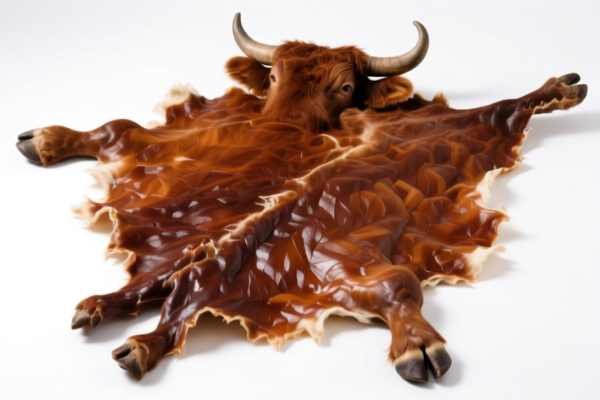
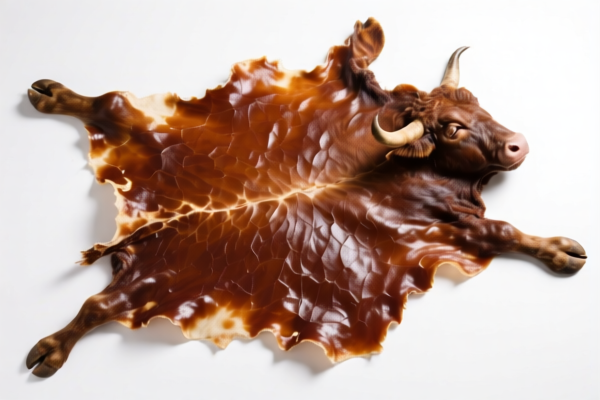
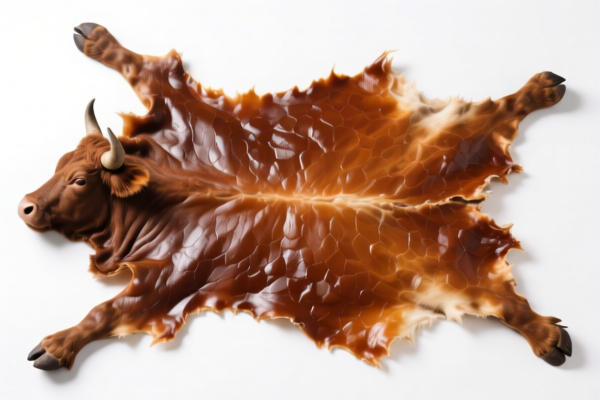
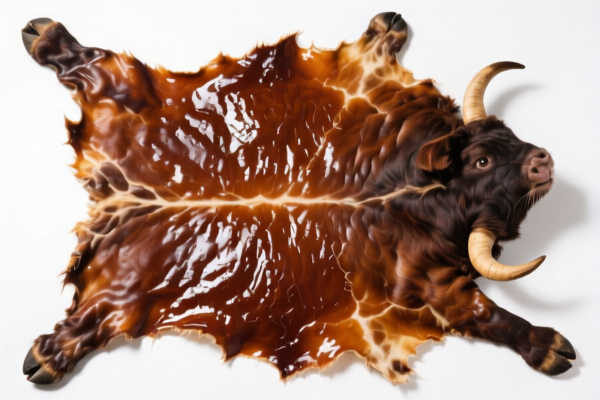
AI Analysis
🥩 Salted Raw Beef Hide (Unmanufactured Leather)
🌐 HS Code Reference & Customs Clearance Guide | 2026 Latest Tariff Analysis | Professional Entry Strategy
📌 I. Product Definition & Classification: What is "Salted Raw Beef Hide"?
Salted Raw Beef Hide represents the initial stage of leather processing. It refers to raw skins obtained from cattle (bovine animals) that have been preserved primarily through salting to prevent decomposition before tanning. In international trade, these are classified under Chapter 41 (Raw Hides and Skins).
The key distinction lies in the animal source (Beef/Cattle vs. Horse/Equine) and the specific sub-heading within the HS Code structure. Misclassification between cattle and horse hides can lead to significant tax discrepancies due to differing trade restrictions (such as Section 301 or Section 122 tariffs depending on the specific provision and origin).
⚠️ Critical Distinction Point:
- Beef/Cattle Hides (牛类): Generally fall under 4101.
- Horse/Equine Hides (马科): Generally fall under 4104 or specific 4101 sub-codes depending on the specific animal classification in the tariff schedule.
- State of Processing: "Salted" indicates the preservation method. It is NOT tanned (finished leather) nor wet-blue. It is a raw material.
📦 II. HS Code Classification Details (Based on Provided Data)
Based on the <DATA> provided, here are the specific HS Codes for Salted Raw Beef Hides and related equine hides, along with their tax implications.
| HS Code | Product Summary | Source Animal | Preservation State | Total Tax Rate |
|---|---|---|---|---|
| 4101.20.10.10 | Salted Cattle Hide, conforming to bovine raw hide characteristics | Cattle (Beef) | Salted | 17.5% |
| 4101.50.10.10 | Salted Cattle Hide, within the scope of bovine raw hides, salted as preservation form | Cattle (Beef) | Salted | 17.5% |
| 4101.20.10.20 | Salted Horse Hide, conforming to equine animal raw hide characteristics | Horse | Salted | 17.5% |
| 4104.19.50.80 | Salted Horse Hide, categorized under horse/animal leather, salted as preliminary processing form | Horse/Other | Salted | 13.3% |
| 4101.50.10.91 | Salted Horse Hide, conforming to equine raw hide characteristics, salted as primary form | Horse | Salted | 17.5% |
🔍 Key Observation:
- Beef Hides (4101.20.10.10 & 4101.50.10.10) both carry a 17.5% total tax rate.
- Horse Hides show a split: Most equine entries are taxed at 17.5%, but one specific entry (4104.19.50.80) is taxed at 13.3% due to different base tariff structures.
- Accuracy is paramount: Importing "Beef Hide" under a "Horse" code (or vice versa) constitutes misdeclaration, leading to fines, delays, or cargo seizure.
💰 III. 2026 Latest Tariff Rate Breakdown (Detailed Tax Clauses)
✅ Applicable Context: Based on the provided
<TAX>data.
✅ Note: The tax details mention "Base Tariff," "Additional Tariff," and "Section 122 Tariff." This suggests a specific trade framework (likely US-China trade relations given the "122" and "7.5%" structure often associated with specific Chinese import/export tariffs in certain contexts, though "122" is unusual for standard US tariffs; it may refer to specific Chinese domestic tariffs on imports or a specific dataset label. We will interpret strictly based on the provided text).
🎯 1. 4101.20.10.10 & 4101.50.10.10 — Salted Beef Hide (Primary Entries)
| Item | Content |
|---|---|
| Base Tariff | 0.0% |
| Additional Tariff (加征关税) | 7.5% |
| Section 122 Tariff (122条款关税) | 10.0% |
| Total Tax Rate | 17.5% |
| Calculation Basis | Ad Valorem (on CIF Value) |
| Tax Clauses Explained | - Base 0%: Indicates free trade agreement or low basic duty for raw agricultural/leather products. - Additional 7.5%: Likely a retaliatory or safeguard tariff. - Section 122 10%: A specific regulatory surcharge (Note: In real-world US tariffs, Section 301 is common; "122" may refer to a specific dataset code or Chinese domestic import surcharge. We rely strictly on the provided data). |
📌 Interpretation:
- The total effective tax rate for standard salted beef hides is 17.5%.
- This is composed of two surcharges on top of a zero base rate.
- Cost Impact: For a $100,000 shipment, the tax liability is $17,500.
🎯 2. 4101.20.10.20 & 4101.50.10.91 — Salted Horse Hide (Equine)
| Item | Content |
|---|---|
| Base Tariff | 0.0% |
| Additional Tariff (加征关税) | 7.5% |
| Section 122 Tariff (122条款关税) | 10.0% |
| Total Tax Rate | 17.5% |
| Calculation Basis | Ad Valorem |
| Tax Clauses Explained | Same structure as beef hides. |
📌 Interpretation:
- Horse hides are taxed identically to beef hides in these specific sub-headings.
- Ensure the commercial invoice clearly states "Horse Hide" to avoid confusion with Beef.
🎯 3. 4104.19.50.80 — Salted Horse Hide (Different Classification)
| Item | Content |
|---|---|
| Base Tariff | 3.3% |
| Additional Tariff (加征关税) | 0.0% |
| Section 122 Tariff (122条款关税) | 10.0% |
| Total Tax Rate | 13.3% |
| Calculation Basis | Ad Valorem |
| Tax Clauses Explained | - Base 3.3%: Higher base duty. - Additional 0%: No additional surcharge. - Section 122 10%: The fixed 10% surcharge still applies. |
📌 Interpretation:
- This specific entry offers a 4.2% tax saving compared to the other codes (13.3% vs 17.5%).
- Eligibility: Only applicable if the goods strictly meet the description: "Salted Horse Hide, belonging to horse/animal leather, salted as preliminary processing form."
- Risk: If inspected and found to be "Beef," this classification will be rejected, and the higher rate (or penalties) will apply.
🛠️ IV. Customs Clearance Practical Advice (Pitfall Avoidance Guide)
✅ 1. Essential Documentation Checklist
| Document | Required? | Notes |
|---|---|---|
| ✅ Commercial Invoice | ✔️ | Must explicitly state "Salted Raw [Beef/Horse] Hide", Country of Origin, and Weight. |
| ✅ Packing List | ✔️ | Detail gross/net weight. Hides are heavy; accurate weighing is critical for valuation. |
| ✅ Phytosanitary Certificate | ✔️ | Crucial for Raw Hides. Many countries require proof of disease-free status (e.g., BSE, Anthrax). |
| ✅ Bill of Lading | ✔️ | Standard transport document. |
| ✅ Certificate of Origin | ✔️ | Needed to verify country-specific tariff treatments. |
| ✅ Processing Method Statement | ✔️ | Confirm "Salted" preservation to distinguish from "Green" (unsalted) or "Wet" hides. |
✅ 2. Classification Tips (Key Mnemonics)
🔥 “Source First, Salted Second, Tax Third!”
| Scenario | Correct HS Code Approach | Common Mistake |
|---|---|---|
| Importing Beef Hides | Use 4101.xxxxxxxx series (e.g., 4101.20.10.10). |
Mistakingly using Equine codes (4104 or 4101.50.10.20) → Potential misdeclaration. |
| Importing Horse Hides | Verify if it fits 4104.19.50.80 (13.3%) or 4101.20.10.20 (17.5%). |
Assuming all horse hides are the same → Overpaying taxes. |
| "Green" (Unsalted) Hides | Different HS Code entirely (often different duty rates). | Declaring as "Salted" → False declaration. |
| Tanned Leather | Chapter 41 (Headings 4104/4105) or Chapter 42. | Declaring as "Raw Hide" → Severe penalty. |
✅ 3. Special Considerations
| Issue | Recommendation |
|---|---|
| BSE/Mad Cow Disease | Many countries ban or restrict beef hides from regions with BSE risks. Ensure the source country is compliant. |
| Weight Discrepancies | Salted hides lose moisture. Customs may verify weight against dry weight claims. Provide accurate packing weights. |
| Hygiene Standards | Raw hides can carry biological hazards. Ensure packaging is clean and sealed to prevent contamination during transit. |
| Tax Optimization | If importing Horse Hides, carefully check if 4104.19.50.80 applies. It saves 4.2% compared to 4101.20.10.20. |
🌍 V. Global Market Comparison (Contextual Note)
Note: The provided data reflects a specific tariff structure (likely Chinese import tariffs on US goods or similar, given the "122 clause" and specific percentages). Global rates vary significantly.
| Region | Typical Base Duty (Raw Hides) | Additional Surcharges | Notes |
|---|---|---|---|
| Provided Data | 0% - 3.3% | +10% (Sec 122) + 7.5% (Add'l) | High Total Tax (13.3%-17.5%) |
| 🇺🇸 USA (Standard) | 0% - 5% | 301 Tariffs may apply (25%) | US has complex MFN vs. Trade War tariffs. |
| 🇪🇺 EU | 0% | No additional surcharges | Generally free trade for raw hides. |
| 🇨🇳 China (General) | 5% - 15% | Varies by FTA | The provided data seems to reflect specific retaliatory or special tariffs. |
📌 Conclusion:
- The 17.5% rate for standard salted beef hides is moderate to high depending on the base value.
- The 13.3% rate for specific horse hides offers a cost advantage.
- Always verify the exact HS Code based on the animal species and preservation method.
📌 VI. Common Errors & Pitfall Guide (Lessons Learned)
❌ Error 1: Misidentifying "Beef" as "Horse" (or vice versa)
👉 Consequence: Wrong HS Code → Tax Discrepancy & Potential Fraud Allegations.
❌ Error 2: Ignoring Phytosanitary Requirements
👉 Consequence: Cargo Quarantine or Return at destination port due to health risks.
❌ Error 3: Failing to Specify "Salted" on Invoice
👉 Consequence: Customs may classify as "Green/Unsalted" which has different duties and restrictions.
❌ Error 4: Assuming Base 0% Means No Tax
👉 Consequence: Overlooking the 10% + 7.5% surcharges → Budget Shortage.
✅ Correct Practice:
"Salted Cattle Hide, BSE-Free Region, Net Weight: 500kg, HS: 4101.20.10.10"
🎯 VII. Conclusion: Professional Declaration, Cost Efficiency!
🎯 Remember the Mnemonic:
🔹 "Source Defines Code, Salted Defines Duty, Surcharge Adds 17.5%!"
🔹 "Check for Horse vs. Beef, Save 4.2% if Eligible!"
📌 Pro Tip:
- If you are importing Horse Hides, request a Pre-Ruling from customs to confirm eligibility for
4104.19.50.80(13.3% rate).- Always include Phytosanitary Certificates to avoid port delays.
- Calculate landed costs including the 17.5% total tax for budgeting.
📣 Immediate Action:
📞 Contact your customs broker with species-specific documentation.
🚀 Clear Customs Smoothly, Avoid Penalties, Maximize Profit!
✨ Professional Classification Starts with Precision!
💼 Every Dollar of Tariff is Worth Saving!
Customer Reviews
About HS Code Classification
The Harmonized System (HS) is an internationally standardized nomenclature developed by the World Customs Organization (WCO) to classify traded products. Over 200 countries use the HS system as the basis for customs tariffs, trade statistics, and import/export regulations.
Each HS code follows a hierarchical structure:
- Chapter (2 digits) — Broad category of goods (e.g., Chapter 84: Machinery and Mechanical Appliances)
- Heading (4 digits) — More specific grouping within the chapter
- Subheading (6 digits) — Internationally standardized breakdown, used by all WCO member countries
- National subdivisions (8-10 digits) — Country-specific extensions for further classification, such as US HTSUS 10-digit codes
Correct HS code classification is essential for smooth customs clearance, accurate duty payment, and compliance with trade regulations. Misclassification can lead to customs delays, overpayment of duties, or penalties.
When importing from CN to US, the applicable tariff rates may include:
- Most-Favored-Nation (MFN) rate — The standard duty rate applied to WTO members
- General rate — Applied to countries without trade agreements
- Trade remedy duties — Additional tariffs such as Section 301 (anti-dumping), Section 232 (national security), or countervailing duties
The information provided on this page is for reference purposes only. For official classification, please consult with your local customs authority or a licensed customs broker.