salted raw cowhide
CN → US| HS Code | Tariff Rate | Origin | Destination | Doc |
|---|---|---|---|---|
| 4101501010 | 17.5% | CN | US | Official Doc |
| 4101201010 | 17.5% | CN | US | Official Doc |
| 4103902000 | 20.8% | CN | US | Official Doc |
| 4103901190 | 17.5% | CN | US | Official Doc |
| 4101901020 | 17.5% | CN | US | Official Doc |
Product Images
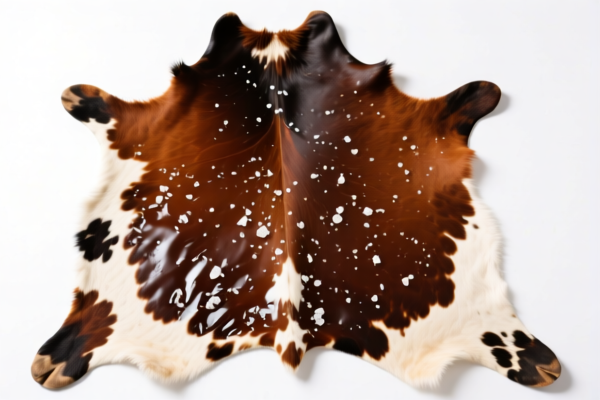
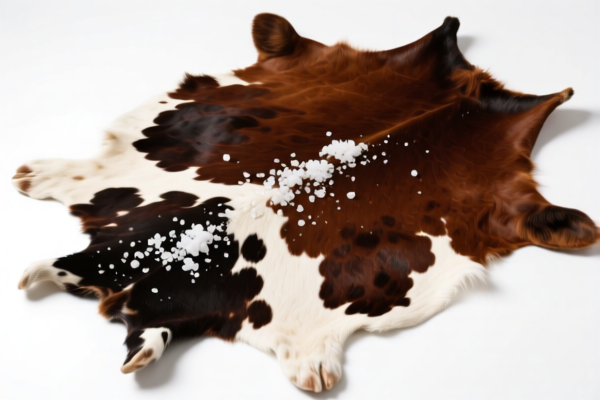
AI Analysis
🐄 Salted Raw Cowhide (盐渍牛皮) — US Import Clearance Guide 2026
🌐 HS Code Reference & Customs Clearance Strategy | Raw Hide Classification | High-Tariff Alert
📌 一、Product Definition & Classification: What is "Salted Raw Cowhide"?
Salted Raw Cowhide refers to the untreated skin of cattle that has been preserved using salt (dry salting or brine) to prevent decomposition. In international trade, it is classified as "Raw Hides" under Chapter 41 of the HTSUS.
Key Characteristics: * Material: Bovine (Cow/Cattle) skin. * State: Un-tanned, un-crusted, preserved with salt. * Condition: Can be fresh wet-salted or dry-salted. * Exclusion: Does not include chrome-tanned, vegetable-tanned, or leather products (which fall under Chapter 42).
⚠️ Critical Distinction:
- If the hide is untanned and only preserved with salt → Chapter 41 (4101/4103)
- If the hide is tanned or further processed → Chapter 42 (Leather articles)
- Do not confuse with "Leather": Salted hides are raw materials, not finished leather goods.
📦 二、HS Code Classification Matrix (2026 HTSUS Analysis)
The provided data indicates four specific HS Codes for Salted Raw Cowhide, with slight variations in base tariff rates. Here is the detailed breakdown:
| HS Code | Product Description | Key Classification Criteria |
|---|---|---|
| 4101.50.10.10 | Salted Cowhides | Material: Cowhide; Form: Salt-preserved. Fits raw hide characteristics. |
| 4101.20.10.10 | Salted Cowhides (Heavy) | Material: Cowhide; Form: Salt-preserved. Fits raw hide classification. |
| 4103.90.20.00 | Fresh Wet-Salted Cowhides | Material: Cowhide; State: Un-tanned, wet-salted. Fits "Raw Hides" category. |
| 4103.90.11.90 | Fresh Wet-Salted Cowhides | Material: Cowhide; State: Freshly salted, pre-tanning. Fits raw hide features. |
| 4101.90.10.20 | Fresh/Wet-Salted Cowhides | Material: Cowhide; State: Fresh or wet-salted. Fully meets classification requirements. |
🔍 Important Note:
- HS Codes starting with 4101 typically refer to "Raw Hides of Bovine Animals, Fresh or Salted."
- HS Codes starting with 4103 refer to "Other Raw Hides and Skins, Fresh or Preserved."
- The difference in 4101 vs. 4103 often lies in weight, moisture content, or specific preservation method, but all fall under Raw Hides.
💰 三、2026 Tariff Rate Breakdown (Including Additional Duties)
✅ Applicable Country: United States (US)
✅ Country of Origin: China (CN)
✅ Effective Date: November 10, 2025 (and subsequent imports)
🎯 1. HS Code 4101.50.10.10 & 4101.20.10.10 — Salted Cowhides
| Item | Details |
|---|---|
| Base Duty Rate | 0.0% |
| Section 301 Additional Duty | +7.5% |
| Section 122 Duty (China) | +10.0% |
| Total Tax Rate | 17.5% |
| Tax Calculation | CIF Value × 17.5% |
| De Minimis Exemption | ❌ Not Applicable |
| Legal Basis Path | 301:4101.50.10.10 → 122:CN → Base:0% |
📌 Explanation:
- Base Rate 0%: Raw hides of bovine animals often have a 0% base tariff in the US.
- Section 301 (7.5%): Standard additional duty on Chinese goods in this category.
- Section 122 (10%): Specific additional duty for certain Chinese-origin goods.
- Total 17.5%: Must be paid on the CIF value.
🎯 2. HS Code 4103.90.20.00 — Fresh Wet-Salted Cowhides
| Item | Details |
|---|---|
| Base Duty Rate | 3.3% |
| Section 301 Additional Duty | +7.5% |
| Section 122 Duty (China) | +10.0% |
| Total Tax Rate | 20.8% |
| Tax Calculation | CIF Value × 20.8% |
| De Minimis Exemption | ❌ Not Applicable |
| Legal Basis Path | 301:4103.90.20.00 → 122:CN → Base:3.3% |
📌 Explanation:
- This code has a higher base rate (3.3%) compared to 4101 codes.
- Total 20.8% is 3.3% higher than the 4101 codes.
- Why the difference? May relate to specific preservation state (e.g., "wet-salted" vs. "dry-salted") or weight classification.
🎯 3. HS Code 4103.90.11.90 & 4101.90.10.20 — Other Fresh/Wet-Salted Cowhides
| Item | Details |
|---|---|
| Base Duty Rate | 0.0% |
| Section 301 Additional Duty | +7.5% |
| Section 122 Duty (China) | +10.0% |
| Total Tax Rate | 17.5% |
| Tax Calculation | CIF Value × 17.5% |
| De Minimis Exemption | ❌ Not Applicable |
| Legal Basis Path | 301:4103.90.11.90 / 4101.90.10.20 → 122:CN → Base:0% |
📌 Explanation:
- These codes also benefit from a 0% base rate, resulting in the 17.5% total duty.
- Ensure the physical state of the hide (fresh/wet-salted) matches the code description to avoid misclassification.
🛠️ 四、Customs Clearance Practical Advice (Avoid Pitfalls)
✅ 1. Required Documentation Checklist
| Document | Required? | Notes |
|---|---|---|
| Commercial Invoice | ✅ Yes | Must clearly state "Salted Raw Cowhide" and HS Code. |
| Packing List | ✅ Yes | Detail gross/net weight, number of hides, salt weight. |
| Bill of Lading/Air Waybill | ✅ Yes | Standard shipping documents. |
| Product Description | ✅ Yes | Specify: Material (Cowhide), Treatment (Salted), State (Fresh/Wet/Dry). |
| Country of Origin Certificate | ✅ Yes | Required for Section 122 and 301 duty application. |
| Photos of Hides | ✅ Recommended | To prove raw, untanned state. |
✅ 2. Key Clearance Tips
🔥 Golden Rule:
"Raw + Salted = 4101/4103 | Tanned = 4201/4202 | Declare Accurately!"
| Scenario | Correct HS Code | Incorrect Code | Consequence |
|---|---|---|---|
| Raw, Salted Cowhide | 4101.50.10.10 or 4101.20.10.10 |
4201.00.00.00 (Leather) |
Overpay Tax (Leather duty may be higher or lower, but misclassification leads to penalties). |
| Wet-Salted Cowhide | 4103.90.20.00 (20.8%) or 4101.90.10.20 (17.5%) |
4101.50.10.10 (17.5%) |
Underpayment Risk if base rate differs. |
| Tanned Leather | 4201.00.00.00 |
4101.50.10.10 |
Severe Penalty for misclassification. |
| Leather Garments | 4203.10.00.00 |
4101.50.10.10 |
Major Error. |
📌 Critical Warning:
- Do NOT declare as "Leather" if it is raw/salted.
- Do NOT split shipments to avoid Section 122 duties; CBP will aggregate.
- Salt Weight: If salt is added during packing, ensure the net weight of the hide is declared correctly, not the gross weight with salt (depending on CBP rules for weight declaration).
✅ 3. Special Cases
| Situation | Recommendation |
|---|---|
| Mixed Consignment (Raw + Tanned) | Declare separately. Do not combine raw hides and tanned leather in one line item. |
| Origin: Not China | Section 122 (10%) does not apply. Only Base + Section 301 (if applicable) apply. |
| De Minimis (800 USD) | ❌ Not Eligible. Raw hides are excluded from de minimis treatment for China-origin goods. |
🌍 五、Global Market Comparison (2026)
| Country/Region | Recommended HS Code | Duty (China Origin) | Notes |
|---|---|---|---|
| 🇺🇸 USA | 4101.50.10.10 |
17.5% | Base 0% + 301 7.5% + 122 10% |
| 🇨🇳 China | 4101.50.10.10 |
0% ~ 5% | Import duty may be lower; check FTA. |
| 🇪🇺 EU | 4101.21.00 |
0% ~ 10% | Varies by preservation method. |
| 🇬🇧 UK | 4101.21.00 |
0% ~ 10% | Post-Brexit tariff schedule. |
📌 Conclusion:
- The USA imposes a 17.5% - 20.8% total duty on Chinese-origin salted raw cowhide.
- This is significantly higher than many other markets.
- Cost Planning: Factor in 17.5% - 20.8% for US imports.
📌 六、Common Mistakes & Pitfalls
❌ Mistake 1: Declaring "Salted Leather" instead of "Salted Raw Hide"
👉 Result: Potential penalty for misclassification, as "Leather" implies tanning.
❌ Mistake 2: Ignoring Section 122 Duty
👉 Result: Underpayment by 10%. CBP will assess back duties + interest.
❌ Mistake 3: Combining Raw Hides with Tanned Leather in one shipment
👉 Result: CBP may flag for audit, leading to delays.
❌ Mistake 4: Misdeclaring Weight
👉 Result: Incorrect duty calculation. Declare net weight of hides, not including excess salt if not part of the product value.
✅ Correct Declaration Example:
"Salted Raw Cowhide, Untanned, China Origin, HS Code 4101.50.10.10, Net Weight: 10,000 lbs, CIF Value: $50,000"
🎯 七、Conclusion: Strategic Clearance for Raw Hides
🎯 Key Takeaways:
🔹 HS Code Matters:
4101vs4103changes base duty (0% vs 3.3%).
🔹 Total Duty: 17.5% for most4101codes, 20.8% for4103.90.20.00.
🔹 No De Minimis: All shipments from China are subject to full duty.
🔹 Documentation: Clear description "Raw, Salted, Untanned" is crucial.
📌 Pro Tip:
If your cowhide is originating from Vietnam, Mexico, or Thailand, you may avoid Section 122 and Section 301 duties.
Action: Apply for Pre-Ruling (CBP Ruling) to confirm the correct HS Code and duty rate before shipping.
📣 Immediate Action:
📞 Contact a licensed Customs Broker
📄 Prepare Product Specs & Origin Certificate
🚀 Ensure Accurate HS Code Declaration to Avoid Penalties!
✨ Professional Clearance Starts with Accurate Classification!
💼 Your Cost Efficiency Depends on Precision!
Customer Reviews
About HS Code Classification
The Harmonized System (HS) is an internationally standardized nomenclature developed by the World Customs Organization (WCO) to classify traded products. Over 200 countries use the HS system as the basis for customs tariffs, trade statistics, and import/export regulations.
Each HS code follows a hierarchical structure:
- Chapter (2 digits) — Broad category of goods (e.g., Chapter 84: Machinery and Mechanical Appliances)
- Heading (4 digits) — More specific grouping within the chapter
- Subheading (6 digits) — Internationally standardized breakdown, used by all WCO member countries
- National subdivisions (8-10 digits) — Country-specific extensions for further classification, such as US HTSUS 10-digit codes
Correct HS code classification is essential for smooth customs clearance, accurate duty payment, and compliance with trade regulations. Misclassification can lead to customs delays, overpayment of duties, or penalties.
When importing from CN to US, the applicable tariff rates may include:
- Most-Favored-Nation (MFN) rate — The standard duty rate applied to WTO members
- General rate — Applied to countries without trade agreements
- Trade remedy duties — Additional tariffs such as Section 301 (anti-dumping), Section 232 (national security), or countervailing duties
The information provided on this page is for reference purposes only. For official classification, please consult with your local customs authority or a licensed customs broker.