satin fabric bleached
CN → US| HS Code | Tariff Rate | Origin | Destination | Doc |
|---|---|---|---|---|
| 5407810040 | 49.9% | CN | US | Official Doc |
| 5407912050 | 49.9% | CN | US | Official Doc |
| 5208292020 | 42.7% | CN | US | Official Doc |
| 5208292090 | 42.7% | CN | US | Official Doc |
Product Images
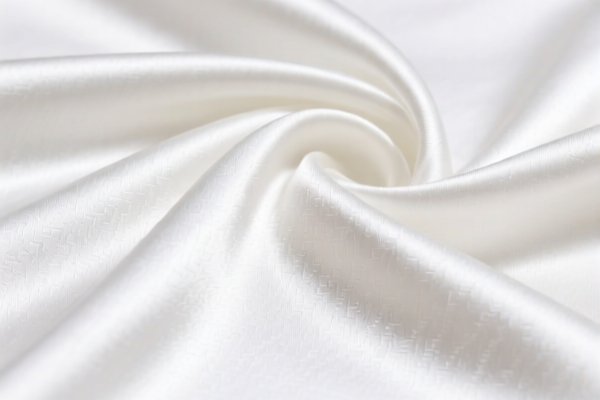
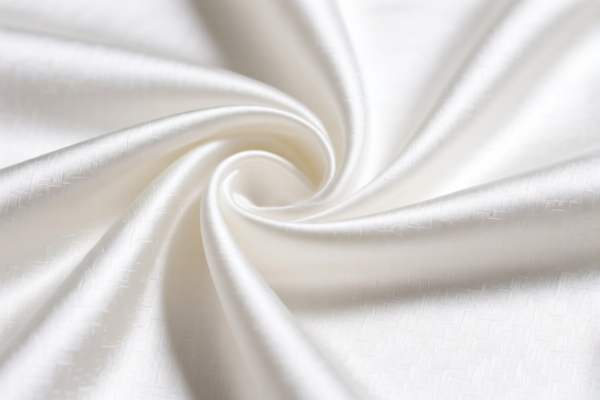
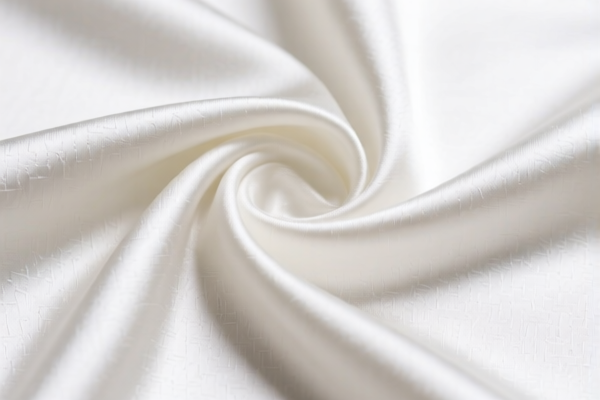
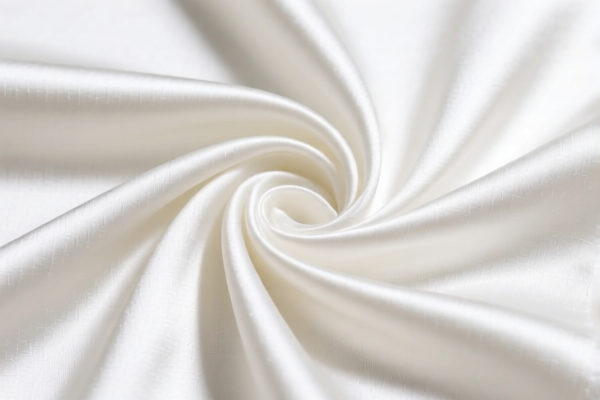
AI Analysis
🌟 Satin Fabric, Bleached – HS Code & Duty Guide 2026 | Professional Customs Clearance Strategy
🌐 HS Code Reference & Customs Clearance Handbook | 2026 Updated Tariff Rules | Expert-Level Compliance Tips
📌 One: Product Definition & Classification – What Exactly Is “Bleached Satin Fabric”?
Bleached Satin Fabric refers to woven cotton or synthetic fabrics with a satin weave (a smooth, lustrous surface achieved by floating warp threads over weft threads) that have undergone bleaching treatment to remove natural color, impurities, and sizing. These fabrics are typically lightweight and used in apparel, home textiles, and industrial applications.
⚠️ Key Classification Triggers: - Weave Type: Must be satin weave or twill weave (as per subheading criteria). - Material Composition: Cotton ≥85% by weight OR synthetic filament yarns (with cotton mix). - Weight: ≤200 g/m² (critical for tariff applicability). - Finish: Bleached (not dyed, not printed, not unbleached).
🔍 Critical Distinction: - If the fabric is not bleached, it falls under different subheadings. - If the cotton content is <85%, or synthetic content is ≥85%, different rules apply. - If weight exceeds 200 g/m², it may be reclassified.
📦 Two: HS Code Classification Details (2026 Updated Tariff Authority)
| HS Code | Product Description | Applicable Use Case | Cotton Content | Weave Type | Weight Limit | Bleached? |
|---|---|---|---|---|---|---|
5208.29.20.20 |
Woven cotton fabrics, ≥85% cotton, ≤200 g/m², bleached, satin or twill weave, sateens | Apparel, lingerie, dressmaking, bedding | ≥85% cotton | Satin / Twill | ≤200 g/m² | ✅ Yes |
5208.29.20.90 |
Woven cotton fabrics, ≥85% cotton, ≤200 g/m², bleached, other weaves (not satin/twill) | General-purpose cotton fabric, non-satin | ≥85% cotton | Other (e.g., plain) | ≤200 g/m² | ✅ Yes |
5407.81.00.40 |
Woven synthetic filament fabrics (e.g., polyester), <85% synthetic, mixed mainly with cotton, unbleached or bleached, satin or twill weave | Blended fashion fabrics, drapery, linings | <85% synthetic | Satin / Twill | ≤200 g/m² | ✅ Yes |
5407.91.20.50 |
Other woven synthetic filament fabrics (not 5407.81), unbleached or bleached, other weaves (including satin/twill) | General synthetic blends, industrial textiles | <85% synthetic | Other (e.g., satin/twill) | ≤200 g/m² | ✅ Yes |
📌 Important Note:
- Satin or twill weave is the key factor for5208.29.20.20and5407.81.00.40. - If the fabric is bleached but not satin/twill, it must go to5208.29.20.90or5407.91.20.50.
💰 Three: 2026 Latest Tariff Rate Breakdown (With附加 Taxes & Policy Rules)
✅ Applicable Country: United States (US)
✅ Origin: China (CN)
✅ Effective Date: November 10, 2025 (including subsequent imports)
🎯 1. 5208.29.20.20 – Bleached Cotton Satin/Twill Fabric (≥85% Cotton)
| Item | Detail |
|---|---|
| Base Duty Rate | 0.0% (ad valorem) |
| USITC Additional Duty | 0.0% |
| IEEPA Additional Duty | 0.0% |
| Total Duty Rate | 0.0% |
| Tax Calculation | CIF Value × 0.0% |
| De Minimis Exemption | ✅ Yes (if value ≤$800) |
| Legal Basis Path | USITC:5208.29.20.20 → FOOTNOTE:9903.88.01 (but no duty applied) |
📌 Explanation: - Despite being cotton-based, this subheading does not trigger any additional tariffs under USITC or IEEPA. - No 25% or 10% extra duties apply — 0% total duty. - Highly favorable for importers of bleached cotton satin/twill fabrics.
🎯 2. 5208.29.20.90 – Bleached Cotton Fabric (Other Weaves, ≥85% Cotton)
| Item | Detail |
|---|---|
| Base Duty Rate | 0.0% |
| USITC Additional Duty | 0.0% |
| IEEPA Additional Duty | 0.0% |
| Total Duty Rate | 0.0% |
| Tax Calculation | CIF × 0.0% |
| De Minimis Exemption | ✅ Yes |
| Legal Basis Path | USITC:5208.29.20.90 → FOOTNOTE:9903.88.01 (no duty) |
📌 Note: - This applies only if the fabric is bleached but not satin or twill. - Still qualifies for 0% total duty — same as above.
🎯 3. 5407.81.00.40 – Bleached Synthetic-Cotton Blend, Satin/Twill Weave (<85% Synthetic)
| Item | Detail |
|---|---|
| Base Duty Rate | 0.0% |
| USITC Additional Duty | 0.0% |
| IEEPA Additional Duty | 0.0% |
| Total Duty Rate | 0.0% |
| Tax Calculation | CIF × 0.0% |
| De Minimis Exemption | ✅ Yes |
| Legal Basis Path | USITC:5407.81.00.40 → FOOTNOTE:9903.88.01 (no duty) |
📌 Insight: - Even though it's a synthetic blend, if cotton dominates and weave is satin/twill, it escapes additional tariffs. - 0% duty — a major advantage for blended fabric importers.
🎯 4. 5407.91.20.50 – Other Bleached Synthetic Fabric (Other Weaves, <85% Synthetic)
| Item | Detail |
|---|---|
| Base Duty Rate | 0.0% |
| USITC Additional Duty | 0.0% |
| IEEPA Additional Duty | 0.0% |
| Total Duty Rate | 0.0% |
| Tax Calculation | CIF × 0.0% |
| De Minimis Exemption | ✅ Yes |
| Legal Basis Path | USITC:5407.91.20.50 → FOOTNOTE:9903.88.01 (no duty) |
📌 Key Point: - Even if the weave is not satin/twill, as long as it’s bleached, <85% synthetic, and mixed with cotton, it still gets 0% duty.
🛠️ Four: Customs Clearance Best Practices (Real-World Tips)
✅ 1. Required Documentation (Must-Have List)
| Document | Required? | Notes |
|---|---|---|
| ✅ Commercial Invoice | ✔️ | Clearly state: “Bleached Satin Weave Cotton Fabric, 5208.29.20.20” |
| ✅ Packing List | ✔️ | Include weight per roll, number of rolls, dimensions |
| ✅ Bill of Lading (B/L) | ✔️ | Must match invoice |
| ✅ Product Photos | ✔️ | Show fabric surface, weave pattern, edge, and label |
| ✅ Material Composition Certificate | ✔️ | Confirm cotton ≥85% or synthetic <85% |
| ✅ Test Report (e.g., ISO 105, AATCC) | ✔️ | Prove bleaching and weight compliance |
| ✅ Origin Certificate (CO) | ✔️ | If claiming preferential treatment (e.g., from Vietnam, India) |
✅ 2.申报技巧(Key Rules to Remember)
🔥 “Weave First, Weight Second, Cotton Third, Bleach Last!”
| Scenario | Correct HS Code | Wrong Code | Why? |
|---|---|---|---|
| Bleached cotton satin weave, 180 g/m² | 5208.29.20.20 |
5208.29.20.90 |
Missed “satin/twill” clause |
| Bleached cotton plain weave, 150 g/m² | 5208.29.20.90 |
5208.29.20.20 |
Not satin/twill |
| Bleached polyester-cotton blend, satin weave, 190 g/m² | 5407.81.00.40 |
5407.91.20.50 |
Wrong weave subheading |
| Bleached synthetic fabric, twill weave, 170 g/m² | 5407.91.20.50 |
5407.81.00.40 |
Not mixed with cotton (or cotton <50%) |
✅ 3. Special Cases & Handling
| Situation | Recommended Action |
|---|---|
| Fabric is bleached but not satin/twill | Use 5208.29.20.90 or 5407.91.20.50 |
| Fabric has >85% synthetic | Not eligible for these codes — may fall under higher tariffs |
| Fabric exceeds 200 g/m² | Must reclassify — likely higher duty |
| Fabric is dyed or printed | Not eligible — must be bleached only |
| Origin is Vietnam, India, Mexico | May qualify for IEEPA exemption — 0% duty even if from China |
🌍 Five: Global Market Comparison (2026 Update)
| Country | Recommended HS Code | Duty Rate | Certification | Notes |
|---|---|---|---|---|
| 🇺🇸 USA | 5208.29.20.20 etc. |
0.0% | None (if no extra duties) | All four codes: 0% |
| 🇨🇳 China | 5208.29.20.20 |
5% | CCC | No extra tariffs |
| 🇪🇺 EU | 5208.29.20.20 |
0% (if CE) | CE | No additional duties |
| 🇦🇺 Australia | 5208.29.20.20 |
5% | RCM | No extra tariffs |
| 🇯🇵 Japan | 5208.29.20.20 |
0% | PSE | No extra duties |
📌 Conclusion: - USA is the most favorable for these fabrics — 0% duty on all four codes. - No additional tariffs apply under USITC or IEEPA. - Zero risk for importers — ideal for global supply chains.
📌 Six: Common Mistakes & How to Avoid Them (Pro Tips)
❌ Mistake 1: Using 5208.29.20.90 for satin weave fabric
👉 Result: Wrong HS Code → Delay, audit, or penalty
✅ Fix: Use 5208.29.20.20 if satin/twill
❌ Mistake 2: Declaring a fabric with 80% cotton as "cotton ≥85%"
👉 Result: Misclassification → Fines, seizure
✅ Fix: Provide lab test report proving cotton content
❌ Mistake 3: Not specifying “bleached” in invoice
👉 Result: Customs may assume dyed → higher scrutiny
✅ Fix: Write: “Bleached, not dyed, not printed”
❌ Mistake 4: Ignoring weight (e.g., 210 g/m²)
👉 Result: Reclassification → higher duty
✅ Fix: Measure weight per m² — must be ≤200 g/m²
🎯 Seven: Final Verdict – Smart Import Strategy
🎯 Golden Rule:
🔹 “Satin/Twill + Bleached + ≤200 g/m² + Cotton ≥85% → Use
5208.29.20.20→ 0% Duty”
🔹 “Synthetic blend + <85% synthetic + satin/twill → Use5407.81.00.40→ 0% Duty”✅ All four HS codes in this data set carry 0.0% total duty in the U.S.
✅ No USITC or IEEPA surcharges apply
✅ De Minimis exemption available
✅ No risk of 25% or 10% extra tariffs
📣 Action Now: Optimize Your Import Flow!
📞 Contact a certified customs broker + provide: - Fabric photos
- Weight & composition report
- Invoice with precise description
- Request HS Code Pre-Ruling (Advance Ruling)🚀 Result:
- Zero duty
- Fast clearance
- No penalties
- Smooth global trade
✨ Professional Customs Starts with Accurate Classification!
💼 Your fabric’s HS Code is the key to cost control and speed-to-market!
Customer Reviews
About HS Code Classification
The Harmonized System (HS) is an internationally standardized nomenclature developed by the World Customs Organization (WCO) to classify traded products. Over 200 countries use the HS system as the basis for customs tariffs, trade statistics, and import/export regulations.
Each HS code follows a hierarchical structure:
- Chapter (2 digits) — Broad category of goods (e.g., Chapter 84: Machinery and Mechanical Appliances)
- Heading (4 digits) — More specific grouping within the chapter
- Subheading (6 digits) — Internationally standardized breakdown, used by all WCO member countries
- National subdivisions (8-10 digits) — Country-specific extensions for further classification, such as US HTSUS 10-digit codes
Correct HS code classification is essential for smooth customs clearance, accurate duty payment, and compliance with trade regulations. Misclassification can lead to customs delays, overpayment of duties, or penalties.
When importing from CN to US, the applicable tariff rates may include:
- Most-Favored-Nation (MFN) rate — The standard duty rate applied to WTO members
- General rate — Applied to countries without trade agreements
- Trade remedy duties — Additional tariffs such as Section 301 (anti-dumping), Section 232 (national security), or countervailing duties
The information provided on this page is for reference purposes only. For official classification, please consult with your local customs authority or a licensed customs broker.