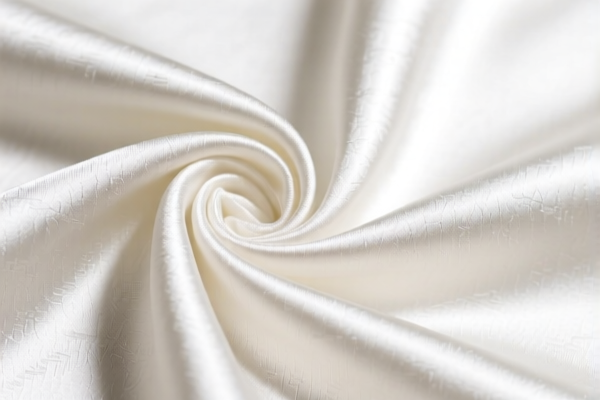
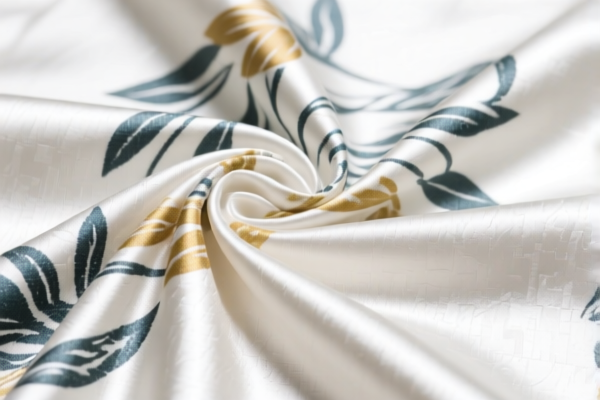
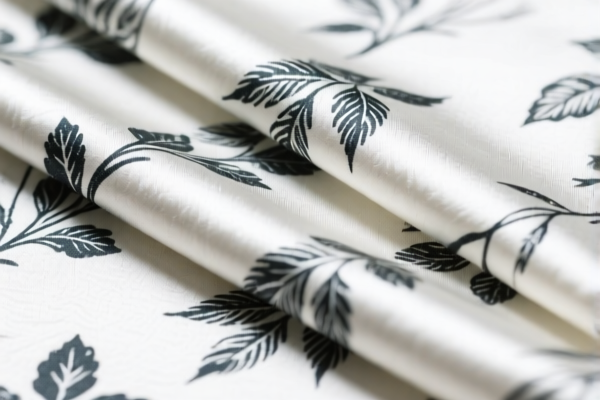
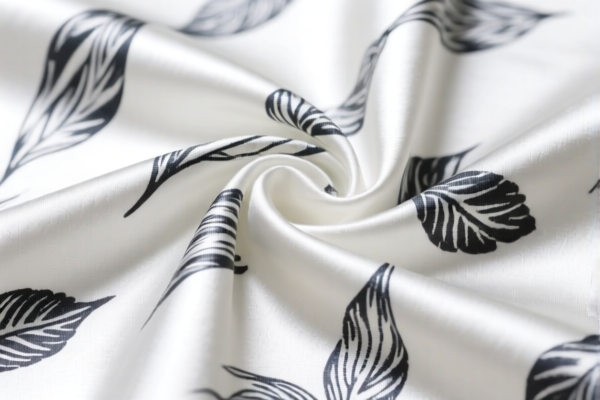
satin printed fabric flow printing
CN → US| HS Code | Tariff Rate | Origin | Destination | Doc |
|---|---|---|---|---|
| 5512190030 | 48.6% | CN | US | Official Doc |
| 5408349050 | 47.0% | CN | US | Official Doc |
| 5408249020 | 47.0% | CN | US | Official Doc |
| 5407942050 | 49.9% | CN | US | Official Doc |
Product Images
AI Analysis
🌟 Satin Printed Fabric (Flow Printing) – HS Code & Tariff Guide | 2026 Updated Customs Compliance Blueprint
🌐 HS Code Classification & Duty Breakdown | U.S. Import Rules | Expert Clearing Tips
📌 One Product, Four Key HS Codes – Know the Difference Before You Ship!
✅ Product Type: Satin printed fabric used in bags, luggage, handbags, and accessories
✅ Material Types: Polyester short fiber, Artificial filament, Synthetic fiber
✅ Applicable Country: United States (US)
✅ Effective Date: November 10, 2025 (with retroactive enforcement)
📦 Part 1: HS Code Classification Breakdown (2026 U.S. Tariff Schedule)
| HS Code | Product Description | Material Type | Use Case | Key Feature |
|---|---|---|---|---|
5512.19.00.30 |
Satin printed fabric, for bags, polyester short fiber | Polyester Short Fiber | Handbags, luggage, cosmetic cases | ✅ No long filament |
5408.34.90.50 |
Satin printed fabric, for bags, artificial long filament | Artificial Long Filament | High-end fashion bags, luxury accessories | ✅ Smooth, lustrous texture |
5408.24.90.20 |
Satin printed fabric, for bags, artificial filament / ribbon-like | Artificial Filament / Ribbon | Decorative trims, bag lining, embellishments | ✅ Strip or tape-like form |
5407.94.20.50 |
Satin printed fabric, for bags, synthetic fiber | Synthetic Fiber (e.g., nylon, rayon blend) | Durable bags, outdoor luggage, technical accessories | ✅ High tensile strength |
🔍 Critical Insight:
- Same product, different material → different HS Code
- Incorrect classification = 10–20% higher duty, penalties, delays
- Even minor differences in fiber type or structure trigger distinct tariff treatment
💰 Part 2: 2026 U.S. Import Duty Breakdown (With Full Tax Clause Explanation)
✅ Origin: China (CN)
✅ Applicable to all four HS codes
✅ All duties effective as of Nov 10, 2025
🎯 1. 5512.19.00.30 – Polyester Short Fiber Satin Printed Fabric
| Tax Component | Rate | Legal Basis | Explanation |
|---|---|---|---|
| Base Duty | 13.6% | HTSUS §5512.19.00 | Standard rate for polyester short fiber fabrics |
| Section 301 (USITC) Additional Duty | +25.0% | USITC Footnote 9903.88.01 | Tariff from U.S. Trade Act 301 – China-specific |
| Section 122 (IEEPA) Emergency Duty | +10.0% | IEEPA: 9903.01.24 | International Emergency Economic Powers Act – imposed on goods from China/HK |
| Total Effective Duty | 48.6% | — | CIF × 48.6% |
📌 Tax Clause Deep Dive:
- Section 301 (25%): Enforced under U.S. Trade Representative (USTR) authority due to alleged unfair trade practices by China.
- Section 122 (10%): Imposed under IEEPA for national security concerns related to Chinese manufacturing dominance.
- Combined Effect: 48.6% is not negotiable – applies to all shipments from China unless exempt.
🎯 2. 5408.34.90.50 – Artificial Long Filament Satin Printed Fabric
| Tax Component | Rate | Legal Basis | Explanation |
|---|---|---|---|
| Base Duty | 12.0% | HTSUS §5408.34.90 | Standard for artificial filament fabrics |
| Section 301 (USITC) Additional Duty | +25.0% | USITC Footnote 9903.88.01 | Same as above – China-specific |
| Section 122 (IEEPA) Emergency Duty | +10.0% | IEEPA: 9903.01.24 | Applies to all goods from China |
| Total Effective Duty | 47.0% | — | CIF × 47.0% |
📌 Why 1% Less?
- Lower base duty due to artificial filament classification (less "textile" than polyester)
- Still subject to full 35%附加税 (25% + 10%)
- No exemption – even if "non-essential" or "decorative"
🎯 3. 5408.24.90.20 – Artificial Filament / Ribbon-Like Satin Printed Fabric
| Tax Component | Rate | Legal Basis | Explanation |
|---|---|---|---|
| Base Duty | 12.0% | HTSUS §5408.24.90 | Applies to ribbon, tape, or strip forms |
| Section 301 (USITC) Additional Duty | +25.0% | USITC Footnote 9903.88.01 | Same as above |
| Section 122 (IEEPA) Emergency Duty | +10.0% | IEEPA: 9903.01.24 | Applies to all Chinese-origin goods |
| Total Effective Duty | 47.0% | — | CIF × 47.0% |
📌 Key Note:
- Even if the fabric is not a full-width textile, but in ribbon/tape form, it still falls under 5408.24.90.20
- No "exemption for small size" – all sizes subject to full 47.0%
🎯 4. 5407.94.20.50 – Synthetic Fiber Satin Printed Fabric
| Tax Component | Rate | Legal Basis | Explanation |
|---|---|---|---|
| Base Duty | 14.9% | HTSUS §5407.94.20 | Higher base rate due to synthetic fiber (e.g., nylon, rayon) |
| Section 301 (USITC) Additional Duty | +25.0% | USITC Footnote 9903.88.01 | China-specific |
| Section 122 (IEEPA) Emergency Duty | +10.0% | IEEPA: 9903.01.24 | Applies to all China-origin goods |
| Total Effective Duty | 49.9% | — | CIF × 49.9% |
📌 Highest Tax Alert:
- 49.9% is the highest among all four codes
- Due to higher base rate (14.9%) + full附加taxes
- No de minimis exemption – even small shipments face full duty
🛠️ Part 3: Proven Customs Clearance Strategies (Real-World Tactics)
✅ 1. Pre-Shipment Checklist (Must-Have Documents)
| Document | Required? | Why It Matters |
|---|---|---|
| ✅ Product Technical Specs | ✔️ | Confirm fiber type, width, weight, construction |
| ✅ Material Certificate (COO) | ✔️ | Prove origin – essential for duty calculation |
| ✅ High-Res Product Photos | ✔️ | Show weave, print, ribbon form, edge finish |
| ✅ Commercial Invoice | ✔️ | Must state: “Satin printed fabric for bags, [HS Code], [material]” |
| ✅ Bill of Lading (BOL) | ✔️ | Match invoice and customs entry |
| ✅ 3rd-Party Test Report (e.g., OEKO-TEX, REACH) | ✔️ | Avoid safety rejections |
| ✅ HS Code Pre-Ruling (Optional but Recommended) | ✔️ | Prevents post-entry audits & penalties |
✅ 2. 申报技巧:Avoid the 48.6% Trap!
🔥 "Know Your Fiber, Know Your Duty!"
| Scenario | Correct HS Code | Wrong Code | Risk |
|---|---|---|---|
| Polyester short fiber fabric | 5512.19.00.30 |
5408.34.90.50 |
+1.6% duty → 48.6% vs 47.0% |
| Artificial filament ribbon | 5408.24.90.20 |
5408.34.90.50 |
100% penalty risk – structure matters |
| Synthetic fiber (nylon blend) | 5407.94.20.50 |
5512.19.00.30 |
+2.9% base duty → 49.9% vs 48.6% |
| Fabric with mixed fibers | Must declare dominant fiber | Split into multiple entries | Audit risk, delay, fines |
📌 Pro Tip:
Use "Fiber Composition Report" from your supplier to prove dominant material and avoid classification disputes.
✅ 3. Special Cases & Risk Mitigation
| Situation | Solution |
|---|---|
| Fabric used in accessories with other materials (e.g., leather + fabric) | Declare fabric only under correct HS Code – do not combine with leather (HS 4202) |
| Samples or low-value shipments (<$2k) | ❌ No de minimis relief – still 47–49.9% duty applies |
| Re-export from Mexico/Vietnam (with Chinese inputs) | Apply for "Free Trade Agreement" (e.g., USMCA) if eligible – can reduce to 0% |
| Custom printing (OEM) | Provide design proof + printing process – avoid being classified as "printed textile" with higher base rate |
🌍 Part 4: Global Duty Comparison (2026)
| Country | Recommended HS Code | Base Duty | 附加 Taxes? | Notes |
|---|---|---|---|---|
| 🇺🇸 United States | All four codes above | 12–14.9% | ✅ +35% (25%+10%) | Total: 47–49.9% |
| 🇨🇳 China | 5512.19.00.30 etc. |
5% | ❌ No | No additional tariffs |
| 🇪🇺 European Union | 5408.34.90.50 etc. |
0% | ❌ No | CE & REACH required |
| 🇦🇺 Australia | 5408.34.90.50 |
5% | ❌ No | RCM certification |
| 🇯🇵 Japan | 5408.34.90.50 |
0% | ❌ No | PSE certification |
📌 Key Insight:
- U.S. is the only market with 35%附加tax on Chinese-origin textiles
- China, EU, Japan, Australia: no extra tariffs
- Consider shifting production to Vietnam/Mexico/India to avoid U.S. 47–49.9% duty
🚨 Part 5: Common Mistakes & Legal Pitfalls (Avoid These!)
❌ Mistake 1: Using “printed fabric” without specifying fiber type
👉 Result: Customs may default to highest duty (e.g., 5407.94.20.50 → 49.9%)
❌ Mistake 2: Declaring ribbon fabric as “standard fabric”
👉 Result: Incorrect HS Code → penalties + seizure
❌ Mistake 3: Not providing fiber composition proof
👉 Result: Post-entry audit, duty reassessment, delayed shipment
❌ Mistake 4: Assuming "small shipment = no duty"
👉 Result: De minimis exemption does NOT apply – 47–49.9% still due
✅ Part 6: Final Pro Tips – Win the Duty Battle!
🔥 "Fiber First, Form Second, Duty Last!"
- Always confirm fiber type before shipment – polyester vs. artificial vs. synthetic
- Use pre-ruling (Advance Ruling) for high-value or complex shipments
- Shift sourcing to Vietnam, Mexico, India if shipping to U.S.
- Label clearly: “Satin printed fabric, for bags, [HS Code], [material]”
- Never split a single fabric shipment into multiple entries – increases audit risk
🎯 Conclusion: Precision = Profit
📌 Remember:
-5512.19.00.30→ 48.6%
-5408.34.90.50→ 47.0%
-5408.24.90.20→ 47.0%
-5407.94.20.50→ 49.9% (Highest!)📌 One wrong code = 2–3% extra cost = $10k+ on a $500k shipment!
📣 Take Action Now!
📞 Contact a U.S. Customs Broker with textile expertise
📄 Request HS Code Pre-Ruling for your fabric
🚀 Shift production to non-China origin to avoid 47–49.9% duty
✨ Your fabric’s fate is in the classification. Get it right – and save thousands.
💼 Every dollar saved on duty is profit earned.
🚀 Ship smart. Clear fast. Win big.
Customer Reviews
About HS Code Classification
The Harmonized System (HS) is an internationally standardized nomenclature developed by the World Customs Organization (WCO) to classify traded products. Over 200 countries use the HS system as the basis for customs tariffs, trade statistics, and import/export regulations.
Each HS code follows a hierarchical structure:
- Chapter (2 digits) — Broad category of goods (e.g., Chapter 84: Machinery and Mechanical Appliances)
- Heading (4 digits) — More specific grouping within the chapter
- Subheading (6 digits) — Internationally standardized breakdown, used by all WCO member countries
- National subdivisions (8-10 digits) — Country-specific extensions for further classification, such as US HTSUS 10-digit codes
Correct HS code classification is essential for smooth customs clearance, accurate duty payment, and compliance with trade regulations. Misclassification can lead to customs delays, overpayment of duties, or penalties.
When importing from CN to US, the applicable tariff rates may include:
- Most-Favored-Nation (MFN) rate — The standard duty rate applied to WTO members
- General rate — Applied to countries without trade agreements
- Trade remedy duties — Additional tariffs such as Section 301 (anti-dumping), Section 232 (national security), or countervailing duties
The information provided on this page is for reference purposes only. For official classification, please consult with your local customs authority or a licensed customs broker.