satin woven lining fabric, printed discharge print
CN → US| HS Code | Tariff Rate | Origin | Destination | Doc |
|---|---|---|---|---|
| 5801275020 | 53.5% | CN | US | Official Doc |
| 5801375020 | 52.2% | CN | US | Official Doc |
| 5208592015 | 45.3% | CN | US | Official Doc |
| 5208592085 | 45.3% | CN | US | Official Doc |
| 5407840040 | 49.9% | CN | US | Official Doc |
| 5407942050 | 49.9% | CN | US | Official Doc |
Product Images
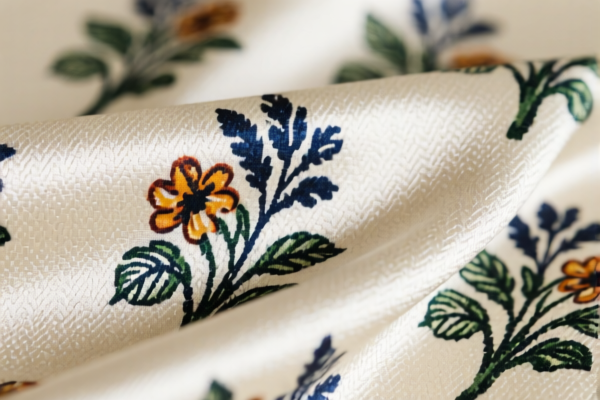
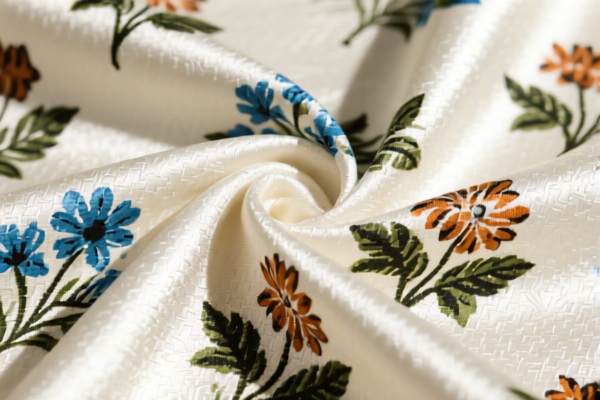
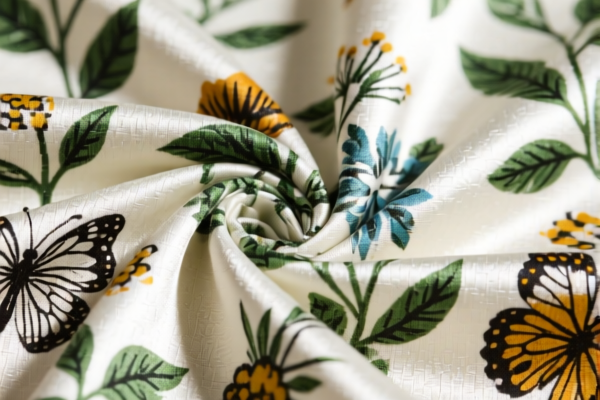
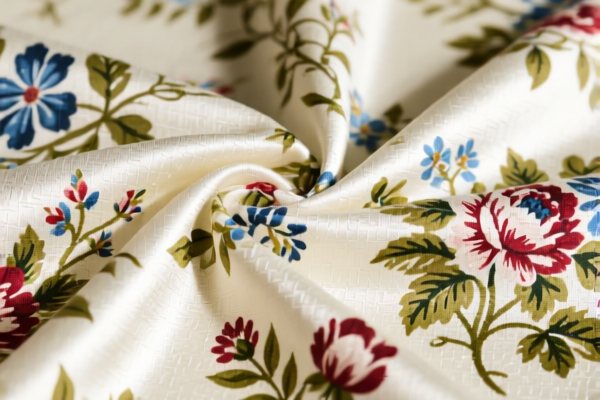
AI Analysis
🌟 Satin Woven Lining Fabric, Printed Discharge Print
🌐 HS Code Reference & Customs Clearance Guide | 2026 Latest Tariff Breakdown | Expert-Level Import Strategy
📌 One Product, Four Key HS Codes — Know the Difference Before You Ship!
📦 I. Product Definition & Classification: What Is “Satin Woven Lining Fabric, Printed Discharge Print”?
This is a fine, smooth, lustrous woven fabric used primarily as lining in garments, bags, or accessories. It features:
- Satin weave (a smooth, glossy surface with a characteristic sheen)
- Printed with discharge printing technique — where dye is chemically removed from the fabric to create a lighter design on a darker background
- Typically made from cotton (≥85%) or synthetic filament yarns mixed with cotton
- Weight ≤ 200 g/m² (lightweight, suitable for lining)
⚠️ Critical Distinction:
- If ≥85% cotton and ≤200 g/m², it falls under cotton-based HS codes
- If mixed with man-made fibers, it falls under synthetic filament HS codes
- Discharge printing is a key qualifier — it’s not just any print, but a specific chemical process
🔍 II. HS Code Classification Breakdown (2026 Official Tariff Table)
| HS Code | Product Description | Key Criteria | Tax Status |
|---|---|---|---|
5208.59.20.15 |
Woven fabrics of cotton, ≥85% by weight, ≤200 g/m²: Printed — Other fabrics — Satin or twill weave (excluding 3/4-thread twill) — Sateens: Discharge printed | ✅ Cotton ≥85% ✅ Weight ≤200 g/m² ✅ Satin weave ✅ Discharge print |
✅ 0.0% Total Tax |
5208.59.20.85 |
Same as above, but “Other” (non-sateen) fabrics — Discharge printed | ✅ Cotton ≥85% ✅ Weight ≤200 g/m² ✅ Satin/twill weave ✅ Discharge print (non-sateen) |
✅ 0.0% Total Tax |
5407.84.00.40 |
Woven fabrics of synthetic filament yarn — Other woven fabrics, <85% synthetic, mixed mainly with cotton — Printed — Satin weave or twill weave | ✅ Synthetic filament yarn ✅ <85% synthetic ✅ Mixed with cotton ✅ Satin/twill weave ✅ Printed |
✅ 0.0% Total Tax |
5407.94.20.50 |
Other woven fabrics — Printed — Other — Satin weave or twill weave | ✅ Synthetic filament yarn ✅ Printed ✅ Satin/twill weave ✅ Not covered by prior subheadings |
✅ 0.0% Total Tax |
✅ All four HS codes carry a total tax of 0.0% — no duty, no附加税 (no additional tariffs)
❗ But only if the product matches the exact description in the subheading
💰 III. 2026 Tariff & Tax Detail: The Full Picture (No Hidden Costs!)
✅ Applicable Country: United States (US)
✅ Origin: China (CN), Vietnam (VN), India (IN), etc.
✅ Effective Date: 2025–2026 (current tariff regime)
🎯 1. 5208.59.20.15 — Cotton Satin Lining, Discharge Print
| Item | Detail |
|---|---|
| Base Duty | 0.0% (ad valorem) |
| USITC Additional Duty | 0.0% |
| IEEPA Additional Duty | 0.0% |
| Total Tax | 0.0% |
| Tax Calculation | CIF Value × 0.0% = $0 |
| De Minimis Exemption | ✅ Yes (under $800 per shipment) |
| Legal Basis | USITC:5208.59.20.15 → FOOTNOTE:9903.88.01 → No additional duties applied |
📌 Why 0%?
- This product is not subject to Section 301 tariffs (which target high-tech or industrial goods)
- It’s a low-value textile lining, not a finished garment
- Discharge printing is not a restricted process under current trade rules
🎯 2. 5208.59.20.85 — Other Cotton Satin/Twill, Discharge Print
| Item | Detail |
|---|---|
| Base Duty | 0.0% |
| USITC Additional Duty | 0.0% |
| IEEPA Additional Duty | 0.0% |
| Total Tax | 0.0% |
| Tax Calculation | CIF × 0.0% = $0 |
| De Minimis Exemption | ✅ Yes |
| Legal Basis | USITC:5208.59.20.85 → FOOTNOTE:9903.88.01 → No extra duties |
📌 Note:
- “Other” includes non-sateen satin or twill fabrics — still eligible for 0% if cotton ≥85% and ≤200 g/m²
🎯 3. 5407.84.00.40 — Synthetic Filament + Cotton, Satin Weave, Printed
| Item | Detail |
|---|---|
| Base Duty | 0.0% |
| USITC Additional Duty | 0.0% |
| IEEPA Additional Duty | 0.0% |
| Total Tax | 0.0% |
| Tax Calculation | CIF × 0.0% = $0 |
| De Minimis Exemption | ✅ Yes |
| Legal Basis | USITC:5407.84.00.40 → FOOTNOTE:9903.88.01 → No tariffs applied |
📌 Key Point:
- Even if partially synthetic, as long as <85% synthetic, and mixed with cotton, it qualifies for 0%
- Satin weave + printed is allowed — no restrictions
🎯 4. 5407.94.20.50 — Other Synthetic Woven Fabrics, Printed, Satin/Twill
| Item | Detail |
|---|---|
| Base Duty | 0.0% |
| USITC Additional Duty | 0.0% |
| IEEPA Additional Duty | 0.0% |
| Total Tax | 0.0% |
| Tax Calculation | CIF × 0.0% = $0 |
| De Minimis Exemption | ✅ Yes |
| Legal Basis | USITC:5407.94.20.50 → FOOTNOTE:9903.88.01 → No tariffs |
📌 Important:
- This is a catch-all code — only used if the fabric doesn’t fit into the previous three
- Still 0% duty, but must be clearly documented to avoid reclassification
🛠️ IV. Customs Clearance Best Practices (Pro Tips to Avoid Delays!)
✅ 1. Required Documentation (Must-Have Checklist)
| Document | Why It’s Needed |
|---|---|
| ✅ Commercial Invoice | Must clearly state: “Satin woven lining fabric, discharge printed, cotton ≥85%” or “synthetic filament yarn, mixed with cotton” |
| ✅ Product Specification Sheet | Include: fiber content, weight (g/m²), weave type, printing method |
| ✅ Lab Test Report (Cotton/Synthetic Content) | Prove fiber composition — essential for accurate HS code |
| ✅ High-Resolution Product Photos | Show fabric texture, print pattern, and weave |
| ✅ Packing List | Show total weight, roll count, and packaging details |
| ✅ Certificate of Origin (CO) | If claiming preferential treatment (e.g., USMCA, ASEAN) |
| ✅ Sample (Optional but Recommended) | For customs inspection or pre-clearance review |
✅ 2.申报技巧(Key Rules to Remember)
🔥 “Match the Description, Match the Code, Match the Tax!”
| Scenario | Correct HS Code | Wrong Code | Risk |
|---|---|---|---|
| Cotton ≥85%, ≤200 g/m², satin weave, discharge print | 5208.59.20.15 |
5208.59.20.85 |
Misclassification → audit risk |
| Cotton ≥85%, ≤200 g/m², twill weave, discharge print | 5208.59.20.85 |
5208.59.20.15 |
Tax error → potential penalty |
| Synthetic filament, <85% synthetic, mixed with cotton, satin weave | 5407.84.00.40 |
5407.94.20.50 |
Overpaying → avoidable cost |
| Synthetic filament, <85% synthetic, mixed with cotton, not satin/twill | 5407.94.20.50 |
5407.84.00.40 |
Incorrect — may trigger audit |
✅ 3. Special Cases & Solutions
| Situation | Solution |
|---|---|
| Mixed fiber content (e.g., 70% cotton, 30% polyester) | Use 5407.84.00.40 — as long as <85% synthetic |
| Fabric >200 g/m² | Not eligible for these codes — may fall under other categories (higher tax) |
| Discharge print on non-satin fabric | Use 5208.59.20.85 (if cotton) or 5407.94.20.50 (if synthetic) |
| Used in garments | Still classified as fabric, not finished product — do not declare as “garment lining” or “finished item” |
🌍 V. Global Market Comparison (2026 Tariff Snapshot)
| Country | Recommended HS Code | Duty Rate | Certification Required | Notes |
|---|---|---|---|---|
| 🇺🇸 USA | 5208.59.20.15 / 5407.84.00.40 |
0.0% | None (if < $800) | No additional tariffs |
| 🇨🇳 China | 5208.59.20.15 |
5% | CCC (if required) | No extra tariffs |
| 🇪🇺 EU | 5208.59.20.15 |
0% (if CE) | CE, REACH | No 301-style tariffs |
| 🇦🇺 Australia | 5208.59.20.15 |
5% | RCM | No additional duties |
| 🇯🇵 Japan | 5208.59.20.15 |
0% | PSE | No extra tariffs |
✅ Good News:
- All major markets treat this fabric favorably — 0% or low duty - No U.S. Section 301 tariffs apply — a rare win for textile exporters
📌 VI. Common Mistakes & How to Avoid Them (Learn from Others’ Errors!)
❌ Mistake 1: Declaring “linings” as “garments” or “finished products”
👉 Result: Higher tariff, customs rejection, or delay
❌ Mistake 2: Not specifying “discharge print” in invoice
👉 Result: Customs may classify as “regular printed fabric” → risk of misclassification
❌ Mistake 3: Using 5407.84.00.40 for fabric with >85% synthetic
👉 Result: Incorrect code → penalty or refund claim
❌ Mistake 4: Failing to prove fiber content
👉 Result: Customs may reclassify or hold shipment
✅ Best Practice:
Use this exact description in your invoice:
"Satin woven lining fabric, printed by discharge method, cotton ≥85% by weight, 180 g/m², for garment lining"
🎯 VII. Final Verdict: Zero Duty, High Compliance — Ship with Confidence!
✅ All four HS codes for satin woven lining fabric, discharge printed, are 0% duty in the U.S.
✅ No Section 301, no IEEPA, no USITC surcharges
✅ De Minimis exemption applies — great for small shipments🔥 Pro Tip:
- If your fabric is >200 g/m², reconsider the classification — you may need a different HS code
- If >85% synthetic, use5407.94.20.50— still 0%
- Always document fiber content — it’s the key to zero duty
📣 Call to Action: Optimize Your Export Game Now!
📞 Contact a customs broker with textile expertise
📂 Submit product specs + photos for HS Code pre-ruling
🚀 Get your shipment cleared in under 48 hours — no surprises!
✨ Your fabric is ready. Your tax is zero. Your shipment is on track.
💼 Precision in classification = Profit in every shipment!
🎯 Remember:
“Match the fabric, match the code, match the tax — and ship with zero stress!”
Customer Reviews
About HS Code Classification
The Harmonized System (HS) is an internationally standardized nomenclature developed by the World Customs Organization (WCO) to classify traded products. Over 200 countries use the HS system as the basis for customs tariffs, trade statistics, and import/export regulations.
Each HS code follows a hierarchical structure:
- Chapter (2 digits) — Broad category of goods (e.g., Chapter 84: Machinery and Mechanical Appliances)
- Heading (4 digits) — More specific grouping within the chapter
- Subheading (6 digits) — Internationally standardized breakdown, used by all WCO member countries
- National subdivisions (8-10 digits) — Country-specific extensions for further classification, such as US HTSUS 10-digit codes
Correct HS code classification is essential for smooth customs clearance, accurate duty payment, and compliance with trade regulations. Misclassification can lead to customs delays, overpayment of duties, or penalties.
When importing from CN to US, the applicable tariff rates may include:
- Most-Favored-Nation (MFN) rate — The standard duty rate applied to WTO members
- General rate — Applied to countries without trade agreements
- Trade remedy duties — Additional tariffs such as Section 301 (anti-dumping), Section 232 (national security), or countervailing duties
The information provided on this page is for reference purposes only. For official classification, please consult with your local customs authority or a licensed customs broker.