sbr rubber strip
CN → US| HS Code | Tariff Rate | Origin | Destination | Doc |
|---|---|---|---|---|
| 4005100000 | 35.0% | CN | US | Official Doc |
| 4002190015 | 35.0% | CN | US | Official Doc |
| 4002110000 | 35.0% | CN | US | Official Doc |
| 4005200000 | 35.0% | CN | US | Official Doc |
| 4004000000 | 35.0% | CN | US | Official Doc |
| 4005910000 | 35.0% | CN | US | Official Doc |
Product Images
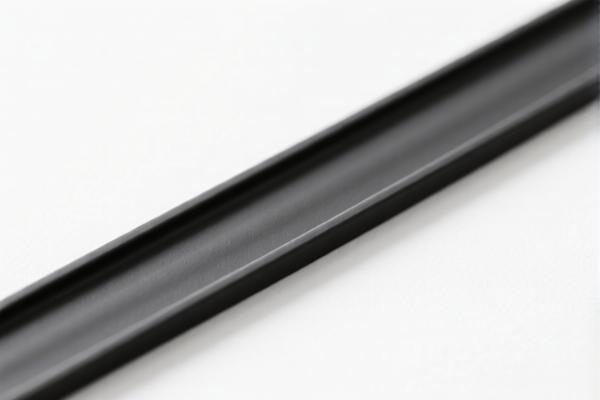

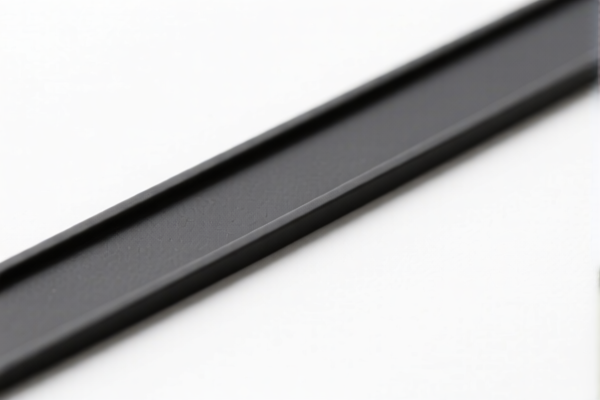
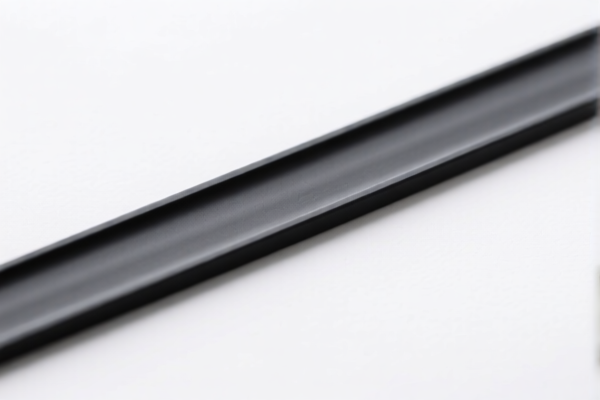
AI Analysis
🧪 SBR Rubber Strip (Styrene-Butadiene Rubber)
🌐 HS Code Reference & Customs Clearance Guide | 2026 Latest Tariff Analysis | Professional Level Strategy
📌 I. Product Definition & Classification: Do You Really Understand "SBR Rubber"?
Styrene-Butadiene Rubber (SBR) is the most widely used synthetic rubber globally, known for its excellent abrasion resistance, aging resistance, and adhesion. In international trade, it is generally classified based on its state (raw material vs. semi-finished) and form.
Key Distinction for SBR: * Primary State (Raw Material/Compounds): Unvulcanized, mixed with additives (carbon black, etc.). Classified under Chapter 40, Heading 4001-4005. * Semi-Finished/Finished Goods: Vulcanized or processed into specific shapes (tires, hoses, mats). Classified under specific end-use headings (e.g., 4011 for tires, 4016 for other articles).
⚠️ Critical Note for "Strips":
- If the SBR is in the form of strips, slabs, or mixed compounds not vulcanized for a specific end-use, it is treated as a raw material/semi-finished good under Heading 4005 or 4002.
- If it is a finished, vulcanized strip for a specific use (e.g., weather stripping, conveyor belt edge), it might fall under 4016.
- However, based on the provided DATA, the classification focuses on unvulcanized/primary form SBR.
📦 II. HS Code Classification Details (Based on Provided Data)
The provided data indicates that the SBR Rubber Strip is classified under unvulcanized or primary form HS codes, as it emphasizes "unvulcanized," "primary form," and "rubber material attributes."
| HS Code | Product Description | Applicability | Vulcanization Status | Form |
|---|---|---|---|---|
4005.10.00.00 |
Mixed Unvulcanized Rubbers (Including Masterbatches) | SBR rubber mixed with other compounds, not yet vulcanized | ❌ Unvulcanized | Primary Form (Slabs/Strips) |
4002.19.00.15 |
Styrene-Butadiene Rubber (SBR), Other | Pure or specific SBR grades not covered in 4002.11 | ❌ Unvulcanized | Primary Form |
4002.11.00.00 |
Latex SBR Rubber | SBR in latex form (aqueous dispersion) | ❌ Unvulcanized | Primary Form (Latex) |
4005.20.00.00 |
Other Mixed Unvulcanized Rubbers | SBR mixed with other rubber types, not vulcanized | ❌ Unvulcanized | Primary Form |
4004.00.00.00 |
Rubbish, Scraps, and Waste, of Rubber | Recycled SBR material, granules, or powder | N/A | Waste/Recyclable Form |
4005.91.00.00 |
Other Mixed Unvulcanized Rubbers (Sheet/Slab/Strip) | SBR strips/slabs for industrial primary processing | ❌ Unvulcanized | Sheet/Slab/Strip |
🔍 Key Insight:
- The term "Strip" in the data context implies a primary form (like a slab or sheet) suitable for further processing, not a finished product like a tire or shoe sole.
- All listed HS codes above carry a 35.0% Total Tax Rate due to specific trade measures.
💰 III. 2026 Latest Tariff Rate Breakdown (Including Additional Taxes)
✅ Applicable Country: United States (US)
✅ Origin: China (CN)
✅ Effective Time: From November 10, 2025 (and onwards)
🎯 General Tax Structure for All Listed HS Codes
All HS codes provided in the data (4005.10.00.00, 4002.19.00.15, 4002.11.00.00, 4005.20.00.00, 4004.00.00.00, 4005.91.00.00) share the same tariff structure.
| Item | Details |
|---|---|
| Base Tariff (MFN) | 0.0% (Most Favored Nation rate for rubber raw materials) |
| Section 301 Additional Tariff | +25.0% (Imposed on Chinese imports under US Trade Act Section 301) |
| Section 122 Tariff (IEEPA) | +10.0% (Additional tariff under the International Emergency Economic Powers Act, effective Nov 2025) |
| Total Effective Tax Rate | 35.0% |
| Calculation Method | CIF Value × 35% |
| De Minimis Exemption | ❌ Not Eligible (De minimis values do not apply to goods subject to Section 301 or Section 122 tariffs) |
| Legal Basis Path | USITC: [HS Code] → FOOTNOTE: 301 → FOOTNOTE: 122 |
📌 Explanation:
- Base Tariff (0%): Rubber raw materials typically have low base tariffs.
- Section 301 (25%): This is the standard punitive tariff on Chinese rubber and chemical products.
- Section 122 (10%): A new/additional layer of tariff targeting specific Chinese imports, effective from late 2025.
- Total (35%): This is a very high effective rate for raw materials, significantly impacting cost competitiveness.
🛠️ IV. Customs Clearance Practical Advice (Pitfall Avoidance Guide)
✅ 1. Essential Documentation Checklist
| Document | Required? | Notes |
|---|---|---|
| ✅ Commercial Invoice | ✔️ | Must clearly state "SBR Rubber Strip," quantity, weight, and value. |
| ✅ Packing List | ✔️ | Detail packaging type (e.g., bales, boxes) and net/gross weight. |
| ✅ Certificate of Origin (CO) | ✔️ | Proves Chinese origin, triggering the 35% tax. |
| ✅ Product Specification Sheet | ✔️ | Confirm unvulcanized status and chemical composition (SBR type). |
| ✅ Bill of Lading/Air Waybill | ✔️ | Standard shipping document. |
| ✅ Customs Declaration | ✔️ | Accurate HS Code selection is critical. |
✅ 2. Declaration Strategy (Key Tips)
🔥 Mantra: "Clarify State, Specify Form, Avoid Finish!"
| Scenario | Correct Declaration | Wrong Practice |
|---|---|---|
| Unvulcanized SBR Strip | Use 4005.xxxx or 4002.xxxx. Clearly state "Unvulcanized SBR." | Declaring as "Finished Rubber Strip" (e.g., 4016) → Risk of misclassification penalty. |
| SBR Latex | Use 4002.11.00.00. State "Aqueous Dispersion." | Declaring as solid rubber → Wrong HS Code. |
| Recycled SBR | Use 4004.00.00.00. State "Rubber Scrap/Waste." | Declaring as new SBR → Higher tax risk if origin/value disputes arise. |
| Mixed Rubber Compound | Use 4005.10/4005.20. State "Mixed Unvulcanized Rubber." | Declaring as pure SBR → If additives are significant, HS Code may change. |
✅ 3. Special Considerations
- Vulcanization Status: Ensure the goods are not vulcanized (hardened/cured). If vulcanized, they are no longer "raw materials" and may fall under different HS codes (e.g., 4016 for other rubber articles) with potentially different tax treatments, but often still subject to Section 301.
- Section 122 Impact: The 10% Section 122 tariff is a new addition. Verify the latest CBP (U.S. Customs and Border Protection) memos for any updates or exemptions.
- De Minimis (Section 321): Packages under $800 generally enter duty-free, but Section 301 and 122 tariffs are NOT exempted under de minimis rules since late 2024/2025. Therefore, even small shipments face the 35% tax.
🌍 V. Global Market Comparison (2026)
| Country/Region | Recommended HS Code | Tariff (China Origin) | Notes |
|---|---|---|---|
| 🇺🇸 USA | 4005.xxxx / 4002.xxxx |
35% (0% Base + 25% Sec 301 + 10% Sec 122) | High tariff barrier. |
| 🇨🇳 China | 4005.xxxx / 4002.xxxx |
Varies (Check local HS) | Export from China may have VAT/rebate considerations. |
| 🇪🇺 EU | 4005.xxxx / 4002.xxxx |
0% - 1.7% | No Section 301/122 tariffs. Likely duty-free or low duty. |
| 🇬🇧 UK | 4005.xxxx / 4002.xxxx |
0% - 5% | Post-Brexit tariffs may vary. Check UK Global Tariff. |
| 🇨🇦 Canada | 4005.xxxx / 4002.xxxx |
0% | Generally duty-free for rubber raw materials. |
📌 Conclusion:
- The USA is the most expensive market for SBR rubber imports from China due to the cumulative 35% tariff.
- EU and Canada offer significantly lower tariff advantages. Consider supply chain diversification if targeting the US market.
📌 VI. Common Mistakes & Pitfalls
❌ Mistake 1: Declaring vulcanized rubber strips as unvulcanized raw materials.
👉 Consequence: Misclassification, penalties, and potential seizure.
👉 Solution: Clearly label products as "Unvulcanized" or "Raw Rubber" in documentation.
❌ Mistake 2: Ignoring Section 122 Tariff.
👉 Consequence: Underpayment of duties, leading to audits and back taxes.
👉 Solution: Always include the 10% Section 122 tariff in cost calculations for US imports.
❌ Mistake 3: Assuming de minimis exemption applies.
👉 Consequence: Small shipments still face 35% tax.
👉 Solution: Budget for full tariffs even for small sample shipments.
✅ Best Practice:
"Verify HS Code with CBP Ruling, Declare State Clearly, Budget for 35% Tax."
🎯 VII. Conclusion: Professional Clearance for Cost Efficiency
🎯 Key Takeaway:
🔹 SBR Rubber Strips from China to the US face a 35% total tariff (0% Base + 25% Sec 301 + 10% Sec 122).
🔹 Unvulcanized Status is crucial for classification under 4005/4002.
🔹 De Minimis does NOT apply to these tariffs.
📌 Actionable Advice:
- Confirm HS Code: Work with a customs broker to validate the specific HS code (4005.10, 4002.19, etc.) based on the exact product form.
- Cost Calculation: Include the 35% tariff in your landed cost model.
- Documentation: Ensure all paperwork explicitly states "Unvulcanized SBR Rubber" to avoid classification disputes.
- Explore Alternatives: If possible, consider sourcing from non-China origins (e.g., Southeast Asia) to mitigate Section 301/122 tariffs.
✨ Professional Customs Clearance Starts with Accurate Classification!
💼 Every Percentage Point of Tariff Impacts Your Bottom Line!
Customer Reviews
About HS Code Classification
The Harmonized System (HS) is an internationally standardized nomenclature developed by the World Customs Organization (WCO) to classify traded products. Over 200 countries use the HS system as the basis for customs tariffs, trade statistics, and import/export regulations.
Each HS code follows a hierarchical structure:
- Chapter (2 digits) — Broad category of goods (e.g., Chapter 84: Machinery and Mechanical Appliances)
- Heading (4 digits) — More specific grouping within the chapter
- Subheading (6 digits) — Internationally standardized breakdown, used by all WCO member countries
- National subdivisions (8-10 digits) — Country-specific extensions for further classification, such as US HTSUS 10-digit codes
Correct HS code classification is essential for smooth customs clearance, accurate duty payment, and compliance with trade regulations. Misclassification can lead to customs delays, overpayment of duties, or penalties.
When importing from CN to US, the applicable tariff rates may include:
- Most-Favored-Nation (MFN) rate — The standard duty rate applied to WTO members
- General rate — Applied to countries without trade agreements
- Trade remedy duties — Additional tariffs such as Section 301 (anti-dumping), Section 232 (national security), or countervailing duties
The information provided on this page is for reference purposes only. For official classification, please consult with your local customs authority or a licensed customs broker.