scaled wooden models to be assembled
CN → US| HS Code | Tariff Rate | Origin | Destination | Doc |
|---|---|---|---|---|
| 9023000000 | 17.5% | CN | US | Official Doc |
| 4421999880 | 38.3% | CN | US | Official Doc |
| 9503000073 | 10.0% | CN | US | Official Doc |
| 9503000071 | 10.0% | CN | US | Official Doc |
| 4421919880 | 38.3% | CN | US | Official Doc |
Product Images
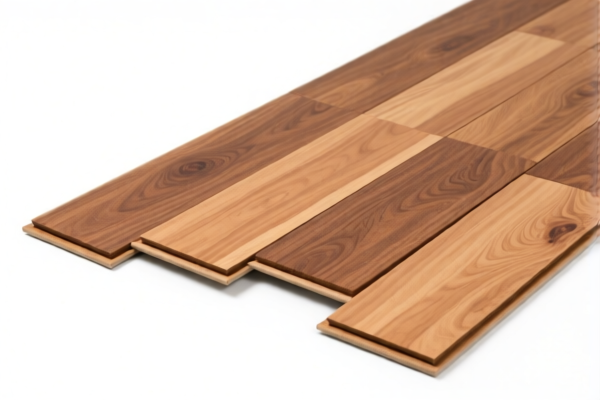
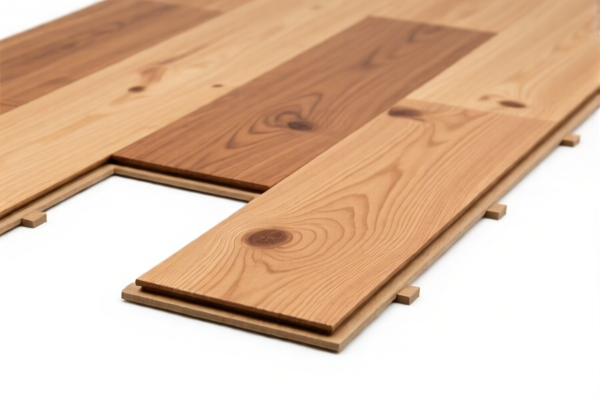
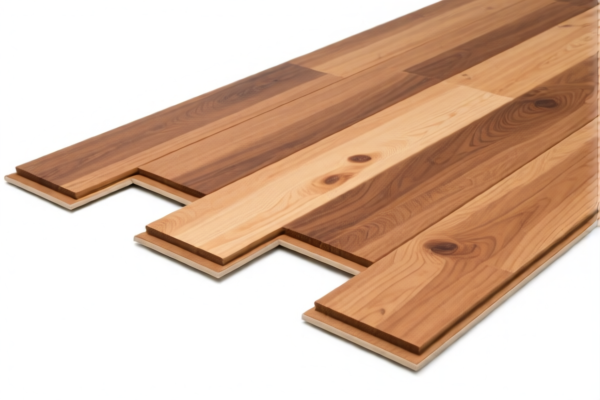
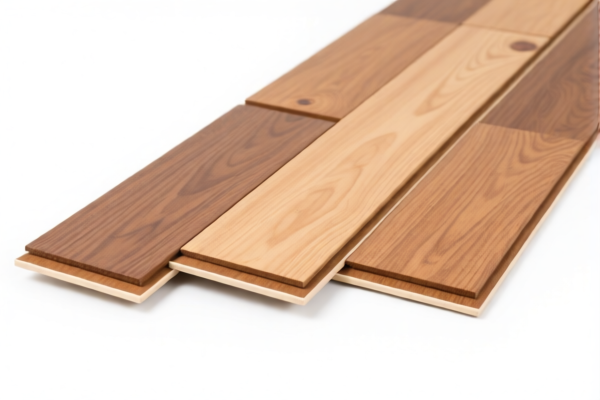
AI Analysis
🪵 Scaled Wooden Models (To Be Assembled)
🌐 HS Code Reference & Customs Clearance Guide | 2026 Latest Tariff Analysis | Professional Entry Strategy
📌 I. Product Definition & Classification: What Are "Scaled Wooden Models"?
Scaled wooden models to be assembled are non-functional, decorative, or demonstrative items made primarily of wood. They replicate real-world objects (cars, planes, buildings, ships) at a reduced scale. In international trade, the classification depends heavily on the intended use (play/education vs. display) and construction method (kit vs. pre-assembled).
⚠️ Key Distinction:
- If intended for play, education, or hobbyist assembly as a toy/puzzle → Classified under Chapter 95 (Toys).
- If intended for strict demonstration, architectural display, or non-playful collection → Classified under Chapter 90 (Scientific/Demonstrative Instruments) or Chapter 44 (Wood Products) as a fallback.
📦 II. HS Code Classification Details (2026 Latest Tariff Authority Comparison)
| HS Code | Product Description | Applicable Scenario | Total Tax Rate |
|---|---|---|---|
9503.00.00.73 |
Scaled models & similar recreational models; for play/education | Hobby kits, educational models, puzzle-like assembly | 10.0% |
9503.00.00.71 |
Puzzles and constructed models; intelligent/entertainment use | Construction toys, skill-building models | 10.0% |
9023.00.00.00 |
Models designed for demonstrational purposes (not playable) | Architectural demos, scientific exhibitions, non-toy displays | 17.5% |
4421.99.98.80 |
Other wooden articles (Fallback category) | Unspecified wooden items, non-toy/non-demonstration misc. wood goods | 38.3% |
4421.91.98.80 |
Other wooden articles (General wooden products) | Basic wooden crafts, non-specific wood items | 38.3% |
🔍 Focus Reminder:
- Models sold as "kits" or for "play/education" should target 9503.00.00 (10% rate).
- Models sold strictly for "demonstration" or "display" fall under 9023.00.00 (17.5% rate).
- If the use is unclear or ambiguous, customs may default to 4421.xx (38.3% rate), which is significantly higher. Avoid this by clearly stating the purpose.
💰 III. 2026 Latest Tariff Rate Breakdown (Including Surcharges & Policy Add-ons)
✅ Applicable Country: United States (US)
✅ Origin: China (CN)
✅ Effective Date: November 10, 2025 onwards
🎯 1. 9503.00.00.73 / 9503.00.00.71 —— Scaled Models for Play/Education (Chapter 95)
| Item | Content |
|---|---|
| Base Rate | 0% (ad valorem) |
| USITC Surcharge (Section 301) | 0% (Exempt for Chapter 95 toys/models) |
| IEEPA Surcharge (Section 122/301) | +10% (Targeting China-origin goods under specific lists) |
| Total Rate | 10.0% |
| Tax Calculation | CIF Value × 10% |
| De Minimis Eligibility | ✅ Yes (Generally eligible if value < $800, subject to strict scrutiny for wood/plant materials) |
| Legal Basis Path | IEEPA:9903.01.25 → USITC:9503.00.00.73 |
📌 Explanation:
- Chapter 95 (Toys/Models) often enjoys 0% base tariff and 0% Section 301 surcharge in certain classifications, but the 10% IEEPA/122 clause surcharge still applies to China-origin goods.
- Total Cost Impact: Only 10%. This is the most cost-effective classification if the product can be legally defined as a model for play/education/hobby.
🎯 2. 9023.00.00.00 —— Demonstrational Models (Chapter 90)
| Item | Content |
|---|---|
| Base Rate | 0% |
| USITC Surcharge (Section 301) | +7.5% |
| IEEPA Surcharge (Section 122) | +10% |
| Total Rate | 17.5% |
| Tax Calculation | CIF Value × 17.5% |
| De Minimis Eligibility | ❌ No (Deny de minimis for demonstrative/scientific instruments in many cases) |
| Legal Basis Path | IEEPA:9903.01.24 → USITC:9023.00.00.00 |
📌 Explanation:
- Base 0%, but faces 7.5% Section 301 + 10% IEEPA/122.
- Total Cost Impact: 17.5%. Nearly double the toy classification. Use this only if the product is strictly for professional demonstration and cannot be argued as a toy/hobby item.
🎯 3. 4421.99.98.80 / 4421.91.98.80 —— Other Wooden Articles (Chapter 44 Fallback)
| Item | Content |
|---|---|
| Base Rate | 3.3% |
| USITC Surcharge (Section 301) | +25.0% |
| IEEPA Surcharge (Section 122) | +10% |
| Total Rate | 38.3% |
| Tax Calculation | CIF Value × 38.3% |
| De Minimis Eligibility | ❌ No |
| Legal Basis Path | IEEPA:9903.01.24 → USITC:4421.99.98.80 |
📌 Explanation:
- This is the "Pitfall" Category. If customs determines the item is not a toy (Ch 95) and not a demonstrative instrument (Ch 90), it defaults to "Other Wood Products."
- Total Cost Impact: 38.3%. This is prohibitively expensive for most commercial imports.
- Critical: You must provide evidence (marketing materials, instructions, product name) to avoid this classification.
🛠️ IV. Customs Clearance Practical Advice (Battle-Tested Pitfall Guide)
✅ 1. Preparation Checklist (Non-Negotiable)
| Document | Required | Description |
|---|---|---|
| ✅ Product Catalog/Marketing | ✔️ | Must highlight "Educational," "Hobby," "Play," or "Assembly Model." Avoid words like "Decorative Only" if seeking Ch 95. |
| ✅ Instruction Manual | ✔️ | Shows step-by-step assembly. Proves it is a "kit" or "model," not a finished decor item. |
| ✅ Product Photos | ✔️ | Clear images of the unassembled pieces or the model in a play/educational context. |
| ✅ Commercial Invoice | ✔️ | Describe as "Wooden Assembly Model for Educational/Hobby Use." |
| ✅ Material Declaration | ✔️ | Specify wood type (e.g., Birch, Pine). Must comply with ISPM 15 if raw wood is used. |
| ✅ Origin Certificate | ✔️ | Proof of China origin to calculate exact surcharges. |
✅ 2. Declaration Tips (Key Mantras)
🔥 "Play/Educational = 10%, Demo = 17.5%, Wood Only = 38.3%! Claim the Right Purpose!"
| Scenario | Correct Declaration | Wrong Approach |
|---|---|---|
| Hobby Kits | 9503.00.00.73 (Models for Play) |
Describing as "Wooden Decoration" → Leads to 38.3% |
| Educational Models | 9503.00.00.71 (Puzzles/Constructed Models) |
Describing as "Scientific Instrument" → Leads to 17.5% |
| Architectural Demos | 9023.00.00.00 (Demonstrational Models) |
Describing as "Toy" → Risk of rejection/penalty |
| Plain Wooden Sculptures | 4421.99.98.80 (Other Wood) |
Trying to call them "Models" → Customs will reject |
✅ 3. Special Cases Handling
| Situation | Handling Suggestion |
|---|---|
| Mixed Materials | If parts are plastic/metal, ensure wood is the principal material or it’s still a "model." If mixed, argue for Ch 95 if play value dominates. |
| ISPM 15 Compliance | Wooden models must be heat-treated or fumigated. Provide phytosanitary certificate to avoid detention at US border. |
| Pre-Assembled vs. Kit | Kits are more easily classified under Ch 95. Pre-assembled items may be seen as "decor" (Ch 44) or "display" (Ch 90). |
| Vintage/Rare Models | If sold as collectibles without "play" intent, customs may push for Ch 90 or Ch 44. Provide marketing to emphasize "collectible model" nature. |
🌍 V. Global Market Customs Comparison (2026 Latest)
| Country/Region | Recommended HS Code | Tariff | Certification | Remarks |
|---|---|---|---|---|
| 🇺🇸 USA | 9503.00.00.73 |
10% | FCC (if electronic), ISPM 15 | Avoid Ch 44 (38.3%)! |
| 🇨🇳 China | 9503.00.00.73 |
0-5% | CCC (if applicable) | Low duty for toys |
| 🇪🇺 EU | 9503.00.39 |
0% | CE, EN71 | 0% duty for toys; strict safety rules |
| 🇬🇧 UK | 9503.00.00.00 |
0% | UKCA | Post-Brexit rules apply |
| 🇯🇵 Japan | 9503.00.00.90 |
0% | ST-mark | 0% duty for toys |
📌 Conclusion:
- USA is the most critical market for tariff optimization. The difference between 10% and 38.3% is massive.
- Ch 95 (Toys/Models) is the golden ticket. Ensure your product marketing supports "play/education/hobby" use.
- Ch 44 (Wood Products) is the black hole. Avoid it at all costs by providing proper documentation.
📌 VI. Common Mistakes & Pitfall Guide (Blood-Tears Lessons)
❌ Mistake 1: Describing products as "Wooden Decor" or "Home Ornament"
👉 Consequence: Customs classifies as 4421.99.98.80 → 38.3% Tax!
👉 Fix: Use terms like "Assembly Model," "Hobby Kit," "Educational Toy."
❌ Mistake 2: Not providing ISPM 15 Phytosanitary Certificate
👉 Consequence: Goods detained at port for pest control → Demurrage Fees + Delays
👉 Fix: Ensure all wood is treated and labeled according to ISPM 15.
❌ Mistake 3: Claiming "Toy" Status for Strictly Decorative Items
👉 Consequence: Customs audit reveals no play value → Reclassification to Ch 90 (17.5%) or Ch 44 (38.3%) + Penalties
👉 Fix: Be honest. If it’s a demo model, declare 9023.00.00.00 (17.5%) and pay the difference. Don’t risk fraud charges.
❌ Mistake 4: Ignoring the "To Be Assembled" Aspect
👉 Consequence: Pre-assembled items may be seen as "finished goods" (Ch 44) rather than "models/kits" (Ch 95)
👉 Fix: Clearly state "Kit," "Unassembled," or "Requires Assembly" on the invoice.
✅ Correct Practice:
"Wooden Assembly Model Kit, Educational Purpose, Unassembled, ISPM 15 Treated, For Hobbies/Education, HS: 9503.00.00.73"
🎯 VII. Conclusion: Precise Classification Saves Millions!
🎯 Remember the Mantra:
🔹 "Play/Edu = 10%, Demo = 17.5%, Wood Only = 38.3%!"
🔹 "Document the Purpose, Treat the Wood, Declare the Kit!"
📌 Pro Tip:
If your wooden models have electronic components (light/sound), ensure they still meet the "primarily a model/toy" test for Ch 95. If electronics dominate, they may fall under Ch 85 or Ch 90, changing the tax profile entirely.
📣 Immediate Action:
📞 Consult a customs broker for Advance Ruling on your specific product design.
🚀 Optimize your product descriptions and packaging to support the Ch 95 classification.
💰 Save 28.3% in taxes by getting the HS Code right!
✨ Professional Clearance Starts with Accurate Classification!
💼 Your Profit Margin Depends on Your HS Code!
Customer Reviews
About HS Code Classification
The Harmonized System (HS) is an internationally standardized nomenclature developed by the World Customs Organization (WCO) to classify traded products. Over 200 countries use the HS system as the basis for customs tariffs, trade statistics, and import/export regulations.
Each HS code follows a hierarchical structure:
- Chapter (2 digits) — Broad category of goods (e.g., Chapter 84: Machinery and Mechanical Appliances)
- Heading (4 digits) — More specific grouping within the chapter
- Subheading (6 digits) — Internationally standardized breakdown, used by all WCO member countries
- National subdivisions (8-10 digits) — Country-specific extensions for further classification, such as US HTSUS 10-digit codes
Correct HS code classification is essential for smooth customs clearance, accurate duty payment, and compliance with trade regulations. Misclassification can lead to customs delays, overpayment of duties, or penalties.
When importing from CN to US, the applicable tariff rates may include:
- Most-Favored-Nation (MFN) rate — The standard duty rate applied to WTO members
- General rate — Applied to countries without trade agreements
- Trade remedy duties — Additional tariffs such as Section 301 (anti-dumping), Section 232 (national security), or countervailing duties
The information provided on this page is for reference purposes only. For official classification, please consult with your local customs authority or a licensed customs broker.