scanning translator pen
CN → US| HS Code | Tariff Rate | Origin | Destination | Doc |
|---|---|---|---|---|
| 8471608000 | 17.5% | CN | US | Official Doc |
| 8471609050 | 35.0% | CN | US | Official Doc |
Product Images
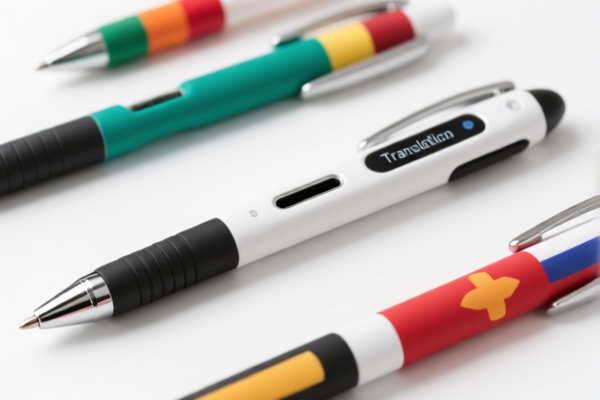
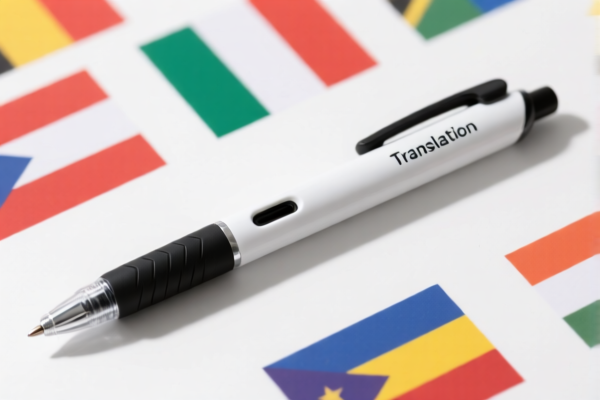
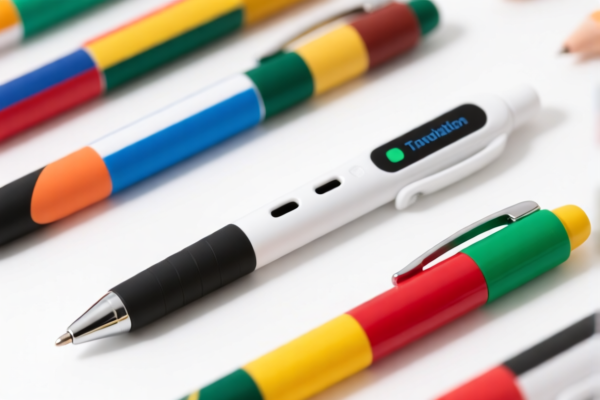
AI Analysis
🖊️ Scanning Translator Pen (Smart Language Translation Devices)
🌐 HS Code Reference & Customs Clearance Guide | 2024-2026 Latest Tariff Analysis | Professional-Level Clearance Strategy
📌 I. Product Definition & Classification: Do You Really Understand "Scanning Translator Pens"?
A Scanning Translator Pen is a portable electronic device used for instant language translation. It typically combines an OCR (Optical Character Recognition) scanner, a processor, and translation software.
In international trade, these devices are classified based on their primary function under Chapter 84 (Nuclear reactors, boilers, machinery and mechanical appliances; parts thereof) or Chapter 90 (Optical, photographic, cinematographic, measuring, checking, precision, medical or surgical instruments and apparatus; parts and accessories thereof).
However, based on the provided data <DATA>, the classification focuses on "Input or output units" for automatic data processing machines.
Key Distinction: * If the device is primarily a "Scanner" (OCR input unit): It falls under HS Code 8471.60. * If the device is primarily a "Processing Machine" with scanning capability: It might be debated, but for customs purposes, if the scanning feature is the dominant input method for data entry/translation, it often leans towards 8471.60.
⚠️ Critical Clarification Point:
- The provided data strictly limits us to HS Code 8471.60 variants.
- 8471.60.80.00: Specifically for Optical scanners and magnetic ink recognition devices.
- 8471.60.90.50: For Other input/output units (if it doesn't fit the specific "optical scanner" definition perfectly, or if it's a general data processing I/O unit).
📦 II. HS Code Classification Details (Based on Provided Data)
| HS Code | Product Description | Applicable Scenario | Key Feature |
|---|---|---|---|
8471.60.80.00 |
Optical scanners and magnetic ink recognition devices | Pens where OCR scanning is the primary data input method for translation | ✅ Optical Scanning |
8471.60.90.50 |
Other other (Other Input/Output units) | Devices that function as I/O units but may not be strictly defined as "optical scanners" (e.g., hybrid devices, or those where scanning is secondary to other I/O functions) | ✅ General I/O Unit |
🔍 Important Note:
- The description "Scanning Translator Pen" strongly implies OCR technology, making8471.60.80.00the most likely candidate for customs classification.
- However, if the device also functions as a standalone language learning machine with audio output and input, customs officials might classify it under8471.60.90.50if they deem it a "general" data processing unit rather than a pure scanner.
- Do not classify as 8517 (Telephone/Set) or 9013 (Laser devices) unless the scanning function is negligible.
💰 III. 2024-2026 Tariff Rate Analysis (US Import from China)
✅ Applicable Country: United States (US)
✅ Country of Origin: China (CN)
✅ Effective Time: Current rates apply (2024-2026)
🎯 1. 8471.60.80.00 —— Optical Scanners (Including Scanning Translator Pens)
| Item | Content |
|---|---|
| Base Tariff Rate | 0.0% (Ad Valorem) |
| Additional Tariff (Section 301) | +7.5% |
| Total Tariff Rate | 7.5% |
| Tax Calculation | CIF Value × 7.5% |
| De Minimis Eligibility | ❌ Not Eligible (Subject to 301 Tariffs) |
| Legal Basis Path | USITC:8471.60.80.00 → Section 301: Footnote 9903.01.01 |
📌 Explanation:
- Base Tariff 0%: As an input unit for data processing, the base duty is zero.
- Section 301 Tariff 7.5%: This is the additional tariff imposed on Chinese-origin goods under Section 301 of the Trade Act of 1974.
- Why 7.5%?: This rate corresponds to List 4B items (or similar categories) in the US-China trade war tariff schedules. Scanning devices often fall into this lower additional duty bracket compared to higher-tier consumer electronics.
🎯 2. 8471.60.90.50 —— Other Input/Output Units
| Item | Content |
|---|---|
| Base Tariff Rate | 0.0% (Ad Valorem) |
| Additional Tariff (Section 301) | +25.0% |
| Total Tariff Rate | 25.0% |
| Tax Calculation | CIF Value × 25.0% |
| De Minimis Eligibility | ❌ Not Eligible (Subject to 301 Tariffs) |
| Legal Basis Path | USITC:8471.60.90.50 → Section 301: Footnote 9903.01.01 |
📌 Explanation:
- Base Tariff 0%: Same as above.
- Section 301 Tariff 25%: This is the standard higher rate for many Chinese electronics not specifically exempted or placed in lower categories.
- Risk: If customs misclassifies your pen as a "general" I/O unit rather than a specific "optical scanner," you could pay 3x more tax (25% vs 7.5%).
🛠️ IV. Customs Clearance Practical Advice (Avoiding Pitfalls)
✅ 1. Document Preparation Checklist (Essential)
| Document | Required | Notes |
|---|---|---|
| ✅ Product Specification Sheet | ✔️ | Must explicitly state: "OCR Scanner Function," "Language Translation," "Input/Output Unit." |
| ✅ Circuit Diagram/Block Diagram | ✔️ | Show that the scanner is the primary input component. |
| ✅ Product Photos | ✔️ | Clear images showing the scanning head, screen, and buttons. |
| ✅ Commercial Invoice | ✔️ | Describe as "OCR Scanner for Language Translation" or "Data Processing Input Unit." |
| ✅ Packing List | ✔️ | Detail contents (pen, charger, cable). |
| ✅ CE/FCC Certification | ✔️ | Required for electronic devices in the US. |
✅ 2. Declaration Strategy (Crucial)
🔥 "Scan First, Translate Second: Declare as Scanner!"
| Scenario | Recommended HS Code | Tax Rate | Risk Level |
|---|---|---|---|
| Primary Function is OCR Scanning | 8471.60.80.00 |
7.5% | ✅ Low (Recommended) |
| Primary Function is General I/O (e.g., keyboard/mouse simulation) | 8471.60.90.50 |
25.0% | ⚠️ High (Avoid if possible) |
| Misclassified as "Electronic Dictionary" (8471.60.90.90) | Varies | Often 25% | ❌ Very High |
📌 Key Tip:
- Emphasize the "Optical Scanner" feature in your product description.
- Use the term "OCR Module" in technical documentation.
- Avoid using "Translator Pen" as the sole product name on the invoice; add "with OCR Scanning Function".
✅ 3. Special Cases
| Case | Handling Advice |
|---|---|
| Hybrid Device (Scanner + Audio Recorder) | If scanning is the main feature, use 8471.60.80.00. If audio is dominant, consider 8518 or 8521, but this is complex. Stick to 8471.60 for scanning-focused devices. |
| Pre-loaded Language Data | The software does not change the hardware classification. The device is still a scanner/input unit. |
| Gift Samples | Still subject to tariffs if value exceeds de minimis ($800) or if classified under 301. |
🌍 V. Global Market Comparison (2024-2026)
| Country/Region | Recommended HS Code | Tariff Rate (China Origin) | Notes |
|---|---|---|---|
| 🇺🇸 USA | 8471.60.80.00 |
7.5% | Best Option |
| 🇺🇸 USA | 8471.60.90.50 |
25.0% | Avoid if possible |
| 🇨🇳 China | 8471.60.80.00 |
0% | Import duty is 0% |
| 🇪🇺 EU | 8471.60.80.00 |
0% | Free trade for most electronics |
| 🇬🇧 UK | 8471.60.80.00 |
0% | Free trade |
📌 Conclusion:
- USA is the only major market imposing significant additional tariffs on these devices.
- Classifying as an Optical Scanner (8471.60.80.00) saves you 17.5% in duties compared to the "Other" category.
📌 VI. Common Mistakes & Pitfalls
❌ Mistake 1: Declaring as "Electronic Dictionary" (HS 8471.60.90.90)
👉 Consequence: May be subject to 25% tariff if not specifically exempted. Also, customs may question the "scanning" function.
❌ Mistake 2: Declaring as "Peripheral" (e.g., 8471.60.90.50)
👉 Consequence: 25% tariff instead of 7.5%. Loss of profit margin.
❌ Mistake 3: Ignoring the "OCR" function in documentation
👉 Consequence: Customs may reclassify as a "general" I/O unit, leading to audits and back-taxes.
✅ Correct Approach:
"OCR Scanner Pen for Language Translation, Model XYZ, with Optical Character Recognition Module, FCC Certified"
🎯 VII. Conclusion: Optimize Your Tariff Strategy
🎯 Remember:
🔹 "Scan is Key: Use 8471.60.80 for 7.5%. Avoid 90.50 at all costs (25%)."
🔹 "Describe the OCR Function Clearly. Precision in Description = Savings in Tariffs."
📌 Pro Tip:
If your product is originating from Vietnam, Thailand, or Malaysia, you may qualify for preferential tariffs or exemptions from Section 301 tariffs. Always check the Country of Origin rules.
📣 Action Required:
📞 Consult a licensed customs broker.
📝 Provide detailed product specs emphasizing OCR Scanning.
🚀 Declare Correctly, Save Significantly, Clear Quickly!
✨ Professional Customs Clearance Starts with Accurate Classification!
💼 Your Bottom Line Matters – Don't Pay 25% When You Can Pay 7.5%!
Customer Reviews
About HS Code Classification
The Harmonized System (HS) is an internationally standardized nomenclature developed by the World Customs Organization (WCO) to classify traded products. Over 200 countries use the HS system as the basis for customs tariffs, trade statistics, and import/export regulations.
Each HS code follows a hierarchical structure:
- Chapter (2 digits) — Broad category of goods (e.g., Chapter 84: Machinery and Mechanical Appliances)
- Heading (4 digits) — More specific grouping within the chapter
- Subheading (6 digits) — Internationally standardized breakdown, used by all WCO member countries
- National subdivisions (8-10 digits) — Country-specific extensions for further classification, such as US HTSUS 10-digit codes
Correct HS code classification is essential for smooth customs clearance, accurate duty payment, and compliance with trade regulations. Misclassification can lead to customs delays, overpayment of duties, or penalties.
When importing from CN to US, the applicable tariff rates may include:
- Most-Favored-Nation (MFN) rate — The standard duty rate applied to WTO members
- General rate — Applied to countries without trade agreements
- Trade remedy duties — Additional tariffs such as Section 301 (anti-dumping), Section 232 (national security), or countervailing duties
The information provided on this page is for reference purposes only. For official classification, please consult with your local customs authority or a licensed customs broker.