scratch painting
CN → US| HS Code | Tariff Rate | Origin | Destination | Doc |
|---|---|---|---|---|
| 9503000071 | 10.0% | CN | US | Official Doc |
| 4911911500 | 17.5% | CN | US | Official Doc |
| 4911996000 | 17.5% | CN | US | Official Doc |
| 4823908680 | 35.0% | CN | US | Official Doc |
| 9503000090 | 10.0% | CN | US | Official Doc |
Product Images
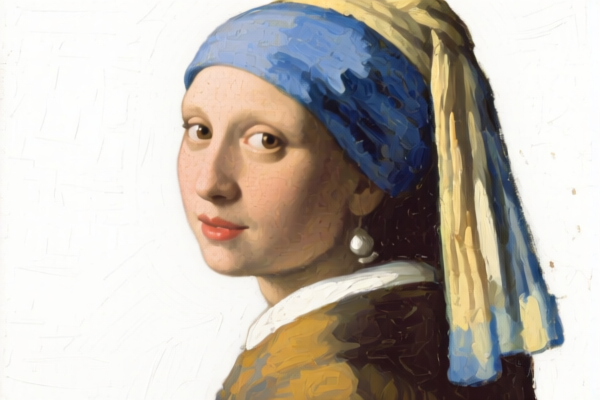
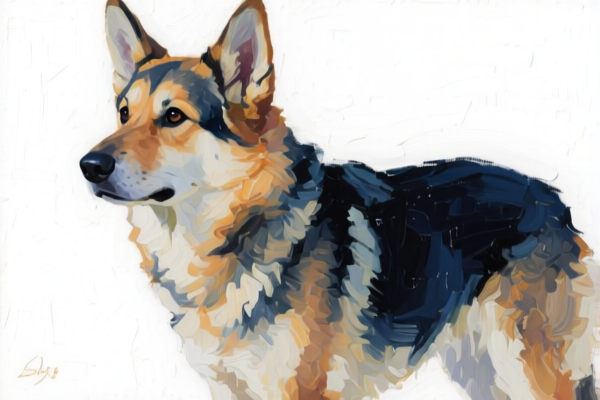
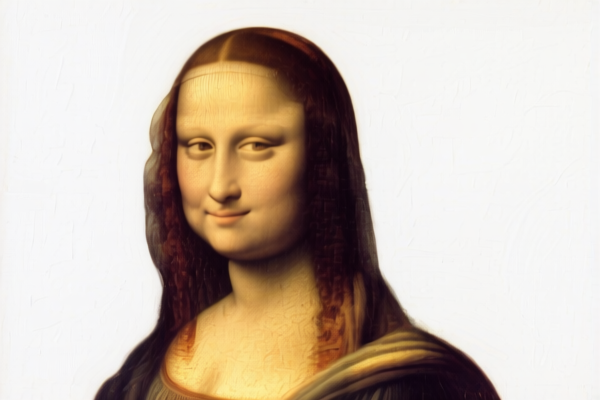

AI Analysis
🎨 Scratch Painting (Scratch Art Paper)
🌐 HS Code Classification & Customs Clearance Guide | 2026 Latest Tariff Breakdown | Expert-Level Compliance Strategy
📌 One Product, Five Classifications — Why So Many HS Codes? Let’s Decode It!
Scratch painting — also known as scratch art paper, scratch-off art, or scratch drawing paper — is a creative, tactile toy/educational tool where users scratch away a dark coating to reveal colorful images underneath. While it may look like simple paper, its classification depends heavily on intended use, manufacturing process, and material composition.
⚠️ Key Insight:
The same physical product can be classified under five different HS Codes, depending on whether it’s seen as a toy, printed artwork, paper product, or educational tool.
This has massive implications on tariffs — from 10% to 35%, and even 45%+ if additional sanctions apply.
📦 二、HS Code Classification Breakdown (2026 Official Tariff Authority)
| HS Code | Product Description | Key Characteristics | Tax Rate | Tax Breakdown |
|---|---|---|---|---|
9503.00.00.71 |
Scratch art paper as consumable medium for puzzles, models, or similar entertainment toys | Used in toy kits; part of a play experience; paper-based art toy | 10.0% | Base: 0%, Additional: 0%, Section 122: 10% |
4911.91.15.00 |
Printed images/designs on paper; falls under printed materials | Designed with pre-printed artwork; made using printing techniques | 17.5% | Base: 0%, Additional: 7.5%, Section 122: 10% |
4911.99.60.00 |
Other printed paper products; partially or fully printed on paper | Matches criteria for “printed on paper” even if not fully decorative | 17.5% | Base: 0%, Additional: 7.5%, Section 122: 10% |
4823.90.86.80 |
Other paper制品 (paper articles), cut into specific shapes | Cut into animal, vehicle, or object shapes; not just flat sheets | 35.0% | Base: 0%, Additional: 25%, Section 122: 10% |
9503.00.00.90 |
Stationery/art supplies; includes unspecified toys, models, or accessories | Covers “other” categories not clearly defined; fits general art/educational tools | 10.0% | Base: 0%, Additional: 0%, Section 122: 10% |
🔍 Critical Note:
- Same product, different HS codes, drastically different taxes
-4823.90.86.80(35%) is the highest risk — if your product is cut into shapes, even if it's art-based, this could apply.
💰 三、2026 Tariff & Duty Breakdown (U.S. Focus – China Origin)
✅ Applicable Country: United States (US)
✅ Origin: China (CN)
✅ Effective Date: November 10, 2025 (with retroactive enforcement)
🎯 1. 9503.00.00.71 — Toy-Style Scratch Art (Consumable Medium)
| Item | Detail |
|---|---|
| Base Duty | 0% (ad valorem) |
| Additional Tariff | 0% |
| Section 122 Tariff | +10% (from U.S. Trade Act Section 122) |
| Total Duty | 10.0% |
| Tax Calculation | CIF Value × 10% |
| De Minimis Exemption? | ❌ No (denied for China-origin goods) |
| Legal Basis Path | Section 122: 9903.01.25 → HS: 9503.00.00.71 |
📌 Why This Applies:
- Used in toys or model kits (e.g., scratch-off dinosaur kits)
- Sold as consumable art medium for play
- Not a standalone art print — part of a play experience
🎯 2. 4911.91.15.00 — Printed Image on Paper (Printed Product)
| Item | Detail |
|---|---|
| Base Duty | 0% |
| Additional Tariff | +7.5% (from USITC 301 List) |
| Section 122 Tariff | +10% |
| Total Duty | 17.5% |
| Tax Calculation | CIF Value × 17.5% |
| De Minimis Exemption? | ❌ No |
| Legal Basis Path | USITC: 301 List → Section 122: 9903.01.25 → HS: 4911.91.15.00 |
📌 Why This Applies:
- Pre-printed artwork (e.g., “scratch to reveal a rainbow”)
- Made using printing process (ink, screen, offset)
- Treated as printed material, not a toy
🎯 3. 4911.99.60.00 — Other Printed Paper Products (Broad Category)
| Item | Detail |
|---|---|
| Base Duty | 0% |
| Additional Tariff | +7.5% |
| Section 122 Tariff | +10% |
| Total Duty | 17.5% |
| Tax Calculation | CIF Value × 17.5% |
| De Minimis Exemption? | ❌ No |
| Legal Basis Path | USITC: 301 List → Section 122: 9903.01.25 → HS: 4911.99.60.00 |
📌 Why This Applies:
- Matches “printed on paper” even if not fully decorative
- Covers any paper product with printed content
- Often used when the design is not a traditional image (e.g., educational puzzles)
🎯 4. 4823.90.86.80 — Other Cut Paper Articles (Shape-Based)
| Item | Detail |
|---|---|
| Base Duty | 0% |
| Additional Tariff | +25% (USITC 301 List) |
| Section 122 Tariff | +10% |
| Total Duty | 35.0% |
| Tax Calculation | CIF Value × 35% |
| De Minimis Exemption? | ❌ No |
| Legal Basis Path | USITC: 301 List → Section 122: 9903.01.25 → HS: 4823.90.86.80 |
📌 Why This Applies (High Risk!):
- Product is cut into specific shapes (e.g., animals, cars, letters)
- Even if it’s “scratch art”, if it’s not a flat sheet, this code applies
- Most expensive option — avoid if possible!
🎯 5. 9503.00.00.90 — Other Toys/Models/Accessories (General Category)
| Item | Detail |
|---|---|
| Base Duty | 0% |
| Additional Tariff | 0% |
| Section 122 Tariff | +10% |
| Total Duty | 10.0% |
| Tax Calculation | CIF Value × 10% |
| De Minimis Exemption? | ❌ No |
| Legal Basis Path | Section 122: 9903.01.25 → HS: 9503.00.00.90 |
📌 Why This Applies:
- Used when the product doesn’t fit neatly into other categories
- Covers unspecified art toys, educational tools, or drawing aids
- Best for non-printed, non-cut, general-purpose scratch art
🛠️ 四、Customs Clearance Best Practices (Pro Tips to Avoid 35% Tariff!)
✅ 1. Essential Documentation (Must-Have)
| Document | Required? | Why It Matters |
|---|---|---|
| ✅ Product Specifications | ✔️ | Clarify if it’s printed, cut, or used in toys |
| ✅ High-Res Product Photos | ✔️ | Show shape, printing, material, packaging |
| ✅ Commercial Invoice | ✔️ | Must state intended use (e.g., “educational art tool” vs. “toy”) |
| ✅ Certificate of Origin (CO) | ✔️ | If from Vietnam/Mexico, may qualify for IEEPA exemption |
| ✅ Test Reports (RoHS, CE, FCC) | ✔️ | Helps avoid suspicion of non-compliance |
| ✅ Packaging & Labeling Samples | ✔️ | Prove no hidden components or non-compliant materials |
✅ 2.申报技巧(Pro申报 Strategy)
🔥 “Shape Matters, Print Matters, Use Defines Tax!”
| Scenario | Correct HS Code | Wrong Code | Risk |
|---|---|---|---|
| Flat sheet, printed design, no cut | 4911.91.15.00 or 4911.99.60.00 |
4823.90.86.80 |
❌ 35% risk |
| Cut into animal shapes, scratch-off | 4823.90.86.80 |
9503.00.00.71 |
❌ 35% instead of 10% |
| Used in a kids’ toy kit | 9503.00.00.71 |
4911.99.60.00 |
❌ 17.5% vs 10% |
| Sold as art supply, not toy | 9503.00.00.90 |
4911.91.15.00 |
❌ 17.5% vs 10% |
📌 Golden Rule:
- If it’s cut → avoid4911→ use4823only if unavoidable
- If it’s for play → use9503
- If it’s printed → use4911
- If it’s general art → use9503.00.00.90
✅ 3. Risk Mitigation & Strategic Tips
| Situation | Recommended Action |
|---|---|
| Product is cut into shapes | Consider removing the cut shape in packaging (e.g., sell flat sheet) or rebrand as “art paper” not “toy” |
| Selling to schools/educators | Use 9503.00.00.90 — “educational tool” — lower risk |
| Exporting from Vietnam/Mexico | Apply for IEEPA exemption — can reduce to 0% |
| High-volume shipments | Request Advance Ruling (Pre-Approval) from U.S. CBP — lock in HS Code |
| Uncertain classification | Use HS Code Pre-Decision Service (available via U.S. Customs) |
🌍 五、Global Market Comparison (2026)
| Country | Recommended HS Code | Duty Rate | Certification Required | Notes |
|---|---|---|---|---|
| 🇺🇸 USA (China origin) | 9503.00.00.71 or 9503.00.00.90 |
10% | FCC, RoHS | 35% risk if cut |
| 🇨🇳 China | 9503.00.00.71 |
5% | CCC, RoHS | No 301/122 tariffs |
| 🇪🇺 EU | 9503.00.00.71 |
0% (if CE) | CE, RoHS | No 301 tariffs |
| 🇦🇺 Australia | 9503.00.00.90 |
5% | RCM | No 301 tariffs |
| 🇯🇵 Japan | 9503.00.00.90 |
0% | PSE | No 301 tariffs |
📌 Takeaway:
- U.S. is the only market with 10–35% additional tariffs
- China-origin goods are most vulnerable
- Vietnam/Mexico origin = potential 0% tariff if properly documented
📌 六、Common Mistakes & Costly Pitfalls
❌ Mistake 1: Selling cut-shaped scratch art as “flat paper”
👉 Result: HS Code 4823.90.86.80 → 35% duty instead of 10% → $35,000 extra tax on $100K shipment
❌ Mistake 2: Labeling as “toy” but selling to schools
👉 Result: May trigger “educational tool” exemption — but if not proven, risk higher tariff
❌ Mistake 3: Not providing photos showing cut shape or printing
👉 Result: Customs may reclassify — delay, fines, or even seizure
❌ Mistake 4: Using “art paper” in invoice but showing toy packaging
👉 Result: Misleading — could be seen as fraudulent申报
✅ Correct Approach:
“Scratch Art Paper, 10 sheets, 6x8 inches, pre-printed with animal designs, used for educational art, not cut into shapes, sold as art supply, not toy”
🎯 七、Final Verdict: How to Win the HS Code Game
🎯 Remember the 3 Golden Rules:
- Shape Defines Tax → Cut = Risk of 35%
- Print Defines Tax → Printed = 17.5%
- Use Defines Tax → Toy = 10%, Art = 10%, Education = 10%
🔥 Pro Tip:
If you're exporting from China, relocate production to Vietnam or Mexico — you can avoid 301 and Section 122 tariffs entirely.
📌 Immediate Action Steps:
📞 Contact a U.S. Customs Broker + Request HS Code Pre-Approval
📸 Send product photos, specs, packaging, and intended use
🚀 Lock in the lowest possible tariff before shipment
📣 Your Scratch Art Isn’t Just Paper — It’s a Tax Strategy!
💼 One wrong HS Code = 35% more cost. One smart choice = 25% savings.
✨ Professional Customs Starts with Precision.
🎨 Your creativity deserves a clear, compliant, and cost-effective path to global markets!
Customer Reviews
About HS Code Classification
The Harmonized System (HS) is an internationally standardized nomenclature developed by the World Customs Organization (WCO) to classify traded products. Over 200 countries use the HS system as the basis for customs tariffs, trade statistics, and import/export regulations.
Each HS code follows a hierarchical structure:
- Chapter (2 digits) — Broad category of goods (e.g., Chapter 84: Machinery and Mechanical Appliances)
- Heading (4 digits) — More specific grouping within the chapter
- Subheading (6 digits) — Internationally standardized breakdown, used by all WCO member countries
- National subdivisions (8-10 digits) — Country-specific extensions for further classification, such as US HTSUS 10-digit codes
Correct HS code classification is essential for smooth customs clearance, accurate duty payment, and compliance with trade regulations. Misclassification can lead to customs delays, overpayment of duties, or penalties.
When importing from CN to US, the applicable tariff rates may include:
- Most-Favored-Nation (MFN) rate — The standard duty rate applied to WTO members
- General rate — Applied to countries without trade agreements
- Trade remedy duties — Additional tariffs such as Section 301 (anti-dumping), Section 232 (national security), or countervailing duties
The information provided on this page is for reference purposes only. For official classification, please consult with your local customs authority or a licensed customs broker.