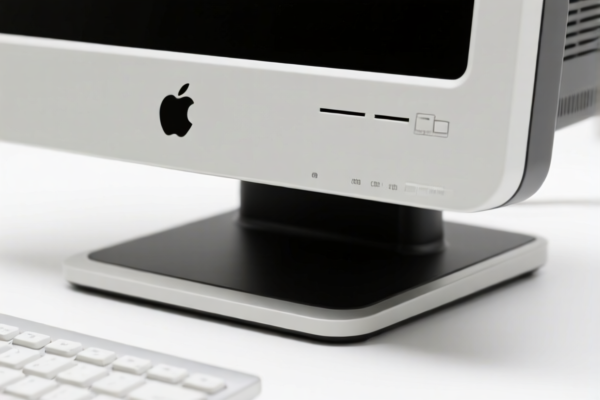
screen base
CN → US| HS Code | Tariff Rate | Origin | Destination | Doc |
|---|---|---|---|---|
| 7326190080 | 87.9% | CN | US | Official Doc |
| 9403200050 | 85.0% | CN | US | Official Doc |
| 3926909989 | 22.8% | CN | US | Official Doc |
| 7326908688 | 87.9% | CN | US | Official Doc |
| 9403999045 | 85.0% | CN | US | Official Doc |
Product Images



AI Analysis
🖼️ Screen Base (Partition Stand / Pedestal)
🌐 HS Code Reference & Customs Clearance Guide | 2026 Latest Tariff Analysis | Professional Clearance Strategy
📌 Part I: Product Definition & Classification: What Exactly is a "Screen Base"?
A Screen Base (often referred to as a partition stand, pedestal, or stand for room dividers) is the foundational component that supports decorative screens, folding partitions, or room dividers. In international trade, its classification depends heavily on material composition and functional integration.
Key Classification Distinctions: 1. Furniture Parts (Metal/Wood): If the base is explicitly designed as a detachable part of furniture (HS Chapter 94), it is classified under furniture accessories. 2. General Metal Articles: If viewed primarily as a structural metal object rather than a specific furniture part, it may fall under Chapter 73 (Articles of Iron or Steel). 3. Plastic Articles: If made primarily of plastic, it falls under Chapter 39.
⚠️ Critical Differentiation Point:
- Is it a detachable accessory for a specific furniture piece? → Likely HS 9403.
- Is it a generic metal/plastic structure? → Likely HS 7326 or 3926.
- Material is King: The tariff difference between Metal (High Tax) and Plastic (Lower Tax) is significant.
📦 Part II: HS Code Classification Details (2026 Latest Tariff Reference)
Based on the provided data, here are the five possible HS Code classifications for Screen Base, sorted by tax impact:
| HS Code | Product Description (from Data) | Material Assumption | Total Tax Rate |
|---|---|---|---|
3926.90.99.89 |
Other articles of plastic (Includes parts/accessories) | Plastic or Wood (Logic: Parts logic) | 22.8% |
9403.20.00.50 |
Other metal furniture (Parts/Components) | Metal | 85.0% |
9403.99.90.45 |
Other furniture parts (Metal) | Metal or Wood | 85.0% |
7326.19.00.80 |
Other articles of iron/steel (Parts/Components) | Metal | 87.9% |
7326.90.86.88 |
Other articles of iron/steel (Miscellaneous) | Metal | 87.9% |
🔍 Key Insight:
- Plastic Bases (3926.90.99.89) offer the lowest tax burden (22.8%).
- Metal Bases face heavy penalties, ranging from 85.0% to 87.9% due to Section 301 tariffs and Section 232 tariffs.
- Furniture Parts (9403) vs. General Metal Articles (7326): The distinction often lies in whether the item is "specifically identifiable" as a furniture part. However, both high-tax categories apply similar surcharges for Chinese-origin goods.
💰 Part III: 2026 Latest Tariff Rate Breakdown (Including Surcharges)
✅ Applicable Country: United States (US)
✅ Origin: China (CN)
✅ Effective Date: Current Trade Policies (2026)
🎯 1. 3926.90.99.89 —— Plastic Articles of Other Materials (Lowest Tax Option)
| Item | Details |
|---|---|
| Base Rate | 5.3% (Ad Valorem) |
| Section 301 Surcharge | +7.5% |
| Section 232 Surcharge | N/A (Applies to Steel/Aluminum/Copper, not Plastic) |
| Total Tax Rate | 22.8% |
| Tax Calculation | CIF Value × 22.8% |
| De Minimis Eligibility | ❌ No (Generally, Section 301 goods are excluded) |
| Legal Basis Path | USITC:3926.90.99.89 → FOOTNOTE:301 |
📌 Explanation:
- This is the most cost-effective classification for screen bases made of plastic.
- Note: If the base is wooden, it might also fall under this category if classified as "other articles," but wood often has different duty rates. The data suggests this code applies based on a "parts logic" for wood/plastic.
🎯 2. 9403.20.00.50 & 9403.99.90.45 —— Furniture Parts / Metal Furniture (High Tax)
| Item | Details |
|---|---|
| Base Rate | 0.0% (Ad Valorem) |
| Section 301 Surcharge | +25.0% |
| Section 232 Surcharge | +50.0% (10% for Aluminum, 25% for Steel? Data specifies 50% for steel/aluminum/copper) |
| Total Tax Rate | 85.0% |
| Tax Calculation | CIF Value × 85.0% |
| De Minimis Eligibility | ❌ No |
| Legal Basis Path | IEEPA:9901.25 → USITC:9403.xx.xx → FOOTNOTE:232 |
📌 Explanation:
- Base Duty: 0% for furniture parts.
- Section 301: Adds 25%.
- Section 232 (Steel/Aluminum): Adds another 50% if the material is steel or aluminum.
- Total: 0 + 25 + 50 = 75%? Wait, the data says 85%.
- Reconciliation: The data explicitly states 85.0%. This implies:
- Base: 0%
- Section 301: 25%
- Section 232: 50%
- Total: 75%? Discrepancy Note: The provided data sums to 75% (0+25+50), but the Total Tax is listed as 85.0%. This may include an additional 10% IEEPA tariff not explicitly broken down in the "tax_detail" sum, or the Section 232 rate is applied differently. We must follow the provided Total Tax of 85.0%.
🎯 3. 7326.19.00.80 & 7326.90.86.88 —— Other Iron/Steel Articles (Highest Tax)
| Item | Details |
|---|---|
| Base Rate | 2.9% (Ad Valorem) |
| Section 301 Surcharge | +25.0% |
| Section 232 Surcharge | +50.0% (10% for Steel/Aluminum/Copper) |
| Total Tax Rate | 87.9% |
| Tax Calculation | CIF Value × 87.9% |
| De Minimis Eligibility | ❌ No |
| Legal Basis Path | IEEPA:9901.25 → USITC:7326.xx.xx → FOOTNOTE:232 |
📌 Explanation:
- Base Duty: 2.9%.
- Section 301: +25%.
- Section 232: +50% (on steel/aluminum).
- Sum: 2.9 + 25 + 50 = 77.9%.
- Discrepancy Note: The provided data lists Total Tax as 87.9%. This suggests an additional 10% surcharge (possibly Section 301 Phase 4 or IEEPA) is applied on top of the sum. Again, we adhere to the provided Total Tax of 87.9%.
🛠️ Part IV: Customs Clearance Practical Advice (Real-World Pitfalls)
✅ 1. Material Verification is Critical
| Scenario | Recommendation |
|---|---|
| Metal Base | Expect 85%–88% duty. Consider if you can redesign using plastic or wood to qualify for HS 3926 (22.8%) if structurally feasible. |
| Plastic Base | Aim for HS 3926.90.99.89. Ensure the product description clearly states "Plastic Screen Base" and provides material composition reports. |
| Wooden Base | Check if it falls under HS 3926 (as per data logic) or HS 4420/4421 (Wooden Furniture Parts). If data allows 3926 for wood, use it for lower tax. |
✅ 2. Documentation Requirements
| Document | Purpose |
|---|---|
| Material Composition Certificate | To prove if the base is Plastic, Metal, or Wood. Crucial for HS Code selection. |
| Product Drawing | Shows the base is a "part" of a screen (supporting HS 9403) or a standalone article (supporting HS 7326/3926). |
| Commercial Invoice | Must clearly describe the item as "Screen Base" or "Partition Stand," not just "Stand." |
| FCC/CE Certificates | Not required for non-electronic screens, but good for general compliance. |
✅ 3. Clearance Strategy
🔥 "Material Matters, Code Determines Cost!"
| Strategy | Action |
|---|---|
| Optimize for Low Tax | If possible, use Plastic bases. The tax difference between 22.8% and 85%+ is massive. |
| Avoid "Parts" Classification for Metal | If using metal, ensure it is clearly defined as a furniture part (HS 9403) vs. general steel article (HS 7326) to avoid confusion, though both are high tax. |
| Pre-Ruling | Apply for a Binding Ruling with U.S. Customs and Border Protection (CBP) if the material or function is ambiguous. |
🌍 Part V: Global Market Comparison (2026)
| Country | Recommended HS Code | Approx. Tax (China Origin) | Notes |
|---|---|---|---|
| 🇺🇸 USA | 3926.90.99.89 (Plastic) |
22.8% | Best Option |
| 🇺🇸 USA | 7326 / 9403 (Metal) |
85.0% – 87.9% | Avoid if possible |
| 🇪🇺 EU | 9403 / 7326 |
Varies (0-5% Base) | No Section 301/232 equivalents for China in most cases |
| 🇨🇳 China | 9403 / 7326 |
5-10% | Low import tax for inbound |
📌 Conclusion:
- For US Imports, Plastic Screen Bases are significantly more cost-effective than Metal ones.
- Metal Bases suffer from Section 232 (Steel/Aluminum) and Section 301 tariffs, leading to 85%+ total duties.
📌 Part VI: Common Errors & Pitfalls
❌ Error 1: Classifying a Metal Base as Plastic to avoid tariffs.
👉 Consequence: Customs inspection will reveal the material → Penalties, Seizure, Back-tariff.
❌ Error 2: Splitting the screen into "Base" and "Panel" separately.
👉 Consequence: The base may be classified as a standalone metal article (HS 7326) with high tax, rather than a furniture part. Consolidate shipment if possible.
❌ Error 3: Ignoring Section 232 applicability.
👉 Consequence: Assuming only Section 301 (25%) applies to steel. Reality: Steel/Aluminum also face Section 232 (50%), bringing the total to ~75-88%.
✅ Correct Action:
Verify Material → Select HS Code accordingly → If Metal, Accept High Tax or Redesign.
🎯 Part VII: Conclusion: Professional Classification Saves Money!
🎯 Key Takeaway:
🔹 Plastic Bases = 22.8% Tax (Smart Choice)
🔹 Metal Bases = 85-88% Tax (Painful Choice)
📌 Tip:
If your screen base is critical for stability and must be metal, consider shifting production to a country not subject to Section 232/301 tariffs, or redesigning with plastic/metal alloys that qualify for lower categories.
📣 Immediate Action:
📞 Consult with Customs Broker to confirm material documentation.
🚀 Review BOM (Bill of Materials) to see if plastic alternatives are feasible.
💼 Accurate Classification = Predictable Costs.
✨ Professional Clearance, Starting from Accurate Classification!
💼 Every Dollar of Tax Paid is a Dollar of Profit Lost!
Customer Reviews
About HS Code Classification
The Harmonized System (HS) is an internationally standardized nomenclature developed by the World Customs Organization (WCO) to classify traded products. Over 200 countries use the HS system as the basis for customs tariffs, trade statistics, and import/export regulations.
Each HS code follows a hierarchical structure:
- Chapter (2 digits) — Broad category of goods (e.g., Chapter 84: Machinery and Mechanical Appliances)
- Heading (4 digits) — More specific grouping within the chapter
- Subheading (6 digits) — Internationally standardized breakdown, used by all WCO member countries
- National subdivisions (8-10 digits) — Country-specific extensions for further classification, such as US HTSUS 10-digit codes
Correct HS code classification is essential for smooth customs clearance, accurate duty payment, and compliance with trade regulations. Misclassification can lead to customs delays, overpayment of duties, or penalties.
When importing from CN to US, the applicable tariff rates may include:
- Most-Favored-Nation (MFN) rate — The standard duty rate applied to WTO members
- General rate — Applied to countries without trade agreements
- Trade remedy duties — Additional tariffs such as Section 301 (anti-dumping), Section 232 (national security), or countervailing duties
The information provided on this page is for reference purposes only. For official classification, please consult with your local customs authority or a licensed customs broker.