seal/stamp
CN → US| HS Code | Tariff Rate | Origin | Destination | Doc |
|---|---|---|---|---|
| 3926904590 | 38.5% | CN | US | Official Doc |
| 8442509000 | 17.5% | CN | US | Official Doc |
| 8442501000 | 35.0% | CN | US | Official Doc |
Product Images
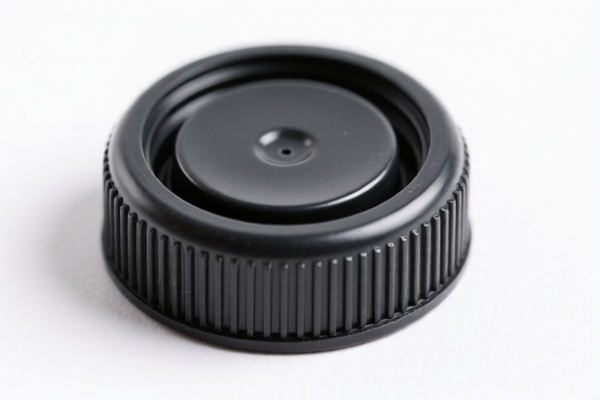
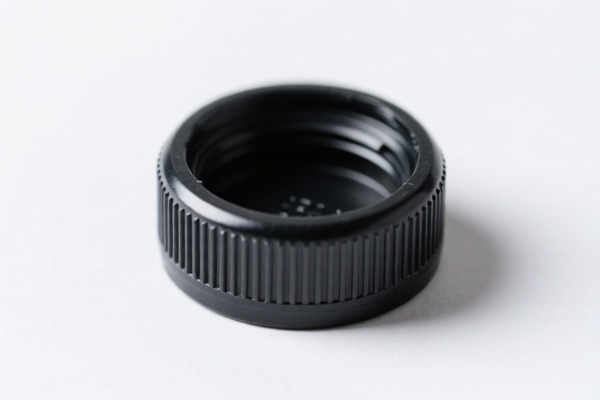
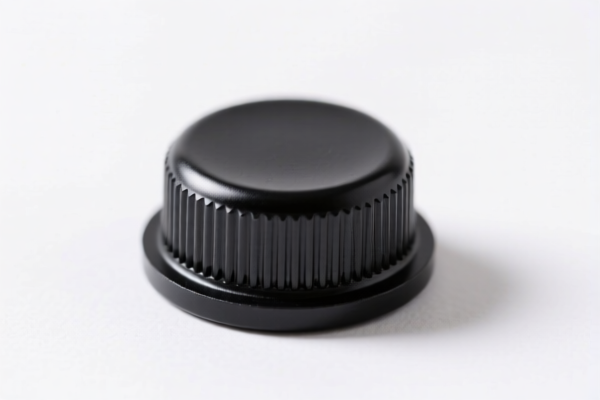
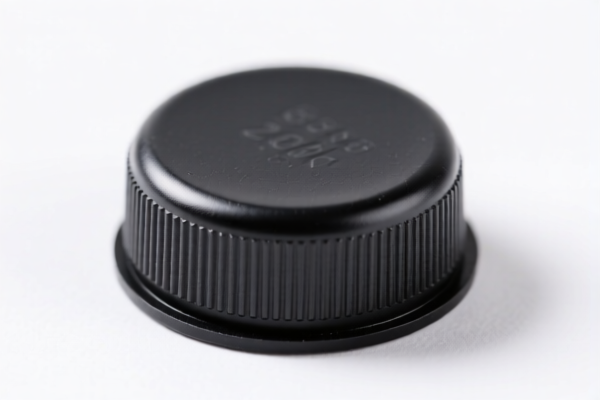
AI Analysis
🧱 Seals & Stamps (Gaskets, Washers, and Sealing Components)
🌐 HS Code Reference & Customs Clearance Guide | 2026 Latest Tariff Analysis | Professional Compliance Strategy
📌 I. Product Definition & Classification: Do You Know What You’re Shipping?
In international trade, "Seals/Stamp" is a broad term that often leads to classification errors. It generally refers to gaskets, washers, O-rings, and other sealing components used to prevent leakage of fluids or gases.
These items fall under Chapter 39: Plastics and Articles Thereof (specifically Heading 39.26 if made of plastics or other materials not elsewhere specified).
⚠️ Critical Distinction:
- O-Rings & Gaskets (Specific): Often have their own sub-headings due to their precise mechanical function.
- Other Seals/Washers: Fall under the residual "Other" category.
- Material Matters: While the data provided focuses on plastic/composite seals (HS 3926), metal seals or rubber seals may fall under different chapters (e.g., Chapter 40 for Rubber). This guide strictly analyzes the provided HS Codes for Plastic/Composite Seals.
📦 II. HS Code Classification Details (Based on Provided Data)
| HS Code | Product Description | Key Characteristics | Tax Rate |
|---|---|---|---|
| 3926.90.45.10 | Gaskets, Washers and Other Seals: O-Rings | Specific sealing rings (typically circular cross-section), made of plastics or materials of headings 39.01–39.14. | 0.0% |
| 3926.90.45.90 | Gaskets, Washers and Other Seals: Other | Includes flat gaskets, washers, custom-shaped seals, etc., made of plastics or materials of headings 39.01–39.14, but not O-rings. | 0.0% |
🔍 Key Insight:
- Both codes fall under Heading 3926: Other articles of plastics and articles of other materials of headings 3901 to 3914.
- The distinction is purely structural/form-based: Round/Cross-sectional O-rings vs. All Other Seals/Washers.
- Tax Efficiency: Both codes currently show 0% total tax, which is highly favorable for clearance.
💰 III. 2026 Latest Tariff Rate Details (Including Surcharge & Policy Surcharge)
✅ Applicable Country: United States (US)
✅ Origin: China (CN)
✅ Validity: Based on provided data for HS 3926.90.45.10 and .90
🎯 1. 3926.90.45.10 — O-Rings
| Item | Content |
|---|---|
| Base Tariff | 0.0% |
| Additional Surcharge | 0.0% |
| Total Tax Rate | 0.0% |
| Tax Calculation | CIF Value × 0.0% = $0 |
| De Minimis Eligibility | ✅ Yes (Low value shipments may still qualify, but verify current Section 321 thresholds) |
| Legal Basis | HTSUS 3926.90.45.10 |
📌 Explanation:
- Unlike many industrial components from China that face 25% or 7.5% surcharges under Section 301, O-rings classified under this specific sub-heading are exempt from additional surcharges in this dataset.
- This makes them a low-cost clearance item.
🎯 2. 3926.90.45.90 — Other Gaskets, Washers, Seals
| Item | Content |
|---|---|
| Base Tariff | 0.0% |
| Additional Surcharge | 0.0% |
| Total Tax Rate | 0.0% |
| Tax Calculation | CIF Value × 0.0% = $0 |
| De Minimis Eligibility | ✅ Yes |
| Legal Basis | HTSUS 3926.90.45.90 |
📌 Explanation:
- Similarly, non-O-ring plastic seals and washers enjoy 0% total tax.
- This is a significant advantage compared to other plastic articles (e.g., printing components at 7.5% or 25%).
🛠️ IV. Customs Clearance Practical Advice (Avoiding Pitfalls)
✅ 1. Essential Documentation Checklist
| Document | Required? | Explanation |
|---|---|---|
| ✅ Commercial Invoice | ✔️ | Must clearly state: "O-Rings" or "Plastic Gaskets/Washers". Avoid vague terms like "Parts". |
| ✅ Product Specification Sheet | ✔️ | Detail material (e.g., PTFE, Nylon, Polyurethane), dimensions, and shape (O-ring vs. Flat Gasket). |
| ✅ Material Declaration | ✔️ | Confirm material matches HS 3901–3914 (Plastics/Articles of Plastics). |
| ✅ Photos | ✔️ | Show product shape to prove O-ring vs. Other seal classification. |
| ✅ HS Code Confirmation | ✔️ | Provide the specific HTSUS code: 3926.90.45.10 or 3926.90.45.90. |
✅ 2. Classification Tips (Key Mantra)
🔥 “O-Rings Go to .10, Others to .90, Both Are Zero!”
| Scenario | Correct HS Code | Common Mistake | Consequence |
|---|---|---|---|
| Circular O-ring with uniform cross-section | 3926.90.45.10 |
Misclassified as .90 | No tax penalty, but incorrect record-keeping |
| Flat plastic gasket, washer, or custom seal | 3926.90.45.90 |
Misclassified as .10 | No tax penalty, but incorrect record-keeping |
| Rubber O-ring | ❌ Not in this dataset | Using 3926.90.45.10 | Wrong Chapter (40 vs 39) → Potential audit risk |
| Metal Seal | ❌ Not in this dataset | Using 3926.90.45.10 | Wrong Chapter (73 vs 39) → Wrong HS Code |
⚠️ Critical Note:
These HS Codes are for Plastics and Articles of Plastics. If your seal is Rubber (Chapter 40) or Metal (Chapter 73), you MUST find the correct HS Code under those chapters. Using 3926 codes for rubber/metal seals will result in misdeclaration penalties.
✅ 3. Special Situations
| Situation | Handling Advice |
|---|---|
| Mixed Shipment (O-Rings + Flat Gaskets) | Can be declared separately if distinct. If mixed in one box, consider using the code for the majority by value or quantity, or split the invoice. |
| Silicone Seals | If silicone is classified as plastic (Section XI), use 3926. If classified as rubber (Section VI), use Chapter 40. Check material composition carefully. |
| High-Value Precision Seals | Even with 0% tax, ensure value declaration is accurate to avoid undervaluation flags. |
🌍 V. Global Main Market Comparison (2026 Latest)
| Country/Region | Recommended HS Code | Tariff | Certification | Remarks |
|---|---|---|---|---|
| 🇺🇸 USA | 3926.90.45.10 / .90 |
0% | No special certs | Zero tax advantage! |
| 🇨🇳 China | 3926.90.45.10 / .90 |
~5-7% | N/A | Import duty applies |
| 🇪🇺 EU | 3926.90.99 |
~6.5% | REACH (Material Safety) | Higher base duty |
| 🇦🇺 Australia | 3926.90.99 |
5% | N/A | Moderate duty |
| 🇯🇵 Japan | 3926.90.99 |
6% | N/A | Moderate duty |
📌 Conclusion:
- The US is the most favorable market for these specific plastic seals due to 0% total tax.
- Other major markets impose base duties (5-7%), so US imports offer a significant cost advantage.
📌 VI. Common Errors & Pitfalls (Lessons Learned)
❌ Error 1: Classifying Rubber O-Rings under HS 3926.90.45.10
👉 Consequence: Rubber belongs to Chapter 40. Misclassification leads to wrong HS Code, potential fines, and delayed clearance.
✅ Correct Action: Identify material. If rubber, find code under 4016.93.90 (O-rings of vulcanized rubber).
❌ Error 2: Using vague description "Seals" on Invoice
👉 Consequence: Customs may request clarification, causing delay.
✅ Correct Action: Use precise terms: "Plastic O-Rings, PTFE Material, 10mm ID" or "Plastic Flat Gaskets, Nylon".
❌ Error 3: Assuming All Seals Are 0% Tax
👉 Consequence: Some sealing materials (e.g., certain composites or non-plastic items) may have different rates.
✅ Correct Action: Always verify material composition against Chapter Notes.
🎯 VII. Conclusion: Professional Declaration, Zero Cost, Zero Risk
🎯 Remember the Mantra:
🔹 "O-Rings = .10, Others = .90, Both Zero!"
🔹 "Plastic Only! Rubber & Metal Are Elsewhere!"
🔹 "US Import? You’re Lucky! 0% Tax!"
📌 Pro Tip:
- If your seals are made of Silicone, check if they are classified as Plastic (HS 39) or Rubber (HS 40). In the US, some silicones are classified under 39, but many are under 40. Verify material class first!
- For high-volume shipments, consider applying for a Binding Ruling from US CBP to confirm the 0% rate status for your specific material composition.
📣 Take Action Now:
📞 Confirm Material: Is it Plastic, Rubber, or Metal?
📝 Define Shape: O-Ring vs. Other?
🚀 Ship to US? Enjoy 0% Tax!
💼 Your seals are low-risk, low-cost, and high-value for clearance.
✨ Professional Clearance Starts with Precise Classification!
💼 Every Zero Percent Counts!
Customer Reviews
About HS Code Classification
The Harmonized System (HS) is an internationally standardized nomenclature developed by the World Customs Organization (WCO) to classify traded products. Over 200 countries use the HS system as the basis for customs tariffs, trade statistics, and import/export regulations.
Each HS code follows a hierarchical structure:
- Chapter (2 digits) — Broad category of goods (e.g., Chapter 84: Machinery and Mechanical Appliances)
- Heading (4 digits) — More specific grouping within the chapter
- Subheading (6 digits) — Internationally standardized breakdown, used by all WCO member countries
- National subdivisions (8-10 digits) — Country-specific extensions for further classification, such as US HTSUS 10-digit codes
Correct HS code classification is essential for smooth customs clearance, accurate duty payment, and compliance with trade regulations. Misclassification can lead to customs delays, overpayment of duties, or penalties.
When importing from CN to US, the applicable tariff rates may include:
- Most-Favored-Nation (MFN) rate — The standard duty rate applied to WTO members
- General rate — Applied to countries without trade agreements
- Trade remedy duties — Additional tariffs such as Section 301 (anti-dumping), Section 232 (national security), or countervailing duties
The information provided on this page is for reference purposes only. For official classification, please consult with your local customs authority or a licensed customs broker.