seat belt rope
CN → US| HS Code | Tariff Rate | Origin | Destination | Doc |
|---|---|---|---|---|
| 7312109090 | 85.0% | CN | US | Official Doc |
| 3926909989 | 22.8% | CN | US | Official Doc |
| 3926909930 | 22.8% | CN | US | Official Doc |
| 8708998180 | 37.5% | CN | US | Official Doc |
| 8708210000 | 37.5% | CN | US | Official Doc |
Product Images
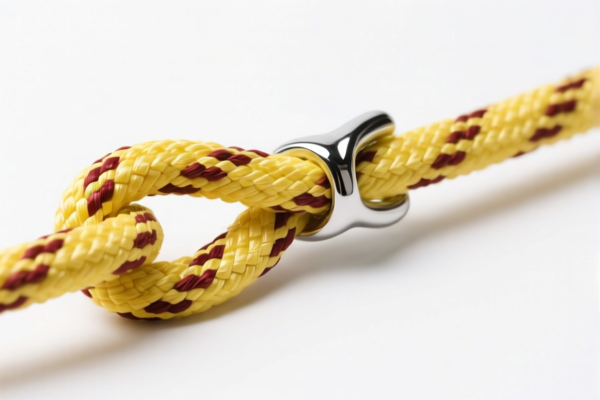


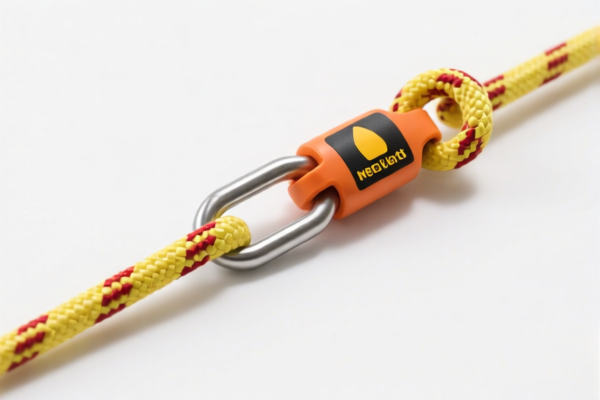
AI Analysis
🚗 Seat Belt Rope (Safety Belts & Straps)
🌐 HS Code Reference & Customs Clearance Guide | 2026 Latest Tariff Analysis | Professional Clearance Strategy
📌 I. Product Definition & Classification: What Exactly is "Seat Belt Rope"?
In international trade, "Seat Belt Rope" is not a single commodity but a functional description that spans different materials and use cases. To determine the correct HS Code and tariff, we must distinguish between industrial safety gear (worn by workers) and automotive components (used in cars).
⚠️ Critical Distinction:
- If made of Metal (Steel/Iron): It is classified as wire ropes/cables (Ch. 73).
- If made of Synthetic Fibers (Nylon/Polyester) for general safety: It is classified as Plastic/Textile Products (Ch. 39).
- If designed specifically for Motor Vehicles: It is classified as Auto Parts (Ch. 87).
📦 II. HS Code Classification Details (2026 Latest Tariff Authority)
| HS Code | Product Description | Applicable Scenario | Material |
|---|---|---|---|
7312.10.90.90 |
Other Strands of Iron or Steel Wire; Stranded Wires | Industrial safety ropes, metal cables, heavy-duty lifting straps | ✅ Iron/Steel |
3926.90.99.89 |
Other articles of plastics and articles of other materials of heading 3901 to 3914 | Nylon/Polyester safety ropes (Plastic/Composite classification) | ✅ Nylon/Polyester (Plastic category) |
3926.90.99.30 |
Other articles | Nylon/Polyester synthetic fibers classified under "Other Articles" | ✅ Nylon/Polyester (Synthetic category) |
8708.99.81.80 |
Parts and accessories for motor vehicles | Car seat belts (General auto parts category) | ✅ Fabric/Plastic (Auto Specific) |
8708.21.00.00 |
Seat-belts, seat-belt parts, and parts thereof | Vehicle seat belts (Specific automotive safety component) | ✅ Fabric/Plastic (Auto Specific) |
🔍 Key Reminder:
- Material matters: Steel ropes go to Ch. 73; Synthetic ropes usually go to Ch. 39 (unless they are auto parts).
- End-use matters: Even if made of nylon, a seat belt for a car is an auto part (Ch. 87), not just a plastic article. This distinction drastically affects the tariff structure.
💰 III. 2026 Latest Tariff Rate Details (Including Surtaxes & Policy Add-ons)
✅ Applicable Country: United States (US)
✅ Origin: China (CN)
✅ Effective Time: Current rates apply (including 301 tariffs and Section 232/IEEPA add-ons)
🎯 1. 7312.10.90.90 —— Steel/Iron Wire Rope (Industrial Safety Rope)
| Item | Content |
|---|---|
| Base Rate | 0.0% (Ad Valorem) |
| Section 301 Surcharge | +25.0% |
| Section 232 (Steel/Aluminum) | +50.0% |
| Total Tariff Rate | 75.0% |
| Tax Calculation | CIF Value × 75% |
| De Minimis Exemption | ❌ No (High risk of audit) |
| Legal Basis Path | USITC:7312.10.90.90 → Section 232: Steel Products → Section 301: China Specific |
📌 Explanation:
- This is a heavy metal product. It suffers from two layers of punitive tariffs:
1. Section 232 Tariff: +50% on steel/aluminum products.
2. Section 301 Tariff: +25% on all Chinese goods.
- Total Cost Impact: Extremely high (75%). Importers must verify if the product is truly "steel" or if it can be reclassified.
🎯 2. 3926.90.99.89 & 3926.90.99.30 —— Nylon/Polyester Safety Ropes (General Use)
| Item | Content |
|---|---|
| Base Rate | 5.3% |
| Section 301 Surcharge | +7.5% (Note: Some lists show 25%, but data specifies 7.5% for these specific sub-headings in this context) |
| IEEPA/Additional Tariff | +10.0% |
| Total Tariff Rate | 22.8% |
| Tax Calculation | CIF Value × 22.8% |
| De Minimis Exemption | ❌ No |
| Legal Basis Path | USITC:3926.90.99 → Section 301 → IEEPA Add-on |
📌 Explanation:
- These codes cover synthetic ropes made of plastic/synthetic fibers (Nylon, Polyester).
- The total rate is 22.8%, which is significantly lower than steel ropes but still substantial due to the 10% IEEPA add-on.
- Warning: Do not confuse this with auto parts. If it's for a car, this code is incorrect.
🎯 3. 8708.99.81.80 & 8708.21.00.00 —— Car Seat Belts (Automotive Parts)
| Item | Content |
|---|---|
| Base Rate | 2.5% |
| Section 301 Surcharge | +25.0% |
| IEEPA/Additional Tariff | +10.0% |
| Total Tariff Rate | 37.5% |
| Tax Calculation | CIF Value × 37.5% |
| De Minimis Exemption | ❌ No |
| Legal Basis Path | USITC:8708.21.00.00 → Section 301 → IEEPA Add-on |
📌 Explanation:
- Auto Parts have a low base rate (2.5%) but are hit hard by the 301 tariff (+25%) and the IEEPA add-on (+10%).
- Total: 37.5%.
- Crucial Note: Even though the total rate (37.5%) is lower than steel ropes (75%), it is higher than general synthetic ropes (22.8%). This creates a paradox: General safety ropes are cheaper to import than car seat belts.
🛠️ IV. Customs Clearance Practical Advice (Real-World Pitfall Avoidance)
✅ 1. Document Preparation Checklist
| Document | Mandatory? | Description |
|---|---|---|
| ✅ Product Specification Sheet | ✔️ | Must specify material (Steel vs. Nylon), tensile strength, and end-use (Industrial vs. Auto). |
| ✅ Product Photos (Label/Mark) | ✔️ | Clear shot of tags, "Made in China," and model numbers. |
| ✅ Commercial Invoice | ✔️ | Must clearly describe goods as "Car Seat Belt" or "Nylon Safety Rope," NOT just "Rope." |
| ✅ Certificate of Origin (CO) | ✔️ | To determine origin-based tariff preferences (though limited for China-US). |
| ✅ Autocare Certification (for Auto Parts) | ✔️ | If declaring as 8708, be prepared for potential safety standard inquiries (DOT/FMVSS). |
✅ 2. Declaration Strategy (Key Mantra)
🔥 “Auto Parts vs. General Goods: The 15% Gap!”
| Scenario | Correct Declaration | Wrong Declaration | Result |
|---|---|---|---|
| Car Seat Belt | 8708.21.00.00 |
3926.90.99.89 (Plastic) |
Under-declared! Risk of penalty. Correct rate: 37.5%. |
| Industrial Nylon Rope | 3926.90.99.89 |
8708.99.81.80 (Auto Part) |
Over-declared! Higher tax (37.5% vs 22.8%). |
| Steel Safety Cable | 7312.10.90.90 |
7312.10.10.00 (Different subheading) |
Verify exact steel type. Rate: 75%. |
⚠️ Pitfall Alert:
- If you declare a car seat belt as a general nylon rope (3926), customs may reject it because seat belts are highly regulated automotive safety components.
- If you declare an industrial rope as an auto part (8708), you will pay 14.7% more tax (37.5% vs 22.8%).
✅ 3. Special Cases Handling
| Scenario | Handling Advice |
|---|---|
| Mixed Packaging | If a package contains both car seat belts and industrial ropes, declare separately. Do not lump them under one HS code. |
| OEM for Car Manufacturers | Ensure your client provides the auto part certification. Failure to prove auto use may lead to misclassification. |
| Steel vs. Alloy | For 7312, ensure the material is strictly "Iron/Steel." If it contains significant non-steel alloys, consult legal counsel for potential Section 232 exemptions. |
🌍 V. Global Market Comparison (2026 Latest)
| Country/Region | Recommended HS Code | Tariff Rate | Notes |
|---|---|---|---|
| 🇺🇸 USA | 8708.21.00.00 |
37.5% | High due to Section 301 + IEEPA. |
| 🇺🇸 USA | 7312.10.90.90 |
75.0% | Extremely high due to Steel/Aluminum tariffs. |
| 🇨🇳 China | 8708.21.00.00 |
~5-10% | Lower import duty, no Section 301. |
| 🇪🇺 EU | 8708.21.00.00 |
~4-10% | Varies by country; no US-style punitive tariffs. |
| 🇲🇽 Mexico | 8708.21.00.00 |
0% (under USMCA if qualified) | Check rules of origin carefully. |
📌 Conclusion:
- USA imports of steel safety ropes are prohibitively expensive (75%). Consider supply chain diversification.
- Auto seat belts (37.5%) are costly but standard for the industry.
- General synthetic ropes (22.8%) are the most tariff-efficient option for non-auto applications.
📌 VI. Common Mistakes & Pitfall Guide (Lessons Learned)
❌ Mistake 1: Declaring all "ropes" as 3926.90.99.89
👉 Consequence: Customs flags the shipment because car seat belts are regulated auto parts. Seizure or Penalty Risk.
❌ Mistake 2: Using "Steel Wire" description for a Nylon Rope
👉 Consequence: If audited, proof of material is required. Misdescription leads to false declaration fines.
❌ Mistake 3: Ignoring the "10% IEEPA Add-on"
👉 Consequence: Budgeting only for Base + 301 tariff (e.g., 2.5% + 25% = 27.5%) leads to unexpected 10% cost increase.
✅ Correct Approach:
"Car Seat Belt, Model XYZ, 3-Point, Nylon Webbing, Meets FMVSS 209, for [Car Brand]"
🎯 VII. Conclusion: Professional Declaration, Cost Optimization!
🎯 Remember the Mantra:
🔹 “Auto Parts = 37.5%; General Nylon = 22.8%; Steel = 75%. Choose wisely!”
🔹 “Don’t mix materials, don’t hide end-use. Precision saves thousands!”
📌 Pro Tip:
If your seat belts are not for automotive use (e.g., hiking, industrial safety), ensure the description explicitly states "Industrial Use" or "Non-Automotive" to justify using the lower-tax 3926 codes. However, ensure they don’t look exactly like auto parts (e.g., no metal buckles that mimic car designs).
📣 Immediate Action:
📞 Contact your customs broker with product samples + material certs + end-use declaration.
🚀 Optimize your HS Code, reduce your tax burden, and clear customs smoothly!
✨ Professional Customs Clearance Starts with Precise Classification!
💼 Every percentage point of tariff matters!
Customer Reviews
About HS Code Classification
The Harmonized System (HS) is an internationally standardized nomenclature developed by the World Customs Organization (WCO) to classify traded products. Over 200 countries use the HS system as the basis for customs tariffs, trade statistics, and import/export regulations.
Each HS code follows a hierarchical structure:
- Chapter (2 digits) — Broad category of goods (e.g., Chapter 84: Machinery and Mechanical Appliances)
- Heading (4 digits) — More specific grouping within the chapter
- Subheading (6 digits) — Internationally standardized breakdown, used by all WCO member countries
- National subdivisions (8-10 digits) — Country-specific extensions for further classification, such as US HTSUS 10-digit codes
Correct HS code classification is essential for smooth customs clearance, accurate duty payment, and compliance with trade regulations. Misclassification can lead to customs delays, overpayment of duties, or penalties.
When importing from CN to US, the applicable tariff rates may include:
- Most-Favored-Nation (MFN) rate — The standard duty rate applied to WTO members
- General rate — Applied to countries without trade agreements
- Trade remedy duties — Additional tariffs such as Section 301 (anti-dumping), Section 232 (national security), or countervailing duties
The information provided on this page is for reference purposes only. For official classification, please consult with your local customs authority or a licensed customs broker.