seating other
CN → US| HS Code | Tariff Rate | Origin | Destination | Doc |
|---|---|---|---|---|
| 8714100010 | 17.5% | CN | US | Official Doc |
| 9401698090 | 35.0% | CN | US | Official Doc |
| 9401790050 | 35.0% | CN | US | Official Doc |
| 8714950000 | 43.0% | CN | US | Official Doc |
| 9402100000 | 10.0% | CN | US | Official Doc |
Product Images
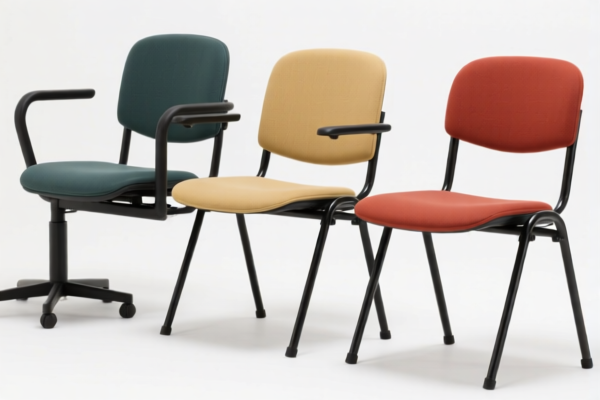
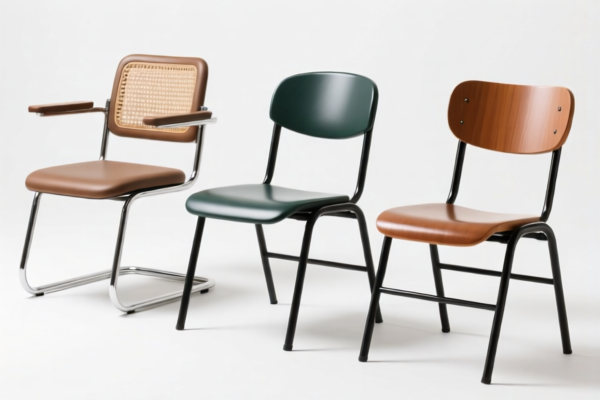
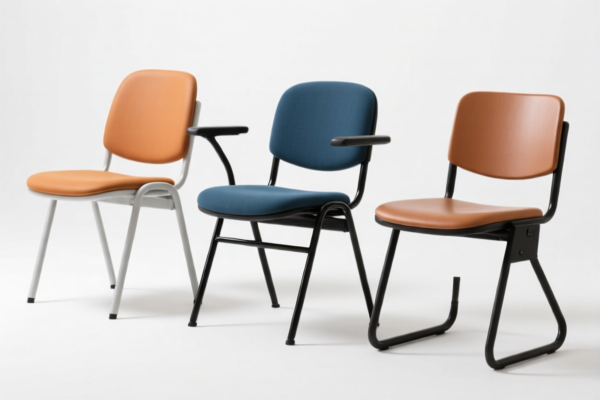
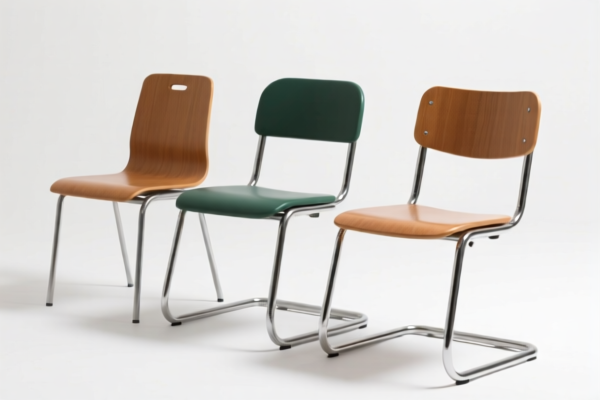
AI Analysis
🪑 Seating, Other: The Ultimate HS Code & Customs Clearance Guide (2026)
🌐 HS Code Reference & Customs Strategy | 2026 Latest Tariff Analysis | Professional Clearance Protocol
📌 Part I: Product Definition & Classification Context
"Seating, Other" (often declared as Other Seats, Non-standard Chairs, or Specialty Seating) represents a broad and often misunderstood category in international trade. It typically includes furniture items that do not fit into standard "chairs" or "sofas" definitions, or components used in specific industries (e.g., automotive, bicycle, medical).
Key Distinction for Customs: The classification hinges entirely on Usage (End-Use) and Construction Material: 1. General Furniture (Chapter 94): Most "other seats" are treated as furniture (e.g., office chairs, bar stools, plastic seating). 2. Vehicle Parts (Chapter 87): Seats specifically designed for vehicles (bicycles, cars, motorcycles) fall under vehicle parts, regardless of whether they are installed or detached.
⚠️ Critical Warning:
Misclassifying a Bicycle Seat as Furniture (or vice versa) can lead to massive tariff differences and potential seizure. Always align the declaration with the intended end-use.
📦 Part II: HS Code Classification Matrix (Based on Provided Data)
The following table details the specific HS Codes derived from the provided dataset, categorized by their logical grouping.
| HS Code | Category | Product Description & Logic | Total Tax Rate | Tax Breakdown |
|---|---|---|---|---|
| 8714.95.00.00 | Vehicle Parts | Bicycle/Motorcycle Saddle/Seat. Matched via "Saddle/Seat" use. Falls under the "catch-all" for vehicle parts. No material conflict. |
43.0% | Base: 8.0% Add'l: 25.0% Sec 122: 10.0% |
| 8714.10.00.10 | Vehicle Parts | Bicycle Parts (Seats/Saddles). "Seat" matches "Saddles & Seats." "Other" is the residual category. No material conflict. |
17.5% | Base: 0.0% Add'l: 7.5% Sec 122: 10.0% |
| 9401.69.80.90 | Furniture | Other Wooden/Metal Seats (Non-Upholstered). "Other seats" matches "Other" attribute & "Seating" use. Residual category for furniture. |
35.0% | Base: 0.0% Add'l: 25.0% Sec 122: 10.0% |
| 9401.79.00.50 | Furniture | Metal Frame Seats. "Other seats" highly matches "Seats with Metal Frames." No material conflict. |
35.0% | Base: 0.0% Add'l: 25.0% Sec 122: 10.0% |
| 9402.10.00.00 | Medical/Adjustable | Similar Chairs (Adjustable/Medical). "Other" matches "Similar Chairs." Residual category. No material conflict. |
10.0% | Base: 0.0% Add'l: 0.0% Sec 122: 10.0% |
| 9402.90.00.20 | Medical/Special | Other Medical/Special Chairs. "Other seats" matches "Other" & "Chair" use. Residual category. No medical furniture conflict. |
10.0% | Base: 0.0% Add'l: 0.0% Sec 122: 10.0% |
💰 Part III: 2026 Tariff Rate Detailed Analysis (US Market)
✅ Applicable Country: USA (US)
✅ Origin: China (CN)
✅ Effective Date: 2025-11-10 onwards (for subsequent imports)
The tax structure consists of three layers: 1. Base Duty (MFN): The standard Most Favored Nation rate. 2. Section 301 Duties ("Add'l"): The 25% (or 7.5%) tariff imposed on Chinese goods under US Trade Law. 3. Section 122 Duties: A specific additional 10% tariff applied to certain goods (often related to recent trade actions or specific statutory provisions).
🎯 1. Vehicle Seats: 8714.95.00.00 (High Risk/High Cost)
| Item | Detail |
|---|---|
| Description | Other parts and accessories of bicycles/motorcycles (Saddles/Seats) |
| Base Duty | 8.0% |
| Section 301 Duty | +25.0% |
| Section 122 Duty | +10.0% |
| Total Effective Rate | 43.0% |
| De Minimis Exemption | ❌ Denied (High-value parts often excluded or subject to strict scrutiny) |
| Legal Basis | Section 301 → Section 122 → HTSUS 8714.95.00.00 |
📌 Explanation:
Bicycle/motorcycle seats are classified as vehicle parts. The base duty of 8% is high, and the combination of Section 301 (25%) and Section 122 (10%) results in a 43% total burden. This is the most expensive classification for "seating" in this dataset.
🎯 2. Bicycle Parts: 8714.10.00.10 (Moderate Cost)
| Item | Detail |
|---|---|
| Description | Saddles and Seats for Bicycles |
| Base Duty | 0.0% |
| Section 301 Duty | +7.5% |
| Section 122 Duty | +10.0% |
| Total Effective Rate | 17.5% |
| De Minimis Exemption | ❌ Denied |
| Legal Basis | Section 301 → Section 122 → HTSUS 8714.10.00.10 |
📌 Explanation:
While still a vehicle part, this specific subheading has a 0% base duty. The Section 301 rate is lower (7.5%) compared to the general vehicle parts category. This is the most cost-effective classification if the item is clearly a bicycle saddle/seat.
🎯 3. Furniture Seats: 9401.69.80.90 & 9401.79.00.50 (Standard Cost)
| Item | Detail |
|---|---|
| Description | Other Seats (Wooden/Metal Frames) |
| Base Duty | 0.0% |
| Section 301 Duty | +25.0% |
| Section 122 Duty | +10.0% |
| Total Effective Rate | 35.0% |
| De Minimis Exemption | ❌ Denied |
| Legal Basis | Section 301 → Section 122 → HTSUS 9401 |
📌 Explanation:
General furniture seats (like plastic or metal office chairs) have 0% base duty. However, the full 25% Section 301 tariff applies, plus the 10% Section 122 duty. Total: 35%.
🎯 4. Medical/Adjustable Chairs: 9402.10.00.00 & 9402.90.00.20 (Low Cost)
| Item | Detail |
|---|---|
| Description | Medical, Surgical, Dental, or Veterinary Furniture (Chairs) |
| Base Duty | 0.0% |
| Section 301 Duty | +0.0% |
| Section 122 Duty | +10.0% |
| Total Effective Rate | 10.0% |
| De Minimis Exemption | ⚠️ Check Eligibility (Often exempt under specific trade agreements, but Section 122 may still apply) |
| Legal Basis | Section 122 → HTSUS 9402 |
📌 Explanation:
This is the lowest tariff bracket (10%). Medical or specially adjustable chairs are exempt from both Base and Section 301 duties. Only the 10% Section 122 duty applies. Note: Ensure the product genuinely qualifies as medical/specialty furniture to avoid misclassification penalties.
🛠️ Part IV: Customs Clearance Practical Advice (Avoid Pitfalls)
✅ 1. Documentation Checklist
| Document | Requirement | Why It Matters |
|---|---|---|
| Product Specifications | ✔️ Required | Must clearly state End-Use (e.g., "For Bicycles" vs. "For Office Use"). |
| Technical Diagrams | ✔️ Required | Proves structural integrity. E.g., Is it a simple seat (9401) or a complex vehicle component (8714)? |
| Product Photos | ✔️ Required | Visual proof of material (Wood vs. Metal vs. Plastic) and branding. |
| Commercial Invoice | ✔️ Required | Must accurately describe the item as "Other Seat" or specific type (e.g., "Bicycle Saddle"). Avoid vague terms like "Accessory." |
| Country of Origin Cert | ✔️ Required | Essential for calculating correct Section 301 and Section 122 applicability. |
✅ 2. Declaration Strategy
🔥 Golden Rule: "Define by End-Use, Declare by Material, Avoid Ambiguity."
| Scenario | Recommended HS Code | Declaration Phrase | Risk Level |
|---|---|---|---|
| Bicycle Seat | 8714.10.00.10 |
"Bicycle Saddle/Seat, Synthetic Material" | 🟢 Low (if clearly bike-related) |
| Motorcycle Seat | 8714.95.00.00 |
"Motorcycle Seat, Part of Vehicle" | 🟡 Medium (Higher tax) |
| Office Chair | 9401.69.80.90 |
"Office Chair, Plastic/Metal Frame" | 🟡 Medium (Standard tax) |
| Medical Chair | 9402.10.00.00 |
"Medical Examination Chair, Adjustable" | 🟢 Low (Lowest tax) |
| Generic "Other Seat" | 9401.69.80.90 |
"Other Seat, Furniture Item" | 🔴 High (If misused for vehicles) |
✅ 3. Special Considerations
| Issue | Advice |
|---|---|
| Component Parts | If selling seat cushions separately for vehicles, ensure they are not classified as "Vehicle Parts" unless explicitly designed for that purpose. General cushions may fall under Chapter 94 or 63. |
| Mixed Shipments | Do not mix "Vehicle Seats" and "Furniture Seats" in one HS Code. Declare separately to avoid customs scrutiny on the entire shipment. |
| Section 122 Compliance | Even if Section 301 is 0% (as in 9402), the 10% Section 122 duty still applies. Budget accordingly! |
| Pre-Import Ruling | For high-volume shipments, apply for an Advance Ruling from US Customs and Border Protection (CBP) to lock in the HS Code and avoid post-import audits. |
🌍 Part V: Global Market Comparison (2026 Outlook)
| Market | Recommended HS Code | Estimated Total Duty | Key Requirement |
|---|---|---|---|
| 🇺🇸 USA | 8714.10.00.10 / 9401.69.80.90 / 9402.10.00.00 |
10% - 43% | Strict End-Use Declaration. Section 301 & 122 apply to most Chinese goods. |
| 🇨🇳 China | Varies | 0% - 10% | Import duties vary. No Section 301/122. |
| 🇪🇺 EU | 9401.69 / 8714.95 |
0% - 4.5% | No Section 301/122. VAT applies separately. |
| 🇨🇦 Canada | Varies | 0% - 6.5% | No Section 301/122. CUSMA may apply for US origin. |
📌 Conclusion:
The USA is the most complex market due to the Layered Tariff Structure (Base + Sec 301 + Sec 122).
- Bicycle Seats are the sweet spot (17.5%).
- Medical Chairs are the cheapest (10%) but require strict medical certification.
- Vehicle Seats (Non-Bicycle) and Furniture Seats are expensive (35%-43%).
📌 Part VI: Common Errors & Pitfalls (Learn from Mistakes)
❌ Error 1: Calling a Bicycle Seat a "Furniture Part"
👉 Consequence: Incorrect HS Code (9401) → Underpayment of duties (if base duty is lower) or Overpayment (if base duty is higher). Customs may audit and demand back-taxes.
👉 Correction: Use 8714 for any seat intended for bicycles.
❌ Error 2: Claiming "Medical" Status for General Office Chairs
👉 Consequence: Misdeclaration → Fine, Penalty, and Shipment Hold.
👉 Correction: Only use 9402 if the chair has specific medical features (adjustable height/angle for patients, sanitary materials, etc.).
❌ Error 3: Ignoring Section 122 Duty
👉 Consequence: Budget miscalculation. Even if Sec 301 is 0%, the 10% Sec 122 remains.
👉 Correction: Always calculate: Base + Sec 301 + 10% Sec 122.
✅ Best Practice:
"Be Specific in Description."
Instead of "Seating Other," use:
- "Synthetic Leather Bicycle Saddle, Model X"
- "Ergonomic Office Chair, Mesh Back, Metal Frame"
- "Adjustable Medical Examination Chair, Hydraulic Lift"
🎯 Part VII: Conclusion: Smart Classification, Maximum Profit
🎯 Key Takeaways:
🔹 Bicycle Seats (
8714.10.00.10): Best balance of tax efficiency (17.5%) for vehicle accessories.
🔹 Medical Chairs (9402.10.00.00): Lowest tax burden (10%) if qualified.
🔹 Furniture Seats (9401): Standard high tax (35%) due to full Sec 301 application.
🔹 Motorcycle Parts (8714.95.00.00): Highest tax (43%) – Avoid if possible or optimize supply chain.
📌 Pro Tip:
If your "Other Seats" can be legitimately classified as Medical Furniture or Bicycle Accessories, do so. The 33% difference between the highest (43%) and lowest (10%) brackets is pure profit.
📣 Immediate Action:
📞 Verify End-Use: Before shipping, confirm the final consumer use.
📄 Prepare Certifications: Medical claims require proof.
🚀 Pre-Arrange Clearance: Use a licensed customs broker to verify the HS Code against the latest HTSUS 2026 updates.
✨ Professional Clearance Starts with Precision!
💼 Your Tariff Bill is Your Bottom Line – Optimize It Today!
Customer Reviews
About HS Code Classification
The Harmonized System (HS) is an internationally standardized nomenclature developed by the World Customs Organization (WCO) to classify traded products. Over 200 countries use the HS system as the basis for customs tariffs, trade statistics, and import/export regulations.
Each HS code follows a hierarchical structure:
- Chapter (2 digits) — Broad category of goods (e.g., Chapter 84: Machinery and Mechanical Appliances)
- Heading (4 digits) — More specific grouping within the chapter
- Subheading (6 digits) — Internationally standardized breakdown, used by all WCO member countries
- National subdivisions (8-10 digits) — Country-specific extensions for further classification, such as US HTSUS 10-digit codes
Correct HS code classification is essential for smooth customs clearance, accurate duty payment, and compliance with trade regulations. Misclassification can lead to customs delays, overpayment of duties, or penalties.
When importing from CN to US, the applicable tariff rates may include:
- Most-Favored-Nation (MFN) rate — The standard duty rate applied to WTO members
- General rate — Applied to countries without trade agreements
- Trade remedy duties — Additional tariffs such as Section 301 (anti-dumping), Section 232 (national security), or countervailing duties
The information provided on this page is for reference purposes only. For official classification, please consult with your local customs authority or a licensed customs broker.