selfie stick
CN → US| HS Code | Tariff Rate | Origin | Destination | Doc |
|---|---|---|---|---|
| 9620001000 | 37.0% | CN | US | Official Doc |
| 9620007000 | 37.5% | CN | US | Official Doc |
| 8529109100 | 35.0% | CN | US | Official Doc |
| 8529909800 | 35.0% | CN | US | Official Doc |
| 9013809100 | 22.0% | CN | US | Official Doc |
| 9013804000 | 40.8% | CN | US | Official Doc |
Product Images
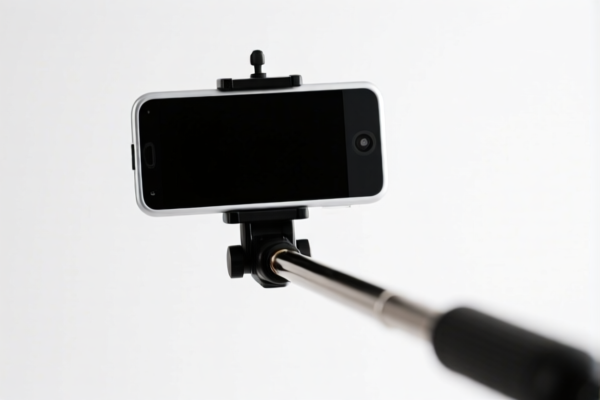
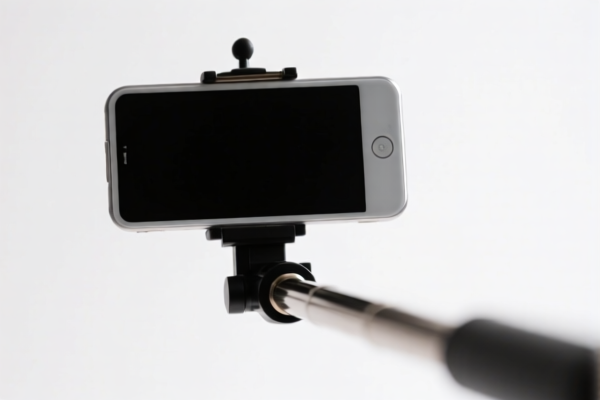
AI Analysis
🤳 Selfie Stick (Selfie Sticks)
🌐 HS Code Reference & Customs Clearance Guide | 2026 Latest Tariff Analysis | Professional Entry Strategies
📌 I. Product Definition & Classification: What Exactly is a "Selfie Stick"?
A selfie stick is an extension pole used to help take photographs or videos, often with a smartphone attached to the handle. In international trade, classification depends heavily on whether it is viewed as a mechanical support device (like a tripod) or an electronic accessory/part.
⚠️ Key Distinction Point:
- If it functions primarily as a mechanical support stand (telescopic pole, similar to a monopod/tripod) → Classified under Chapter 96 or Chapter 85 as accessories.
- If it contains electronic circuitry beyond simple connection (e.g., integrated Bluetooth shutter control, advanced sensors) → May fall under Chapter 85 as electronic parts.
- Material Matters: Metal vs. Plastic can influence specific sub-codes within Chapter 96.
📦 II. HS Code Classification Details (2026 Authoritative Comparison)
Based on current trade data and common customs practices, here are the possible classifications for Selfie Sticks:
| HS Code | Product Description | 适用 Scenario | Material/Function Note |
|---|---|---|---|
9620.00.10.00 |
Telescopic support articles (monopods/tripods) | Standard mechanical selfie sticks, aluminum/metal body | ✅ Mechanical Support |
9620.00.70.00 |
Selfie sticks (Aluminum/Metal) | Aluminum alloy or metal selfiе sticks | ✅ Metal Material |
8529.10.91.00 |
Antennas/Reflectors parts/supports | Electronic support accessories, "catch-all" for electronic peripherals | ✅ Electronic Part |
8529.90.98.00 |
Parts/Accessories of electronic equipment | General electronic support配件, no specific material conflict | ✅ Electronic Part |
9013.80.91.00 |
Other instruments/appliances (Optical/Electronic) | Optical/electronic usage tools, general instrument category | ✅ Instrument Accessory |
9013.80.40.00 |
Optical/Support Instruments | Plastic/Metal optical support tools, catch-all for optical devices | ✅ Mixed Material |
🔍 Key Insight:
- Mechanical Selfie Sticks (simple poles) are most accurately classified under 9620 (Monopods/Tripods).
- Electronic/Bluetooth Selfie Sticks may be argued under 8529 (Parts of Electronic Machines) or 9013 (Instruments).
- US Customs often scrutinizes Chapter 96 items heavily due to previous trade disputes; ensure documentation clearly supports the "support" function.
💰 III. 2026 Latest Tariff Rate Breakdown (Including Surcharges & Policy Add-ons)
✅ Applicable Country: United States (US)
✅ Origin: China (CN)
✅ Effective Date: Post-2025 (Includes Section 301 & IEEPA tariffs)
🎯 1. 9620.00.10.00 —— Telescopic Support Articles (Monopods)
| Item | Content |
|---|---|
| Base Tariff | 2.0% (ad valorem) |
| Section 301 Surcharge | +25.0% |
| IEEPA Surcharge (Section 122) | +10.0% |
| Total Effective Rate | 37.0% |
| Tax Calculation | CIF Value × 37.0% |
| De Minimis Exemption | ❌ Not Eligible (Denied for Chinese origin under current rules) |
| Legal Basis Path | USITC:9620.00.10.00 → Section 301: Footnote 9903.88.01 → IEEPA:9903.01.25 |
📌 Explanation:
- This is the most mechanically accurate classification for standard selfie sticks.
- Total Tax: 37% is high but standard for Chinese-made consumer electronics accessories subject to Section 301.
- Warning: Do not misclassify as "Plastic Toys" to avoid this; US Customs will verify the material and function.
🎯 2. 9620.00.70.00 —— Selfie Sticks (Aluminum/Metal)
| Item | Content |
|---|---|
| Base Tariff | 2.5% |
| Section 301 Surcharge | +25.0% |
| IEEPA Surcharge (Section 122) | +10.0% |
| Total Effective Rate | 37.5% |
| Tax Calculation | CIF Value × 37.5% |
| De Minimis Exemption | ❌ Not Eligible |
| Legal Basis Path | USITC:9620.00.70.00 → Section 301 → IEEPA:9903.01.25 |
📌 Note:
- Specifically for Aluminum or Metal selfie sticks.
- Only 0.5% higher than the plastic/telescopic variant.
- Use this if your product is clearly made of metal alloys.
🎯 3. 8529.10.91.00 & 8529.90.98.00 —— Electronic Parts/Accessories
| Item | Content |
|---|---|
| Base Tariff | 0.0% |
| Section 301 Surcharge | +25.0% |
| IEEPA Surcharge (Section 122) | +10.0% |
| Total Effective Rate | 35.0% |
| Tax Calculation | CIF Value × 35.0% |
| De Minimis Exemption | ❌ Not Eligible |
| Legal Basis Path | USITC:8529.xxxx.xxxx → Section 301 → IEEPA |
📌 Strategy:
- This offers the lowest total tax (35%).
- Risk: Requires strong justification that the item is an "electronic part" or "accessory to a data processing machine", not just a mechanical pole.
- Best For: Selfie sticks with integrated Bluetooth remotes, complex electronics, or proprietary connectivity that are essential to the phone's function.
- Caution: If customs determines it is merely a mechanical support, they may reclassify to 9620 (37-37.5%).
🎯 4. 9013.80.91.00 & 9013.80.40.00 —— Optical/Instrument Accessories
| Item | Content |
|---|---|
| Base Tariff | 4.5% (9013.80.91) / 5.8% (9013.80.40) |
| Section 301 Surcharge | +7.5% (9013.80.91) / +25.0% (9013.80.40) |
| IEEPA Surcharge (Section 122) | +10.0% |
| Total Effective Rate | 22.0% (9013.80.91) / 40.8% (9013.80.40) |
| Tax Calculation | CIF Value × Rate |
| De Minimis Exemption | ❌ Not Eligible |
| Legal Basis Path | USITC:9013.xxxx.xxxx → Section 301 → IEEPA |
📌 Critical Analysis:
-9013.80.91.00offers a significant tax advantage (22%).
- Justification Needed: Must argue the selfie stick is an "instrument or appliance" related to optical/electronic equipment usage, not just a mechanical pole.
- High Risk: This is a "catch-all" category. If customs audits and finds it is primarily a mechanical support, you face reclassification penalties.
- Recommendation: Only use if you have strong technical documentation linking the stick to optical/instrumental precision or specific electronic device support beyond simple holding.
🛠️ IV. Customs Clearance Practical Advice (Real-World Pitfall Guide)
✅ 1. Required Documentation Checklist
| Document | Mandatory? | Purpose |
|---|---|---|
| Product Specification Sheet | ✔️ | Must state material (Metal/Plastic), length, weight, and function (e.g., "Telescopic Monopod for Smartphones"). |
| Commercial Invoice | ✔️ | Description must match HS Code logic (e.g., "Selfie Stick, Metal, Model XYZ"). Avoid vague terms like "Phone Holder" without context. |
| Material Composition Certificate | ✔️ | Crucial if claiming 9620.00.70.00 (Metal) vs 9620.00.10.00. |
| Electrical Diagram (if applicable) | ✔️ | Needed for 8529 claims to prove electronic nature. |
| FCC Declaration | ✔️ | Required for any electronic component (Bluetooth remotes). |
| Packing List | ✔️ | Ensure no separation of parts that could be interpreted as separate commodities. |
✅ 2. Declaration Strategy (Key Mnemonic)
🔥 "Function First, Material Second, Electronic Proof if Possible!"
| Scenario | Recommended HS Code | Reason |
|---|---|---|
| Standard Metal Selfie Stick | 9620.00.70.00 |
Clear "Monopod" definition, material is metal. |
| Standard Plastic/Telescopic Stick | 9620.00.10.00 |
Clear "Telescopic Support" definition. |
| High-Tech Bluetooth Stick (with complex circuitry) | 8529.90.98.00 |
Argument: It is a part/accessory of electronic data processing equipment. |
| Claiming Lower Tax (22%) | 9013.80.91.00 |
High Risk/High Reward. Must prove it is an "instrumental support" for optical devices, not just a pole. |
✅ 3. Special Situations
| Situation | Handling Advice |
|---|---|
| OEM Selfie Sticks | Provide client order + design specs. Ensure branding does not imply a different category. |
| Selfie Stick with Lens Attachment | If the lens is the primary function, consider optics codes. If it's just a holder, use support codes. |
| Bulk vs. Retail Packaging | Declare as retail unit. Do not split large cartons into individual parts unless necessary. |
| Bluetooth Remotes Included | If the remote is separate, declare it separately. If integrated into the handle, declare the whole unit under the most specific code (9620 or 8529). |
🌍 V. Global Market Comparison (2026 Update)
| Country/Region | Recommended HS Code | Estimated Duty (China Origin) | Key Certifications | Notes |
|---|---|---|---|---|
| 🇺🇸 USA | 9620.00.10.00 |
37.0% | FCC, CE | Section 301 + IEEPA apply strictly. |
| 🇨🇳 China | 9620.00.10.00 |
~5-10% | CCC (if electronic) | Lower base duties, no US surcharges. |
| 🇪🇺 EU | 9620.00.10.00 |
~3.7% + VAT | CE, RoHS | No Section 301. Lower overall cost. |
| 🇬🇧 UK | 9620.00.10.00 |
~3.7% + VAT | UKCA | Post-Brexit rules, but lower than US. |
| 🇦🇺 Australia | 9620.00.10.00 |
~5.0% | RCM | Stable tariff structure. |
📌 Conclusion:
- The US market is the most expensive due to Section 301 (25%) and IEEPA (10%) surcharges.
- EU/UK/AU are significantly cheaper (~3-5%).
- Strategy: If targeting the US, consider supply chain optimization (e.g., assembly in third countries) or accurate HS classification to avoid penalties.
📌 VI. Common Mistakes & Pitfall Avoidance (Lessons Learned)
❌ Mistake 1: Declaring a metal selfie stick as "Plastic Toy"
👉 Consequence: Customs flags material mismatch → Reclassification to 9620.00.70.00 → Back taxes + penalties.
❌ Mistake 2: Using 8529 for a purely mechanical stick
👉 Consequence: Customs rejects electronic argument → Reclassification to 9620 → Potential penalty for incorrect declaration.
❌ Mistake 3: Ignoring IEEPA Section 122 (10% Surcharge)
👉 Consequence: Underpayment of duty → Seizure or Delayed Release. Always include the 10% in cost calculations.
❌ Mistake 4: Splitting "Sticks + Remotes" inappropriately
👉 Consequence: If sold as a set, they must be declared together. Splitting can lead to higher combined duties or confusion.
✅ Correct Approach:
"Selfie Stick, Telescopic, Aluminum Alloy, with Integrated Bluetooth Shutter, Model ABC, FCC Certified"
→ Use9620.00.70.00(Primary function: Support) or8529.90.98.00(if electronic complexity is high and justified).
🎯 VII. Conclusion: Precise Classification Saves Money!
🎯 Key Takeaway:
🔹 For most standard selfie sticks: Use
9620.00.10.00or9620.00.70.00. It is the most defensible classification.
🔹 For high-tech electronic sticks: Consider8529.90.98.00for a lower base rate, but be prepared to justify the electronic nature.
🔹 Avoid9013unless you have strong legal/technical backing for the "instrument" argument.
🔹 Total US Duty Range: 35% - 37.5% for most categories. Plan your margins accordingly!
📌 Pro Tip:
If your product is assembled in Vietnam, Mexico, or Thailand, check if it qualifies for IEEPA Exemption or lower Section 301 rates. Advance Ruling with US Customs is highly recommended for high-volume shipments.
📣 Immediate Action:
📞 Consult a licensed customs broker + Provide technical specs + Apply for Advance Ruling
🚀 Ensure your selfie sticks clear customs smoothly, maximize profit, and avoid surprises!
✨ Professional Clearance Starts with Accurate Classification!
💼 Every Percentage Point Matters in Global Trade!
Customer Reviews
About HS Code Classification
The Harmonized System (HS) is an internationally standardized nomenclature developed by the World Customs Organization (WCO) to classify traded products. Over 200 countries use the HS system as the basis for customs tariffs, trade statistics, and import/export regulations.
Each HS code follows a hierarchical structure:
- Chapter (2 digits) — Broad category of goods (e.g., Chapter 84: Machinery and Mechanical Appliances)
- Heading (4 digits) — More specific grouping within the chapter
- Subheading (6 digits) — Internationally standardized breakdown, used by all WCO member countries
- National subdivisions (8-10 digits) — Country-specific extensions for further classification, such as US HTSUS 10-digit codes
Correct HS code classification is essential for smooth customs clearance, accurate duty payment, and compliance with trade regulations. Misclassification can lead to customs delays, overpayment of duties, or penalties.
When importing from CN to US, the applicable tariff rates may include:
- Most-Favored-Nation (MFN) rate — The standard duty rate applied to WTO members
- General rate — Applied to countries without trade agreements
- Trade remedy duties — Additional tariffs such as Section 301 (anti-dumping), Section 232 (national security), or countervailing duties
The information provided on this page is for reference purposes only. For official classification, please consult with your local customs authority or a licensed customs broker.