semi bleached coniferous pulp for printing
CN → US| HS Code | Tariff Rate | Origin | Destination | Doc |
|---|---|---|---|---|
| 4703210020 | 35.0% | CN | US | Official Doc |
| 4703210040 | 35.0% | CN | US | Official Doc |
Product Images
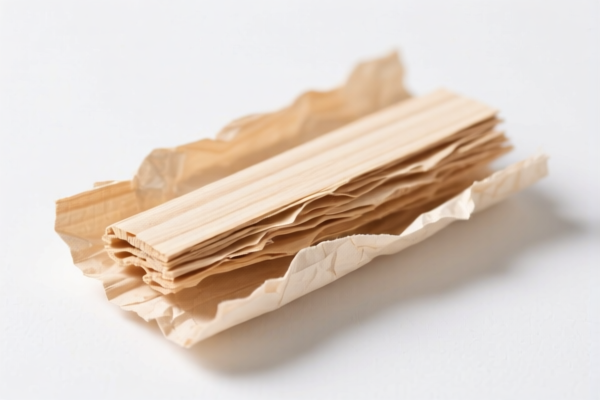
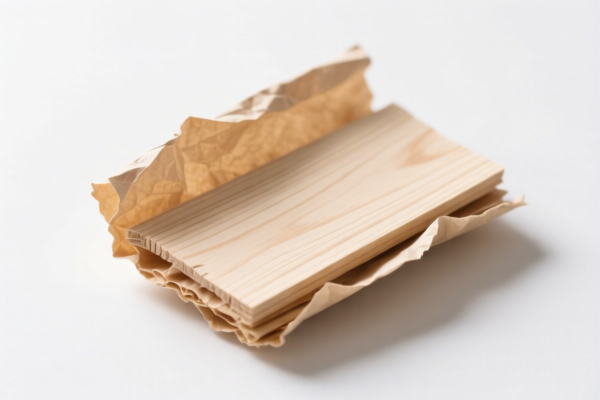

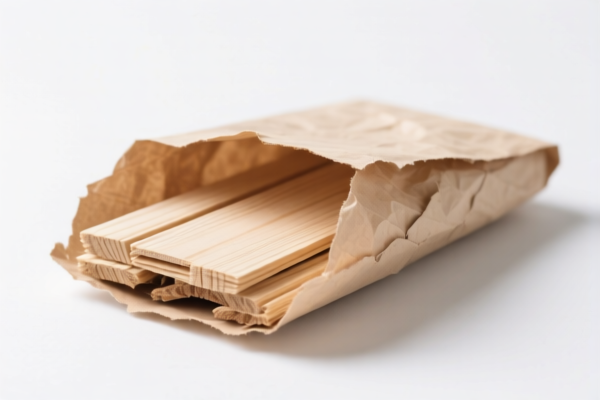
AI Analysis
🌲 Semi-bleached Coniferous Pulp for Printing (Chemical Wood Pulp)
🌐 HS Code Reference & Customs Clearance Guide | 2026 Latest Tariff Analysis | Professional Level通关 Strategy
📌 I. Product Definition & Classification: What is "Semi-bleached Coniferous Pulp"?
Chemical woodpulp, derived from coniferous (softwood) trees (such as pine, spruce, or fir), is a critical raw material in the paper industry. This specific product refers to soda or sulfate pulp that has undergone a partial bleaching process but has not reached full brightness, and is not of a "dissolving grade."
In international trade, precise classification is vital because the difference between "semibleached" and "fully bleached" can impact duty calculations, although in the provided data, the tariff rate is identical.
Key Distinction Points: - Raw Material: Coniferous (Softwood) trees. - Process: Chemical method (Soda or Sulfate/Kraft). - Degree of Bleaching: Semibleached (partially treated, darker than fully bleached pulp) OR Bleached (fully treated). - Exclusion: Must NOT be "dissolving grade" (used for viscose, rayon, or cellulose acetate).
⚠️ Critical Classification Rule:
- If the pulp is Semibleached → Goes to 4703.21.00.20
- If the pulp is Bleached → Goes to 4703.21.00.40
- Note: Both fall under the same HS Chapter 47 (Woodpulp), Subheading 4703 (Soda or sulfate woodpulp), and further split by bleaching status.
📦 II. HS Code Classification Details (2026 Latest Tariff Authority Mapping)
| HS Code | Product Description | Applicable Scenario | Bleaching Status |
|---|---|---|---|
4703.21.00.20 |
Chemical woodpulp, soda or sulfate, other than dissolving grades; Semibleached or bleached; Coniferous Semibleached | Semi-bleached softwood pulp for paper/board manufacturing | ✅ Semibleached |
4703.21.00.40 |
Chemical woodpulp, soda or sulfate, other than dissolving grades; Semibleached or bleached; Coniferous Bleached | Fully bleached softwood pulp for high-grade paper/printing | ✅ Bleached |
🔍 Key Reminder:
- Both codes are for Coniferous (Softwood) pulp. Deciduous (Hardwood) pulp falls under different subheadings (e.g., 4703.22.xx). - The term "Other than dissolving grades" is crucial. If this pulp is intended for chemical processing into rayon or films, it must be classified under Chapter 4702 (Dissolving grades), which has different tax treatments.
💰 III. 2026 Latest Tariff Rate Breakdown (Detailed Tax Clauses)
✅ Applicable Country: United States (US)
✅ Origin: China (CN) (Based on the "Additional Tax" context in the data)
✅ Effective Time: Current trade policies apply
🎯 1. 4703.21.00.20 —— Coniferous Semibleached Chemical Woodpulp
| Item | Content |
|---|---|
| Base Tariff (MFN) | 0.0% |
| Additional Tariff (Section 301 / Retaliatory) | +25.0% |
| Total Tax Rate | 25.0% |
| Tax Calculation | CIF Value × 25% |
| De Minimis Exemption | ❌ Not Applicable (High-value industrial raw materials generally excluded or limited) |
| Legal Basis | HTSUS 4703.21.00.20 + Section 301 Lists |
📌 Explanation:
- The Base Rate of 0% reflects the US commitment to raw material imports under general MFN terms.
- The 25% Additional Tariff is a significant trade barrier, typically imposed under Section 301 of the Trade Act of 1974 against specific Chinese-origin goods.
- Total Cost Impact: For every $100,000 worth of semi-bleached pulp, you must pay $25,000 in duties alone.
🎯 2. 4703.21.00.40 —— Coniferous Bleached Chemical Woodpulp
| Item | Content |
|---|---|
| Base Tariff (MFN) | 0.0% |
| Additional Tariff (Section 301 / Retaliatory) | +25.0% |
| Total Tax Rate | 25.0% |
| Tax Calculation | CIF Value × 25% |
| De Minimis Exemption | ❌ Not Applicable |
| Legal Basis | HTSUS 4703.21.00.40 + Section 301 Lists |
📌 Note:
- Despite the difference in bleaching (Semibleached vs. Bleached), the tariff burden is identical.
- There is no 0% or 5% preferential rate available for these specific codes from China in the current dataset.
- Strategic Implication: The choice between4703.21.00.20and4703.21.00.40should be based strictly on product quality specifications, not tax savings, as both incur a 25% duty.
🛠️ IV. Customs Clearance Practical Advice (Real-World Pitfall Avoidance)
✅ 1. Preparation Checklist (Non-Negotiable)
| Document | Must Provide | Explanation |
|---|---|---|
| ✅ Product Specification Sheet | ✔️ | Must explicitly state: "Soda or Sulfate Pulp," "Coniferous Origin," "Semibleached/Bleached," and "Non-Dissolving Grade." |
| ✅ Certificate of Origin (CO) | ✔️ | To prove origin. If misdeclared as non-Chinese origin, penalties will be severe. |
| ✅ Commercial Invoice | ✔️ | Must clearly describe the product as "Chemical Woodpulp, Coniferous, Semibleached" (or Bleached). Avoid vague terms like "Paper Raw Material." |
| ✅ Bill of Lading / Packing List | ✔️ | Weight and volume details must match the invoice. |
| ✅ Lab Test Report | ✔️ | Critical: Must confirm "Dissolving Alpha Cellulose" content is below the threshold for dissolving grades (usually < 90-95%, depending on specific trade definitions). |
✅ 2. Declaration Tips (Key Mnemonics)
🔥 “Grade Matters: Dissolving = Chapter 4702; Non-Dissolving = Chapter 4703. Bleaching Dictates Subcode!”
| Scenario | Correct HS Code | Risk if Misdeclared |
|---|---|---|
| Semi-bleached, Non-dissolving, Coniferous | 4703.21.00.20 |
If declared as "Bleached" (...40): Minor discrepancy, but may trigger manual inspection. |
| Fully Bleached, Non-dissolving, Coniferous | 4703.21.00.40 |
If declared as "Semibleached" (...20): Same tax, but inconsistent with physical appearance (color). |
| Dissolving Grade Pulp | 4702.xx.xx (Different Chapter) |
If declared as 4703.xx.xx: Wrong Classification. High risk of seizure, penalties, and potential tariff evasion charges. |
| Deciduous (Hardwood) Pulp | 4703.22.xx.xx |
If declared as "Coniferous": Wrong Classification. May affect duty rates if hardwood has different preferences (though often similar, accuracy is key). |
✅ 3. Special Case Handling
| Situation | Handling Suggestion |
|---|---|
| Mixed Shipments | If a shipment contains both semibleached and bleached pulp, must split lines in the customs declaration. Do not average them. |
| Re-export from Third Country | If the pulp was processed in Vietnam or Thailand, ensure the Certificate of Origin reflects substantial transformation. However, note that Section 301 duties may still apply if the origin remains China (look-through rules). |
| "Dissolving Grade" Ambiguity | If the pulp is on the border (e.g., high purity), provide a manufacturer's affidavit stating it is NOT intended for dissolving purposes. This prevents the more complex 4702 classification. |
🌍 V. Global Market Customs Comparison (2026 Context)
| Country/Region | Recommended HS Code | Est. Tariff (China Origin) | Notes |
|---|---|---|---|
| 🇺🇸 USA | 4703.21.00.20 / .40 |
25.0% | Base 0% + 25% Additional Duty. High barrier. |
| 🇨🇳 China | 4703.21.00 |
Low/Zero | China is a major importer; duties may be lower or exempt for raw materials. |
| 🇪🇺 EU | 4703.21.00 |
Varies (Check CE/REACH) | EU tariffs on woodpulp are often 0-5%, but REACH compliance is strict. |
| 🇯🇵 Japan | 4703.21.00 |
0-2% | Japan is a major importer; FTAs may apply. |
📌 Conclusion:
- The US market is the most challenging due to the flat 25% additional tariff.
- Supply chain diversification (e.g., sourcing from Canada, Brazil, or Southeast Asia) is a common strategy to mitigate this 25% cost.
📌 VI. Common Errors & Pitfall Guide (Blood & Tears Lessons)
❌ Error 1: Misclassifying "Dissolving Pulp" as "Non-Dissolving"
👉 Consequence: Wrong HS Code (4702 vs 4703). Leads to misdeclaration penalties, back-taxes, and potential fraud accusations.
❌ Error 2: Ignoring the "Coniferous" vs. "Deciduous" distinction
👉 Consequence: If hardwood is declared as softwood, the HS code is wrong. While tax might be similar, it violates customs accuracy laws and can lead to audits.
❌ Error 3: Vague Description on Invoice
👉 Consequence: Using only "Wood Pulp" without specifying "Soda/Sulfate," "Bleaching Status," or "Tree Source."
👉 Result: CBP (Customs and Border Protection) may issue a Request for Information (RFI), delaying clearance by weeks.
✅ Correct Declaration Example:
"CHEMICAL WOODPULP, SODA TYPE, CONIFEROUS, SEMIBLEACHED, NON-DISSOLVING GRADE, BALE PACKAGED, NET WT 500KG PER BALE, ORIGIN CHINA"
🎯 VII. Conclusion: Precision in Classification Saves Money
🎯 Remember the Mantra:
🔹 "Check the Source: Softwood (Coniferous) vs. Hardwood."
🔹 "Check the Process: Soda/Sulfate vs. Mechanical."
🔹 "Check the Grade: Dissolving (Ch4702) vs. Paper (Ch4703)."
🔹 "Check the Bleach: Semi-bleached (.20) vs. Bleached (.40)."
🔹 "US Tax is 25% Flat, No Matter Which Subcode!"
📌 Pro Tip:
If you are importing into the US, calculate the landed cost including the 25% duty BEFORE shipping.
If the margin is thin, consider:
1. Supply Chain Shift: Sourcing from non-China origins (e.g., Brazil, Sweden) to avoid the 25% additional tariff.
2. Section 301 Exclusions: Check if your specific product type was ever eligible for exclusion (note: exclusions have expired or been limited; verify current status).
📣 Immediate Action:
📞 Consult a licensed US customs broker before shipping.
📄 Ensure your Certificate of Origin and Product Specification are perfectly aligned with the HS Code.
🚀 Avoid customs holds by declaring with precision!
✨ Professional Customs Clearance Starts with Accurate Classification!
💼 Every percentage point of duty matters in the paper industry!
Customer Reviews
About HS Code Classification
The Harmonized System (HS) is an internationally standardized nomenclature developed by the World Customs Organization (WCO) to classify traded products. Over 200 countries use the HS system as the basis for customs tariffs, trade statistics, and import/export regulations.
Each HS code follows a hierarchical structure:
- Chapter (2 digits) — Broad category of goods (e.g., Chapter 84: Machinery and Mechanical Appliances)
- Heading (4 digits) — More specific grouping within the chapter
- Subheading (6 digits) — Internationally standardized breakdown, used by all WCO member countries
- National subdivisions (8-10 digits) — Country-specific extensions for further classification, such as US HTSUS 10-digit codes
Correct HS code classification is essential for smooth customs clearance, accurate duty payment, and compliance with trade regulations. Misclassification can lead to customs delays, overpayment of duties, or penalties.
When importing from CN to US, the applicable tariff rates may include:
- Most-Favored-Nation (MFN) rate — The standard duty rate applied to WTO members
- General rate — Applied to countries without trade agreements
- Trade remedy duties — Additional tariffs such as Section 301 (anti-dumping), Section 232 (national security), or countervailing duties
The information provided on this page is for reference purposes only. For official classification, please consult with your local customs authority or a licensed customs broker.