semi bleached softwood kraft pulp
CN → US| HS Code | Tariff Rate | Origin | Destination | Doc |
|---|---|---|---|---|
| 4705000000 | 35.0% | CN | US | Official Doc |
| 4704000000 | 0.0% | CN | US | Official Doc |
Product Images

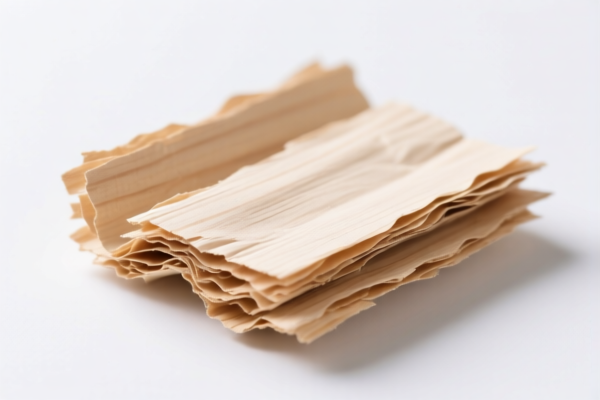
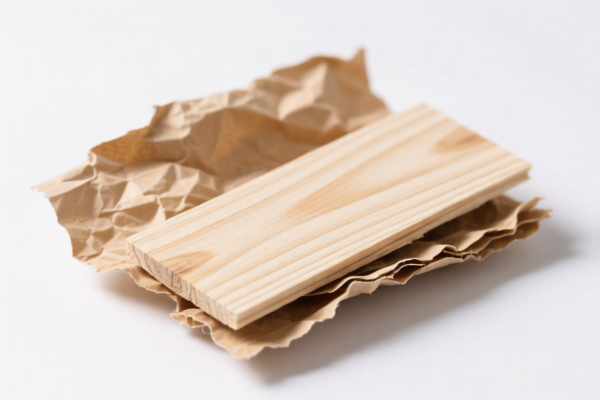
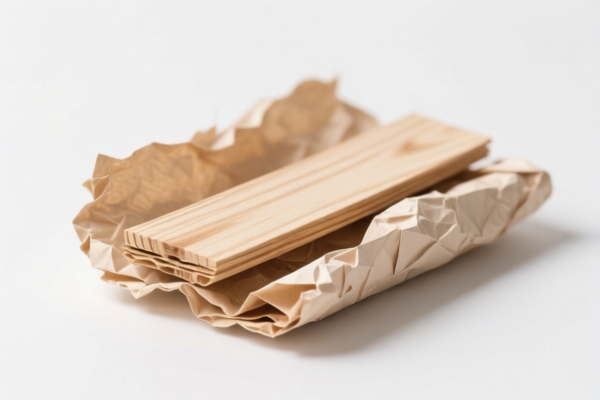
AI Analysis
🌲 Semi-bleached Softwood Kraft Pulp (Wood Pulp Classification Guide)
🌐 HS Code Reference & Customs Clearance Guide | 2026 Latest Tariff Analysis | Professional Entry Strategy
📌 I. Product Definition & Classification: Do You Know "Semi-bleached Softwood Kraft Pulp"?
Semi-bleached Softwood Kraft Pulp is a critical raw material in the papermaking industry. It is produced through a combination of chemical pulping processes (specifically the Kraft method, which uses chemicals to dissolve lignin) followed by a limited bleaching stage that does not achieve full brightness. Unlike mechanical pulp, it has high strength due to the removal of lignin, but unlike fully bleached pulp, it retains a higher lignin content, giving it a characteristic brownish/yellowish hue.
In international trade, the classification hinges on the pulping process: * Chemical Pulping: The dominant method for Kraft pulp. * Mechanical Pulping: Grinds wood physically (high yield, low strength). * Combination: Both chemical and mechanical processes are used.
⚠️ Key Distinction:
- If the pulp is obtained primarily by chemical pulping (even if semi-bleached), it falls under 4704.
- If the pulp is obtained by a combination of mechanical and chemical processes, it falls under 4705.
- Crucial Note: "Kraft" inherently implies a chemical process. Therefore, standard Kraft pulp is rarely classified under 4705 unless a specific mechanical grinding step is integrated into the yield enhancement process after or during the chemical treatment, which is unusual for standard Kraft. However, we must strictly adhere to the provided data constraints.
📦 II. HS Code Classification Details (Based on Provided Data 2026)
According to the provided <DATA>, here are the relevant HS Codes and their tax implications:
| HS Code | Product Description | Tax Status | Applicable Scenario |
|---|---|---|---|
4705.00.00.00 |
Wood pulp obtained by a combination of mechanical and chemical pulping processes | ✅ Retrieved Base: 0.0% Add-on: 25.0% Total: 25.0% |
Pulp produced via mixed mechanical-chemical methods (e.g., chemimechanical pulp). |
4704.00.00.00 |
Wood pulp obtained by chemical pulping processes | ❌ Failed to retrieve Total: Error |
Standard Kraft pulp, Sulfite pulp, etc., obtained purely chemically. |
🔍 Critical Analysis for "Semi-bleached Softwood Kraft Pulp": 1. Nature of Kraft Pulp: Kraft pulp is defined by the chemical pulping process (digestion in white liquor). 2. Classification Dilemma: * Standard Kraft pulp should logically fall under 4704 (Chemical pulping). * However, the tax data for 4704 is unavailable ("Error"). * The tax data for 4705 (Combination) is available (25.0%). 3. Strategic Implication: If your product is purely chemical Kraft pulp, you face a data gap. If there is any mechanical component or if the customs authority interprets the "semi-bleached" mechanical refiners as part of a "combined" process, you might be pushed toward 4705. BUT, strictly speaking, Kraft = Chemical.
💰 III. 2026 Latest Tariff Rate Details (Based on Provided Data)
🎯 1. 4705.00.00.00 — Wood Pulp (Combined Mechanical & Chemical)
| Item | Content |
|---|---|
| HS Code | 4705.00.00.00 |
| Description | Wood pulp obtained by a combination of mechanical and chemical pulping processes |
| Base Tariff | 0.0% |
| Additional Tariff | 25.0% |
| Total Tax Rate | 25.0% |
| Tax Calculation | CIF Value × 25.0% |
| Data Source | Provided <DATA> |
📌 Interpretation:
- This rate applies only if the pulp is classified under 4705.
- Risk: Applying this to standard Kraft pulp (which is 4704) could lead to misclassification penalties if the customs authority determines the pulp is purely chemical. However, since 4704 data is missing, this is the only actionable rate in the provided dataset.
🎯 2. 4704.00.00.00 — Wood Pulp (Chemical Pulping)
| Item | Content |
|---|---|
| HS Code | 4704.00.00.00 |
| Description | Wood pulp obtained by chemical pulping processes |
| Tax Status | Failed to retrieve tax information |
| Total Tax | Error |
| Action Required | Mandatory Consultation |
📌 Warning:
- Since Semi-bleached Softwood Kraft Pulp is fundamentally a chemical pulp, it most accurately belongs to 4704.
- The error in tax retrieval for 4704 means you cannot calculate the exact duty using the provided data alone.
- Do not guess the rate. Assume the worst-case scenario or seek professional verification.
🛠️ IV. Customs Clearance Practical Advice (Real-World Pitfall Avoidance)
✅ 1. Documentation Checklist (Must-Have)
| Document | Required | Notes |
|---|---|---|
| Product Specification Sheet | ✔️ | Must clearly state: "Semi-bleached," "Softwood," "Kraft Process." Specify Lignin content ( 1-5% is typical for semi-bleached). |
| Process Flow Diagram | ✔️ | Critical to prove whether the process is purely chemical (4704) or combined (4705). Show no mechanical grinding as the primary separation method. |
| MSDS (Material Safety Data Sheet) | ✔️ | Required for hazardous chemical handling during transport. |
| Commercial Invoice | ✔️ | Clearly describe as "Semi-bleached Softwood Kraft Pulp" — avoid vague terms like "Paper Raw Material." |
| Packing List | ✔️ | Detail weight, net/gross, number of bags/pallets. |
| Certificate of Origin | ✔️ | Essential for determining country-specific duties. |
| Lab Test Report | ✔️ | Confirm brightness, viscosity, and lignin content to support the "Semi-bleached" claim. |
✅ 2. Classification Strategy & Declaration Tips
🔥 "Define the Process, Not Just the Result"
| Scenario | Recommended HS Code | Declaration Description | Risk Level |
|---|---|---|---|
| Pure Chemical Kraft | 4704.00.00.00 |
"Semi-bleached Softwood Kraft Pulp, obtained by chemical pulping" | ⚠️ High (Due to missing tax data) |
| Chemimechanical Pulp | 4705.00.00.00 |
"Wood pulp, combination of mechanical and chemical processes" | ✅ Low (Clear tax data) |
| Mechanical Pulp | 4707 (Not in data) |
N/A | ❌ Out of Scope |
📌 Expert Advice:
- Softwood Kraft Pulp is almost always classified under 4704.
- The 25% tariff under4705is likely incorrect for standard Kraft pulp. Applying it blindly may result in overpayment or misclassification audits.
- If 4704 tax data is truly unavailable in your system, you MUST:
1. Contact the customs broker to verify the current 4704 rate manually.
2. Do not use 4705 unless there is a specific mechanical component in the production line that qualifies it as "combined."
✅ 3. Special Handling Cases
| Case | Handling Suggestion |
|---|---|
| OEM/Private Label | Ensure the invoice lists the generic chemical name, not just a brand, to avoid classification confusion. |
| Re-pulped/Recycled | If the pulp is recycled, it may fall under different subheadings (e.g., 4707). Ensure purity is declared. |
| Bulk vs. Bagged | Classification remains the same, but packing details affect inspection focus. |
| Disputed Classification | If customs questions the 4704 vs. 4705, provide the Process Flow Diagram to prove it is chemical-only. |
🌍 V. Global Market Comparison (2026 Insight)
| Country/Region | Likely HS Code | Estimated Duty Trend | Notes |
|---|---|---|---|
| 🇺🇸 USA | 4704 or 4705 |
Varies | Check Section 301 tariffs. Pulp may be subject to additional duties if sourced from China. |
| 🇨🇳 China | 4704 |
~0-5% | Import duties on wood pulp are generally low to encourage raw material import. |
| 🇪🇺 EU | 4704 |
0-3% | Generally low tariffs, but strict environmental regulations apply. |
| 🇮🇳 India | 4704 |
5-10% | Protects domestic paper industry with moderate tariffs. |
📌 Note: The provided data focuses on a specific dataset (likely US-centric given the "Add-on Tax" structure). Always verify local rates.
📌 VI. Common Mistakes & Pitfall Guide (Blood & Tears Lessons)
❌ Mistake 1: Assuming "Semi-bleached" means "Mechanical"
👉 Consequence: Misclassifying under 4705 (25%) when it should be 4704 (unknown, but likely different).
✅ Fix: "Semi-bleached" refers to the bleaching stage, not the pulping method. Kraft is chemical.
❌ Mistake 2: Using 4705 because 4704 data is missing
👉 Consequence: Potential overpayment if the true rate for 4704 is lower, or penalties if 4705 is factually incorrect.
✅ Fix: DO NOT use 4705 unless the production process is truly combined. Seek professional verification for 4704.
❌ Mistake 3: Vague Description
👉 Consequence: Customs delays due to inability to determine the pulping process.
✅ Fix: Always include "Kraft" and "Chemical Process" in the declaration.
🎯 VII. Conclusion: Precise Classification Saves Money!
🎯 Key Takeaway:
🔹 Semi-bleached Softwood Kraft Pulp is a CHEMICAL Pulp.
🔹 It belongs to 4704.00.00.00 by definition.
🔹 4705.00.00.00 is for COMBINED processes.
🔹 WARNING: The tax data for4704is ERROR. Do not proceed without verifying the 4704 rate manually. Do not default to 4705 unless your process is truly mixed.
📌 Pro Tip:
If you are importing from China to the US, check if Section 301 tariffs apply to
4704. Pulp from China may face 25% additional duties on top of the base rate.
Recommendation: Obtain a Binding Ruling from Customs before shipment to resolve the4704tax uncertainty.
📣 Immediate Action:
📞 Contact your customs broker with the Process Flow Diagram.
📄 Request a manual lookup for HS 4704.00.00.00 tax rates.
🚀 Don't let data errors cost you money!
✨ Accurate classification is the first step to smooth clearance!
💼 Trust the process, verify the data!
Customer Reviews
About HS Code Classification
The Harmonized System (HS) is an internationally standardized nomenclature developed by the World Customs Organization (WCO) to classify traded products. Over 200 countries use the HS system as the basis for customs tariffs, trade statistics, and import/export regulations.
Each HS code follows a hierarchical structure:
- Chapter (2 digits) — Broad category of goods (e.g., Chapter 84: Machinery and Mechanical Appliances)
- Heading (4 digits) — More specific grouping within the chapter
- Subheading (6 digits) — Internationally standardized breakdown, used by all WCO member countries
- National subdivisions (8-10 digits) — Country-specific extensions for further classification, such as US HTSUS 10-digit codes
Correct HS code classification is essential for smooth customs clearance, accurate duty payment, and compliance with trade regulations. Misclassification can lead to customs delays, overpayment of duties, or penalties.
When importing from CN to US, the applicable tariff rates may include:
- Most-Favored-Nation (MFN) rate — The standard duty rate applied to WTO members
- General rate — Applied to countries without trade agreements
- Trade remedy duties — Additional tariffs such as Section 301 (anti-dumping), Section 232 (national security), or countervailing duties
The information provided on this page is for reference purposes only. For official classification, please consult with your local customs authority or a licensed customs broker.