semi finished horse leather
CN → US| HS Code | Tariff Rate | Origin | Destination | Doc |
|---|---|---|---|---|
| 4115100000 | 35.0% | CN | US | Official Doc |
| 4113903000 | 38.3% | CN | US | Official Doc |
| 4201006000 | 37.8% | CN | US | Official Doc |
Product Images
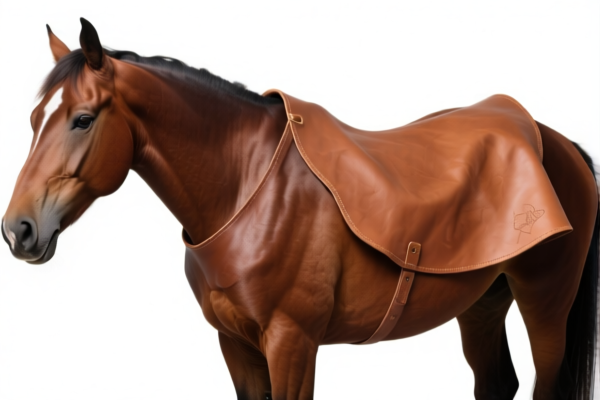
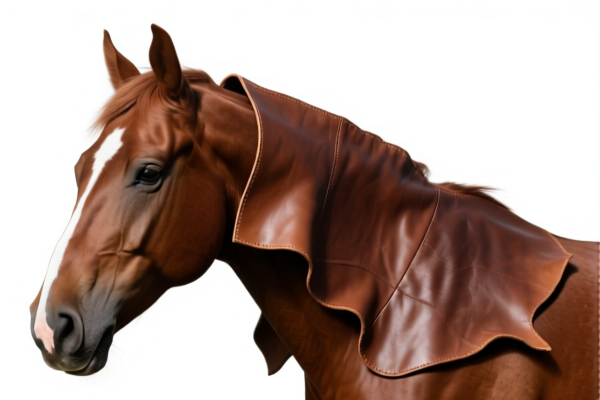


AI Analysis
🐎 Semi-Finished Horse Leather: HS Code Classification & US Customs Clearance Guide (2026)
🌐 HS Code Reference & Customs Clearance Strategy | 2026 Latest Tariff Analysis | Professional Compliance 📌 I. Product Definition: What is "Semi-Finished Horse Leather"?
"Semi-Finished Horse Leather" refers to leather derived from equine hides that has undergone initial processing (such as curing, liming, or tanning) but has not yet been transformed into finished goods like saddles, bridles, or apparel. In international trade, this category is critical because it sits between raw hides and manufactured leather products, often attracting high tariffs due to US trade policies.
The classification depends heavily on the state of processing and intended end-use. Below is the authoritative breakdown based on the provided data.
📦 II. HS Code Classification Details (2026 Latest Tariff Alignment)
| HS Code | Product Description | Matching Logic & Application | Total Tax Rate |
|---|---|---|---|
4115.10.00.00 |
Leather Horse Semi-finished Goods | Material & Form Match: • "Leather": Matches material requirement. • "Semi-finished": Matches form requirement (sheets/strips are included). • Best Fit: Directly addresses the physical state of the leather. |
35.0% |
4113.90.30.00 |
Leather Horse Semi-finished Goods | Processing State Match: • "Leather": Matches material. • "Semi-finished": Matches further processed characteristics. • Nuance: Used when the leather is further processed but not explicitly defined as sheets/strips; assumed no conflict. |
38.3% |
4201.00.60.00 |
Other Equipment for Animals (Horse Use) | Use & Material Match: • "Horse Use": Matches purpose. • "Leather": Matches material. • "Semi-finished": Falls under "Other" (Other) category. • Conflict Check: No material or purpose conflict found. |
37.8% |
🔍 Key Distinction: -
4115.10.00.00is the most direct match for "semi-finished leather" in sheet/strip form. -4113.90.30.00applies if the leather is further processed but not strictly defined as basic semi-finished sheets. -4201.00.60.00is a functional classification, prioritizing the horse equipment aspect over pure leather processing.
💰 III. 2026 Latest Tariff Rate Breakdown (Including Additional Duties & Policies)
✅ Applicable Country: United States (US) ✅ Origin: China (CN) ✅ Effective Date: Post-2025 Policies (Including 122 Clause & Section 301)
🎯 1. HS Code 4115.10.00.00 — Leather Horse Semi-finished
| Item | Detail |
|---|---|
| Base Tariff | 0.0% |
| Section 301 Tariff | +25.0% |
| 122 Clause Tariff | +10.0% |
| Total Tariff | 35.0% |
| Calculation Basis | CIF Value × 35% |
| De Minimis Exemption | ❌ NOT Applicable (High tariff goods are excluded from 80.01.25 de minimis thresholds) |
| Legal Path | USITC:4115.10.00.00 → SECTION301:9903.88.01 → CLAUSE122:IEEPA:9903.01.25 |
📌 Explanation: - The 0% base tariff reflects the general duty rate for this leather category. - The 25% Section 301 tariff is applied to Chinese-origin goods under US Trade Act Section 301. - The 10% 122 Clause tariff is an additional levy under the International Emergency Economic Powers Act (IEEPA) targeting specific Chinese imports. - Total 35%: This is a significant cost driver. Importers must budget for this high rate.
🎯 2. HS Code 4113.90.30.00 — Other Leather Semi-finished
| Item | Detail |
|---|---|
| Base Tariff | 3.3% |
| Section 301 Tariff | +25.0% |
| 122 Clause Tariff | +10.0% |
| Total Tariff | 38.3% |
| Calculation Basis | CIF Value × 38.3% |
| De Minimis Exemption | ❌ NOT Applicable |
| Legal Path | USITC:4113.90.30.00 → SECTION301:9903.88.01 → CLAUSE122:IEEPA:9903.01.25 |
📌 Note: - Slightly higher than
4115.10.00.00due to the 3.3% base tariff. - Same additional duties apply. - Use this code only if the leather does not fit the "sheet/strip" definition of4115.
🎯 3. HS Code 4201.00.60.00 — Horse Equipment (Other)
| Item | Detail |
|---|---|
| Base Tariff | 2.8% |
| Section 301 Tariff | +25.0% |
| 122 Clause Tariff | +10.0% |
| Total Tariff | 37.8% |
| Calculation Basis | CIF Value × 37.8% |
| De Minimis Exemption | ❌ NOT Applicable |
| Legal Path | USITC:4201.00.60.00 → SECTION301:9903.88.01 → CLAUSE122:IEEPA:9903.01.25 |
📌 Caution: - While the base tariff is low (2.8%), the 37.8% total is still very high. - This classification is riskier if customs inspectors view the goods as "leather products" rather than "horse equipment." Misclassification can lead to penalties.
🛠️ IV. Customs Clearance Practical Advice (Pitfall Avoidance Guide)
✅ 1. Documentation Checklist (Non-Negotiable)
| Document | Required | Purpose |
|---|---|---|
| ✅ Product Specification Sheet | ✔️ | Must detail: Material (Horse Leather), State (Semi-finished), Dimensions, Tanning Process. |
| ✅ Product Photos | ✔️ | Clear images of the leather surface, edges, and any markings. Must show "semi-finished" state (not sewn into products). |
| ✅ Commercial Invoice | ✔️ | Explicitly state: "Semi-Finished Horse Leather" + HS Code + Origin (China). |
| ✅ Packing List | ✔️ | Describe packaging (e.g., "Rolled sheets," "Stacked hides"). Avoid vague terms like "leather goods." |
| ✅ Certificate of Origin (CO) | ✔️ | Proves Chinese origin (triggers Section 301 & 122 Clause). |
✅ 2. Declaration Best Practices
🔥 Golden Rule: "Be Specific, Be Accurate, Avoid Ambiguity!"
| Scenario | Correct Declaration | Incorrect Declaration | Consequence |
|---|---|---|---|
| Raw Semi-Finished Leather | "Semi-Finished Horse Leather, Sheets, Unstitched" | "Horse Saddles Parts" or "Leather Goods" | Risk of misclassification → Higher duties or seizure |
| Leather for Horse Gear | "Semi-Finished Horse Leather for Equipment Manufacturing" | "Horse Equipment" (if not yet assembled) | Customs may reject as "equipment" if not in final form |
| Mixed Hides | "Horse Leather Only" | "Mixed Animal Leather" | Must separate horse leather; mixed goods may face stricter scrutiny |
✅ 3. Special Considerations
| Issue | Advice |
|---|---|
| De Minimis Exemption | ❌ Do NOT use 80.01.25 for these items. With 35%+ tariffs, small shipments are still subject to full duty. |
| Pre-Ruling | ✅ Strongly Recommended: Apply for a Binding Tariff Ruling with CBP to confirm HS Code (4115.10.00.00 vs 4201.00.60.00) before shipment. |
| Supplier Documentation | Ensure the supplier provides a Certificate of Tanning to prove the "semi-finished" state and not raw hide. |
| Packaging | Use moisture-proof packaging to prevent leather degradation during transit, which can lead to rejection. |
🌍 V. Global Market Comparison (2026)
| Country/Region | Recommended HS Code | Estimated Total Duty | Key Requirement |
|---|---|---|---|
| 🇺🇸 USA | 4115.10.00.00 |
35.0% | Section 301 + 122 Clause |
| 🇨🇳 China | 4115.10.00.00 |
~5-8% | Import License may be required |
| 🇪🇺 EU | 4115.10.00.00 |
~10-12% | REACH Compliance |
| 🇬🇧 UK | 4115.10.00.00 |
~10-12% | Post-Brexit Tariffs |
📌 Conclusion: - USA is the most expensive market for Chinese-origin semi-finished horse leather due to Section 301 and 122 Clause tariffs. - Consider supply chain diversification (e.g., sourcing from Vietnam or India) to mitigate US tariffs, if possible.
📌 VI. Common Errors & Pitfalls (Blood Lessons)
❌ Error 1: Declaring "Semi-Finished Leather" as "Finished Horse Saddles" 👉 Consequence: Misclassification → Penalty + Back Duties + Audit.
❌ Error 2: Using "Leather Goods" as a generic description 👉 Consequence: Customs delay → Demurrage Charges + Storage Fees.
❌ Error 3: Ignoring the 122 Clause 👉 Consequence: Underpayment → 10% additional duty + Interest.
❌ Error 4: Failing to distinguish between "Horse" and "Other Animal" leather 👉 Consequence: Incorrect HS Code → Potential seizure if material verification fails.
✅ Correct Approach:
"Semi-Finished Horse Leather, Tanned, Sheets, for Manufacturing Horse Equipment, Origin: China, HS Code: 4115.10.00.00"
🎯 VII. Conclusion: Professional Declaration, Cost Control, Risk Mitigation
🎯 Remember the Key Takeaways:
🔹 "Specific Description, Correct HS Code, Avoid De Minimis Trap!" 🔹 "USA Tariffs are High (35%+), Plan Ahead!" 🔹 "Documentation is Key: Photos, Specs, CO!"
📌 Pro Tip:
If you are importing small quantities, remember that De Minimis exemption does NOT apply due to high tariffs. Calculate total landed cost including 35%+ duty. For large volumes, consider Advance Rulings to ensure compliance.
📣 Immediate Action:
📞 Contact a Licensed Customs Broker + Provide Product Photos + Request HS Code Pre-Ruling. 🚀 Ensure Smooth Clearance, Avoid Delays, Protect Margins!
✨ Professional Customs Clearance Starts with Accurate Classification! 💼 Every Dollar Saved is a Dollar Earned!
Customer Reviews
About HS Code Classification
The Harmonized System (HS) is an internationally standardized nomenclature developed by the World Customs Organization (WCO) to classify traded products. Over 200 countries use the HS system as the basis for customs tariffs, trade statistics, and import/export regulations.
Each HS code follows a hierarchical structure:
- Chapter (2 digits) — Broad category of goods (e.g., Chapter 84: Machinery and Mechanical Appliances)
- Heading (4 digits) — More specific grouping within the chapter
- Subheading (6 digits) — Internationally standardized breakdown, used by all WCO member countries
- National subdivisions (8-10 digits) — Country-specific extensions for further classification, such as US HTSUS 10-digit codes
Correct HS code classification is essential for smooth customs clearance, accurate duty payment, and compliance with trade regulations. Misclassification can lead to customs delays, overpayment of duties, or penalties.
When importing from CN to US, the applicable tariff rates may include:
- Most-Favored-Nation (MFN) rate — The standard duty rate applied to WTO members
- General rate — Applied to countries without trade agreements
- Trade remedy duties — Additional tariffs such as Section 301 (anti-dumping), Section 232 (national security), or countervailing duties
The information provided on this page is for reference purposes only. For official classification, please consult with your local customs authority or a licensed customs broker.