semi finished horsehide non premium
CN → US| HS Code | Tariff Rate | Origin | Destination | Doc |
|---|---|---|---|---|
| 4115100000 | 35.0% | CN | US | Official Doc |
| 4113903000 | 38.3% | CN | US | Official Doc |
| 4201006000 | 37.8% | CN | US | Official Doc |
| 4107112000 | 37.4% | CN | US | Official Doc |
| 4107192000 | 37.4% | CN | US | Official Doc |
Product Images
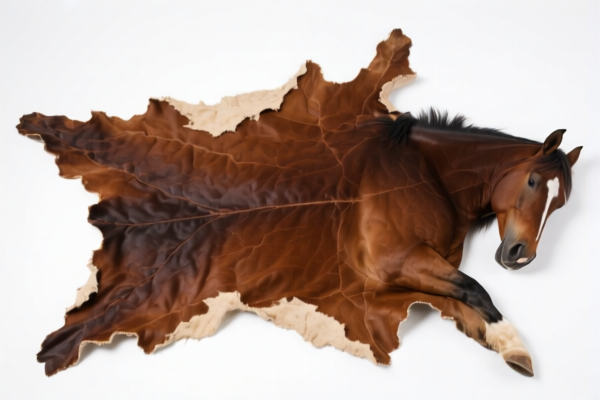
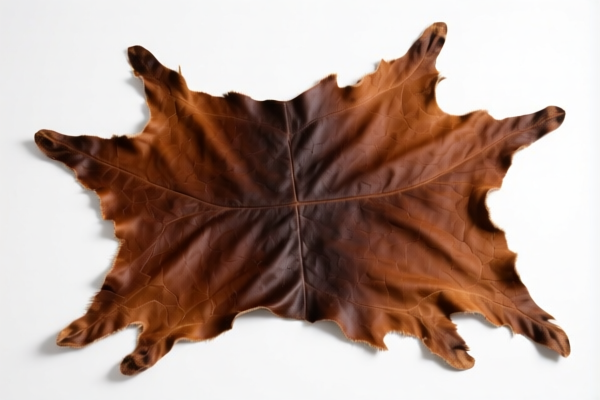
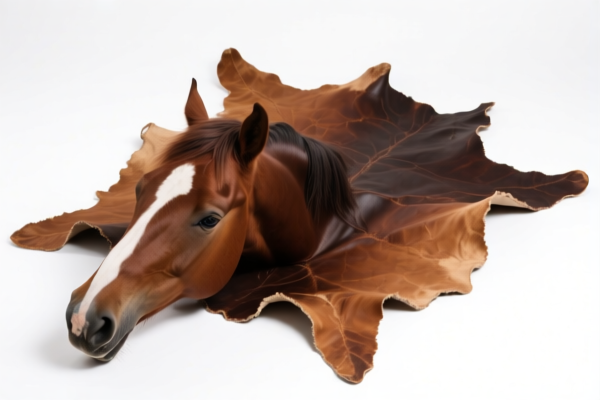
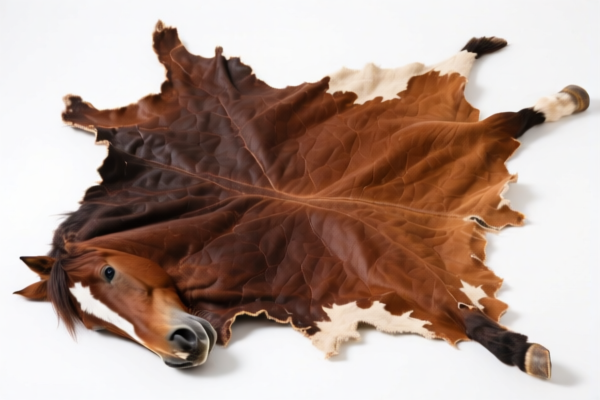
AI Analysis
🐎 Horsehide Semi-Finished (Non-Premium)
🌐 HS Code Reference & Customs Clearance Guide | 2026 Latest Tariff Analysis | Professional通关 Strategy
📌 I. Product Definition & Classification: What Exactly is "Semi-Finished Horsehide"?
Semi-finished horsehide refers to leather that has undergone initial tanning and processing but has not yet reached its final finished state (such as dyeing, buffing, or coating for specific end-uses like saddles, harnesses, or upholstery). In international trade, especially for US imports, these goods are often scrutinized under specific chapters depending on their final form and intended use.
For non-premium horsehide (i.e., not classified as "high-quality" or "specialty" hides), the key distinction lies in whether it is: 1. General Semi-Processed Leather: Classified under Chapter 41 (Animal Skins and Furs), typically used for general manufacturing. 2. Specifically for Horse Equipment: Classified under Chapter 42 (Articles of Leather), if clearly intended for saddlery/harnessing. 3. Specific Horsehide Semi-Finished Goods: Classified under Chapter 41 if it retains a specific shape/form for horse use (e.g., blanks for saddles).
⚠️ Key Distinction Point:
- If the hide is general semi-processed leather (crust leather, wet blue, etc.) →归入 4107.11.20.00 / 4107.19.20.00
- If it is specifically for horse equipment but still in semi-finished form →归入 4201.00.60.00
- If it is semi-finished specifically shaped/made for horse use (e.g., saddle blanks) →归入 4115.10.00.00 / 4113.90.30.00
📦 II. HS Code Classification Details (2026 Latest Tariff Authority Comparison)
| HS Code | Product Description | Application Scenario | Conflict/Note |
|---|---|---|---|
4115.10.00.00 |
Semi-finished goods of leather, for horse use, in the form of plates, strips, or other flat shapes | Leather blanks for saddles/harnesses, flat semi-finished forms | ✅ No conflict; clearly for horse use |
4113.90.30.00 |
Semi-finished leather goods for horse use, further processed, no conflict | Further processed semi-finished horsehide, non-flat forms | ✅ No conflict; deeper processing |
4201.00.60.00 |
Semi-finished leather goods, for horse use, other categories | General semi-finished leather intended for horse equipment | ✅ Clear "horse use" designation |
4107.11.20.00 |
Semi-processed cowhide (non-premium) | General semi-processed leather, non-superior quality | ✅ Fits "non-premium" general leather |
4107.19.20.00 |
Semi-processed cowhide (non-premium), non-luxury | General semi-processed leather, not classified as "superior" | ✅ Non-premium fits here |
🔍 Critical Reminder:
- Horsehide vs. Cowhide: Although the input is "horsehide," some HS codes in the data (4107.11/19) refer to cowhide. If your product is strictly horsehide, you must ensure it does not fall under generic cowhide codes unless the classification explicitly allows horsehide in that subheading. However, based on the provided data,4107.11.20.00and4107.19.20.00are listed for "non-premium semi-processed leather," which may include horsehide if not specified otherwise in national tariffs. Verify with local customs!
- "Non-Premium": Means the leather is not classified as "superior" or "luxury" (e.g., not high-grade saddle leather). This affects the base tariff rate.
💰 III. 2026 Latest Tariff Rate Breakdown (Including Additional Duties & Policy Surcharges)
✅ Applicable Country: USA (US)
✅ Country of Origin: China (CN)
✅ Effective Date: From November 10, 2025 (and subsequent imports)
🎯 1. 4115.10.00.00 —— Semi-Finished Leather for Horse Use (Flat Forms)
| Item | Content |
|---|---|
| Base Tariff Rate | 0.0% |
| USITC Additional Duty | +25.0% (from USITC Footnote 9903.88.01) |
| IEEPA Additional Duty | +10.0% (for China/HK products, from Nov 10, 2025) |
| Total Tariff Rate | 35.0% |
| Tax Calculation | CIF Value × 35% |
| De Minimis Eligibility | ❌ Not Eligible (deny_de_minimis) |
| Legal Basis Path | IEEPA:9903.01.25 → IEEPA:9903.01.24 → USITC:4115.10.00.00 → FOOTNOTE:9903.88.01 |
📌 Explanation:
- "USITC Additional Duty 25%": From Section 301 of the US Trade Act;
- "IEEPA 10%": Additional tariff under the International Emergency Economic Powers Act for Chinese products;
- Total 35%: High tariff level. Must be factored into cost structure!
🎯 2. 4113.90.30.00 —— Further Processed Semi-Finished Leather for Horse Use
| Item | Content |
|---|---|
| Base Tariff Rate | 3.3% |
| USITC Additional Duty | +25.0% |
| IEEPA Additional Duty | +10.0% |
| Total Tariff Rate | 38.3% |
| Tax Calculation | CIF Value × 38.3% |
| De Minimis Eligibility | ❌ Not Eligible |
| Legal Basis Path | IEEPA:9901.25 → IEEPA:9903.01.24 → USITC:4113.90.30.00 → FOOTNOTE:9903.88.01 |
📌 Note:
- Base rate is higher (3.3%) due to deeper processing;
- Total 38.3%, which is the highest among the options. Avoid if possible!
🎯 3. 4201.00.60.00 —— Semi-Finished Leather Goods for Horse Use (Other Categories)
| Item | Content |
|---|---|
| Base Tariff Rate | 2.8% |
| USITC Additional Duty | +25.0% |
| IEEPA Additional Duty | +10.0% |
| Total Tariff Rate | 37.8% |
| Tax Calculation | CIF Value × 37.8% |
| De Minimis Eligibility | ❌ Not Eligible |
| Legal Basis Path | IEEPA:9903.01.25 → IEEPA:9903.01.24 → USITC:4201.00.60.00 → FOOTNOTE:9903.88.01 |
📌 Note:
- Base rate is 2.8%;
- Total 37.8%, slightly lower than4113.90.30.00.
🎯 4. 4107.11.20.00 —— Semi-Processed Cowhide (Non-Premium)
| Item | Content |
|---|---|
| Base Tariff Rate | 2.4% |
| USITC Additional Duty | +25.0% |
| IEEPA Additional Duty | +10.0% |
| Total Tariff Rate | 37.4% |
| Tax Calculation | CIF Value × 37.4% |
| De Minimis Eligibility | ❌ Not Eligible |
| Legal Basis Path | IEEPA:9903.01.25 → IEEPA:9903.01.24 → USITC:4107.11.20.00 → FOOTNOTE:9903.88.01 |
📌 Note:
- If your product is not specifically for horse use but general semi-processed leather (including non-premium horsehide if not classified elsewhere), this is the lowest total rate (37.4%).
- Caution: Ensure it doesn’t misrepresent the product. If it’s clearly for horse use, customs may reclassify it.
🎯 5. 4107.19.20.00 —— Semi-Processed Cowhide (Non-Premium), Non-Luxury
| Item | Content |
|---|---|
| Base Tariff Rate | 2.4% |
| USITC Additional Duty | +25.0% |
| IEEPA Additional Duty | +10.0% |
| Total Tariff Rate | 37.4% |
| Tax Calculation | CIF Value × 37.4% |
| De Minimis Eligibility | ❌ Not Eligible |
| Legal Basis Path | IEEPA:9903.01.25 → IEEPA:9903.01.24 → USITC:4107.19.20.00 → FOOTNOTE:9903.88.01 |
📌 Note:
- Same as4107.11.20.00;
- 37.4% total rate.
🛠️ IV. Customs Clearance Practical Advice (Real-World Pitfall Avoidance)
✅ 1. Required Documentation List (All Mandatory)
| Document | Required | Description |
|---|---|---|
| ✅ Product Specification Sheet | ✔️ | Includes material (horsehide), processing stage (semi-finished), quality grade (non-premium) |
| ✅ Product Photos (Including Labels) | ✔️ | Clear image of hide texture, edges, and any markings |
| ✅ Commercial Invoice | ✔️ | Must explicitly state "Semi-Finished Horsehide, Non-Premium" |
| ✅ Packing List | ✔️ | Detail quantity, weight, and packaging type |
| ✅ Certificate of Origin (CO) | ✔️ | If not from China, to check for preferential rates |
| ✅ Third-Party Test Report | ✔️ | If required by buyer or customs (e.g., chemical treatment details) |
✅ 2. Declaration Tips (Key Mantra)
🔥 “Be Specific, Avoid Generalization, Prevent Reclassification!”
| Scenario | Correct Declaration | Wrong Practice |
|---|---|---|
| General semi-processed leather (not specifically for horse use) | 4107.11.20.00 / 4107.19.20.00 |
Declaring as "horse saddle parts" → 35-38% |
| Specifically for horse equipment (semi-finished) | 4201.00.60.00 |
Declaring as "general leather" → Risk of reclassification |
| Semi-finished horsehide blanks (flat) | 4115.10.00.00 |
Declaring as "finished leather" → Wrong category |
| Further processed horsehide | 4113.90.30.00 |
Declaring as "semi-finished" → May lead to audit |
📌 Mantra:
"If it’s for horses, say it! If it’s general, keep it general. Accuracy saves taxes!"
✅ 3. Special Cases Handling
| Scenario | Handling Advice |
|---|---|
| OEM Custom Horsehide | Provide customer order + design specs to prove "horse use" → Justify 4201.00.60.00 or 4115.10.00.00 |
| Mixed Hides (Cow + Horse) | Declare separately if possible. If mixed, use the highest applicable rate or clarify composition |
| Non-Premium vs. Premium | Provide quality certificates to prove "non-premium" status to avoid higher base rates |
| Partial Shipment | Ensure all documents match the exact HS code for each batch to avoid discrepancies |
🌍 V. Global Main Market Customs Comparison (2026 Latest)
| Country/Region | Recommended HS Code | Tariff | Certification Requirement | Notes |
|---|---|---|---|---|
| 🇺🇸 USA | 4107.11.20.00 (if general) / 4201.00.60.00 (if horse use) |
37.4% - 37.8% (China) | None specific for leather | Highest tariffs due to 301 & IEEPA |
| 🇨🇳 China | 4107.11.20.00 / 4201.00.60.00 |
0% - 5% | CCC (if applicable) | No additional surcharges |
| 🇪🇺 EU | 4107.11.20.00 / 4201.00.60.00 |
0% - 6% | REACH (chemical compliance) | No additional surcharges |
| 🇬🇧 UK | 4107.11.20.00 / 4201.00.60.00 |
0% - 6% | UKCA | Post-Brexit rules apply |
| 🇯🇵 Japan | 4107.11.20.00 / 4201.00.60.00 |
0% - 5% | JIS | No additional surcharges |
📌 Conclusion:
- USA has significantly higher tariffs due to trade policies;
- China, EU, UK, Japan have much lower base tariffs;
- Export to USA: Must budget for 35-38% total tariff impact.
📌 VI. Common Errors & Pitfall Avoidance Guide (Lessons Learned)
❌ Error 1: Declaring "Semi-Finished Horsehide" as "Finished Leather"
👉 Consequence: Misclassification → Penalty + Back Tariff
❌ Error 2: Using "General Leather" for products clearly intended for horse equipment
👉 Consequence: Customs reclassification → Higher tariff (e.g., 37.8% instead of 35%)
❌ Error 3: Not specifying "Non-Premium" when claiming lower base rate
👉 Consequence: Base rate increased → Higher total tax
❌ Error 4: Omitting "Horse Use" when applicable
👉 Consequence: Loss of specific classification → Potential audit
✅ Correct Declaration Example:
“Semi-Finished Horsehide, Non-Premium Grade, Crust Leather, Flat Sheets, For Saddle Manufacturing, HS Code 4107.11.20.00”
🎯 VII. Conclusion: Professional Declaration, Time-Saving, Cost-Effective!
🎯 Remember the Mantra:
🔹 "Horse Use = Specific Code, General = General Code. Non-Premium = Lower Base. Accuracy = Savings!"
🔹 "HS Code Determines Tax Rate. 3% Difference = Thousands of Dollars Saved!"
📌 Pro Tip:
If your horsehide is originated from Vietnam, Mexico, Thailand, or Malaysia, you may apply for IEEPA Exemption, reducing tariffs to 0%-5%.
We recommend applying for an Advance Ruling before shipment to mitigate customs risks.
📣 Immediate Action:
📞 Contact a Professional Customs Broker + Provide Product Photos + Apply for HS Code Advance Ruling
🚀 Let your horsehide clear customs smoothly, boost efficiency, and maximize profits!
✨ Professional Customs Clearance Starts with Accurate Classification!
💼 Every Penny of Your Cost Deserves Precise Calculation!
Customer Reviews
About HS Code Classification
The Harmonized System (HS) is an internationally standardized nomenclature developed by the World Customs Organization (WCO) to classify traded products. Over 200 countries use the HS system as the basis for customs tariffs, trade statistics, and import/export regulations.
Each HS code follows a hierarchical structure:
- Chapter (2 digits) — Broad category of goods (e.g., Chapter 84: Machinery and Mechanical Appliances)
- Heading (4 digits) — More specific grouping within the chapter
- Subheading (6 digits) — Internationally standardized breakdown, used by all WCO member countries
- National subdivisions (8-10 digits) — Country-specific extensions for further classification, such as US HTSUS 10-digit codes
Correct HS code classification is essential for smooth customs clearance, accurate duty payment, and compliance with trade regulations. Misclassification can lead to customs delays, overpayment of duties, or penalties.
When importing from CN to US, the applicable tariff rates may include:
- Most-Favored-Nation (MFN) rate — The standard duty rate applied to WTO members
- General rate — Applied to countries without trade agreements
- Trade remedy duties — Additional tariffs such as Section 301 (anti-dumping), Section 232 (national security), or countervailing duties
The information provided on this page is for reference purposes only. For official classification, please consult with your local customs authority or a licensed customs broker.