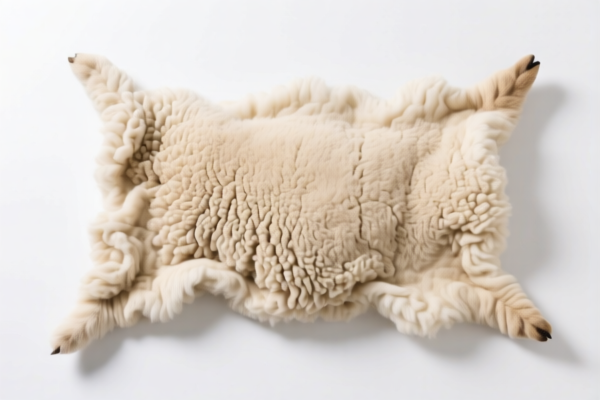
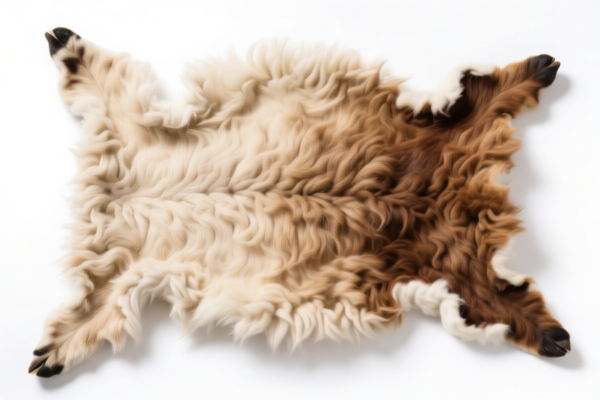
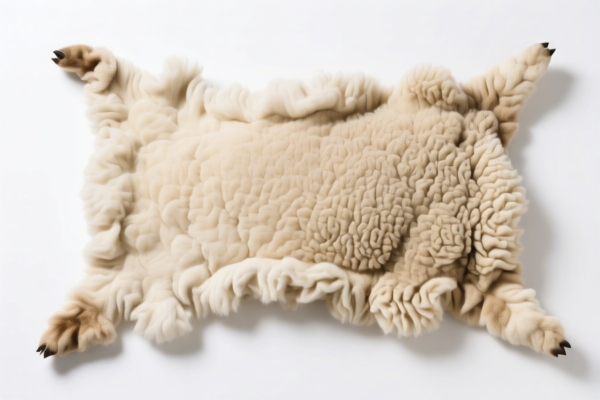
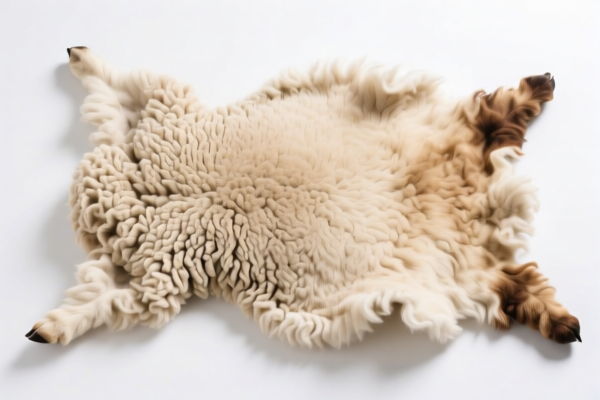
semi processed sheepskin
CN → USProduct Images
AI Analysis
🐑 Semi-Processed Sheepskin (Raw Hides/Skins)
🌐 HS Code Reference & Customs Clearance Guide | 2026 Latest Tariff Analysis | Professional Entry Strategies
📌 1. Product Definition & Classification: What Exactly is "Semi-Processed Sheepskin"?
Semi-processed sheepskin refers to raw sheep or lamb skins that have undergone initial preservation treatments (such as salting, liming, or tanning) but have not yet been fully tanned into finished leather for direct use in apparel or upholstery. In international trade, the distinction between "Raw," "Raw Preserved," and "Tanned" is critical for correct HS Code assignment.
Key Distinctions: * Raw Unprocessed: Just slaughtered, salted, or fresh. Usually falls under Chapter 41 (Raw Hides and Skins). * Semt-Processed/Tanned Partially: Undergoes preliminary processing to stabilize the skin but lacks final finishing. * Finished Leather: Fully tanned, dyed, and finished for manufacturing. Falls under Chapter 41 (if leather) or Chapter 43 (if fur skins kept with wool, i.e., "Sheepskin" in the commercial sense of fur-lined).
⚠️ Critical Clarification Point:
- If the product is sheepskin with wool attached (fur) and has been tanned/processed for fashion/apparel → It is often classified under HS 4303 (Articles of apparel, clothing accessories, and other articles of fur skins).
- If the product is sheepskin without wool (leather side only) or raw hides intended for further tanning → It falls under HS 4103 (Sheep or lamb skins, raw).
- Most Common Commercial "Semi-Processed Sheepskin": Often refers to wet-blue tanned sheepskin or limed pelts. These are typically classified under 4104 or 4106 depending on the exact chemical state.
- Note for this guide: We will assume the most common interpretation: Sheepskins, tanned/sem tanned (not with wool attached, or intended for leather production). If it is fur skin with wool, see the special note in Section 2.
📦 2. HS Code Classification Details (2026 Latest Tariff Alignment)
| HS Code | Product Description | Application Scenario | With Wool? | Tanning State |
|---|---|---|---|---|
4104.41.00.00 |
Sheep or lamb skins, raw, preserved | Salted fresh skins, intended for further processing | Yes/No | Un-tanned |
4104.41.10.00 |
Sheep or lamb skins, tanned or sem-tanned (excluding chamois) | Wet-blue, vegetable-tanned pelts | Yes/No | Sem-processed |
4106.22.10.00 |
Sheep or lamb skins, tanned or sem-tanned | Specific sub-category for certain tanned sheepskins | Yes/No | Sem-processed |
4303.10.00.00 |
Articles of apparel, clothing accessories, and other articles of fur skins | Sheepskin with wool attached, fully processed for fashion | ✅ YES | Finished/Processed |
4303.90.00.00 |
Other articles of fur skins | Miscellaneous fur goods | ✅ YES | Finished |
🔍 Key Reminder:
- If the sheepskin retains its wool and is sold as "sheepskin" (e.g., for rugs, coats, boot liners), it is often classified under Chapter 43 (Fur Skins), specifically 4303.10.00.00 if it's in the form of whole skins or pieces.
- If the wool has been removed or it is sold as leather hide (even if sem-processed), it falls under Chapter 41.
- Common Error: Misclassifying tanned sheepskin with wool as raw hide (4104) → Leads to under-declaration of duty.
- Customs Practice: Always declare whether the product is "with wool" or "without wool." This is the single most important factor for classification.
💰 3. 2026 Latest Tariff Rate Breakdown (Including Surtaxes & Policy Add-ons)
✅ Applicable Country: United States (US)
✅ Country of Origin: China (CN)
✅ Effective Date: From November 10, 2025 (for subsequent imports)
🎯 1. 4104.41.00.00 – Sheep or Lamb Skins, Raw, Preserved
| Item | Content |
|---|---|
| Base Tariff Rate | 6.4% (ad valorem) |
| USITC Additional Tariff | +25% (under Section 301, USITC Footnote 9903.88.01) |
| IEEPA Additional Tariff | +10% (China-specific, effective Nov 2025) |
| Total Tariff Rate | 41.4% |
| Calculation | CIF Value × 41.4% |
| De Minimis Eligibility | ❌ No (deny_de_minimis) |
| Legal Basis Path | IEEPA:9903.01.25 → IEEPA:9903.01.24 → USITC:4104.41.00.00 → FOOTNOTE:9903.88.01 |
📌 Explanation:
- Raw hides are subject to significant surtaxes due to US trade policies.
- Even if "raw," the 25% Section 301 tariff applies.
- Total burden: 41.4% is high. Importers must ensure accurate classification to avoid penalties.
🎯 2. 4104.41.10.00 – Sheep or Lamb Skins, Tanned or Sem-Tanned
| Item | Content |
|---|---|
| Base Tariff Rate | 4.2% (ad valorem) |
| USITC Additional Tariff | +25% (under Section 301) |
| IEEPA Additional Tariff | +10% |
| Total Tariff Rate | 39.2% |
| Calculation | CIF Value × 39.2% |
| De Minimis Eligibility | ❌ No |
| Legal Basis Path | IEEPA:9903.01.25 → IEEPA:9903.01.24 → USITC:4104.41.10.00 → FOOTNOTE:9903.88.01 |
📌 Note:
- Tanned/sem-tanned sheepskins have a lower base rate (4.2%) compared to raw (6.4%), but the surtaxes remain the same.
- Total: 39.2%. Still very high.
- Important: If the product is "sem-processed" (e.g., wet-blue), it falls here. If it is fully tanned for apparel with wool, see 4303.10.00.00 below.
🎯 3. 4303.10.00.00 – Fur Skins (Sheepskin with Wool)
| Item | Content |
|---|---|
| Base Tariff Rate | 12.5% (ad valorem) |
| USITC Additional Tariff | +25% (Section 301 applies to most fur products) |
| IEEPA Additional Tariff | +10% |
| Total Tariff Rate | 47.5% |
| Calculation | CIF Value × 47.5% |
| De Minimis Eligibility | ❌ No |
| Legal Basis Path | IEEPA:9903.01.25 → IEEPA:9903.01.24 → USITC:4303.10.00.00 → FOOTNOTE:9903.88.01 |
📌 Warning:
- If your "semi-processed sheepskin" still has wool and is considered a "fur skin," it may be classified under 4303.
- Total Tariff: 47.5% is the highest among the three categories.
- Classification Risk: Misclassifying as raw hide (4104) instead of fur (4303) can lead to underpayment and severe penalties.
🛠️ 4. Customs Clearance Practical Advice (Live Pitfall Avoidance Guide)
✅ 1. Required Documentation Checklist
| Document | Required | Explanation |
|---|---|---|
| ✅ Product Specification Sheet | ✔️ | Must detail: Tanning method (vegetable/chrome), presence of wool, moisture content, salt level. |
| ✅ Photos (Clear & Labeled) | ✔️ | Show both sides (wool and flesh). Label "With Wool" or "Without Wool." |
| ✅ Commercial Invoice | ✔️ | Clearly state "Sheepskins, Sem-Processed, HS Code XXXX" + "Country of Origin: China." |
| ✅ Packing List | ✔️ | Include weight, number of skins, dimensions. |
| ✅ Certificate of Origin (CO) | ✔️ | If applicable for preferential treatment (though US-China has few preferences for leather/fur). |
| ✅ Third-Party Test Report | ✔️ | For chemical compliance (e.g., hexavalent chromium limits if tanned). |
✅ 2. Declaration Strategy (Key Mantra)
🔥 “Wool Determines Chapter, Tanning Determines Sub-heading, Origin Determines Surtax!”
| Scenario | Correct HS Code | Wrong Action | Consequence |
|---|---|---|---|
| Sheepskin with wool, sem-processed | 4303.10.00.00 |
Misclassify as raw hide 4104 |
Underpay duty → Audit & Penalty |
| Sheepskin without wool, tanned | 4104.41.10.00 |
Misclassify as finished leather goods | Overpay/Underpay depending on goods |
| Raw salted sheepskin | 4104.41.00.00 |
Claim as "finished" | Severe misdeclaration |
| Sheepskin from Vietnam | N/A (Not CN) | Claim Chinese Origin | Fraud → Seizure |
✅ 3. Special Case Handling
| Situation | Handling Advice |
|---|---|
| Mixed Shipments (With & Without Wool) | Separate lots or declare separately to avoid classification disputes. |
| OEM Custom Sheepskin | Provide design specs to prove intended use (apparel vs. industrial). |
| Sheepskin for Medical Use | If for surgical gloves, may fall under different sub-headings; provide medical use proof. |
| Sheepskin for Military/Space | May qualify for special treatment; consult with CBP for Advance Ruling. |
🌍 5. Global Customs Clearance Comparison (2026 Latest)
| Country/Region | Recommended HS Code | Tariff (China Origin) | Certification Requirements | Notes |
|---|---|---|---|---|
| 🇺🇸 United States | 4104.41.00.00 or 4303.10.00.00 |
39.2% – 47.5% | USDA (if animal origin), EPA (if tanned) | High surtaxes; strict origin checks. |
| 🇨🇳 China | 4104.41.00.00 |
8% – 10% | None | No additional surtaxes. |
| 🇪🇺 European Union | 4104.41.00 |
6.5% – 8.5% | REACH (chemical compliance) | No Section 301-like surtaxes. |
| 🇬🇧 United Kingdom | 4104.41.00 |
6.5% – 8.5% | UKCA (if applicable) | Post-Brexit tariffs similar to EU. |
| 🇯🇵 Japan | 4104.41.00 |
5% – 7% | JIS (if for industrial use) | No major surtaxes. |
📌 Conclusion:
- USA is the most expensive market for semi-processed sheepskin due to Section 301 and IEEPA surtaxes.
- EU and Japan offer more favorable tariff structures, but compliance (REACH, chemical tests) is strict.
- Supply Chain Strategy: Consider sourcing from non-China origins (e.g., Argentina, Australia, Brazil) to avoid US surtaxes.
📌 6. Common Errors & Pitfall Guide (Lessons Learned)
❌ Error 1: Declaring "Tanned Sheepskin" as "Raw Hides" to avoid surtaxes.
👉 Consequence: CBP will test the skin. If tanned, you face 3x penalty + back duties.
❌ Error 2: Ignoring the "With Wool" distinction.
👉 Consequence: Classified under wrong chapter → 47.5% vs 39.2% difference → Underpayment.
❌ Error 3: Not providing chemical test reports for tanned skins.
👉 Consequence: USDA/EPA holds shipment for toxicology tests → Delays & Storage Fees.
❌ Error 4: Using vague descriptions like "Sheep Leather" without HS code.
👉 Consequence: CBP assigns highest possible tariff → 47.5% automatically.
✅ Correct Practice:
“Sheepskins, Sem-Processed, Tanned (Wet-Blue), Without Wool, HS Code 4104.41.10.00, Origin: China”
🎯 7. Conclusion: Precision Saves Money!
🎯 Remember Mantra:
🔹 “Wool = Chapter 43, No Wool = Chapter 41, China = +35% Surtax!”
🔹 “HS Code is Life, Tariff Difference is Profit, Declaration Error is Loss!”
📌 Tips:
If your sheepskin is originating from Argentina, Australia, New Zealand, or Brazil, you can avoid IEEPA surtaxes (10% extra).
Consider Advance Ruling (Pre-classification) with CBP to lock in your HS Code and avoid post-entry adjustments.
📣 Immediate Action:
📞 Contact a licensed customs broker + Provide detailed photos + Apply for HS Code Advance Ruling
🚀 Ensure your sheepskin clears US customs smoothly, efficiently, and cost-effectively!
✨ Professional Clearance Starts with Accurate Classification!
💼 Every Dollar Saved is Pure Profit!
Customer Reviews
About HS Code Classification
The Harmonized System (HS) is an internationally standardized nomenclature developed by the World Customs Organization (WCO) to classify traded products. Over 200 countries use the HS system as the basis for customs tariffs, trade statistics, and import/export regulations.
Each HS code follows a hierarchical structure:
- Chapter (2 digits) — Broad category of goods (e.g., Chapter 84: Machinery and Mechanical Appliances)
- Heading (4 digits) — More specific grouping within the chapter
- Subheading (6 digits) — Internationally standardized breakdown, used by all WCO member countries
- National subdivisions (8-10 digits) — Country-specific extensions for further classification, such as US HTSUS 10-digit codes
Correct HS code classification is essential for smooth customs clearance, accurate duty payment, and compliance with trade regulations. Misclassification can lead to customs delays, overpayment of duties, or penalties.
When importing from CN to US, the applicable tariff rates may include:
- Most-Favored-Nation (MFN) rate — The standard duty rate applied to WTO members
- General rate — Applied to countries without trade agreements
- Trade remedy duties — Additional tariffs such as Section 301 (anti-dumping), Section 232 (national security), or countervailing duties
The information provided on this page is for reference purposes only. For official classification, please consult with your local customs authority or a licensed customs broker.