servo motor
CN → US| HS Code | Tariff Rate | Origin | Destination | Doc |
|---|---|---|---|---|
| 8504909642 | 35.0% | CN | US | Official Doc |
| 850490 | 0.0% | CN | US | Official Doc |
| 8501524000 | 38.7% | CN | US | Official Doc |
| 8501322000 | 37.9% | CN | US | Official Doc |
| 8503009520 | 88.0% | CN | US | Official Doc |
| 8503006500 | 38.0% | CN | US | Official Doc |
Product Images
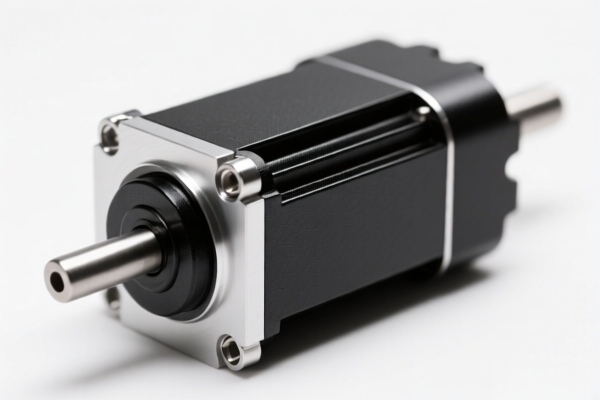
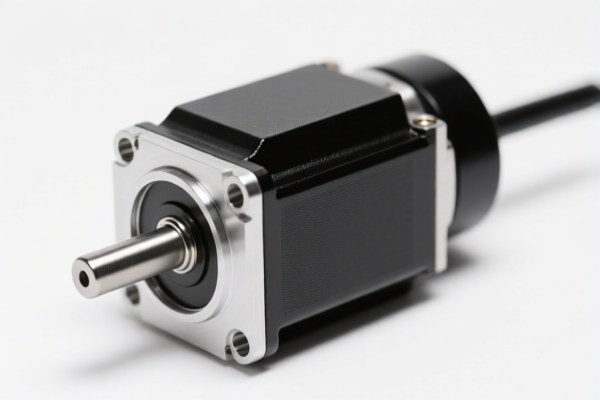
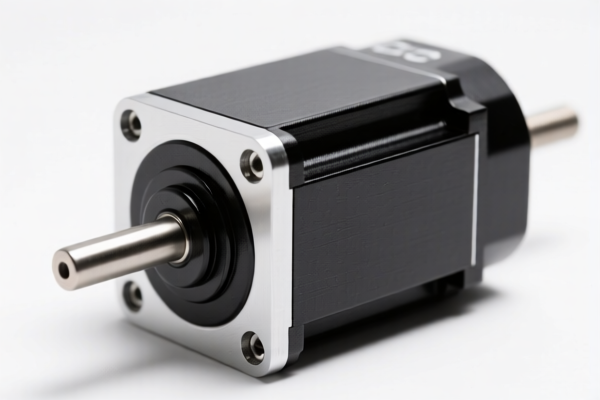
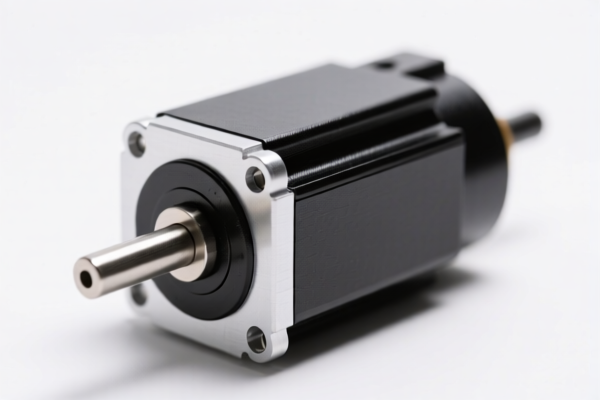
AI Analysis
⚡ Servo Motors & Electrical Machinery Components
🌐 HS Code Reference & Customs Clearance Guide | 2026 Latest Tariff Analysis | Professional Clearance Strategy
📌 I. Product Definition & Classification: Do You Really Understand "Servo Motors" and Their Parts?
Servo motors are precision motion control components widely used in robotics, CNC machinery, and industrial automation. In international trade, they are not a single homogeneous category. They are strictly divided based on current type (AC/DC), output power, and whether they are complete units or components.
Furthermore, accessories solely or principally used with these motors fall under a specific heading for "Parts."
Electrical Motors (Headings 8501/8502):
- AC Servo Motors: Multi-phase AC motors, typically exceeding 750W.
- DC Servo Motors: DC motors, often used in precision applications.
Parts of Motors (Heading 8503):
- Stators & Rotors: The core magnetic components.
- General Parts: Other components suitable solely/principally for use with machines of heading 8501/8502.
⚠️ Key Distinction Point:
- If the item is a complete motor (including shaft, mounting, casing), it is classified under 8501.xxxx.
- If the item is a component (e.g., stator, rotor, or other specific part) only used with a motor, it is classified under 8503.
- Crucial: Parts must be "suitable for use solely or principally" with the motor. Generic bolts or non-specific brackets do not qualify for 8503.
📦 II. HS Code Classification Details (2026 Latest Tariff Authority Comparison)
| HS Code | Product Description | Application Scenario | Tax Category |
|---|---|---|---|
8503.00.95.20 |
Parts suitable for use solely/principally with motors (8501/8502): Other Parts | General servo motor parts (e.g., housings, specific non-stator/rotor components) | 🇺🇸 +50% (Steel/Aluminum/Copper) |
8503.00.65.00 |
Parts suitable for use solely/principally with motors (8501/8502): Stators and Rotors | Core magnetic components (Stators/Rotors) for servo motors | 🇺🇸 +25% |
8504.90.96.42 |
Parts of transformers/inductors: Wound cores for incorporation into transformers | Not a motor part, but often confused. Used for inductors/transformers. | 🇺🇸 +25% |
8504.90 |
Parts of electrical transformers/inductors | General parts for transformers (Note: Tax retrieval failed in source data) | ⚠️ Error |
8501.52.40.00 |
Electric Motors: Other AC Motors, Multi-phase | AC Servo Motors (Output >750W but ≤14.92 kW) | 🇺🇸 0% |
8501.32.20.00 |
Electric Motors: Other DC Motors | DC Servo Motors (Output >750W but ≤14.92 kW) | 🇺🇸 0% |
🔍 Key Reminder:
- Complete Servo Motors (AC or DC) exceeding 750W are tax-exempt in many contexts (0% base), BUT their parts attract significant duties.
- Stators/Rotors (8503.00.65.00) attract a 28% total tax.
- Other Parts (8503.00.95.20) may face a massive 78% total tax if made of steel, aluminum, or copper.
- Inductor Cores (8504.90.96.42) are NOT motor parts; they are transformer/inductor parts. Do not misclassify!
💰 III. 2026 Latest Tariff Rate Details (Including Surtaxes & Policy Add-ons)
✅ Applicable Country: United States (US)
✅ Country of Origin: China (CN)
✅ Effective Time: Current rates applied
🎯 1. 8503.00.95.20 —— Other Parts of Motors (e.g., Housings, Brackets)
| Item | Content |
|---|---|
| Base Tariff | 3.0% (ad valorem) |
| Section 301 Surtax | +25.0% |
| Steel/Aluminum/Copper Surtax | +50.0% (if material matches) |
| Total Tax Rate | 78.0% |
| Tax Calculation | CIF Value × 78% |
| De Minimis Exemption | ❌ Not Applicable |
| Legal Basis | Base tariff 3% + 301 tariff 25% + SAFTAA/Aluminum/Steel 50% |
📌 Explanation:
- This is the highest risk category. If your servo motor part is made of steel, aluminum, or copper, it triggers the 50% additional tariff on top of the standard 28% (3% base + 25% Section 301).
- Total burden: 78%. This often eliminates the profit margin for exporting generic parts.
🎯 2. 8503.00.65.00 —— Stators and Rotors
| Item | Content |
|---|---|
| Base Tariff | 3.0% (ad valorem) |
| Section 301 Surtax | +25.0% |
| Steel/Aluminum/Copper Surtax | Not explicitly added in source (likely included or not applicable per specific subheading) |
| Total Tax Rate | 28.0% |
| Tax Calculation | CIF Value × 28% |
| De Minimis Exemption | ❌ Not Applicable |
| Legal Basis | Base tariff 3% + 301 tariff 25% |
📌 Note:
- Stators and rotors are treated differently from "other parts." They do not trigger the additional 50% steel/aluminum surtax in this specific subheading classification.
- Total burden: 28%. Significantly lower than general parts.
🎯 3. 8501.52.40.00 & 8501.32.20.00 —— Complete AC/DC Servo Motors
| Item | Content |
|---|---|
| Base Tariff | 0.0% (ad valorem) |
| Section 301 Surtax | 0.0% |
| Total Tax Rate | 0.0% |
| Tax Calculation | No Duty |
| De Minimis Exemption | N/A (Already 0%) |
| Legal Basis | HTSUS 8501 specific subheadings for motors >750W ≤75kW |
📌 Explanation:
- Complete motors in this power range (750W – 14.92kW) currently face 0% duty.
- This is a strategic advantage for exporting complete servo units vs. components.
- Warning: Do not ship "disassembled" motors as parts if they are functionally complete units, as customs may reclassify them.
🎯 4. 8504.90.96.42 —— Wound Cores for Transformers
| Item | Content |
|---|---|
| Base Tariff | 0.0% (ad valorem) |
| Section 301 Surtax | +25.0% |
| Total Tax Rate | 25.0% |
| Tax Calculation | CIF Value × 25% |
| De Minimis Exemption | ❌ Not Applicable |
📌 Note:
- This code is for transformer/inductor parts, NOT servo motor parts.
- If you are exporting inductors or transformer cores, this is the correct code.
- Do not confuse with servo motor parts (8503).
🛠️ IV. Customs Clearance Practical Advice (Battle-Tested Pitfall Avoidance)
✅ 1. Documentation Checklist (Essential)
| Document | Must Provide | Description |
|---|---|---|
| ✅ Product Spec Sheet | ✔️ | Must specify: Voltage, Current, Phase (AC/DC), Output Power (Watts/KW), Type (Servo/AC/DC). |
| ✅ Circuit Diagram | ✔️ | Critical for proving if it’s a part (8503) or a complete motor (8501). |
| ✅ Material Declaration | ✔️ | Crucial for 8503.00.95.20. Must state if made of Steel, Aluminum, or Copper to trigger/avoid 50% surtax. |
| ✅ Product Photos | ✔️ | Clear images showing nameplate, model, and connections. |
| ✅ Commercial Invoice | ✔️ | Must clearly state "Servo Motor" or "Parts of Servo Motor" with HS Code. |
| ✅ Packing List | ✔️ | Detailed breakdown of components. Avoid mixing "Complete Motors" and "Parts" in one shipment without clear labeling. |
✅ 2. Classification Strategy (Key Rules)
🔥 "Complete Motor = 0%; Parts = 28-78%; Material Matters!"
| Scenario | Correct HS Code | Risk Level |
|---|---|---|
| Complete AC Servo Motor (>750W, ≤14.92kW) | 8501.52.40.00 |
✅ Low (0%) |
| Complete DC Servo Motor (>750W, ≤14.92kW) | 8501.32.20.00 |
✅ Low (0%) |
| Stator or Rotor Only | 8503.00.65.00 |
⚠️ Medium (28%) |
| Other Parts (Housing, etc.) - Made of Steel/Al/Cu | 8503.00.95.20 |
🔴 High (78%) |
| Other Parts - Non-Metallic | 8503.00.95.20 |
⚠️ Medium (28%) (Check if 50% applies to non-ferrous/non-copper) |
| Transformer Cores | 8504.90.96.42 |
⚠️ Medium (25%) |
📌 Critical Tip:
- If you can export a complete motor, always choose8501.xxxx(0% duty) over8503(28-78% duty), provided the product is not legally required to be shipped disassembled.
- If exporting parts, ensure the material composition is accurately declared. If it’s steel, aluminum, or copper, the 50% surtax is automatic.
✅ 3. Special Cases
| Scenario | Handling Advice |
|---|---|
| OEM Servo Motors | Provide customer authorization and design specs. Prove it’s a "complete unit" to qualify for 0% duty. |
| Mixed Shipment (Motors + Parts) | Separate Bill of Lading recommended. Mixing can cause customs to scrutinize the entire shipment. |
| Servo Drives/Controllers | Not covered in this data. Typically classified under 8537.10 (Boards for Electric Control). Do not use 8501 or 8503. |
| Inductors Coiled with Motor Parts | If wound cores are for transformers/inductors, use 8504.90.96.42. Do not mix with motor parts. |
🌍 V. Global Market Clearance Comparison (2026 Latest)
| Country/Region | Recommended HS Code | Tariff | Certification | Notes |
|---|---|---|---|---|
| 🇺🇸 USA | 8501.52.40.00 (AC) / 8501.32.20.00 (DC) |
0% | FCC, UL (if applicable) | Parts are heavily taxed (28-78%). |
| 🇨🇳 China | 8501.52 / 8501.32 |
5-10% | CCC | No Section 301 surtax. |
| 🇪🇺 EU | 8501.51 / 8501.31 |
0% (under EBA/GSP if applicable) | CE, RoHS | Check for preferential tariffs. |
| 🇬🇧 UK | 8501.51 / 8501.31 |
0-5% | UKCA, RoHS | Post-Brexit rules apply. |
📌 Conclusion:
- USA is the only major market with punitive tariffs on Servo Motor Parts (up to 78%).
- Exporting Complete Motors to the USA is tariff-free (0%) in this power range.
- Strategy: Export complete units whenever possible. If parts must be exported, consider 3rd country assembly (e.g., Vietnam, Mexico) to avoid China-origin surtaxes.
📌 VI. Common Mistakes & Pitfall Guide (Blood-Teachings)
❌ Mistake 1: Shipping a complete servo motor as "Parts of Motor" (8503)
👉 Consequence: You pay 28-78% duty instead of 0%.
👉 Fix: Classify as 8501.xxxx if the unit is complete and functional.
❌ Mistake 2: Declaring Steel Parts as "Plastic Parts" to avoid 50% surtax
👉 Consequence: Customs inspection finds steel material → Confiscation, fines, and back-taxes.
👉 Fix: Accurately declare material. If 78% is too high, explore alternative supply chains.
❌ Mistake 3: Confusing Servo Motor Parts (8503) with Transformer Cores (8504)
👉 Consequence: Misclassification leads to clearance delays.
👉 Fix: Use 8503 for motor components, 8504 for transformer/inductor components.
❌ Mistake 4: Ignoring Power Output (Watts/KW)
👉 Consequence: If output exceeds 75kW, the HS Code changes entirely (to 8501.54 etc.), and tariffs may differ.
👉 Fix: Always specify exact output power on the invoice.
✅ Correct Declaration Example:
"AC Servo Motor, 10kW, Multi-phase, Complete Unit, Model XYZ, FCC Certified, HS Code: 8501.52.40.00"
🎯 VII. Conclusion: Precise Classification Saves Money!
🎯 Remember the Mantra:
🔹 "Complete Motor = 0%; Parts = 28-78%; Material is King!"
🔹 "Don't ship parts if you can ship the whole!"
🔹 "Steel/Al/Cu Parts = 78% Duty Alert!"
📌 Pro Tip:
- If your parts are made of Steel, Aluminum, or Copper, the 78% duty is a major cost driver.
- Consider Value-Added Assembly in a third country (e.g., Vietnam) to change the origin and avoid Section 301 + Steel/Aluminum surtaxes.
- Always apply for a Pre-Ruling from CBP if the classification is ambiguous.
📣 Immediate Action:
📞 Contact a licensed customs broker.
📝 Provide exact wattage and material composition.
🚀 Optimize your supply chain to export Complete Motors, not Parts!
✨ Professional Clearance Starts with Accurate Classification!
💼 Every percentage point in duty is profit lost!
Customer Reviews
About HS Code Classification
The Harmonized System (HS) is an internationally standardized nomenclature developed by the World Customs Organization (WCO) to classify traded products. Over 200 countries use the HS system as the basis for customs tariffs, trade statistics, and import/export regulations.
Each HS code follows a hierarchical structure:
- Chapter (2 digits) — Broad category of goods (e.g., Chapter 84: Machinery and Mechanical Appliances)
- Heading (4 digits) — More specific grouping within the chapter
- Subheading (6 digits) — Internationally standardized breakdown, used by all WCO member countries
- National subdivisions (8-10 digits) — Country-specific extensions for further classification, such as US HTSUS 10-digit codes
Correct HS code classification is essential for smooth customs clearance, accurate duty payment, and compliance with trade regulations. Misclassification can lead to customs delays, overpayment of duties, or penalties.
When importing from CN to US, the applicable tariff rates may include:
- Most-Favored-Nation (MFN) rate — The standard duty rate applied to WTO members
- General rate — Applied to countries without trade agreements
- Trade remedy duties — Additional tariffs such as Section 301 (anti-dumping), Section 232 (national security), or countervailing duties
The information provided on this page is for reference purposes only. For official classification, please consult with your local customs authority or a licensed customs broker.