sewing machine
CN → US| HS Code | Tariff Rate | Origin | Destination | Doc |
|---|---|---|---|---|
| 8452299000 | 10.0% | CN | US | Official Doc |
| 8452100090 | 10.0% | CN | US | Official Doc |
| 8452219000 | 17.5% | CN | US | Official Doc |
| 8479896500 | 20.3% | CN | US | Official Doc |
| 8452299000 | 10.0% | CN | US | Official Doc |
Product Images
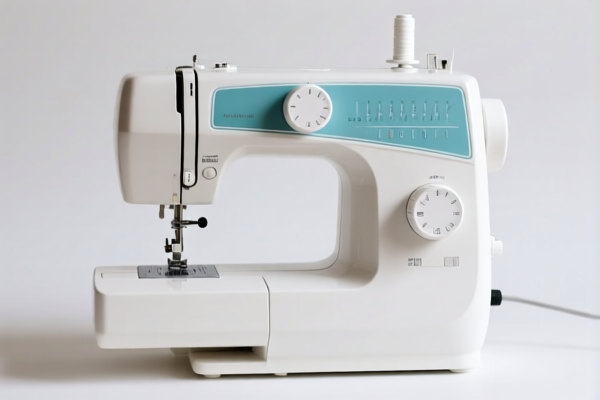
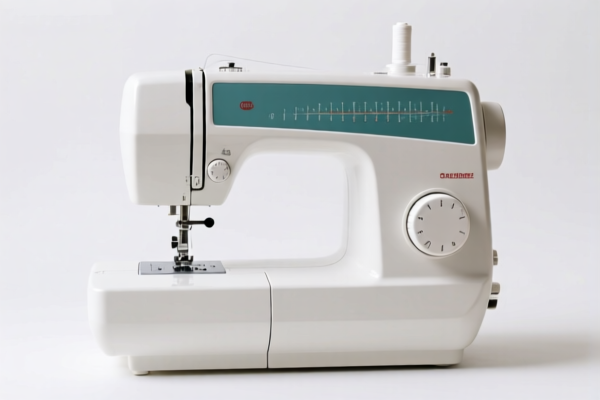
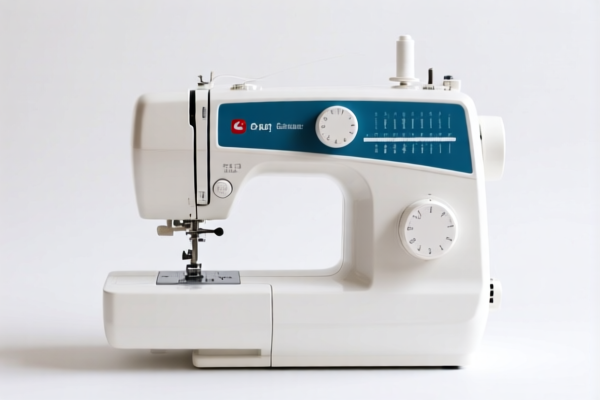
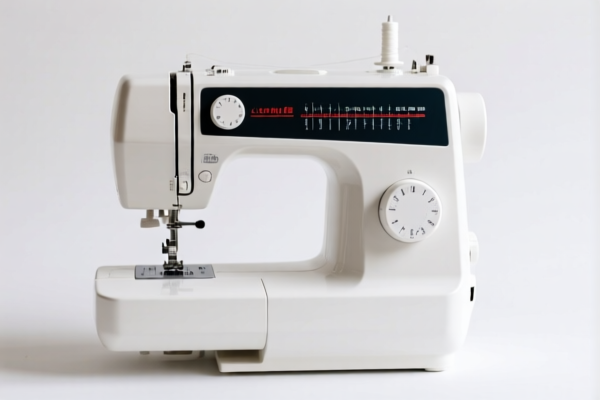
AI Analysis
🧵 Sewing Machines (Industrial & Home Use)
🌐 HS Code Reference & Customs Clearance Guide | 2026 Latest Tariff Analysis | Professional Clearance Strategy
📌 I. Product Definition & Classification: Do You Really Understand "Sewing Machines"?
Sewing machines are indispensable tools in the textile, apparel, and leather goods industries. In international trade, they are broadly categorized by their intended use (Home vs. Industrial) and specific mechanical characteristics (Automatic/Unit vs. Other). Misclassification can lead to significant tariff discrepancies due to varying duty structures under U.S. trade policies.
Key Distinctions:
* Home Sewing Machines (8452.10.00.90): Designed for domestic, non-commercial use.
* Industrial Sewing Machines: Designed for high-volume production. These are further split into:
* Automatic Units (8452.21.90.00): High-speed, automated systems.
* Other Industrial/General Sewing Machines (8452.29.90.00, 8479.89.65.00): Manual or semi-automatic machines that do not fit the strict "automatic unit" definition or are classified as other mechanical appliances.
⚠️ Critical Differentiation Point:
- If the machine is clearly marked or documented for home/personal use →归入 8452.10.00.90
- If it is for factory/industrial use, check if it is an automatic unit (high speed, programmed) → 8452.21.90.00
- If it is industrial but not an automatic unit (or falls under other mechanical categories with motors) → 8452.29.90.00 or 8479.89.65.00
📦 II. HS Code Classification Details (2026 Latest Tariff Authority Comparison)
| HS Code | Product Description | Application Scenario | Key Feature |
|---|---|---|---|
8452.10.00.90 |
Home Sewing Machines | Household use, small workshops | Directly fits home use, no material/conflict |
8452.29.90.00 (1) |
Sewing Machines (Other) | General sewing, including non-automatic industrial | Core function is sewing, no material conflict |
8452.21.90.00 |
Industrial Sewing Machines (Automatic Units) | High-speed factory production, automatic groups | Classified as other types under automatic units |
8479.89.65.00 |
Other Mechanical Appliances with Self-Contained Motors | Industrial sewing with independent function & motor | Independent function, self-contained motor |
8452.29.90.00 (2) |
Other Sewing Machines (Not Book Binding) | General industrial/commercial sewing | Excludes book binding machines, no conflict |
🔍 Key Reminder:
- Home Use machines have a distinct HS code (8452.10) but still incur Section 301/122 duties.
- Industrial Machines are primarily split between8452.21(Automatic) and8452.29/8479.89(Non-automatic/Other).
- Duty Variance: The choice between8452.21and8452.29can change the total tariff from 17.5% to 10.0%.
💰 III. 2026 Latest Tariff Rate Breakdown (Including Surcharges & Policy Add-ons)
✅ Applicable Country: United States (US)
✅ Origin: China (CN)
✅ Effective Date: Includes imports post-2025 (Section 301 & 122 provisions active)
🎯 1. 8452.10.00.90 —— Home Sewing Machines
| Item | Content |
|---|---|
| Base Tariff | 0.0% |
| Section 301 Surcharge | 0.0% |
| Section 122 Tariff | 10.0% |
| Total Tariff Rate | 10.0% |
| Tax Calculation | CIF Value × 10% |
| Legal Basis | Direct fit for home use; applies 122 clause tariff |
📌 Explanation:
- Although the base tariff is 0%, the Section 122 tariff of 10% applies to these goods from China.
- No additional Section 301 surcharge is listed for this specific subheading in the provided data.
🎯 2. 8452.29.90.00 —— General/Other Sewing Machines
| Item | Content |
|---|---|
| Base Tariff | 0.0% |
| Section 301 Surcharge | 0.0% |
| Section 122 Tariff | 10.0% |
| Total Tariff Rate | 10.0% |
| Tax Calculation | CIF Value × 10% |
| Legal Basis | Core function is sewing; no material conflict; applies 122 clause tariff |
📌 Explanation:
- This code covers sewing machines that are not classified as "automatic units" (see below).
- Total 10% tariff applies. This is a lower rate compared to the automatic unit classification.
🎯 3. 8452.21.90.00 —— Industrial Sewing Machines (Automatic Units)
| Item | Content |
|---|---|
| Base Tariff | 0.0% |
| Section 301 Surcharge | 7.5% |
| Section 122 Tariff | 10.0% |
| Total Tariff Rate | 17.5% |
| Tax Calculation | CIF Value × 17.5% |
| Legal Basis | Classified as other types under automatic units; higher surcharge applies |
📌 Explanation:
- Significantly Higher Duty: This classification incurs a 7.5% Section 301 surcharge plus the 122 tariff.
- Total 17.5% is the highest rate among the standard sewing machine codes listed.
- Only applies to machines definitively classified as "Automatic Units" under heading 8452.21.
🎯 4. 8479.89.65.00 —— Industrial Sewing Machines (Other Mechanical Appliances)
| Item | Content |
|---|---|
| Base Tariff | 2.8% |
| Section 301 Surcharge | 7.5% |
| Section 122 Tariff | 10.0% |
| Total Tariff Rate | 20.3% |
| Tax Calculation | CIF Value × 20.3% |
| Legal Basis | Independent function, self-contained motor; classified under Chapter 84 residual |
📌 Explanation:
- Highest Duty Rate: This code includes a Base Tariff of 2.8% on top of all surcharges.
- Total 20.3% applies to industrial sewing machines that are argued to be "other mechanical appliances" with self-contained motors rather than standard sewing machines under 8452.
- Use this only if the machine does not strictly fit 8452 definitions (e.g., specialized embroidery or multi-head units with unique motor integration).
🛠️ IV. Customs Clearance Practical Advice (Battle-Tested Pitfall Guide)
✅ 1. Documentation Checklist (Missing Items = Delays)
| Document | Required | Notes |
|---|---|---|
| ✅ Product Specification Sheet | ✔️ | Must state: Home Use OR Industrial Use. Specify "Automatic" or "Non-Automatic". |
| ✅ Photographs (Clear) | ✔️ | Show brand, model, nameplate, and key features (e.g., foot pedal vs. auto-control panel). |
| ✅ Commercial Invoice | ✔️ | Clearly describe as "Sewing Machine, Model XYZ". Avoid vague terms like "Textile Equipment". |
| ✅ Packing List | ✔️ | Detail accessories. If sent as a kit, ensure it's declared as a complete machine. |
| ✅ Original Certificate of Origin | ✔️ | Crucial for verifying Chinese origin (subject to tariffs). |
| ✅ Technical Diagrams | ✔️ | Helpful if challenged on "Automatic Unit" status. |
✅ 2. Declaration Strategy (Key Tips)
🔥 "Classify by Use: Home is 10%, Industrial Auto is 17.5%, Other is 10-20.3%."
| Scenario | Correct HS Code | Duty Rate | Common Mistake |
|---|---|---|---|
| Home Sewing Machine | 8452.10.00.90 |
10.0% | Declaring as Industrial → Unnecessary complexity (still 10% here, but wrong code). |
| Industrial Non-Automatic | 8452.29.90.00 |
10.0% | Declaring as Automatic → Pays extra 7.5% (Total 17.5% vs 10%). |
| Industrial Automatic Unit | 8452.21.90.00 |
17.5% | Under-declaring rate → Risk of penalty. |
| Specialized Motorized Sewing Unit | 8479.89.65.00 |
20.3% | Over-complicating standard machine → Pays extra 2.8% base + same surcharges. |
📌 Critical Note:
- The difference between8452.21.90.00(17.5%) and8452.29.90.00(10.0%) is 7.5%.
- If your machine is industrial but NOT an automatic unit, ALWAYS classify under8452.29.90.00to save 7.5% in Section 301 duties.
✅ 3. Special Cases
| Case | Handling Advice |
|---|---|
| Embroidery Machines | Often fall under 8452.21 (Automatic) if multi-head/high-speed. Check if they qualify as "Automatic Units". If not, 8452.29 may apply (10%). |
| Overlock/Serger Machines | Typically 8452.29.90.00 (10%) unless they are high-speed automated units (8452.21). |
| OEM/Private Label | Ensure the invoice matches the product exactly. Hidden branding does not change HS code. |
| Accessories (Needles, Feet) | Often declared separately or included. If separate, check for different HS codes (e.g., parts under 8452.90). |
🌍 V. Global Market Comparison (2026 Update)
| Country/Region | Recommended HS Code | Base Tariff | Section 301/122 | Total Effective Rate (China Origin) | Notes |
|---|---|---|---|---|---|
| 🇺🇸 USA | 8452.29.90.00 |
0% | +10% (122) | 10.0% | Best rate for non-auto industrial. |
| 🇺🇸 USA | 8452.21.90.00 |
0% | +7.5% (301) +10% (122) | 17.5% | High cost for auto units. |
| 🇨🇳 China | 8452.29.90.00 |
10-14%* | N/A | 10-14% | Import duty varies by subheading. |
| 🇪🇺 EU | 8452.29.90 |
3.2% | 0% | 3.2% | No Section 301/122. Much lower duty. |
| 🇬🇧 UK | 8452.29.90 |
4.8% | 0% | 4.8% | Post-Brexit tariff structure. |
📌 Conclusion:
- USA imposes significant tariffs (10%-20.3%) on Chinese sewing machines.
- EU/UK offer significantly lower duties (~3-5%).
- Strategic Advice: For large-volume exports to the US, ensure precise classification to avoid the 17.5% or 20.3% rates. Classify as8452.29.90.00(10%) if the machine is not a strict "automatic unit".
📌 VI. Common Errors & Pitfalls (Lessons Learned)
❌ Error 1: Classifying a standard industrial machine as an "Automatic Unit" (8452.21)
👉 Consequence: Pay 17.5% instead of 10.0%.
👉 Fix: Verify if the machine has automatic programming/feedback systems. Most basic industrial machines are NOT automatic units.
❌ Error 2: Declaring "Textile Machinery" vaguely
👉 Consequence: Customs may reclassify to the highest applicable code (8479.89.65.00 at 20.3%).
👉 Fix: Be specific: "Sewing Machine, Model XYZ, Industrial, Non-Automatic".
❌ Error 3: Ignoring the "Home Use" distinction
👉 Consequence: While the rate is similar (10%), wrong code can lead to audit flags for mismatched usage.
👉 Fix: Clearly mark "For Home Use" on the product and invoice if applicable.
❌ Error 4: Combining sewing machines with other parts in one HS code
👉 Consequence: Complexity in duty calculation.
👉 Fix: Declare the main machine separately.
✅ Correct Declaration Example:
"Sewing Machine, Industrial Model XYZ, Non-Automatic, Electric Motor, No Embroidery Function"
→ HS Code:8452.29.90.00
→ Duty: 10.0%
🎯 VII. Conclusion: Precision Classification Saves Money!
🎯 Remember the Golden Rule:
🔹 "Home = 10%. Industrial Non-Auto = 10%. Industrial Auto = 17.5%. Special Motorized = 20.3%.
🔹 "Don't call it 'Automatic' unless it is! Save 7.5% on every unit!"
📌 Pro Tip:
If your machine has embroidery capabilities or multi-head automation, it is more likely to be classified as an "Automatic Unit" (8452.21). For standard straight-stitch or overlock industrial machines, 8452.29 is usually the correct and cheaper classification.
Consider applying for an Advance Ruling from U.S. Customs if the "Automatic" status is ambiguous.
📣 Immediate Action:
📞 Contact your customs broker with photos and specs.
📝 Specify "Non-Automatic" if applicable on the commercial invoice.
🚀 Optimize your landed cost by avoiding the 17.5% and 20.3% traps.
✨ Professional Clearance Starts with Accurate Classification!
💼 Every 1% of duty saved is pure profit!
Customer Reviews
About HS Code Classification
The Harmonized System (HS) is an internationally standardized nomenclature developed by the World Customs Organization (WCO) to classify traded products. Over 200 countries use the HS system as the basis for customs tariffs, trade statistics, and import/export regulations.
Each HS code follows a hierarchical structure:
- Chapter (2 digits) — Broad category of goods (e.g., Chapter 84: Machinery and Mechanical Appliances)
- Heading (4 digits) — More specific grouping within the chapter
- Subheading (6 digits) — Internationally standardized breakdown, used by all WCO member countries
- National subdivisions (8-10 digits) — Country-specific extensions for further classification, such as US HTSUS 10-digit codes
Correct HS code classification is essential for smooth customs clearance, accurate duty payment, and compliance with trade regulations. Misclassification can lead to customs delays, overpayment of duties, or penalties.
When importing from CN to US, the applicable tariff rates may include:
- Most-Favored-Nation (MFN) rate — The standard duty rate applied to WTO members
- General rate — Applied to countries without trade agreements
- Trade remedy duties — Additional tariffs such as Section 301 (anti-dumping), Section 232 (national security), or countervailing duties
The information provided on this page is for reference purposes only. For official classification, please consult with your local customs authority or a licensed customs broker.