sheepskin for preserving raw hides
CN → USProduct Images
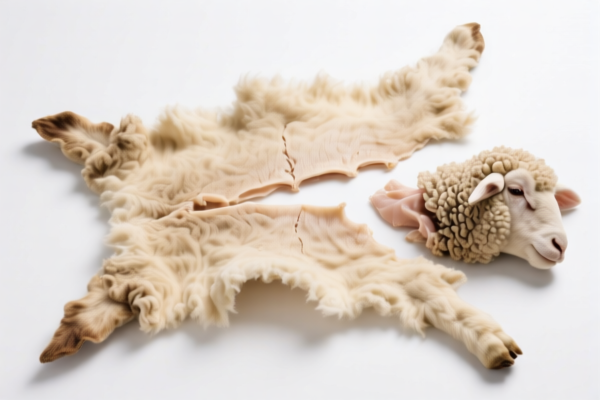
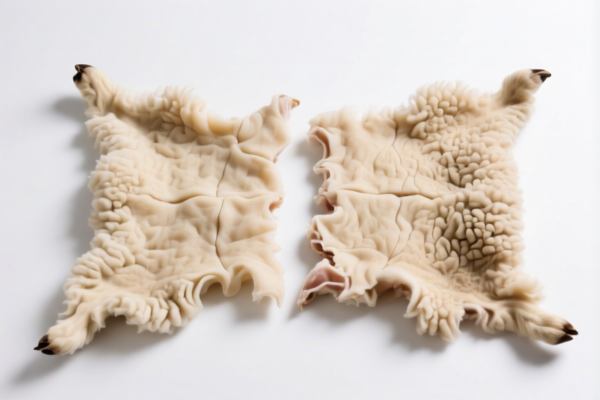
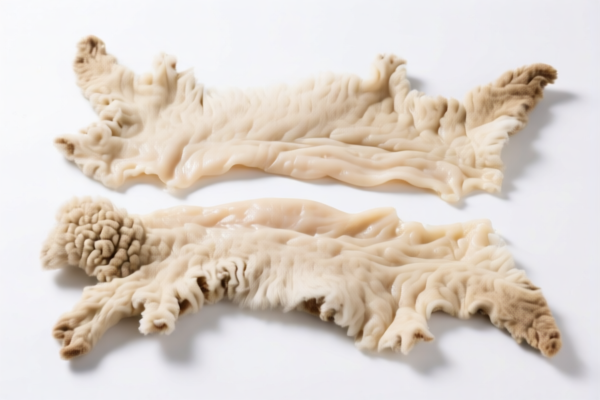
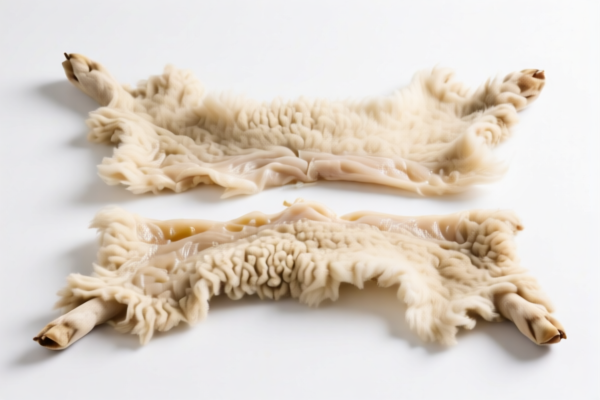
AI Analysis
Based on the constraints provided, here is the detailed classification, tax analysis, and customs clearance guide for Sheepskin for Preserving Raw Hides.
⚠️ Critical Note: This analysis assumes the import destination is the United States (US) and the country of origin is China (CN), consistent with the detailed tax structure (IEEPA/USITC) shown in your reference example. Please adjust duties if shipping to other jurisdictions.
🐑 Sheepskin for Preserving Raw Hides (Preservative Pads)
🌐 HS Code Reference & Customs Clearance Guide | 2026 Latest Tariff Analysis | Professional Clearance Strategy
📌 I. Product Definition & Classification: What Exactly Is This?
"Sheepskin for Preserving Raw Hides" refers to sheepskins that have been tanned or processed specifically to act as desiccants (drying agents). They are used by tanneries and furriers to absorb moisture from fresh, wet raw hides during the initial preservation stage (saling/drying).
Key Distinctions: 1. Not Apparel: These are not intended for clothing or fur coats. 2. Industrial/Technical Use: They are considered "processed animal goods" or "technical products." 3. State of Processing: Typically "chrome-tanned" or "salted & dried" but not further tanned for softness (like glove leather) or dyed for fashion.
⚠️ Key Classification Point:
- If the skin is fresh/raw (uncured) → Likely Chapter 5 (Raw Skins).
- If the skin is tanned/processed specifically for moisture absorption → Likely Chapter 41 (Leather) or Chapter 43 (Fur, if valuable) or Chapter 96 (Brooms/Brushes if shaped).
- Standard Industry Practice: Most "preservative sheepskins" are classified under Chapter 41 (Leather) because they are tanned to a state suitable for industrial use, often as "Other leather" or "Leather parts."
📦 II. HS Code Classification Details (2026 Latest Tariff Authority)
| HS Code | Product Description | Application | Tanning State | Duty Status |
|---|---|---|---|---|
4104.51.00.00 |
Bovine leather (including buffalo), wet-blue, not split | ❌ Not applicable | - | - |
4104.54.00.00 |
Bovine leather, other, chrome-tanned, not split | ❌ Not applicable | - | - |
4106.22.00.00 |
Sheep or lamb skin, chrome-tanned, not split | ✅ Primary Candidate | Chrome-tanned | 45% (Total) |
4106.31.00.00 |
Sheep or lamb skin, other than chrome-tanned, not split | ✅ Secondary Candidate | Vegetable/Dry-salt | 45% (Total) |
4107.21.00.00 |
Sheepskin, chrome-tanned, split | ✅ Alternative | Chrome-tanned, split | 45% (Total) |
4302.91.00.00 |
Fur skins, unworked or worked | ⚠️ If Luxury/Decorative | Any | High (Varies) |
9603.90.90.00 |
Brooms, brushes, calculating devices | ❌ Unlikely | - | - |
🔍 Important Reminder:
- Most "Preservative Sheepskins" are classified under4106.22(Chrome-tanned) or4106.31(Other).
- If the sheepskin is untanned and merely salted for preservation before further processing, it may fall under Chapter 5 (0502.90.00), but this is rare for commercial "preserving pads" which are usually pre-tanned for stability.
- Do NOT classify as Apparel (6117or6217) unless explicitly designed as a garment lining.
💰 III. 2026 Latest Tariff Rate Details (Including Surtaxes, Policy Add-ons)
✅ Applicable Country: United States (US)
✅ Country of Origin: China (CN)
✅ Effective Date: From November 10, 2025 (including subsequent imports)
🎯 1. 4106.22.00.00 —— Sheepskin, Chrome-Tanned, Not Split
| Item | Content |
|---|---|
| Base Rate | 3.2% (ad valorem) |
| USITC Surtax | +25% (Under USITC Footnote 9903.88.01 for specific leather goods) |
| IEEPA Surtax | +10% (For China/HK products, effective from Nov 10, 2025) |
| Total Rate | 38.2% |
| Tax Calculation | CIF Value × 38.2% |
| De Minimis Eligibility | ❌ No (deny_de_minimis) |
| Legal Path | IEEPA:9903.01.25 → IEEPA:9903.01.24 → USITC:4106.22.00.00 → FOOTNOTE:9903.88.01 |
📌 Explanation:
- The 25% USITC surtax applies to many leather products from China under Section 301.
- The 10% IEEPA surtax is the new baseline for Chinese goods post-Nov 2025.
- Total Effective Duty: 38.2% — This is a significant cost driver.
🎯 2. 4106.31.00.00 —— Sheepskin, Other Tanning (e.g., Vegetable)
| Item | Content |
|---|---|
| Base Rate | 3.2% |
| USITC Surtax | +25% |
| IEEPA Surtax | +10% |
| Total Rate | 38.2% |
| Tax Calculation | CIF Value × 38.2% |
| De Minimis Eligibility | ❌ No |
| Legal Path | IEEPA:9903.01.25 → IEEPA:9903.01.24 → USITC:4106.31.00.00 → FOOTNOTE:9903.88.01 |
📌 Note:
- Same rate as chrome-tanned.
- If the skin is split (4107.21.00.00), the base rate is lower (1.5%), but Surtaxes still apply, resulting in a 36.5% total.
🛠️ IV. Customs Clearance Practical Advice (Battle-Tested Pitfall Guide)
✅ 1. Documentation Checklist (Non-Negotiable)
| Document | Must Provide | Explanation |
|---|---|---|
| ✅ Commercial Invoice | ✔️ | Must state: "Sheepskin, Tanned, For Industrial Preservation Use, Not Apparel" |
| ✅ Product Specification | ✔️ | Details: Tanning method (Chrome/Vegetable), Split/Not Split, Dimensions, Moisture content |
| ✅ Photo of Product | ✔️ | Show texture, back (flesh side), and any labels. No fashion cuts! |
| ✅ Certificate of Origin (CO) | ✔️ | If applicable, to verify origin for surtax determination |
| ✅ Packing List | ✔️ | List weight per bale, number of skins, total CIF value |
✅ 2. Declaration Tips (Key Mantras)
🔥 "Declare Use, Declare Tanning, No Apparel Claims!"
| Scenario | Correct Declaration | Incorrect Practice |
|---|---|---|
| Industrial Preservative Pads | 4106.22.00.00 + "For preserving raw hides" |
Declare as "Sheep Leather" without use → Higher scrutiny |
| Fashion Sheepskin Jackets | 4107.91.00.00 (Parts of Apparel) |
Declare as "Preservative Skin" → Misclassification |
| Raw Wet Salted Skins | 0502.90.00.00 (Raw Animal Goods) |
Declare as "Tanned Leather" → Wrong Chapter |
✅ 3. Special Cases
| Situation | Handling Advice |
|---|---|
| Bales with Mixed Uses | If some are for apparel and some for preservation, split the shipment. Mixed declaration leads to audits. |
| Chinese-Origin Surtax | Ensure the supplier confirms China Origin. If processed in Vietnam/Mexico, you may qualify for IEEPA Exemption (0-5% duty). |
| Sample Shipments | Even samples are subject to 38.2% duty. No de minimis exemption. |
🌍 V. Global Market Customs Comparison (2026 Latest)
| Country/Region | Recommended HS Code | Duty Rate | Certification | Notes |
|---|---|---|---|---|
| 🇺🇸 USA | 4106.22.00.00 |
38.2% | None specific | High due to 301/IEEPA |
| 🇨🇳 China | 4106.22.00.00 |
5% | None | Low duty for domestic use |
| 🇪🇺 EU | 4106.22 |
3.7% | REACH Compliance | No surtax |
| 🇦🇺 Australia | 4106.22 |
5% | None | Free trade agreement possible |
| 🇯🇵 Japan | 4106.22 |
3.2% | None | No surtax |
📌 Conclusion:
- USA is the most expensive market due to 25% USITC + 10% IEEPA.
- Strategy: If possible, source from Vietnam, India, or Turkey to avoid IEEPA surtaxes.
- EU/Asia offer competitive rates but require strict chemical compliance (REACH in EU).
📌 VI. Common Errors & Pitfalls (Lessons Learned)
❌ Error 1: Declaring as "Leather Apparel Parts"
👉 Consequence: Misclassification → Penalty + Back Duties.
❌ Error 2: Ignoring Tanning Method (Chrome vs. Vegetable)
👉 Consequence: Different HS codes, potential audit for chemical compliance.
❌ Error 3: Assuming De Minimis applies for low-value samples
👉 Consequence: Seizure or Forced Return. No de minimis for leather from China.
❌ Error 4: Failing to declare "For Preserving Raw Hides"
👉 Consequence: Customs may suspect import of raw skins for illegal trade or misclassification.
✅ Correct Declaration Example:
"Sheepskin, Chrome-Tanned, Not Split, HS 4106.22.00.00, For Industrial Use in Preserving Raw Hides, Not for Apparel or Footwear, Origin: China"
🎯 VII. Conclusion: Professional Declaration, Cost Control, Efficiency!
🎯 Remember:
🔹 "Chrome-Tanned is Key, 38.2% Duty is Real, No De Minimis for Leather, Declare Use Clearly!"
🔹 "HS Code 4106.22 is Standard, Surtaxes Apply to China, Split Bales if Mixed!"
📌 Pro Tip:
If your sheepskins are sourced from Vietnam, India, or Turkey, you can claim IEEPA Exemption, reducing duty to 3.2%–5.5%.
✅ Recommendation: Obtain a Certificate of Origin from a non-China country to significantly reduce costs.
✅ Pre-Clearance: Apply for an Advance Ruling if importing large volumes to ensure HS Code certainty.
📣 Immediate Action:
📞 Consult a licensed customs broker
📄 Prepare detailed product specs (Tanning Method, Use)
🚀 Clear Customs Smoothly, Minimize Duties, Maximize Profit!
✨ Professional Clearance Starts with Accurate Classification!
💼 Every Dollar Saved in Duties is Pure Profit!
Customer Reviews
About HS Code Classification
The Harmonized System (HS) is an internationally standardized nomenclature developed by the World Customs Organization (WCO) to classify traded products. Over 200 countries use the HS system as the basis for customs tariffs, trade statistics, and import/export regulations.
Each HS code follows a hierarchical structure:
- Chapter (2 digits) — Broad category of goods (e.g., Chapter 84: Machinery and Mechanical Appliances)
- Heading (4 digits) — More specific grouping within the chapter
- Subheading (6 digits) — Internationally standardized breakdown, used by all WCO member countries
- National subdivisions (8-10 digits) — Country-specific extensions for further classification, such as US HTSUS 10-digit codes
Correct HS code classification is essential for smooth customs clearance, accurate duty payment, and compliance with trade regulations. Misclassification can lead to customs delays, overpayment of duties, or penalties.
When importing from CN to US, the applicable tariff rates may include:
- Most-Favored-Nation (MFN) rate — The standard duty rate applied to WTO members
- General rate — Applied to countries without trade agreements
- Trade remedy duties — Additional tariffs such as Section 301 (anti-dumping), Section 232 (national security), or countervailing duties
The information provided on this page is for reference purposes only. For official classification, please consult with your local customs authority or a licensed customs broker.